

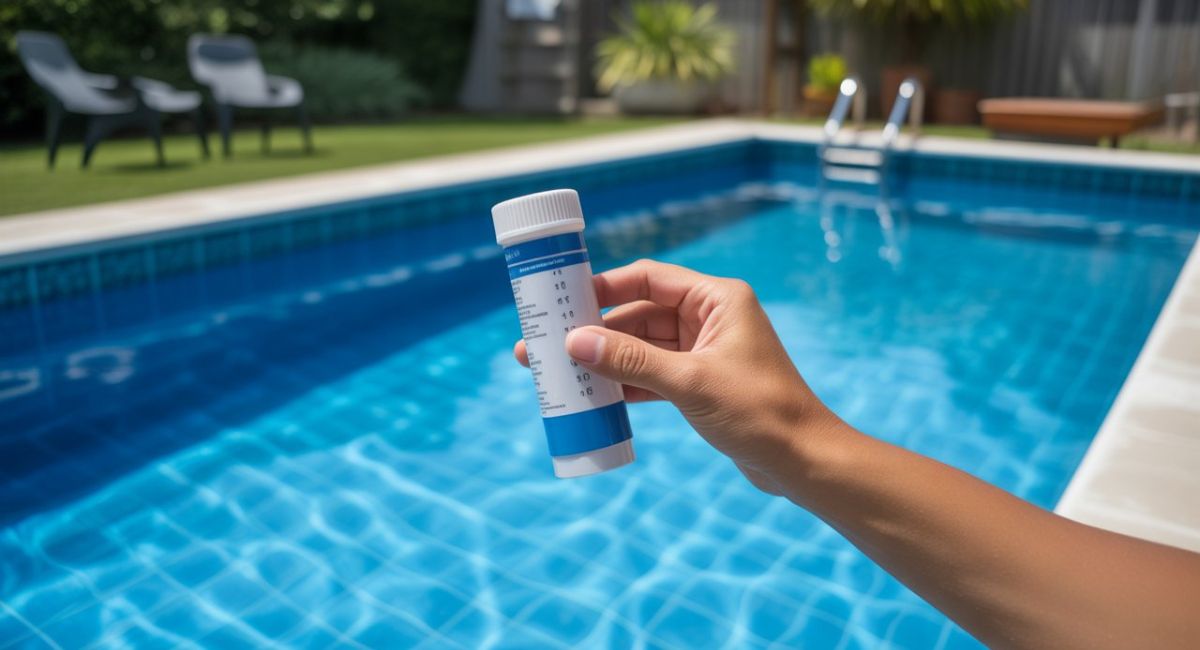
Keeping a swimming pool clean and safe depends on maintaining proper pool water chemistry. One important part of this balance is alkalinity. When the total alkalinity levels become too high, pool water can quickly develop problems such as unstable pH, cloudy water, and reduced sanitizer performance. Many pool owners face high alkalinity in pool situations without knowing the right way to fix it. Learning how to lower alkalinity in pool water helps protect pool surfaces, improve chlorine performance, and keep swimmers comfortable. By understanding the correct pool alkalinity range, testing water regularly, and making small chemical adjustments, you can keep your pool clear, healthy, and properly balanced throughout the swimming season.
What is Alkalinity?
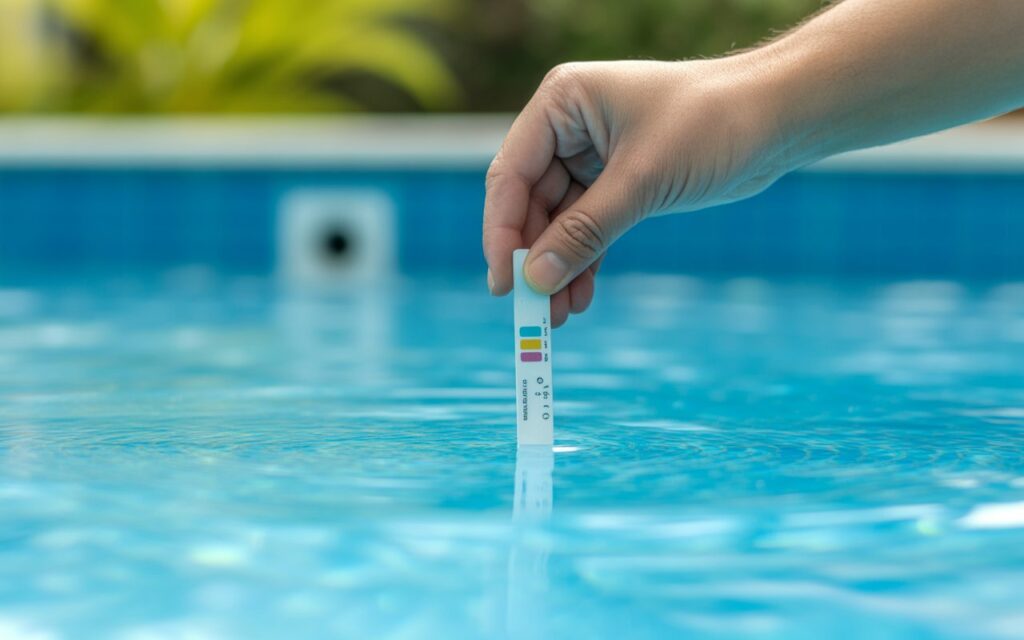
Alkalinity in pool water describes the concentration of alkaline substances in water that resist sudden pH changes. These substances include bicarbonates carbonates hydroxides which help maintain chemical stability. Scientists measure alkalinity in parts per million (ppm). This measurement reflects the buffering capacity of water, meaning how well the water resists becoming too acidic.
In practical terms alkalinity acts like a shock absorber for pool pH balance. When levels remain stable, the pool stays chemically predictable. However when high total alkalinity develops, it pushes pH upward and disrupts balanced pool water. That is why maintaining the correct pool alkalinity range is essential for healthy pool conditions.
What is Total Alkalinity?
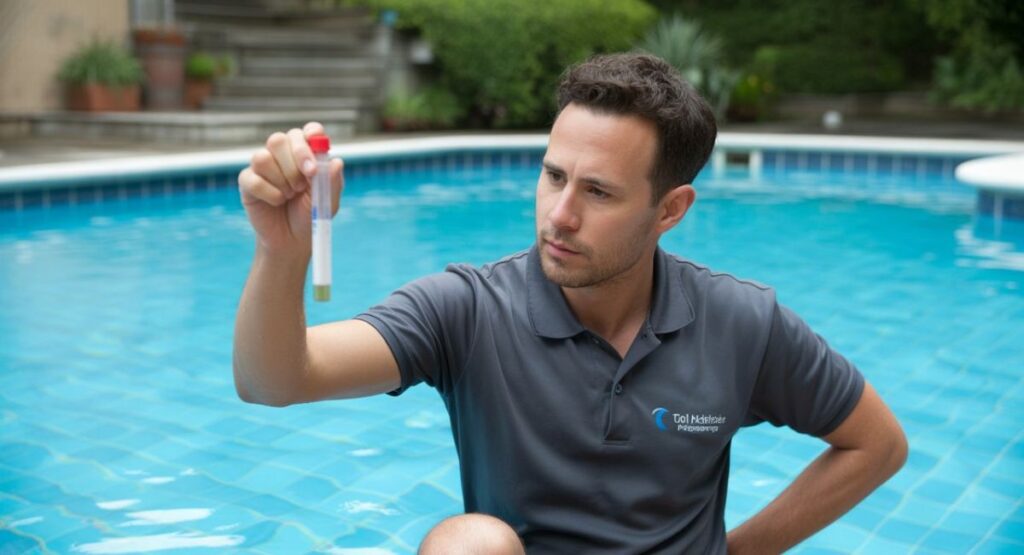
Total alkalinity measures the overall concentration of alkaline minerals dissolved in pool water. These minerals regulate pH stability and protect surfaces from corrosion or chemical damage. Most professionals recommend total alkalinity 80–120 ppm as the ideal alkalinity ppm range for residential pools.
When total alkalinity levels remain balanced, chlorine works efficiently and the pool stays comfortable for swimmers. But if alkalinity higher than 150 ppm occurs, the water becomes unstable. This condition leads to high pH and alkalinity, scaling, and poor sanitation. Pool experts often begin chemical correction by first addressing total alkalinity.
| Pool Parameter | Recommended Range |
| Total Alkalinity | 80–120 ppm |
| pH Level | pool pH 7.2 to 7.8 |
| Chlorine | 1–3 ppm |
Why is Alkalinity Important in a Pool?

Alkalinity plays a central role in maintaining stable pool chemical balance. When the alkalinity level remains correct, it prevents rapid pH swings that damage pool equipment. Stable chemistry also improves chlorine effectiveness, allowing sanitizers to destroy bacteria and algae more efficiently.
Another reason alkalinity matters is swimmer comfort. When high alkalinity in pool water appears, swimmers often experience burning eyes or itchy skin. High levels also contribute to calcium buildup in pool surfaces and scaling in pool pipes. By keeping alkalinity stable you maintain balanced pool water and extend the life of your pool system.
Recommended Alkalinity Level in a Pool
Most pool professionals recommend maintaining total alkalinity 80–120 ppm as the safe operating zone. This range supports a stable pool pH balance and prevents sudden chemical shifts. In addition the ideal pH level should remain within pool pH 7.2 to 7.8.
When alkalinity rises beyond this range problems quickly appear. Pools experiencing alkalinity higher than 150 ppm often develop cloudy pool water and mineral scale. Maintaining the proper pool alkalinity range keeps filtration systems efficient and preserves the overall pool water chemistry.
| Pool Type | Ideal Alkalinity |
| Residential Pool | 80–120 ppm |
| Saltwater Pool | 70–100 ppm |
| Commercial Pool | 100–120 ppm |
How Do Alkalinity and pH Affect Each Other?
Alkalinity and pH work closely together in pool water. Alkalinity stabilizes pH by neutralizing acids or bases that enter the water. This protective ability comes from the buffering capacity of water created by bicarbonates carbonates hydroxides.
However when high total alkalinity develops it pushes the pH upward. This leads to high pH and alkalinity, which reduces sanitizer efficiency and weakens chlorine. When pool technicians try to reduce pool alkalinity, they often lower pH simultaneously. Correcting alkalinity first helps restore proper pool water chemistry and makes future adjustments easier.
What Causes High Total Alkalinity?
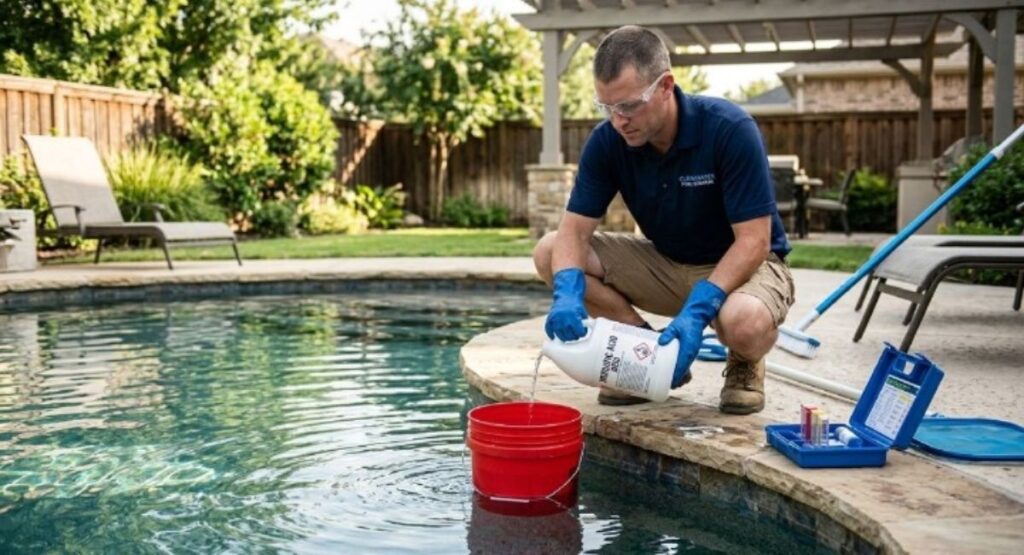
Many everyday pool treatments can unintentionally increase alkalinity. Adding chemicals, topping off with mineral rich water, or heavy swimmer activity can gradually raise total alkalinity levels. When these factors combine they produce high alkalinity in pool water that becomes difficult to stabilize.
Another common cause is poor monitoring of water chemistry. Without regular weekly pool testing, small imbalances grow into major problems. Excess stabilizers, chlorine shock treatments, or incorrect dosing can raise acid demand, making it harder to maintain balanced pool water.
Cyanuric Acid
Cyanuric acid protects chlorine from sunlight. However excessive stabilizer levels increase high total alkalinity and disturb pool chemical balance. When this happens the pool requires more acid treatment to lower alkalinity in a pool effectively.
Low Sanitizer Levels
Low chlorine allows contaminants to build up in the water. These pollutants affect pool pH balance and disrupt total alkalinity levels. Maintaining correct chlorine levels improves sanitizer efficiency and prevents chemical imbalance.
Pool Shock
Chlorine shock treatments sanitize water quickly but they may increase high pH and alkalinity. After shocking a pool technicians often check pool water chemistry and adjust alkalinity if necessary.
What Happens if Your Pool Alkalinity is Too High?

High alkalinity affects nearly every part of the swimming pool system. When high alkalinity in pool water occurs, the water becomes difficult to balance. This leads to poor sanitation, mineral deposits, and mechanical stress on equipment.
Pool professionals often notice warning signs such as cloudy pool water, rising pH, and calcium buildup in pool tiles. If untreated these problems may cause scaling in pool pipes or damage filters. Maintaining correct total alkalinity levels prevents these costly repairs.
Causes High pH
Excess alkalinity increases the acid demand of the pool. As a result pH levels rise quickly beyond the safe pool pH 7.2 to 7.8 range.
Reduces Chlorine Effectiveness
When high pH and alkalinity occur chlorine loses strength. Reduced chlorine effectiveness allows bacteria and algae to survive in the water.
May Irritate Skin and Eyes
Swimmers often notice itching, redness, or eye irritation when high alkalinity in pool water disrupts the pool chemical balance.
Leads to Scale Build Up
High alkalinity encourages calcium buildup in pool surfaces. Over time mineral deposits create rough surfaces and scaling in pool pipes.
Creates Cloudy Water
Mineral particles suspended in water produce cloudy pool water that filtration systems struggle to remove.
Measuring Your Pool’s pH Balance
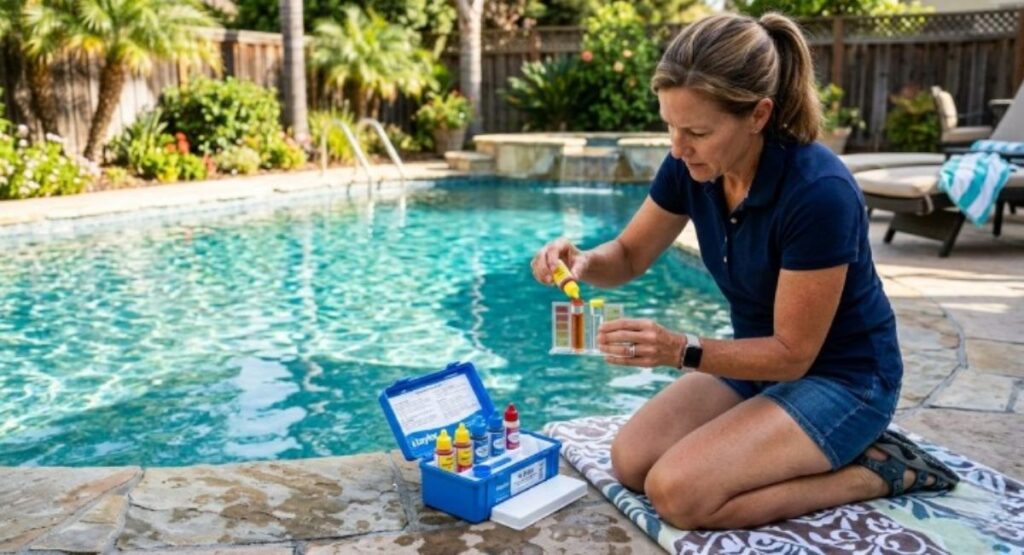
Accurate measurement is essential before attempting to reduce pool alkalinity. Pool owners should monitor both alkalinity and pH regularly. This ensures the water stays within the recommended pool alkalinity range.
Professionals recommend weekly pool testing using reliable equipment. Proper monitoring keeps pool water chemistry stable and helps detect high total alkalinity before it becomes severe.
| Testing Method | Accuracy | Cost |
| Test Strips | Moderate | Low |
| Liquid Test Kit | High | Medium |
| Digital Meter | Very High | High |
Testing Alkalinity Levels
Testing alkalinity is simple but extremely important for maintaining balanced pool water. Pool owners should measure total alkalinity levels before adding chemicals. This helps determine how much acid is needed to lower alkalinity in a pool safely.
Experts recommend testing during calm weather conditions. Regular weekly pool testing allows you to track changes in pool water chemistry and respond quickly if high alkalinity in pool develops.
How Do You Lower Alkalinity in a Pool?
There are several reliable methods to lower alkalinity in a pool. Most techniques involve adding acid to neutralize excess alkaline minerals. Common solutions include muriatic acid and sodium bisulfate. Both chemicals help reduce pool alkalinity while adjusting pool pH balance.
Some pool owners also combine chemical treatment with aeration. Aeration increases oxygen movement in water which gradually raises pH without affecting total alkalinity levels. This strategy helps stabilize balanced pool water after chemical adjustments.
How to Lower Alkalinity in a Pool
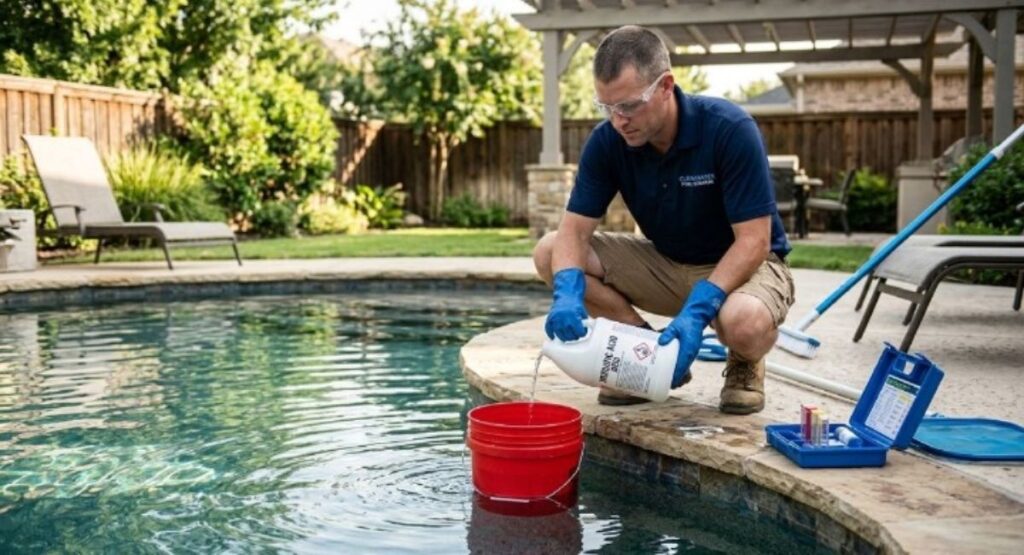
The process to lower alkalinity in a pool involves careful testing and gradual chemical adjustments. Pool technicians begin by measuring total alkalinity levels and calculating the correct dosage needed to correct high total alkalinity.
Once acid treatment begins the pool pump circulates water to distribute chemicals evenly. This method slowly reduces pool alkalinity while restoring pool chemical balance.
How to Use Muriatic Acid to Lower Alkalinity
Muriatic acid is one of the most effective ways to lower alkalinity in a pool. When added carefully it neutralizes excess alkaline minerals and reduces high total alkalinity quickly. Pool professionals use calculated doses to prevent extreme drops in pool pH balance.
How to Use Sodium Bisulfate to Lower Alkalinity
Sodium bisulfate is a dry acid alternative commonly used to reduce pool alkalinity. It works similarly to muriatic acid but is easier to store and handle. This chemical gradually corrects high alkalinity in pool water while stabilizing overall pool water chemistry.
Adjusting Alkalinity With Chemicals
Chemical treatment remains the fastest way to fix high total alkalinity. Muriatic acid and sodium bisulfate both lower alkalinity by neutralizing excess minerals. When applied properly they restore the correct pool alkalinity range.
Pool technicians carefully calculate acid demand before treatment. Accurate dosing prevents sudden changes in pool pH balance and keeps the water safe for swimmers. This controlled method helps maintain balanced pool water.
Natural Remedies for Alkalinity Reduction

Some pool owners prefer natural methods to reduce pool alkalinity. Aeration techniques such as fountains, jets, or waterfalls increase oxygen movement in water. This process gradually corrects high pH and alkalinity without heavy chemical use.
Another option involves partially draining the pool and refilling it with fresh water. This approach dilutes minerals responsible for high alkalinity in pool water and restores healthy pool water chemistry.
Maintaining Balanced Water Chemistry
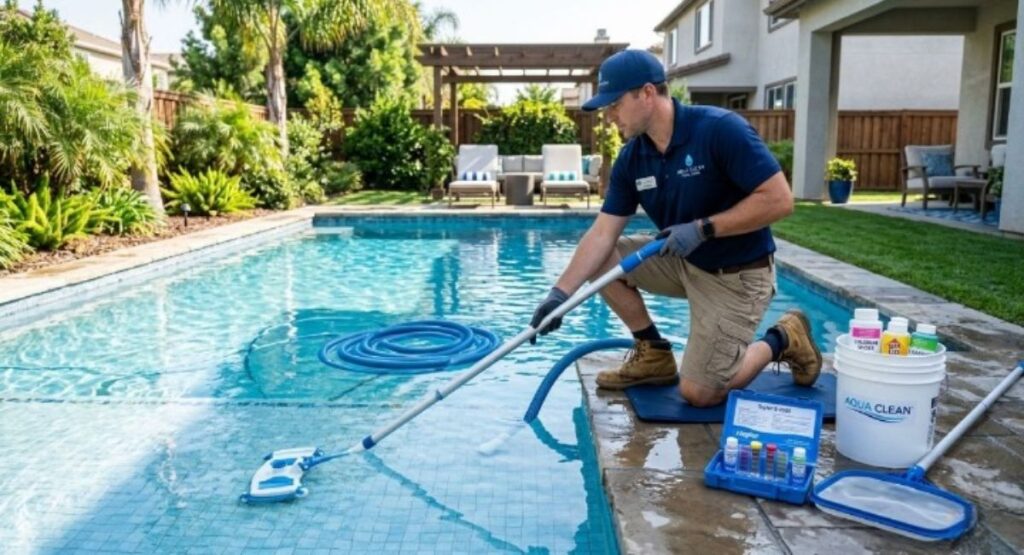
Long term pool care depends on consistent monitoring and maintenance. A reliable pool maintenance routine prevents chemical imbalances before they start. Regular testing ensures total alkalinity levels stay within the recommended range.
Maintaining balanced pool water improves swimmer comfort and protects expensive equipment. Pool experts emphasize consistent weekly pool testing and proper chemical dosing to preserve stable pool chemical balance throughout the swimming season.
Troubleshooting High Alkalinity Issues

Sometimes alkalinity continues rising even after treatment. In such cases technicians investigate possible causes such as mineral rich fill water or excessive chemical use. Identifying the source helps correct high alkalinity in pool conditions permanently.
Pool professionals also monitor signs like cloudy pool water, calcium buildup in pool, and scaling in pool pipes. Addressing these symptoms early allows owners to lower alkalinity in a pool quickly and maintain stable pool water chemistry for safe swimming.
Conclusion
Maintaining the right pool water chemistry is essential for a clean, safe, and comfortable swimming environment. When high total alkalinity occurs, it can lead to several problems such as unstable pH, reduced chlorine effectiveness, and issues like cloudy pool water or calcium buildup in pool surfaces and equipment. Learning how to lower alkalinity in pool water helps restore the proper balance and protects your pool system from long-term damage.
The key to success is regular monitoring and small adjustments. By keeping total alkalinity levels within the recommended total alkalinity 80–120 ppm, you maintain stable pool pH 7.2 to 7.8 and ensure proper sanitizer performance. A consistent pool maintenance routine that includes weekly pool testing allows you to detect problems early and maintain balanced pool water.
When you understand the correct steps to lower alkalinity in a pool, pool care becomes much easier. With proper testing, careful chemical use, and routine maintenance, you can keep your pool water clear, healthy, and perfectly balanced throughout the entire swimming season.
FAQs
What happens if your pool alkalinity is too high?
High alkalinity can cause unstable pH, reduce chlorine effectiveness, and lead to problems like cloudy water and scale buildup on pool surfaces.
Does baking soda lower pool alkalinity?
No, baking soda actually raises total alkalinity levels and is commonly used when pool alkalinity is too low.
Does shocking pool affect alkalinity?
Yes, some pool shock treatments can slightly raise alkalinity and pH levels depending on the type of shock used.
Should you adjust pH or alkalinity first?
You should adjust total alkalinity first because it controls the buffering capacity of water and helps stabilize the pH level.
What causes pool alkalinity to rise?
Pool alkalinity can rise due to chemical overuse, hard fill water, high mineral content, or excessive use of stabilizers like cyanuric acid.
Meta Description :
Learn how to lower alkalinity in a pool, fix high alkalinity fast, balance pool water chemistry, and keep your pool clean and clear.

Welcome to PoolProGuide! I’m John Phillips is a Certified Pool Operator with 12+ years of experience specializing in advanced water chemistry and DIY pool care solutions across the USA.