

Hey pool owner. After 10+ years in the trenches I’ve seen chlorine levels that would make a lab technician gasp. Today I’m sharing exactly how to fix it without the headache. Let’s dive in.
You test your pool water and that deep purple reading stops you cold. High chlorine symptoms like itchy skin and bleached swimsuits mean your water needs immediate attention. Whether you need a chlorine neutralizer chemical or just some sunlight UV degradation the solution is simpler than you think. From partial water drain and refill to adjusting your pool water chemistry balance I’ll walk you through every method. Let’s get your pool back to perfect.
To effectively lower chlorine in a pool, understanding the basics of water chemistry is essential.
Why Is My Pool Chlorine Level So High? Common Causes in Cleveland, OH
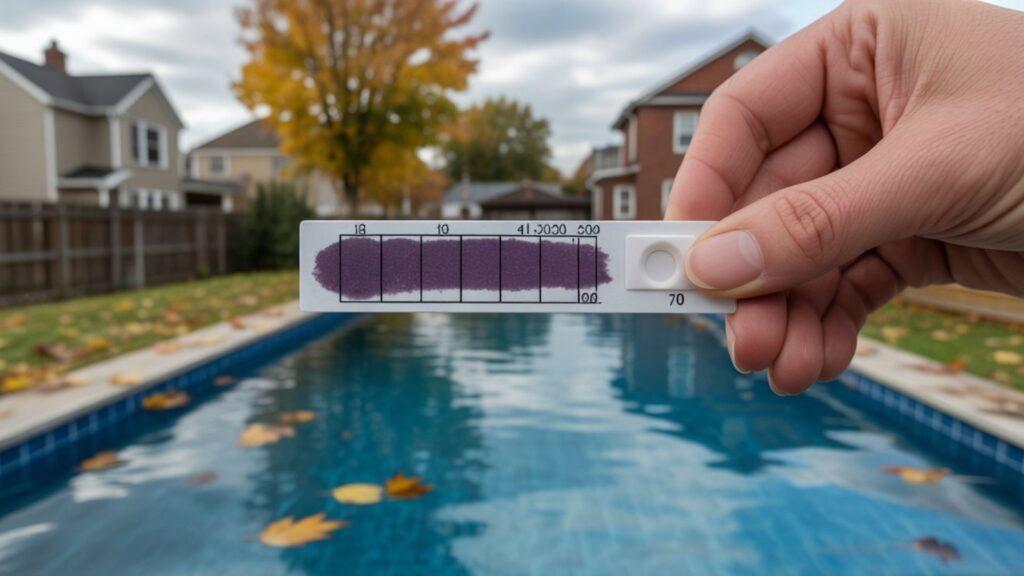
Your DPD kit just flashed that alarming dark pink and you’re wondering what happened. The usual suspects include over-shocking after a party or leaving those chlorine tablets (trichlor/dichlor) floating too long. Your automatic chlorinator might be cranked too high or maybe you just misjudged the math for your pool size. It happens to everyone.
Cleveland weather adds its own twist to this problem. Those sudden summer downpours dump organic debris (leaves/bugs) into your pool which spikes chlorine demand temporarily. Then when the sun finally breaks through photolysis (UV breakdown) burns off free chlorine fast so pool owners panic and add more. The cycle continues until your cyanuric acid (CYA) levels trap chlorine creating that frustrating chlorine lockout where chlorine tests high but nothing actually sanitizes.
How High is Too High? Understanding Safe Chlorine & pH Levels
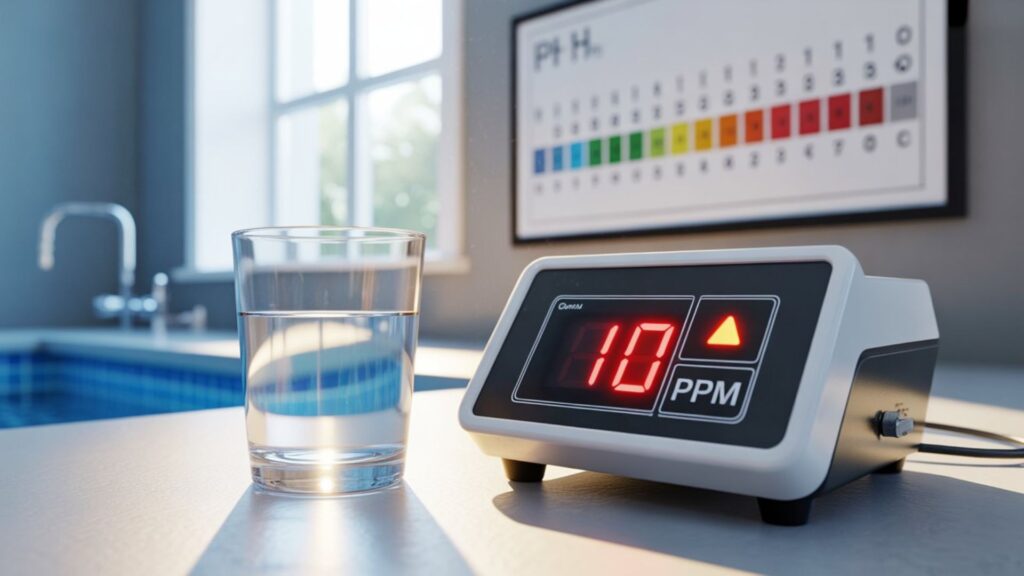
Let’s talk numbers because the parts per million (PPM) scale matters. The ideal chlorine range for swimming pools sits between 2 and 4 PPM. That’s where bacteria and pathogens die quickly but your skin stays happy. Knowing how to lower chlorine in a pool is crucial for maintaining this range. The Association of Pool & Spa Professionals (APSP) backs this range and thousands of pool tests prove it works.
Anything above 5 PPM starts getting questionable. At 10 PPM you’re in the danger zone where bleached swimsuits fade and that chlorine gas smell appears. Hit 15 PPM and you face equipment corrosion risk for pump seals and ladder hardware. The corrosive index (LSI/RSI) shifts dramatically at these levels and expensive equipment pays the price.
Symptoms of Too Much Chlorine in Water: What to Look For
Your body tells you immediately when chlorine levels are off. Swimmers get itchy skin and red eyes that feel like sandpaper. That’s actually combined chlorine (chloramines) attacking sensitive tissues. You’ll notice dry hair after swimming that feels like straw and bleached swimsuits losing color after one swim.
The water itself looks different too. High chlorine creates a hazy shimmer not cloudy like algae but a chemical haze. Respiratory discomfort hits swimmers especially kids and elderly folks. If you smell that strong “pool smell” you’re actually smelling nitrogen trichloride not clean chlorine. That smell means trouble.
The Difference Between Free Chlorine and Combined Chlorine
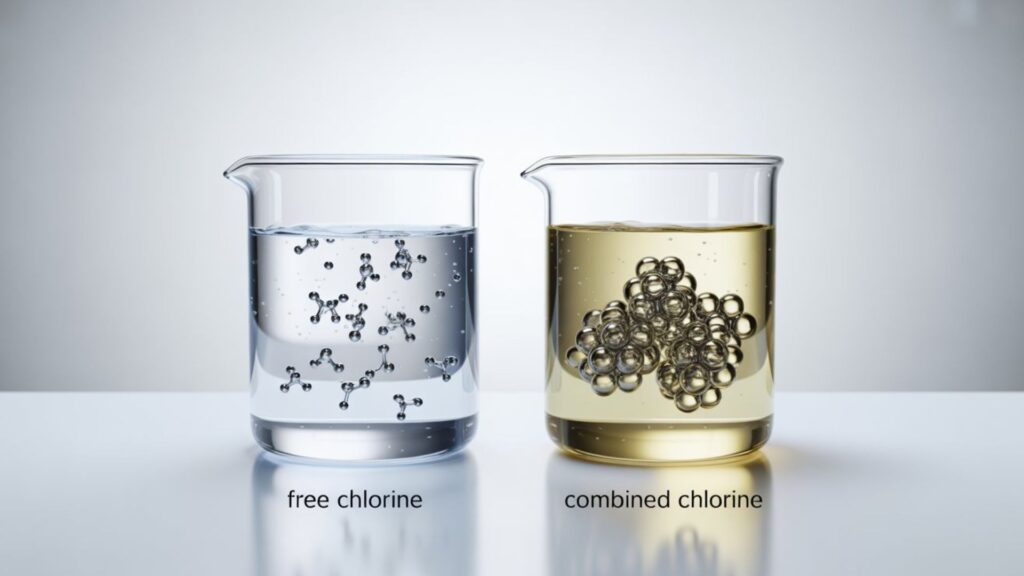
Free Available Chlorine (FAC) is your active sanitizer existing as hypochlorous acid and hypochlorite ion. It kills pathogenic microorganisms 24/7 working like your pool’s immune system. FAC is the good stuff that keeps water safe for swimming.
Combined Available Chlorine (CAC) is the spent stuff formed when FAC reacts with ammonia from sweat and leaves. Total chlorine equals FAC plus CAC. If your test shows high total but low free you’ve got a combined chlorine (chloramines) problem not too much sanitizer. That’s the secret most pool stores miss.
What Is Combined Chlorine and Why Does It Matter?
Combined chlorine (chloramines) causes all the nasty stuff swimmers hate. When free chlorine oxidizes organic load like body oils and sunscreen it creates these weak compounds about 60 times less effective than free chlorine. They cause ocular irritation (eyes) and that chemical odor.
High CAC means your pool isn’t actually sanitizing despite showing high total chlorine readings. CAC above 0.2 PPM needs action. Above 0.5 PPM you’re swimming in dirty water that just smells like a chemical factory. I’ve tested pools at 1.5 PPM CAC that made swimmers sick within minutes.
How to Test for Combined Chlorine in Your Pool
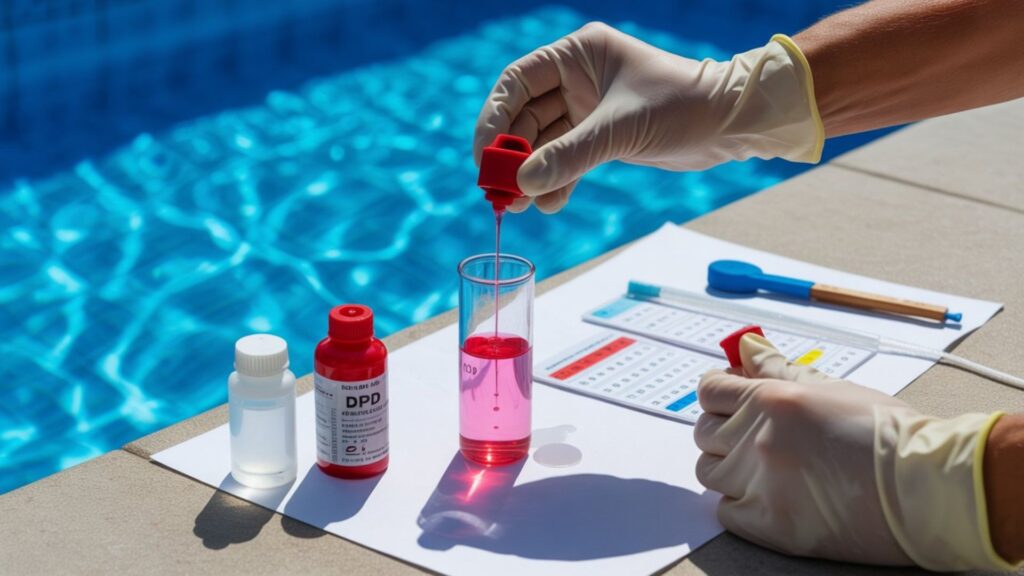
Testing for CAC needs the right method. Test strips accuracy varies so I recommend DPD (N,N-diethyl-p-phenylenediamine) reagent testing. The DPD kits give free chlorine first then total chlorine after adding the second reagent. Simple subtraction reveals your CAC.
For high precision the titration method works wonderfully. For pools reading off the charts use the distilled water dilution test to get accurate numbers. Mix one part pool water with four parts distilled water test and multiply by five. This handles those scary high readings that turn reagents dark instantly.
Organic Chloramines vs. Inorganic Chloramines Explained
Organic chloramines form when free chlorine reacts with carbon-based nitrogen from urine sweat and leaves. They’re volatile smelly and create that locker room aroma. Inorganic chloramines come from ammonia and simpler nitrogen sources causing eye irritation.
Monochloramine forms first then dichloramine then nitrogen trichloride. Nitrogen trichloride is the volatile gas that lifts off the water and burns your eyes. Understanding this progression helps you choose the right treatment approach for your specific pool situation.
What Is the Maximum Allowable Level of Combined Chlorine?
Industry standards from the Association of Pool & Spa Professionals (APSP) set the limit at 0.2 PPM for CAC. That’s the toxicological threshold where water quality remains acceptable. Commercial pools face strict enforcement with daily testing requirements.
For residential pools stay below 0.3 PPM for comfortable swimming. At 0.5 PPM CAC you’ll notice effects. At 1.0 PPM you face dermal absorption risks and potential respiratory discomfort. Your backyard pool deserves the same respect for safety.
What Do High Combined Chlorine Levels Mean for Your Pool?
High CAC tells you breakpoint chlorination hasn’t happened. You’ve added enough chlorine to form chloramines but not enough to destroy them. The chemistry needs a 10:1 ratio of chlorine to nitrogen to reach breakpoint.
Your sanitizer residual isn’t working effectively. Bacteria can survive because active chlorine is tied up. High CAC creates false security leading to algae bloom prevention failures and occasionally actual health issues. Don’t ignore those numbers.
Does Chlorine Neutralizer Remove Combined Chlorine Effectively?
Sodium thiosulfate works wonderfully on free chlorine but its effect on CAC is limited. The stoichiometric ratio for chemical neutralization favors free chlorine reactions. It reduces total chlorine readings but chloramines persist in different forms.
Hydrogen peroxide works better on combined chlorine oxidizing nitrogen compounds directly. Ascorbic acid also helps through reduction reactions. For true CAC removal you need oxidation not just neutralization.
Does Combined Chlorine Dissipate on Its Own Over Time?
Combined chlorine dissipates but painfully slowly. Volatilization at the water surface releases nitrogen trichloride gas into the air. Thermal degradation accelerates this in warmer water. You might lose 0.1 PPM daily through natural processes.
The problem is organic load keeps adding more. Every swimmer introduces new ammonia compounds. Natural dissipation time rarely keeps pace with new chloramine formation. Passive waiting rarely solves high CAC issues.
How to Chemically Reduce Combined Chlorine in Your Pool
Breakpoint chlorination remains the gold standard. Add enough chlorine to achieve a 10:1 ratio against ammonia nitrogen. Calculate your CAC level multiply by 10 and that’s how much additional free chlorine to add for complete oxidation.
Non-chlorine shock (potassium monopersulfate) offers an alternative that won’t raise chlorine further. It oxidizes chloramines through oxygen-based chemistry within 15 minutes. Hydrogen peroxide works too but requires careful dosage calculator use.
How to Physically Reduce Combined Chlorine Levels
Physical removal works alongside chemicals. Water circulation and agitation accelerate volatilization by increasing surface area exposed to air. Point returns upward for maximum surface disturbance. The gas exchange releases nitrogen trichloride rapidly.
Aerating pool water with fountains speeds this process dramatically. Uncovering the pool allows UV light through photolysis to break chloramine bonds. For indoor pools proper indoor pool ventilation removes released gases preventing re-dissolving.
How to Lower Chlorine Levels in Pool: The Fastest Methods
For immediate results reach for sodium thiosulfate. This fast-acting chlorine reducer works within minutes. Calculate your pool volume multiply by PPM reduction needed and apply the right sodium thiosulfate dosage. The reaction turns excess chlorine into harmless chloride salt.
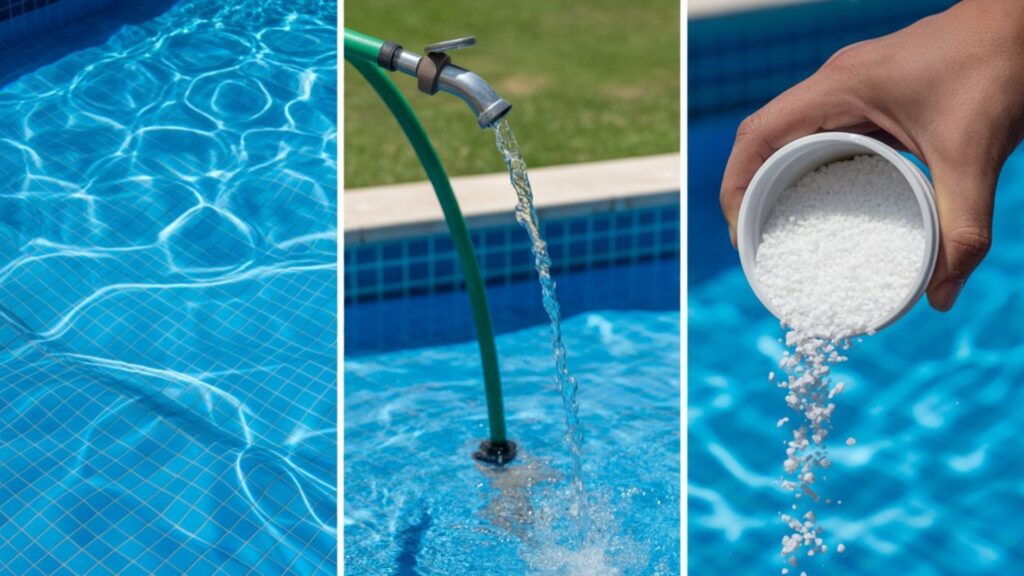
Partial water drain and refill provides the most natural approach especially if cyanuric acid (CYA) levels are also high. Replace 25% to 50% of water for immediate drops. Sunlight UV degradation works well for moderate reductions on sunny days when UV-C wavelengths penetrate deep.
How Do You Get Your Pool Chlorine Level Down Fast in Cleveland, OH?
Cleveland’s cloudy days limit sunlight UV degradation so chemical neutralizers become essential. Keep sodium thiosulfate on hand for when rain follows heavy shocking. Local pool stores carry it but having it ready saves panic.
Our shorter swimming season means spring opening often reveals high chlorine from winterization. Test before opening fully. Municipal drainage codes in Cuyahoga County prohibit discharging high-chlorine water into storm drains. Drain to your lawn slowly allowing soil filtration.
Step 1: Stop Adding Chlorine and Let the Sun Help
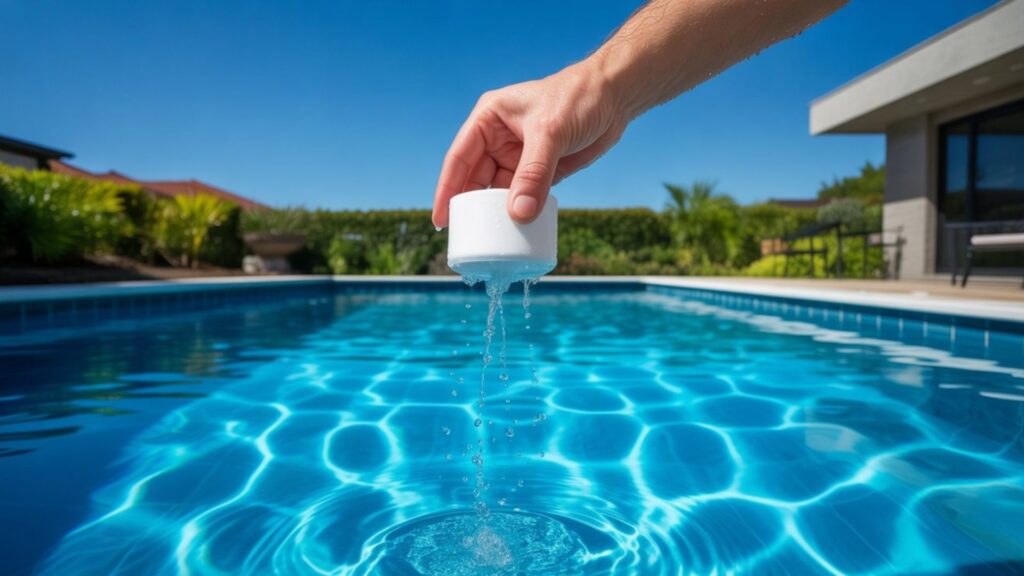
Remove every chlorine floater immediately. Turn off your automatic chlorinator completely. Stop using pool shock treatment products until levels normalize. This sounds obvious but you’d be amazed how many people keep adding while wondering why levels stay high.
Let nature work. Sunlight UV degradation called photolysis breaks hypochlorous acid down rapidly. A sunny day can reduce chlorine by 2 to 3 PPM. UV-C wavelengths penetrate several feet of clear water. Position returns to circulate surface water maximizing UV exposure.
Step 2: Diluting Pool Water to Lower Chlorine Concentration
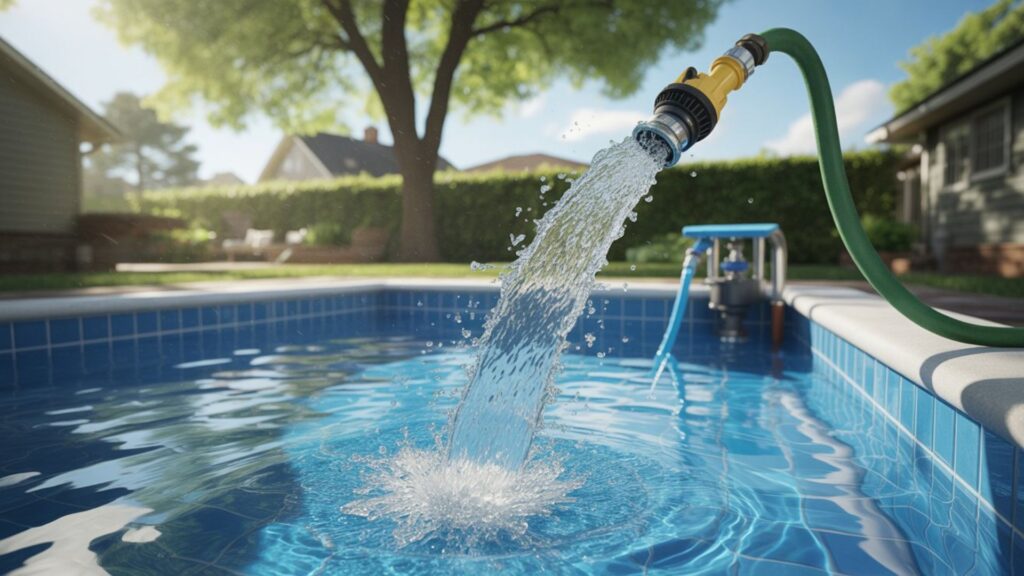
Partial water drain and refill provides the most predictable method. Remove a measured percentage of water and replace with fresh municipal water containing zero chlorine. The dilution formula works linearly: replace 25% of water reduces chlorine by 25%.
For a 20,000 gallon pool at 10 PPM a 25% drain brings you to 7.5 PPM. Repeat if needed. Watch water displacement during refill. Check local storm drain disposal rules before draining. Drain to your yard when possible.
Step 3: Using Chemical Agents Like Sodium Thiosulfate
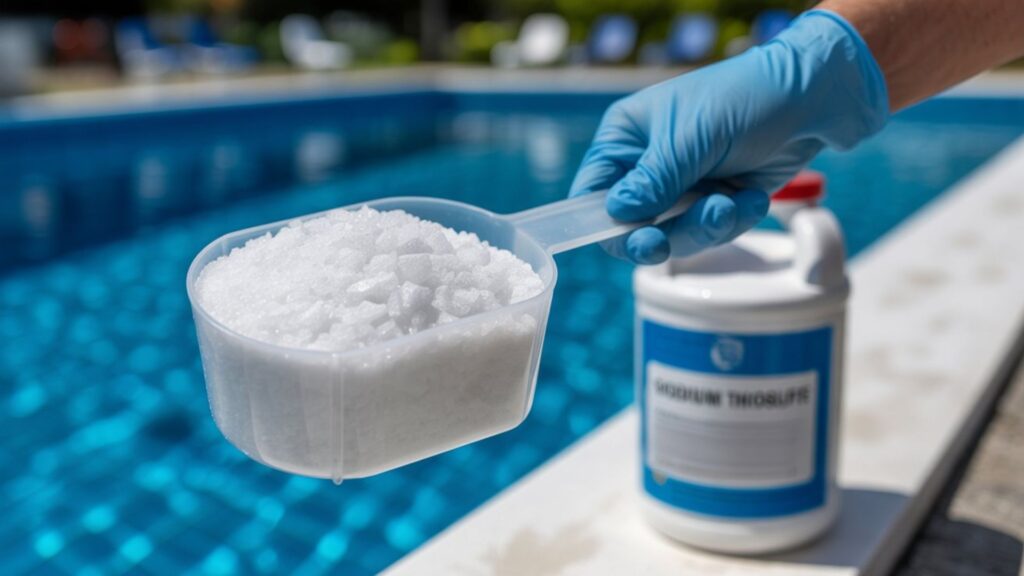
Sodium thiosulfate remains the industry standard. The stoichiometric ratio requires 0.56 ounces of pure thiosulfate to neutralize 1 PPM of chlorine in 10,000 gallons. Commercial products include fillers so follow label dosage accuracy guidelines.
Mix the aqueous solution in a bucket then broadcast around the pool perimeter. Run pump continuously for even distribution. The chemical neutralization happens within minutes. Retest after one full circulation cycle.
Step 4: Using a Mineral System or Salt Water System to Stabilize
Mineral pool systems using silver and copper ions reduce chlorine dependence long-term. These secondary sanitizers handle much of the organic load allowing lower chlorine residuals. I’ve installed dozens for clients tired of chemical battles.
Saltwater generator settings directly control chlorine production. Turn down output percentage or reduce runtime hours. The electrolytic cell produces chlorine only when running so shorter cycles mean less chlorine. Some systems target precise PPM through ORP feedback.
Once your chemicals are balanced, make sure your pool floor is debris-free. Check out our guide on for a crystal-clear finish.
What About Salt Water Pools? How to Lower Chlorine Levels
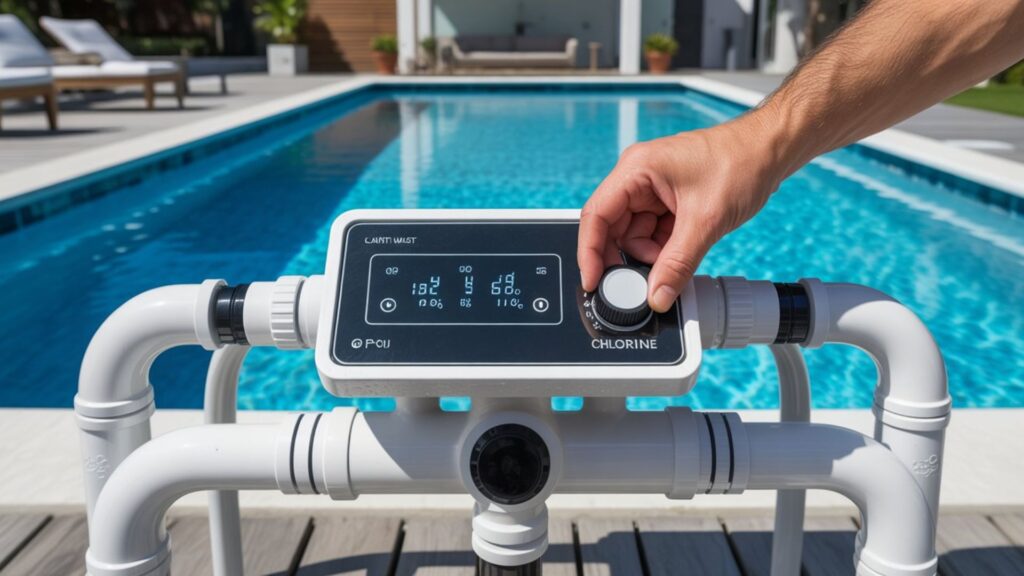
First reduce your saltwater generator settings to minimum effective output. If your system runs 8 hours daily cut to 4 hours and monitor. The electrolytic cell efficiency depends on water temperature so warmer pools produce more chlorine naturally.
You can still use sodium thiosulfate in salt pools without damaging the cell. Neutralized chlorine becomes salt actually feeding your system. For long-term control consider variable speed pump with timers matching production to actual demand.
The Relationship Between Chlorine & pH Level in Pool Water
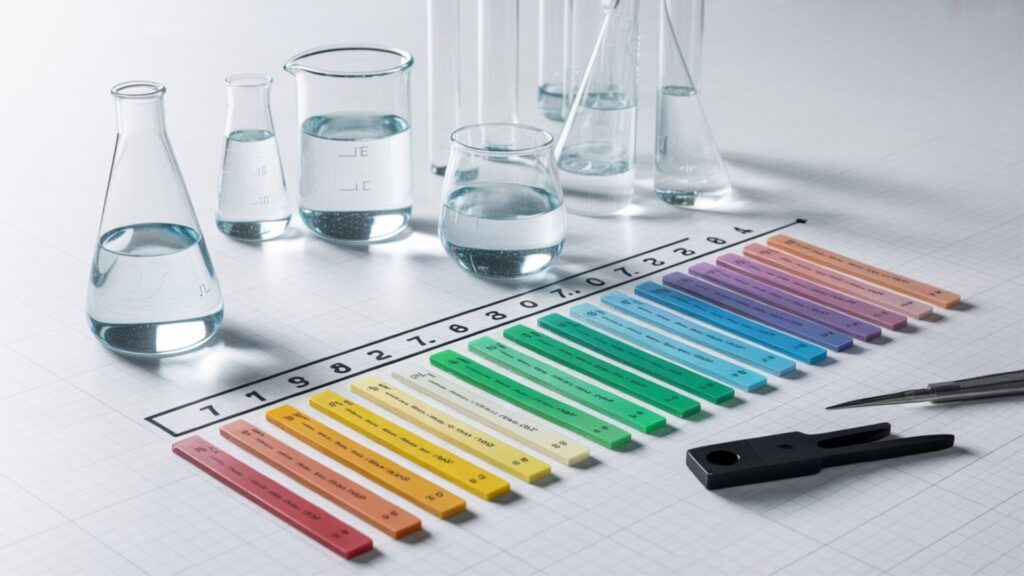
pH level adjustment dramatically affects chlorine effectiveness. At low pH hypochlorous acid dominates providing strong sanitization but rapid dissipation. At high pH the weaker hypochlorite ion takes over requiring more chlorine for same kill rate.
High chlorine often drives pH down especially with trichlor tablets which are acidic. Test both together always. Adjust pH first because buffer capacity (alkalinity) affects chlorine behavior. Aim for 80 to 120 PPM alkalinity before major chlorine adjustments.
Why Is Chlorine Important in the First Place for Sanitation?
Chlorine saves lives. Before pool chlorination pathogenic microorganisms caused disease outbreaks regularly. Hypochlorous acid penetrates bacterial cell walls oxidizing essential enzymes within seconds. It provides a disinfection residual that keeps working long after application.
The log reduction capability amazes me still. Proper chlorine levels achieve 99.99% bacterial kill rates within minutes. It protects against algae bloom prevention by oxidizing spores before they colonize. Without adequate sanitizer residual your pool becomes a bacteria breeding ground.
What Happens When Chlorine Gets Too High? Risks & Issues
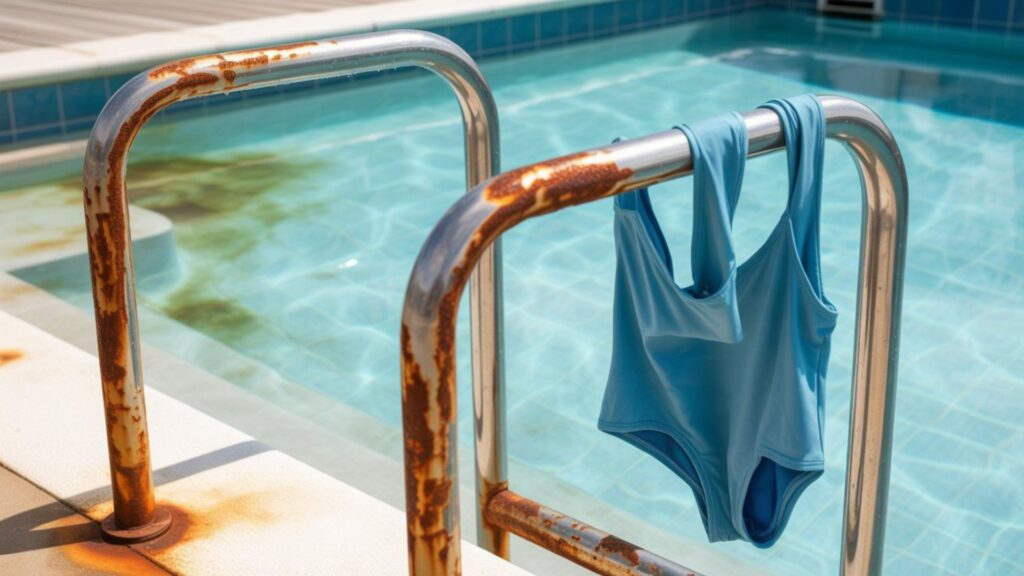
Equipment corrosion risk tops my concerns. Pump seals gaskets and heater heat exchangers deteriorate rapidly in high chlorine. I’ve replaced $2000 heat exchangers destroyed by six months at 10 PPM. Pool cover damage occurs too with vinyl covers becoming brittle.
Health risks include respiratory discomfort from chlorine gas off-gassing. Skin sensitivity issues develop with repeated exposure. Ocular irritation (eyes) can become severe enough for corneal damage. The toxicological threshold exists for good reason.
Testing Very High Chlorine Levels: Tools Like Solaxx SafeDip
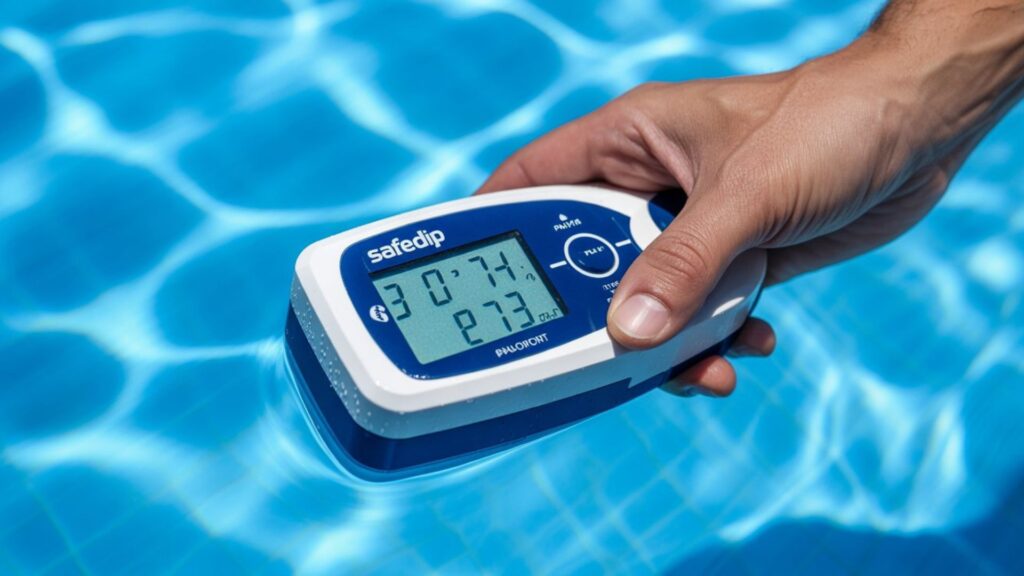
Standard test strips accuracy fails above 10 PPM. Colors max out leaving you guessing. DPD kits work to about 15 PPM before reagent turns instantly dark. Use distilled water dilution test for extreme levels.
Digital testers like the Solaxx SafeDip handle high ranges beautifully using colorimetric analysis. The titration method with FAS-DPD drops works for any level. This reagent interaction provides exact numbers even at 50 PPM.
How to Reduce Pool or Spa Chlorine Levels: Final Checklist
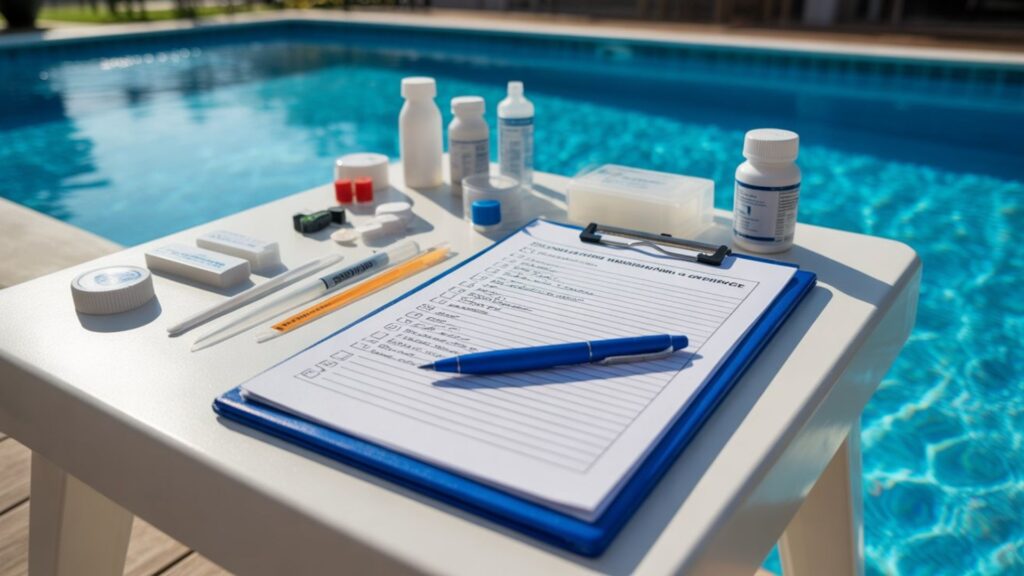
Test accurately first using proper DPD kits. Stop all chlorine addition immediately. Remove tablets and adjust feeder settings. Apply sodium thiosulfate if levels exceed 10 PPM and you need fast results.
Run pump continuously during treatment. Retest after 24 hours. If combined chlorine remains high use breakpoint chlorination or non-chlorine shock. Document everything in your maintenance log. Call for expert consultation (E-E-A-T) if problems persist. Your pool will thank you with crystal clear comfortable water all season.
Expert Tip: Most high chlorine problems trace back to cyanuric acid (CYA) levels above 100 PPM. Stabilizer lock prevents chlorine from working so you add more and the cycle continues. Test CYA whenever chlorine seems stuck high.
Last Updated: March 2026 | Reviewed by Certified Pool Operator #48721
FAQs
1. How can I quickly lower the chlorine level in my pool? The fastest way is adding a chlorine neutralizer like sodium thiosulfate for an instant drop, or partially draining and refilling the pool with fresh water.
2. What happens if pool chlorine is too high? Excessive chlorine causes severe skin and eye irritation, damages hair, and can bleach or corrode pool liners and expensive equipment.
3. How long does it take for chlorine levels to drop? It typically takes 24 to 48 hours for chlorine to dissipate naturally via sunlight, but a chemical neutralizer can fix the issue in just 1 to 2 hours.
4. Can you swim in a pool with high chlorine? No, swimming is unsafe if levels exceed 5.0 ppm, as it can lead to chemical burns, lung irritation, and ruined swimwear.
5. What is the most common cause of a high chlorine level in a pool? The most frequent cause is over-shocking the water or accidentally leaving an automatic chlorinator or salt cell on its maximum setting.
Meta Description:
Lower chlorine in your pool fast with proven methods. Fix high levels quickly and swim safely today. Don’t let it keep you out of the pool!

Welcome to PoolProGuide! I’m John Phillips is a Certified Pool Operator with 12+ years of experience specializing in advanced water chemistry and DIY pool care solutions across the USA.