

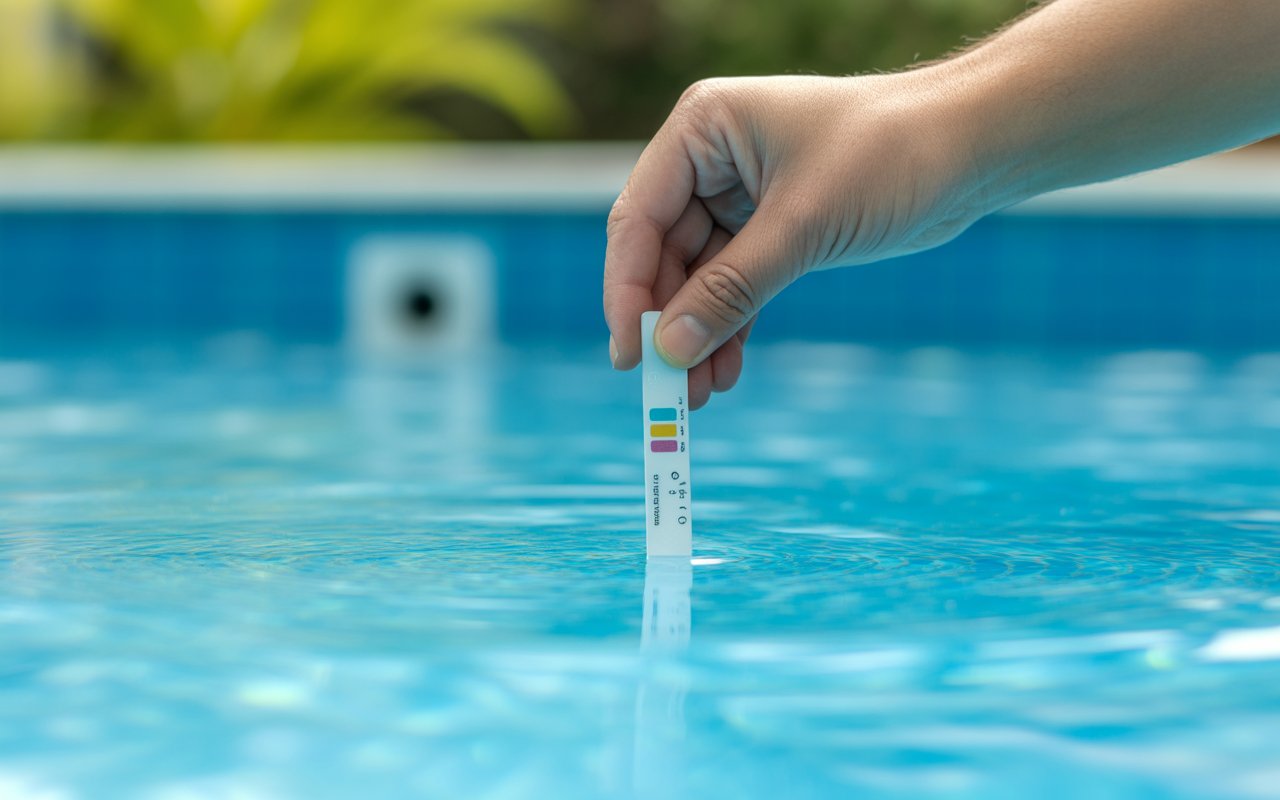
Keeping your swimming pool water safe, clear, and comfortable starts with understanding how to lower pH in swimming pool. Pool pH levels affect not only the water’s balance but also the effectiveness of pool chemicals like chlorine, which keeps the water free from harmful microbes. When high pH in pool occurs, it can cause cloudy pool water, skin and eye irritation, and reduce chlorine effectiveness, making swimming unsafe. Conversely, low pH in pool can lead to acidic pool water that corrodes equipment and damages surfaces. Learning the proper steps to lower pH safely, test your water regularly, and manage pool water chemistry ensures your pool remains healthy, inviting, and easy to maintain year-round.
What is pH in a Swimming Pool?
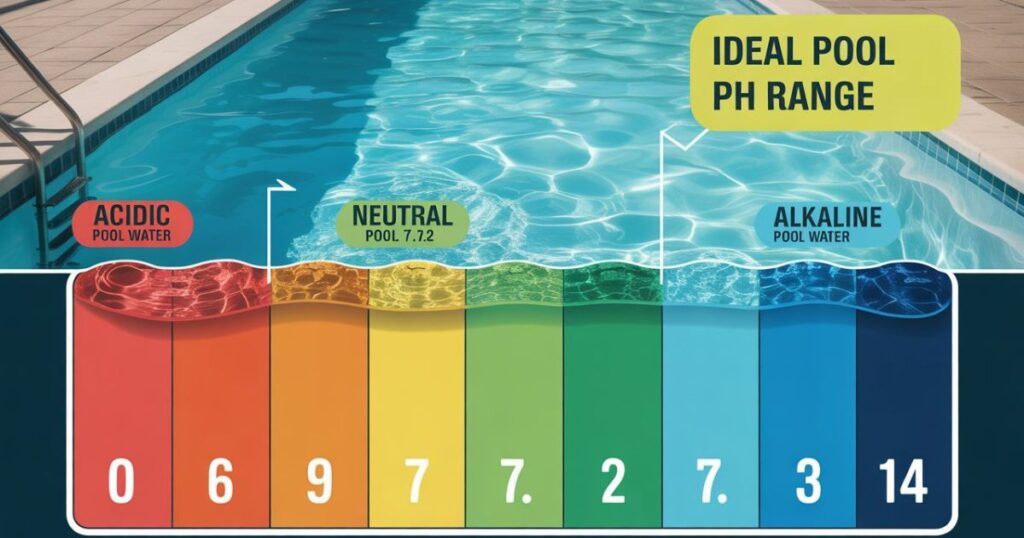
Swimming pool pH measures how acidic or alkaline the water is, on a scale from 0 to 14. A pH below 7 is acidic, while a pH above 7 is alkaline. Proper pool water chemistry relies on staying in the ideal pH range 7.2 to 7.8.
Water naturally changes pH due to pool shock effects on pH, rainfall, or debris. Swimmers themselves contribute to pH fluctuation in swimming pool, as body oils, sweat, and lotions affect chemical balance. Frequent pool water testing helps prevent long-term problems.
Measuring pool pH levels with a pH test kit for pool or pH meter for pool provides accurate data. Without testing, chlorine effectiveness drops, and cloudy pool water becomes more likely. Accurate readings are the foundation of balancing pool pH.
Why Maintaining Proper Pool pH is Important
Proper pool pH levels keep water safe, clear, and comfortable for swimmers. High pH in pool reduces chlorine effectiveness, allowing bacteria and algae to thrive, while low pH in pool corrodes metal fittings and damages plaster surfaces.
Imbalanced pH also harms swimmers with skin and eye irritation. Acidic pool water burns eyes and skin, while alkaline pool water causes itchiness. Maintaining ideal pool pH ensures swimming is safe and enjoyable for everyone.
Beyond health, incorrect pH accelerates pool equipment corrosion and promotes calcium scale build-up. Both can be expensive to repair. A well-maintained pool maintenance routine prevents costly repairs and extends equipment life.
Ideal pH Range for Swimming Pools
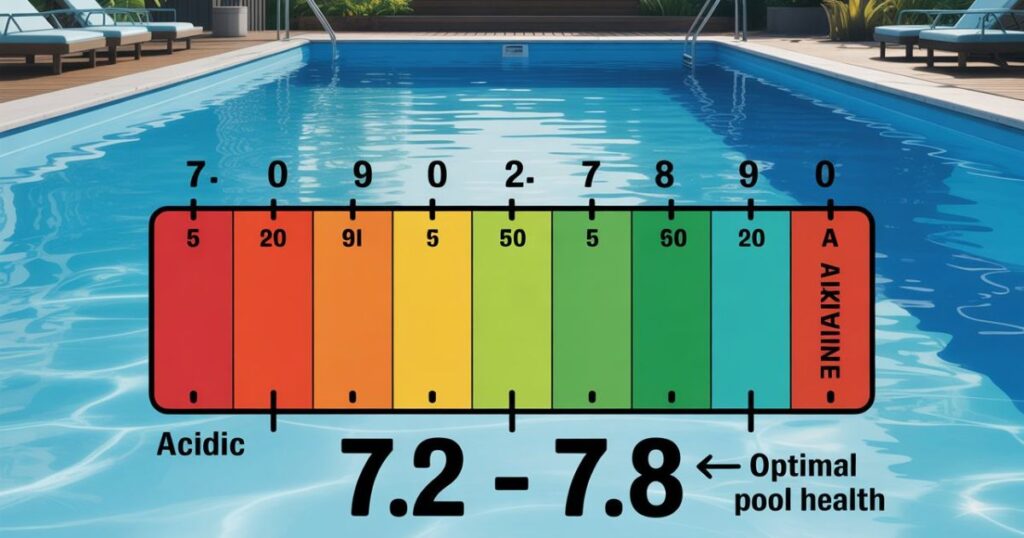
The ideal pool pH is 7.2 to 7.8. Staying in this range ensures chlorine effectiveness is high and cloudy pool water is minimized. Water outside this range is harmful for swimmers and pool surfaces.
Total alkalinity in pool acts as a buffer, stabilizing pH and preventing rapid swings. If alkalinity is too low, pH drops in pool easily, and if too high, pH rises in pool quickly. Balancing alkalinity is key to maintaining ideal pool pH.
Testing and adjusting water with a pH reducer for pool, such as sodium bisulfate for pool or muriatic acid for pool, ensures water stays within safe limits. Regular pool water testing allows proactive management.
Signs That Your Pool pH is Too High
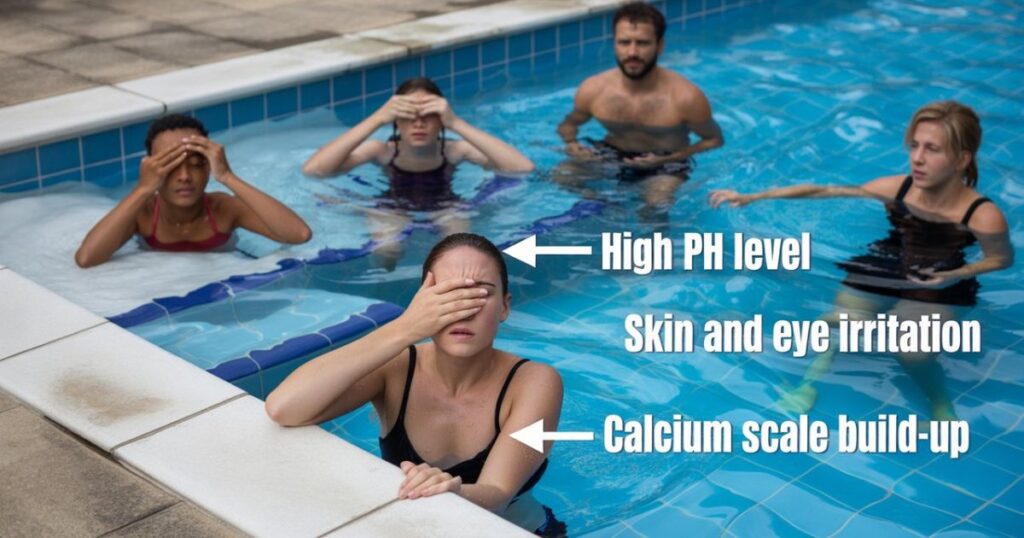
High pH in pool makes water alkaline, causing several noticeable issues. Swimmers may experience skin and eye irritation, and chlorine effectiveness drops significantly. Pool water may appear cloudy pool water due to mineral precipitation.
Another sign is calcium scale build-up on pool walls, ladders, and surfaces. Pool chemical dosing becomes less effective, as high pH prevents chlorine from sanitizing water efficiently.
Visual cues such as film on water, rough textures on pool surfaces, or frequent algae outbreaks indicate a pH rises in pool problem. Using a pH test kit for pool confirms high readings before taking corrective action.
Signs That Your Pool pH is Too Low
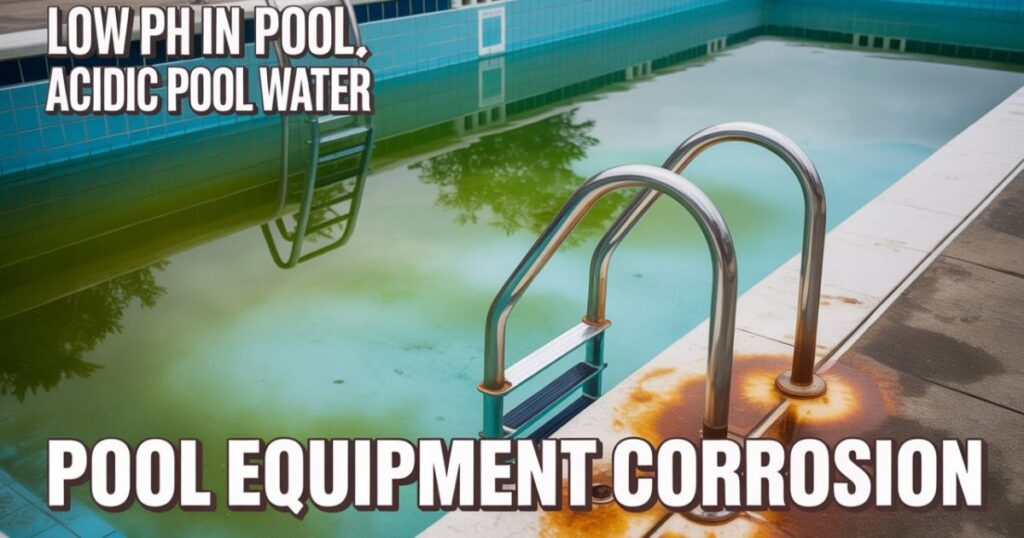
Low pH results in acidic pool water, which corrodes metal fittings, damages plaster, and etches tiles. Swimmers often complain about skin and eye irritation, red eyes, or dry skin after swimming.
Pools with pH drops in pool require more chlorine to maintain sanitation, increasing chemical costs. The water may appear clearer, but corrosion and pool equipment corrosion happen silently over time.
A strong chlorine smell often signals low pH in pool, as acidic water accelerates chlorine activity. Total alkalinity in pool should always be checked first, as low alkalinity often causes low pH.
How Often Should You Test Pool pH?
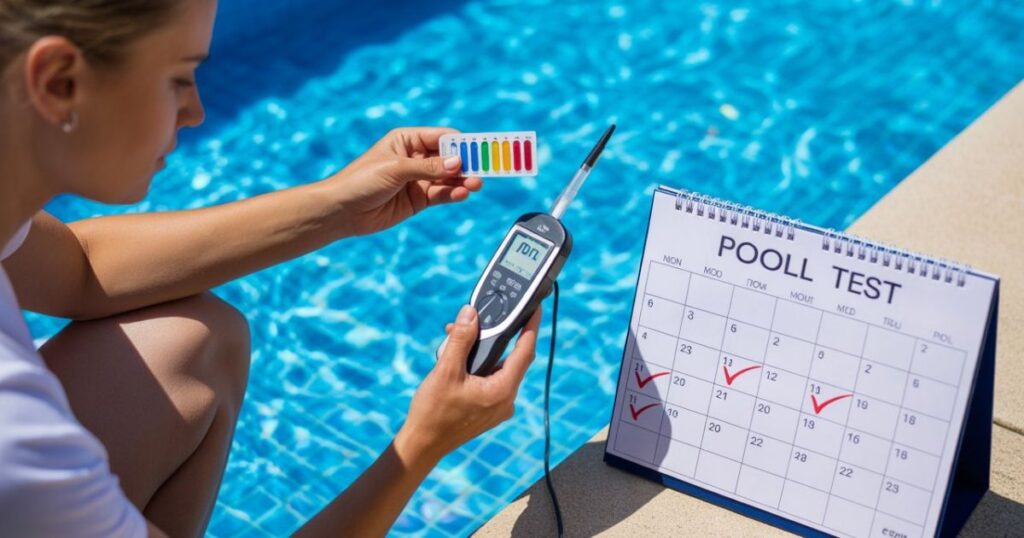
Testing is critical for balancing pool pH. Home pools should test pH levels regularly, ideally twice a week, or after heavy rain, pool parties, or chemical dosing. Regular testing prevents pH fluctuation in swimming pool.
Automated systems can monitor pH continuously, but manual checks with a pH meter for pool or pH test kit for pool provide confirmation. Data tracking helps identify trends like pH rises in pool due to high mineral content in water.
Failing to test can result in unnoticed high pH in pool or low pH in pool, leading to cloudy pool water, reduced chlorine effectiveness, and expensive repairs. Proper pool maintenance routine relies on frequent monitoring.
How to Test Pool pH Accurately
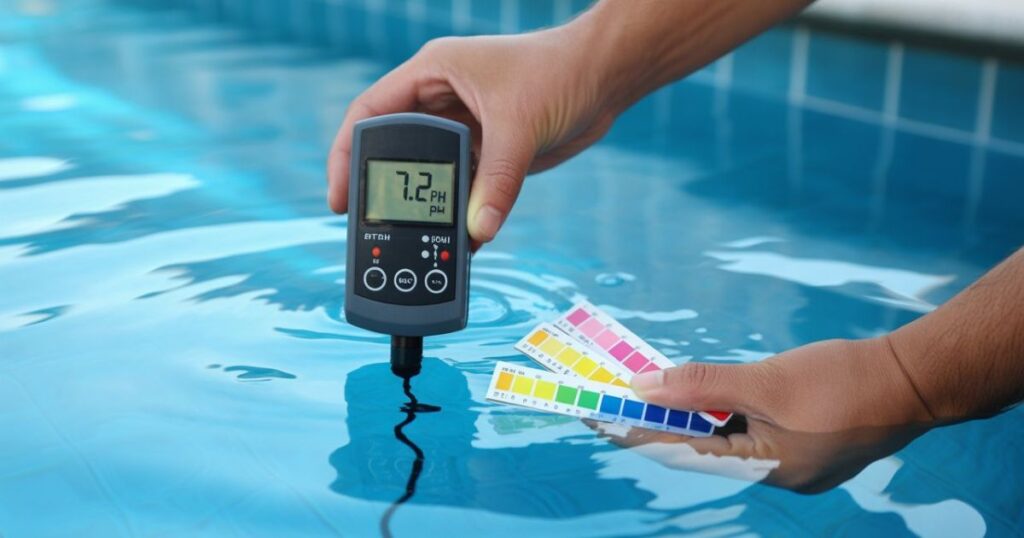
Accurate testing starts with pool water testing using a pH meter for pool or pH test kit for pool. Collect water from elbow depth, not surface, to avoid debris contamination.
Calibrate meters before use to ensure readings are correct. Test strips must be compared immediately with the color chart to prevent false readings. Accurate testing ensures proper pool chemical dosing and helps maintain proper pool pH.
Retesting after adding a pH reducer for pool is essential. Proper monitoring prevents pH fluctuation in swimming pool and helps maintain ideal pH range 7.2 to 7.8, keeping water safe and clear.
Common Causes of High Pool pH
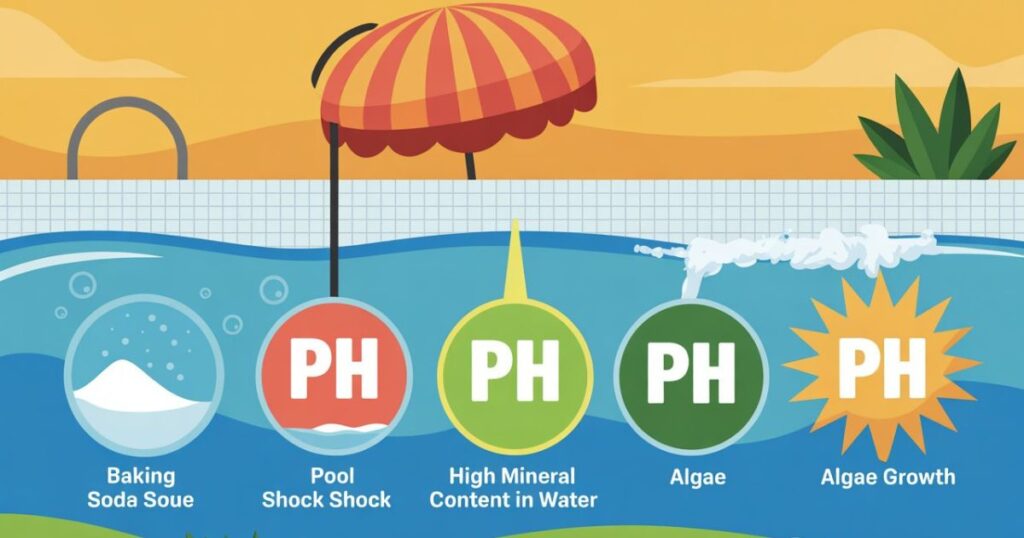
High pH in pool happens from multiple sources. Excessive baking soda affecting pool pH, frequent pool shock effects on pH, and high mineral content in water are common causes. Algae growth removes CO₂, raising water alkalinity and pH.
Sunlight and temperature changes increase pH rises in pool, while overuse of sodium bisulfate for pool or chlorine can also spike pH. Ignoring high pH leads to cloudy pool water, skin and eye irritation, and calcium scale build-up.
Regular pool water testing and proper pool chemical dosing help correct these issues. Using a pH reducer for pool allows precise adjustments to lower pH safely.
Common Causes of Low Pool pH
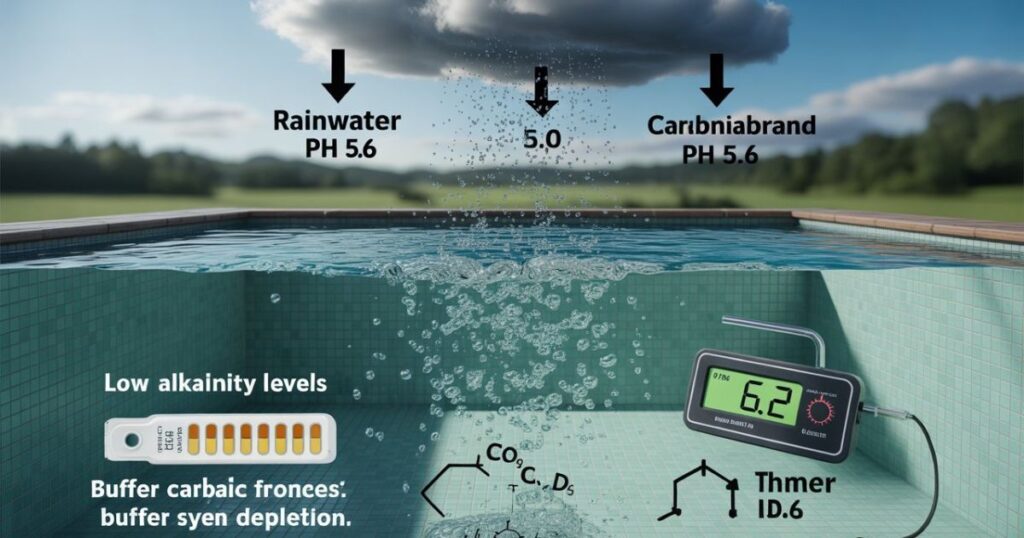
Low pH in pool often occurs when too much muriatic acid for pool is added or total alkalinity in pool is low. Rainwater with acidic content or poor circulation accelerates pH drops in pool.
Acidic water can damage surfaces, corrode metals, and irritate swimmers. Frequent testing and careful chemical additions prevent sudden swings in pH. Maintaining ideal pool pH ensures chemical balance and safe swimming.
Adding alkalinity buffers first helps adjust alkalinity before pH, creating stability. This prevents rapid swings, protects pool surfaces, and improves chlorine effectiveness.
Problems Caused by High or Low pH
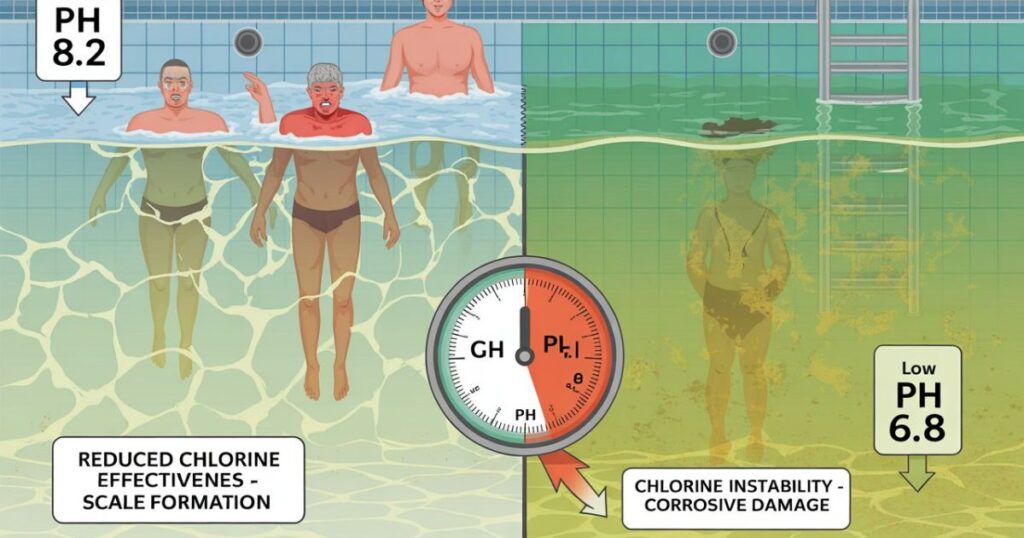
Incorrect pool pH levels affect swimmers, surfaces, and chemicals. High pH in pool reduces chlorine effectiveness, creates cloudy pool water, and promotes calcium scale build-up. Swimmers experience skin and eye irritation, and equipment faces pool equipment corrosion.
Low pH in pool is equally damaging. Acidic pool water corrodes metal fittings, damages plaster, and accelerates chemical degradation. Both extremes require corrective action, including pool chemical dosing with sodium bisulfate for pool or muriatic acid for pool.
Maintaining ideal pool pH with regular pool water testing ensures safe, clear, and balanced water. A proper pool maintenance routine reduces chemical costs and keeps swimmers comfortable.
Step-by-Step Guide: How to Lower pH in Swimming Pool
Lowering swimming pool pH starts with accurate pool water testing. First, use a pH meter for pool or a pH test kit for pool to determine the exact level. Knowing whether pH rises in pool or pH drops in pool helps in selecting the right corrective chemical. Adjustments are only safe after understanding the total alkalinity in pool, because alkalinity stabilizes water pH and prevents sudden swings.
Next, calculate the correct acid dosage using pool volume, current pH, and alkalinity readings. Online pool calculators simplify the math, but manual calculation ensures precision. Using too much sodium bisulfate for pool or muriatic acid for pool can create acidic pool water, causing skin and eye irritation and pool equipment corrosion.
Once the dosage is determined, slowly add the chemical to the pool. Always wear protective gear for handling chemicals, pour the acid carefully, and preferably pour acid near return jets to distribute it evenly. Circulate water using the pump for at least 4–6 hours to ensure proper mixing, which helps lower pH safely.
Finally, retest pH after treatment to confirm water has reached the ideal pH range 7.2 to 7.8. If necessary, repeat the process in smaller doses. Correct application prevents pH fluctuation in swimming pool, keeps water clear, and maintains chlorine effectiveness.
Chemicals Used to Reduce Pool pH
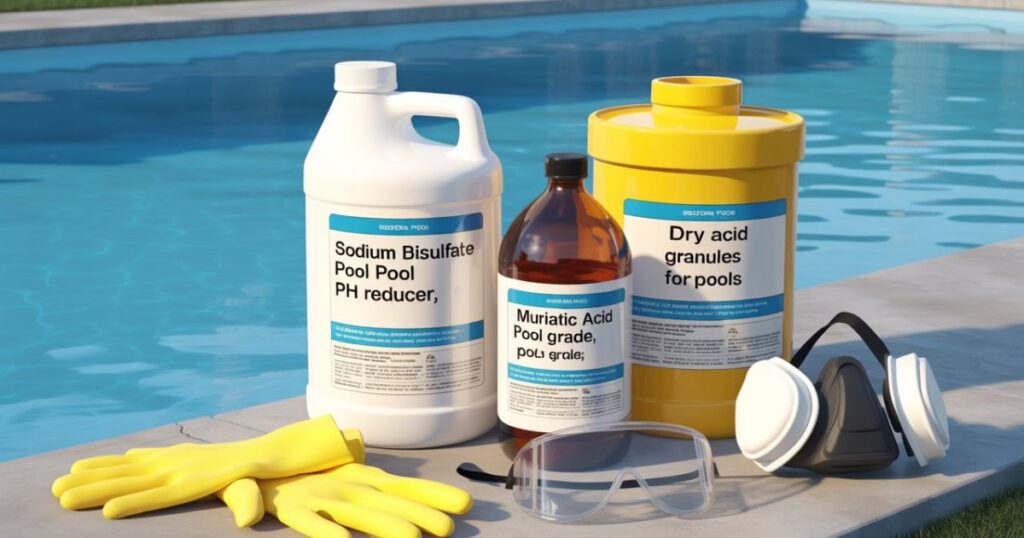
Sodium bisulfate for pool, also known as dry acid for pool, is a granular chemical used to lower pH safely. It dissolves quickly, is safer to store than liquid acids, and allows precise control over pool chemical dosing. It’s ideal for small adjustments or pools with moderate high pH in pool issues.
Muriatic acid for pool, also called hydrochloric acid for pool, is a strong liquid acid that rapidly reduces pool pH levels. It works well in large pools or when pH spikes dramatically. Care must be taken to wear protective gear for handling chemicals and to avoid direct contact with surfaces or swimmers.
Both chemicals interact with total alkalinity in pool. Overuse can drop alkalinity and destabilize pH, so always adjust alkalinity before pH. Using either chemical correctly prevents cloudy pool water, calcium scale build-up, and pool equipment corrosion, while helping to maintain proper pool pH.
How to Calculate the Correct Amount of Acid
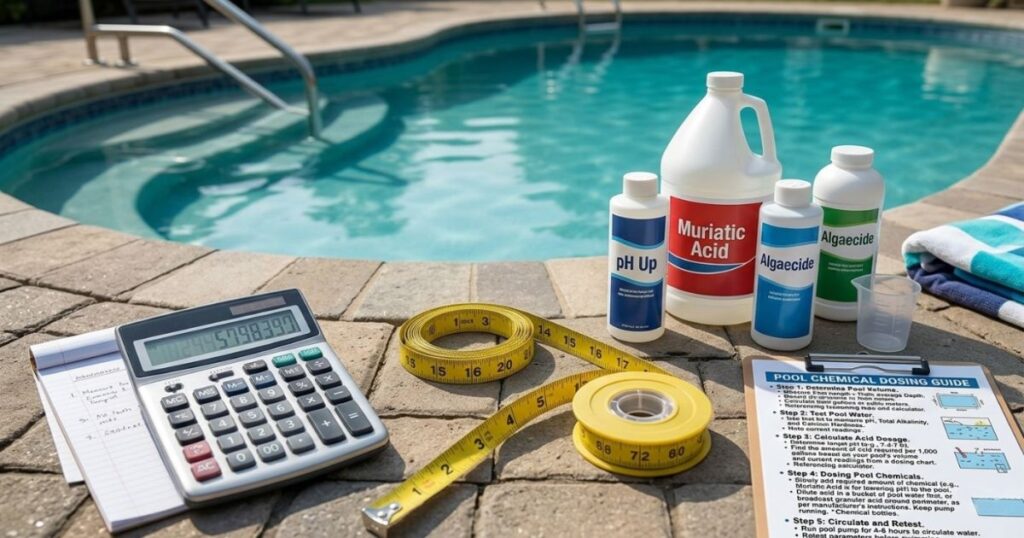
Calculating acid dosage requires knowing the pool volume, current pool pH levels, and total alkalinity in pool. For instance, a 10,000-gallon pool needing a 0.2 pH drop might require 12 ounces of muriatic acid for pool or 7 ounces of sodium bisulfate for pool.
Equations differ for round pools versus rectangular pools. For rectangular pools: multiply length × width × average depth × 7.5. For round pools: multiply diameter × diameter × average depth × 5.9. These calculations help lower pH safely without overshooting and creating acidic pool water.
After calculating, always add only 75% of the acid first, then retest. This prevents pH drops in pool from going too far. Pool water testing after dosing ensures chemical balance is maintained.
Safe Ways to Add Acid to Your Pool
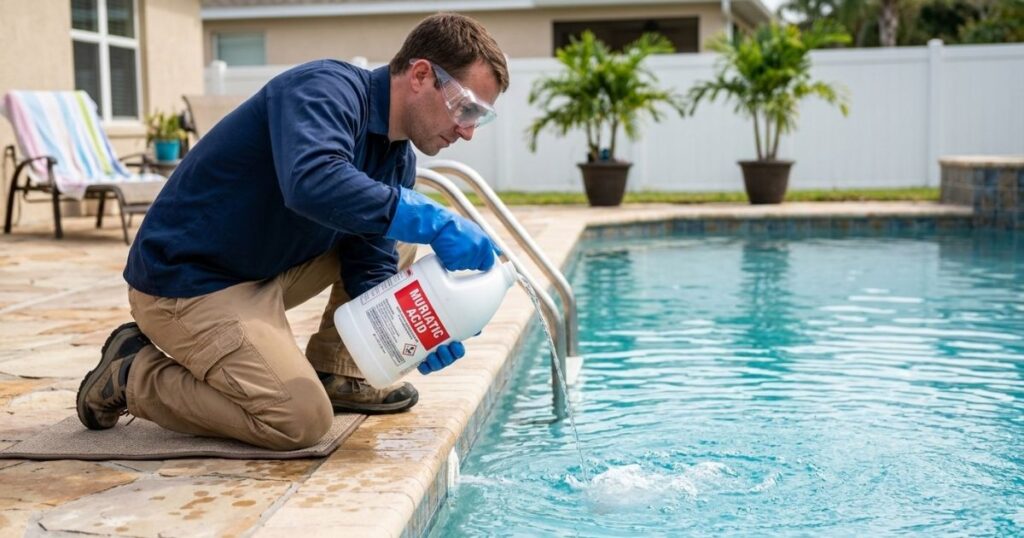
Safety is critical when adding muriatic acid for pool or sodium bisulfate for pool. Always wear protective gear for handling chemicals, including gloves, goggles, and long sleeves. Never mix acids with chlorine or other pool chemicals, as toxic fumes may form.
Dissolve sodium bisulfate for pool in a bucket before pouring into the water, while muriatic acid for pool can be poured slowly, preferably near return jets. Circulating the water after dosing helps acids spread evenly, preventing localized low pH zones.
After treatment, wait 15–20 minutes, then retest pH after treatment to ensure water has reached the ideal pH range 7.2 to 7.8. Proper timing avoids pH fluctuation in swimming pool and ensures swimmers remain safe from skin and eye irritation.
Natural Methods to Lower Pool pH
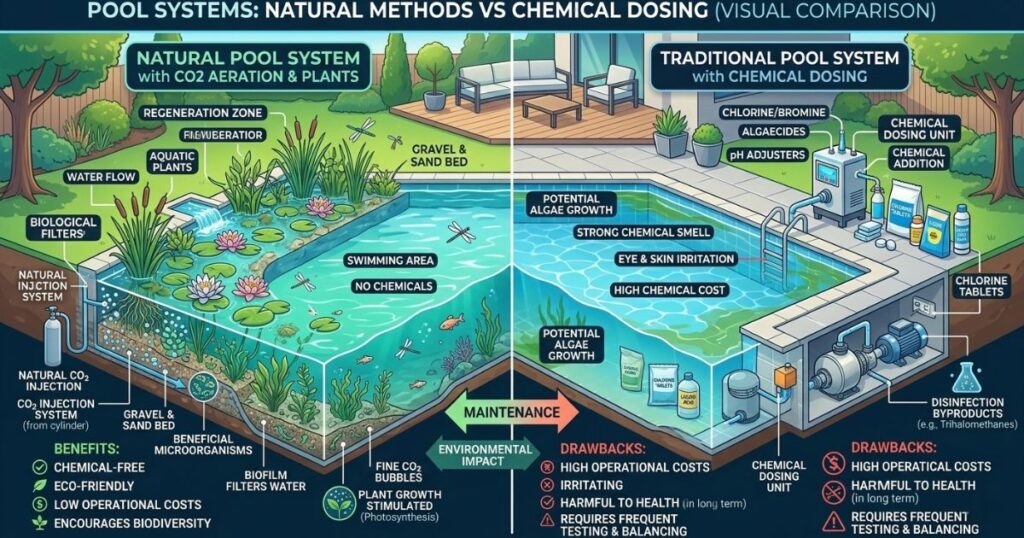
While chemical dosing is the fastest method, some natural approaches can help stabilize swimming pool pH. Aeration can reduce high pH in pool by releasing dissolved CO₂, slightly acidifying the water over time. Adding peat moss or CO₂ injection systems also lowers pH naturally.
Rainwater can sometimes reduce pH rises in pool, but it can bring impurities. Proper pool water testing is still needed. Certain minerals in water sources influence pH, so knowing high mineral content in water helps manage pool chemistry without heavy chemicals.
Natural methods are slower, so they are best for minor adjustments or pools with minor pH fluctuation in swimming pool. Combining chemical and natural methods ensures safe, clear, and balanced water.
The Role of Alkalinity in Pool pH
Total alkalinity in pool acts as a buffer to stabilize swimming pool pH. High alkalinity prevents rapid pH drops in pool, while low alkalinity allows pH rises in pool with minimal triggers. Maintaining proper alkalinity reduces pH fluctuation in swimming pool.
Without adequate alkalinity, any addition of sodium bisulfate for pool or muriatic acid for pool can swing pH dramatically. Correctly balancing alkalinity helps maintain ideal pool pH and ensures chlorine effectiveness.
Measuring alkalinity along with pH during pool water testing provides complete insights into pool water chemistry. Adjusting alkalinity first allows safer lower pH safely interventions.
Balancing Alkalinity While Lowering pH
When adding acids to lower pH safely, alkalinity drops. Balancing it prevents new pH problems. For low alkalinity, add baking soda to restore the proper range, which supports ideal pool pH.
Monitoring total alkalinity in pool ensures pH doesn’t fluctuate excessively. Correct balancing prevents cloudy pool water and maintains chlorine effectiveness. Without alkalinity correction, repeated pH swings may occur, increasing pool chemical dosing.
Combining alkalinity adjustment with pH reducer for pool creates stable water that meets ideal pH range 7.2 to 7.8 and keeps swimming pool maintenance tips simple for long-term care.
Common Mistakes When Lowering Pool pH
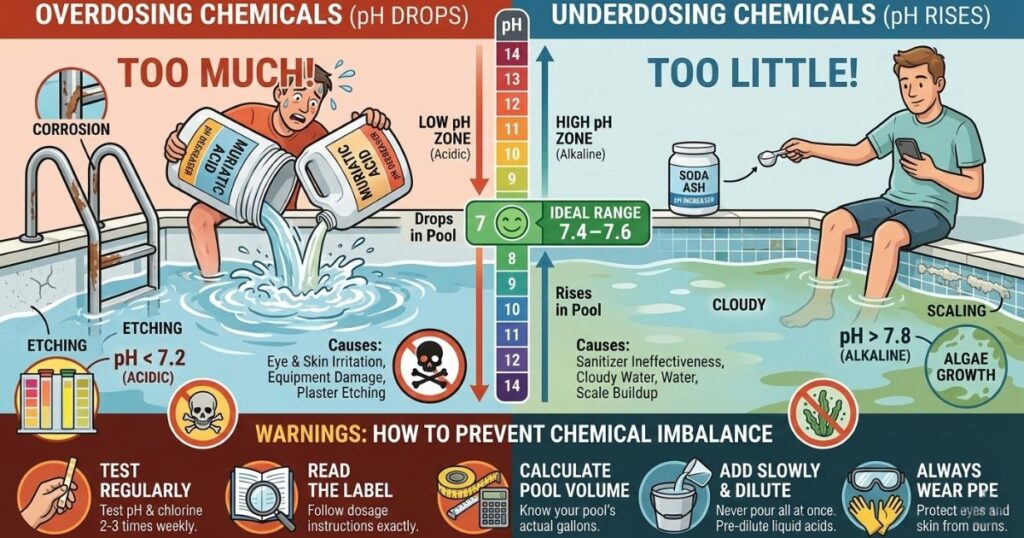
A frequent error is overdosing chemicals. Adding too much muriatic acid for pool or sodium bisulfate for pool leads to acidic pool water and skin and eye irritation. Incorrect pool chemical dosing can destabilize total alkalinity in pool.
Neglecting proper mixing and failing to circulate pool water after dosing can create low pH zones near return jets or walls. Skipping retest pH after treatment leads to unnoticed swings and pH fluctuation in swimming pool.
Using rainwater or minerals without considering high mineral content in water may also destabilize pH. Avoiding these mistakes helps maintain proper pool pH efficiently.
Tips to Keep Pool pH Stable Year-Round
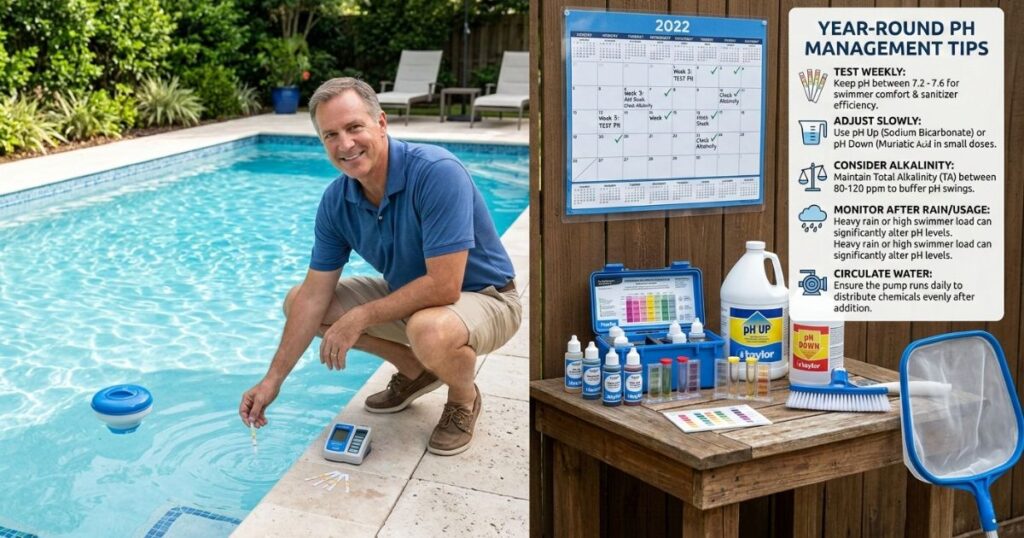
Regular pool water testing is essential. Always test pH levels regularly to prevent pH fluctuation in swimming pool. Keeping total alkalinity in pool within correct limits reduces chemical shocks and prevents cloudy pool water.
Avoid adding excessive baking soda affecting pool pH, and monitor pool shock effects on pH after maintenance. Maintaining a consistent pool maintenance routine helps reduce pH rises in pool and pH drops in pool, keeping water in ideal pH range 7.2 to 7.8.
Using FROG pool care products can simplify maintenance, reduce chlorine usage, and help maintain crystal clear water all season. Proper chemical management ensures balanced, safe, and inviting water.
Troubleshooting Persistent High pH Problems
If high pH in pool persists despite proper dosing, check water source for high mineral content in water. Minerals like calcium and bicarbonate naturally raise swimming pool pH, causing repeated pH rises in pool.
Aeration, careful pool chemical dosing, and occasionally pH reducer for pool like sodium bisulfate for pool or muriatic acid for pool are needed. Maintaining total alkalinity in pool helps prevent spikes and ensures chlorine effectiveness.
Persistent high pH also signals overuse of pool shock effects on pH or improper pool maintenance routine. Proper testing, corrective dosing, and monitoring allow pool owners to manage pool pH year-round safely.
Conclusion
Maintaining ideal pool pH is crucial for safe, comfortable, and crystal-clear swimming water. By regularly testing pH levels, using a reliable pH meter for pool, and applying the right pH reducer for pool such as sodium bisulfate for pool or muriatic acid for pool, you can prevent pH fluctuation in swimming pool and protect swimmers from skin and eye irritation. Properly adjusting alkalinity before pH ensures long-term stability and reduces cloudy pool water, calcium scale build-up, and pool equipment corrosion.
Combining chemical management with smart swimming pool maintenance tips and natural methods allows you to lower pH safely, manage pool pH year-round, and maintain chlorine effectiveness. With consistent monitoring and thoughtful dosing, your pool will remain balanced, inviting, and safe for all users while requiring less frequent chemical intervention. Using innovative solutions like FROG pool care products can simplify maintenance, reduce chlorine usage, and help maintain crystal clear water all season long. Proper attention to pool water chemistry ultimately ensures a healthy, enjoyable swimming experience every time.
FAQs
Frequently Asked Questions (FAQs)
1. How do I lower the pH in my pool fast?
To lower pH quickly, use a pH reducer for pool such as sodium bisulfate for pool or muriatic acid for pool, follow a step-by-step guide to lower pH, and circulate pool water after dosing to ensure even distribution.
2. What happens if pool pH is too high?
High pH in pool can reduce chlorine effectiveness, cause cloudy pool water, lead to skin and eye irritation, and accelerate pool equipment corrosion if left unbalanced.
3. How can I lower the pH in my water quickly?
Adding dry acid for pool or hydrochloric acid for pool near return jets while using protective gear for handling chemicals allows for a safe and fast pH reduction.
4. Does shocking a pool raise pH?
Yes, pool shock effects on pH can temporarily increase pH levels, especially when using calcium hypochlorite, which can also cause pH rises in pool.
5. What lowers pH but not alkalinity?
Using carbon dioxide or aeration can lower pH safely while leaving total alkalinity in pool largely unaffected, making it ideal for precise adjustments.
Meta description :
Learn how to lower pH in swimming pool effectively to maintain balanced water, prevent irritation, and keep your pool crystal clear.

Welcome to PoolProGuide! I’m John Phillips is a Certified Pool Operator with 12+ years of experience specializing in advanced water chemistry and DIY pool care solutions across the USA.