
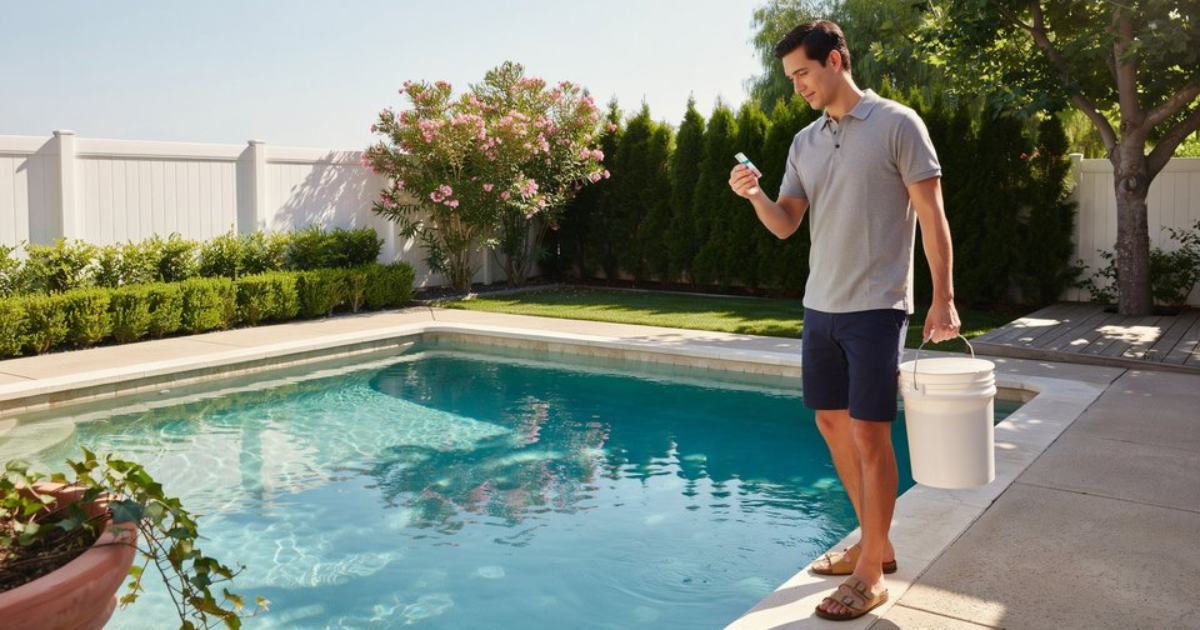

high pool alkalinity
How to lower alkalinity in a pool, without crashing your pH in the process, comes down to one chemical, one dosing limit, and one step most guides never mention. The chemical is acid. The limit is 20 ppm per session. The missing step is aeration. This guide gives you all three, plus the exact ounces-per-gallon dosing table pool pros use and the saltwater pool exception that catches most homeowners off guard.
How to lower alkalinity in a pool, without crashing your pH in the process, comes down to one chemical, one dosing limit, and one step most guides never mention. The chemical is acid. The limit is 20 ppm per session. The missing step is aeration. This guide gives you all three, plus the exact ounces-per-gallon dosing table pool pros use and the saltwater pool exception that catches most homeowners off guard.
This guide covers standard chlorine and saltwater residential pools. It does NOT address commercial aquatic facilities or pools with cyanuric acid levels above 80 ppm, those require a separate treatment protocol.
High alkalinity in a pool is fixed with acid. That’s the short answer. But the way you add that acid, how much, how fast, and what you do afterward, is the difference between a balanced pool and a pH crash that etches your plaster or bleaches your liner. This guide gives you the exact steps, the real dosing numbers, and the one thing every other guide skips: how to bring your pH back up after treatment without undoing the alkalinity reduction you just worked for.
How to Lower Alkalinity in a Pool — And Why It Affects pH
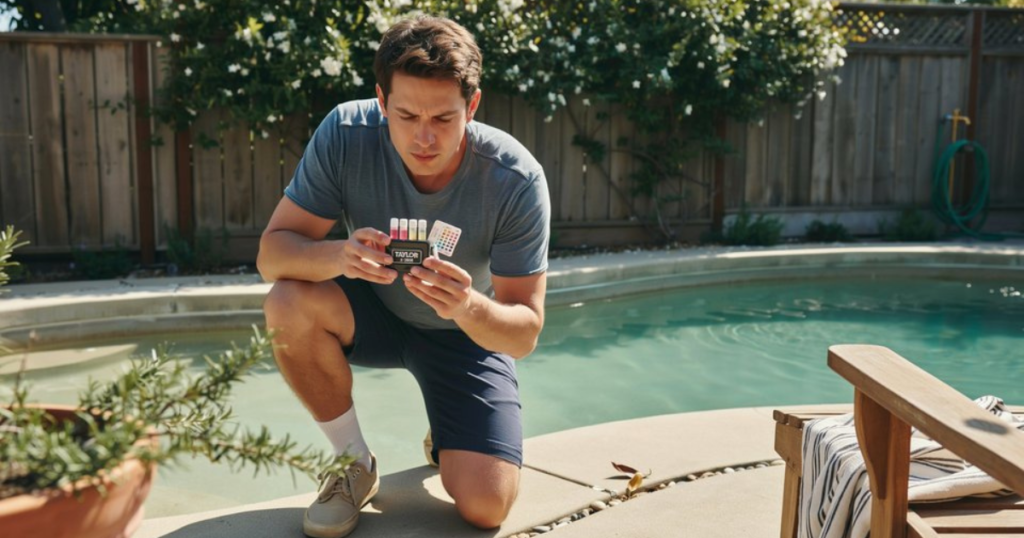
Total alkalinity (TA) is your pool water’s ability to resist changes in pH, it’s a chemical buffer. The ideal range for most pools is 80–120 ppm. When TA climbs above 120 ppm, that buffer becomes so strong that pH locks up and won’t budge even when you add acid. The result: cloudy water, scale buildup on tile and equipment, and chlorine that works at maybe 60% efficiency because high pH suppresses it.
Lowering total alkalinity in a pool means neutralizing that excess buffer, specifically the bicarbonate ions that make up most of your TA — by introducing hydrogen ions via acid. Those hydrogen ions convert bicarbonate into carbonic acid, which then offgasses as CO2. Less bicarbonate = lower TA. That’s the whole chemistry, and you don’t need to memorize it, you just need to know it confirms why only acid works here. Baking soda, shock, and clarifier do not lower alkalinity. They never will.
According to the CDC’s 2024 Model Aquatic Health Code (5th Edition), proper water chemistry maintenance, including alkalinity, pH, and disinfectant balance, is the foundational standard for preventing illness and injury in recreational water venues, including residential pools. Getting TA right isn’t optional maintenance. It’s the base layer everything else depends on.
The pH Crash Risk — Why Most People Get This Wrong
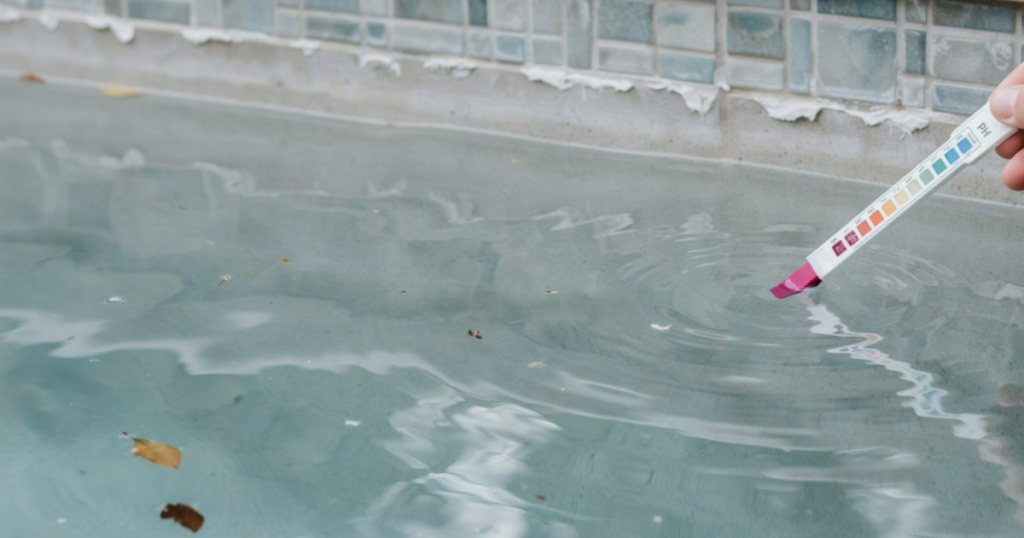
Here’s the thing: acid lowers both alkalinity and pH at the same time. That’s not a flaw, it’s just chemistry. The problem is when people add too much acid at once trying to fix a large TA spike, and the pH doesn’t just drop, it falls off a cliff.
Pool pros call this a pH crash. When pH drops below 7.0, the water turns corrosive. Plaster pits. Vinyl liners bleach and develop stress cracks. Metal fittings, pump seals, and heater cores corrode faster than you’d expect. Pool owners who’ve tried to fix high alkalinity without guidance often report discovering surface damage weeks later, not realizing the cause was an acid overdose they thought was fine because “the water looked clearer.”
The fix is not to avoid acid. The fix is to use it in controlled doses, no more than a 20 ppm TA reduction per treatment session, and to use aeration afterward to recover pH without touching alkalinity again.
Or maybe I should say it this way: acid is your tool, patience is your method.
Muriatic Acid vs. Sodium Bisulfate — Which One Should You Use
Both chemicals lower pool alkalinity. They work through the same mechanism. Choosing between them comes down to your comfort level and how quickly you need results.
Quick Comparison
| Option | Best For | Key Benefit | Limitation |
|---|---|---|---|
| Muriatic acid (31.45% HCl) | Faster correction, larger pools | Works within hours, lower cost per dose | Fumes are harsh; requires careful handling and dilution |
| Sodium bisulfate (dry acid) | Beginners, smaller pools | Granular, easier to measure and store | Slower acting; takes longer to circulate fully |
| White vinegar | Not recommended for pools | None at pool scale | Impractical — you’d need gallons per 10 ppm of correction |
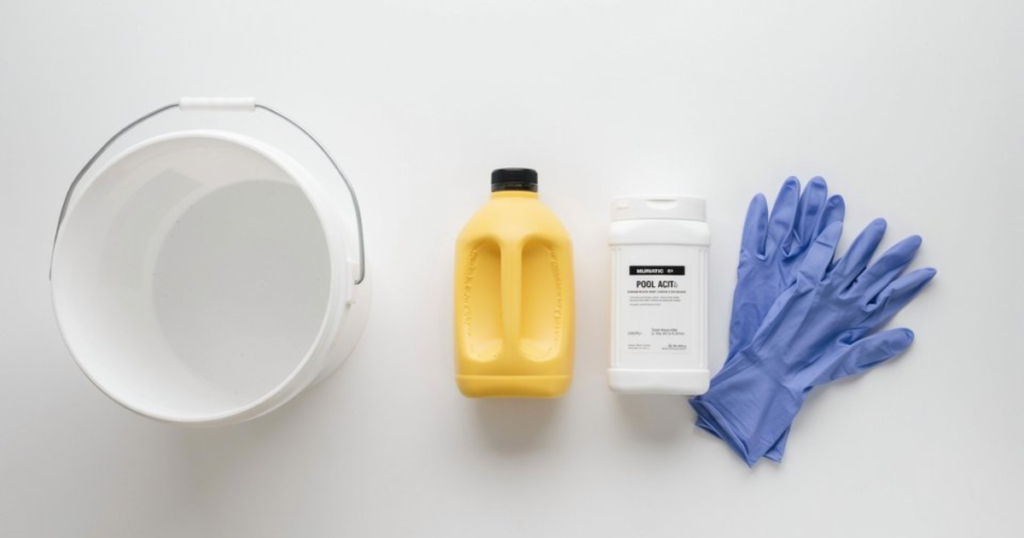
Muriatic acid (hydrochloric acid at 31.45% concentration) is what pool professionals use. It’s fast, cost-effective, and widely available. The tradeoff is that the fumes are genuinely irritating, always add it to a 5-gallon bucket of pool water first (never pour the concentrate directly from the jug into the pool), wear chemical-resistant gloves, and work upwind.
Sodium bisulfate (dry acid) is granular, easier to store, and generates fewer fumes. Pool owners who are newer to water chemistry often prefer it for that reason. It’s slower to dissolve and circulate, so you’ll want to retest at the 6-hour mark rather than 4.
Look, if you’ve never handled pool acid before, start with sodium bisulfate. It’s more forgiving. Once you’re comfortable with the process, muriatic acid is the professional’s choice for a reason.
- ✓ Balanced alkalinity acts as your pool’s chemistry stabilizer, preventing constant pH swings and costly maintenance headaches.
Step-by-Step: How to Lower Pool Alkalinity Without Affecting pH
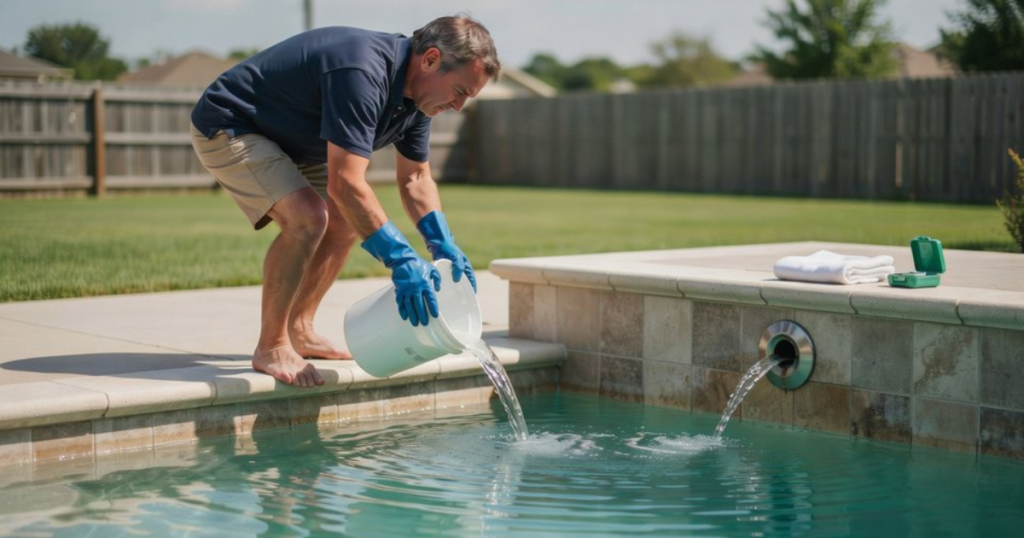
To lower alkalinity in a pool safely, follow these steps:
- Test your water with a reliable kit: Taylor K-2006 or equivalent drop-test kit.
- Calculate your dose using the table below based on pool volume and target ppm drop.
- Pre-dilute acid in a 5-gallon bucket of pool water before adding.
- Pour the diluted acid slowly in front of a return jet with the pump running.
- Run the pump for at least 30 minutes to circulate fully.
- Wait 4–8 hours before allowing swimmers back in the pool.
- Retest TA and pH before deciding whether a second dose is needed.
- If pH dropped below 7.2, aerate, don’t add pH increaser, to recover it.
Maximum reduction per session: 20 ppm. Do not try to fix a 60 ppm overage in one day.
Muriatic Acid Dosing Table (31.45% concentration)
| Target TA Drop | 10,000 gal pool | 15,000 gal pool | 20,000 gal pool |
|---|---|---|---|
| 10 ppm | 10 fl oz | 15 fl oz | 20 fl oz |
| 20 ppm | 20 fl oz | 30 fl oz | 40 fl oz |
For sodium bisulfate, use approximately 3/4 lb per 10,000 gallons per 10 ppm reduction. Always verify against your specific product label.
how to lower alkalinity in a pool
For sodium bisulfate, use approximately 3/4 lb per 10,000 gallons per 10 ppm reduction. Always verify against your specific product label.
Quick note: these are starting-point doses based on standard tap water. Pools with high cyanuric acid (CYA) or high calcium hardness may require slightly different treatment, test first, dose second.
How to Use Aeration to Recover pH Without Raising Alkalinity Again
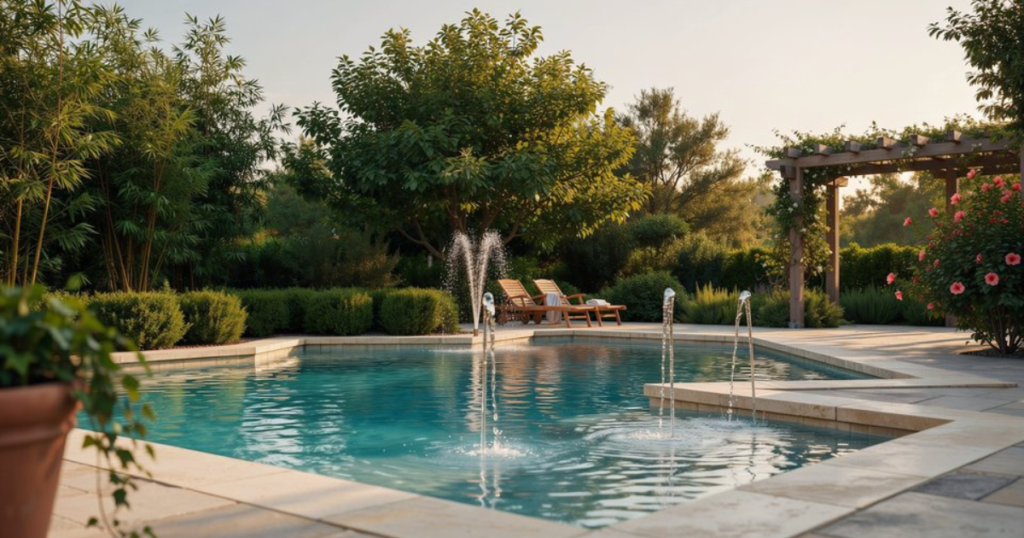
This is what most guides skip entirely, and it’s the key to the whole process.
After you add acid, your TA drops. So does your pH, usually into the 7.0–7.2 range depending on how much acid you used. You need pH back at 7.4–7.6. The instinct is to add a pH increaser (soda ash / sodium carbonate). Don’t. Soda ash raises pH but also raises alkalinity, which partially undoes your correction.
Aeration raises pH without touching alkalinity. CO2 offgasses from the water surface when you increase water movement, which nudges pH upward through natural chemistry. Run your pool’s water features, fountains, waterfalls, deck jets, for 8–12 hours after an acid treatment. No water features? Point a return jet upward to agitate the surface, or run a submersible pump pointed at an angle. It’s slower than chemicals but it doesn’t cost you anything and won’t create a new imbalance.
I’ve seen conflicting guidance on how long aeration takes to raise pH, some sources say 6 hours, others say 24 hours for a full recovery. My read is that it depends heavily on water temperature and surface area. Test at the 8-hour mark and again at 12 hours. If pH hasn’t moved by 12 hours, a small dose of soda ash (1 lb per 10,000 gallons) is acceptable, understanding it will nudge TA up by roughly 8–10 ppm.
The Saltwater Pool Exception Most Guides Don’t Mention
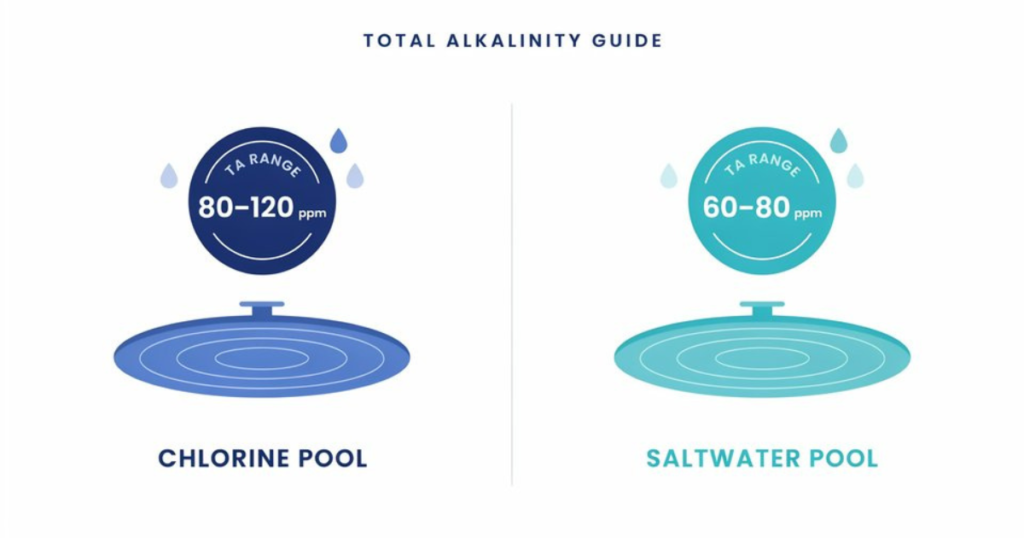
Standard advice says to keep TA between 80–120 ppm. That’s correct for chlorine pools. Saltwater pools are different.
Saltwater chlorine generators (SCGs) produce sodium hypochlorite at a naturally high pH, typically 8.0 or above. That means the water in a saltwater pool is constantly being pushed toward higher pH, which in turn drives up apparent alkalinity over time. Pool chemistry specialists who work with SCG systems generally recommend running TA at 60–80 ppm for saltwater pools, not 80–120 ppm. The lower TA gives the pH more room to drift before it requires correction, reducing the frequency of acid treatments overall.
Some experts argue that standard 80–120 ppm targets apply to all pools regardless of sanitization method. That’s valid if your pool’s pH stays stable on its own. But if you own a saltwater pool and your pH keeps climbing back above 7.8 within days of correcting it, the issue is almost certainly TA that’s too high for your system. Running at 70 ppm TA is not dangerous, it’s appropriate.
Common Questions About Lowering Pool Alkalinity
What’s the best way to lower alkalinity in a pool without lowering pH?
There’s no chemical method that lowers TA without affecting pH at all, acid does both. The practical solution is to lower TA with acid, then recover pH through aeration, which raises pH without touching alkalinity.
How do I know when my pool alkalinity is too high?
Test with a drop-test kit like the Taylor K-2006. Any reading above 120 ppm is high. Above 150 ppm, pH will be difficult to adjust and water will likely appear cloudy or have a scaling tendency.
Should I use muriatic acid or dry acid to lower alkalinity?
Muriatic acid works faster and costs less per dose, preferred by professionals. Dry acid (sodium bisulfate) is safer to handle and better for beginners. Both are effective; choose based on your comfort level with chemicals.
Why does my pool alkalinity keep going up after I correct it?
Common causes include high-alkalinity fill water from your tap, regular use of sodium bicarbonate (baking soda), cal-hypo shock, or — in saltwater pools, the naturally high pH output of the chlorine generator driving carbonate equilibrium upward.
When should I let swimmers back in after adding acid?
Wait a minimum of 30 minutes with the pump running after adding a diluted acid dose. For full safety, the recommended wait is 4–8 hours, especially after larger corrections. Retest pH and confirm it’s at 7.2 or above before anyone gets in.
Meta Description :
Lower alkalinity in a pool without crashing your pH, get the exact muriatic acid dosing table, safe swimmer wait times, and the saltwater pool exception most guides miss.
Thank you so much! This was very helpful. I was having trouble with cloudy water in an indoor endless pool. The pH was normal, I had trouble in my mind figuring out how to get the alkalinity down without disturbing the pH. Everything you said began to make so much good sense. I am in the process now and the water is clearing. Again, THANKS!
Hi Bruce, thanks for sharing your experience! It’s great to hear that your water is clearing up. Dealing with alkalinity in indoor pools can be tricky because of lower air exchange. Keep an eye on it for the next 24 hours, and feel free to reach out if you face any other issues.