
how to test pool water
Keeping your pool water balanced is one of the most important responsibilities of pool ownership. Most common pool problems, including algae growth, cloudy water, strong chlorine odors, and swimmer discomfort, can be traced back to poor or inconsistent water testing.
The good news is that testing pool water only takes a few minutes and can save you hundreds of dollars in chemicals, repairs, and professional treatments. In this guide, you’ll learn the best methods for testing pool water, how often to test, and which testing tools provide the most accurate results.
Here’s how to do it right, which method to use, when to test, how to read the results, and what most guides don’t tell you.
📌 KEY TAKEAWAYS
- ✓ Test strips = fastest but least accurate, especially for chlorine above 5 ppm
- ✓ DPD liquid test kit = professional standard, separates free chlorine from combined chlorine
- ✓ Photometers = most accurate but overkill for most residential pools
- ✓ Test free chlorine and pH every 2–3 days in summer, everything else weekly or monthly
- ✓ Never test near return jets, the skimmer, or in direct sunlight, all three produce false readings
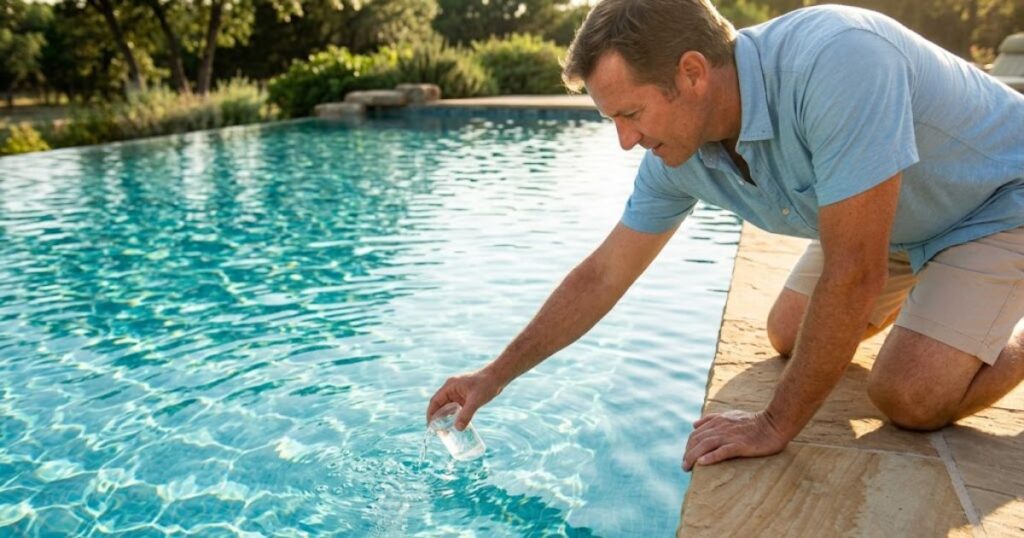
- ✓ Always collect water from mid-pool, elbow depth for an accurate sample
Why Testing Pool Water Matters
Regular pool water testing helps maintain proper sanitation, protects pool equipment, and ensures a safe swimming environment. Without accurate testing, pool owners often add unnecessary chemicals or fail to address problems before they become expensive.
To maintain healthy water, you should monitor these key pool chemistry levels
✓ Free Chlorine: 1–3 ppm
✓ Combined Chlorine: Below 0.5 ppm
✓ pH: 7.2–7.4
✓ Total Alkalinity: 80–120 ppm
✓ Cyanuric Acid (CYA): 30–50 ppm
✓ Calcium Hardness: 200–400 ppm
Each parameter plays a unique role in water balance and swimmer safety.
Pool Water Testing Methods Compared
There are three primary ways to test pool water:
- Pool Test Strips
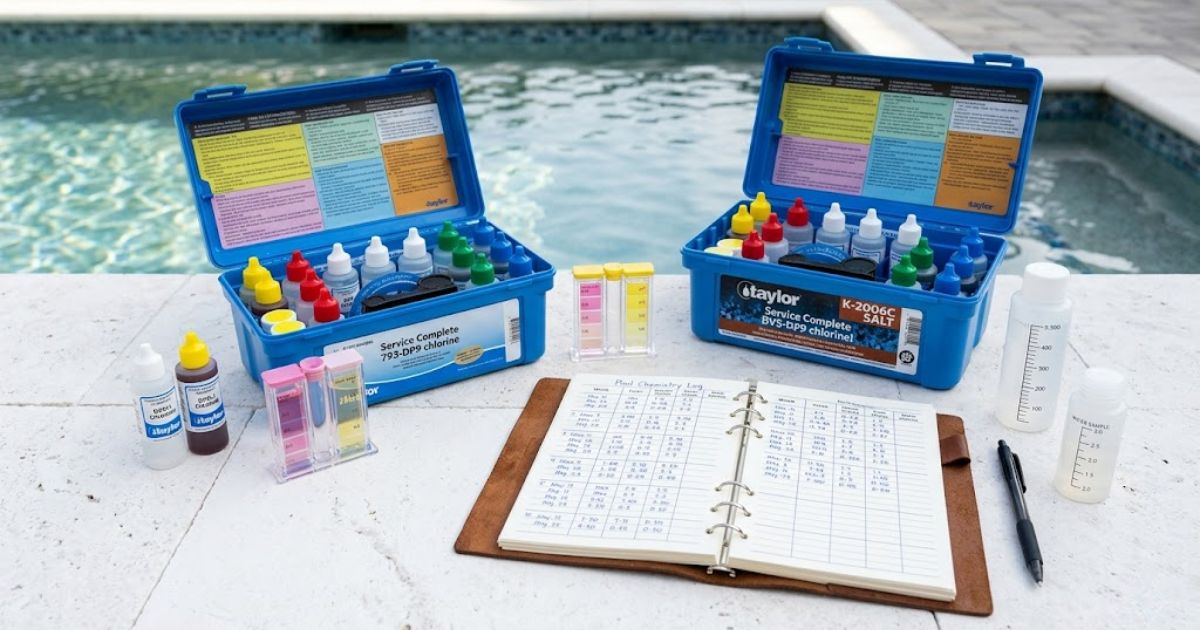
- DPD Liquid Test Kits
- Digital Photometers
Each method offers different levels of accuracy, convenience, and cost.
Quick Comparison Table
| Testing Method | Accuracy | Cost | Measures Free & Combined Chlorine Separately? | Best For |
|---|---|---|---|---|
| Test Strips | Moderate | $10–$20 | No | Quick routine checks |
| DPD Liquid Test Kits | High | $20–$50 | Yes | Regular pool maintenance |
| Digital Photometers | Very High | $100–$300+ | Yes | Professionals and advanced users |
Test Strips: Fast and Convenient
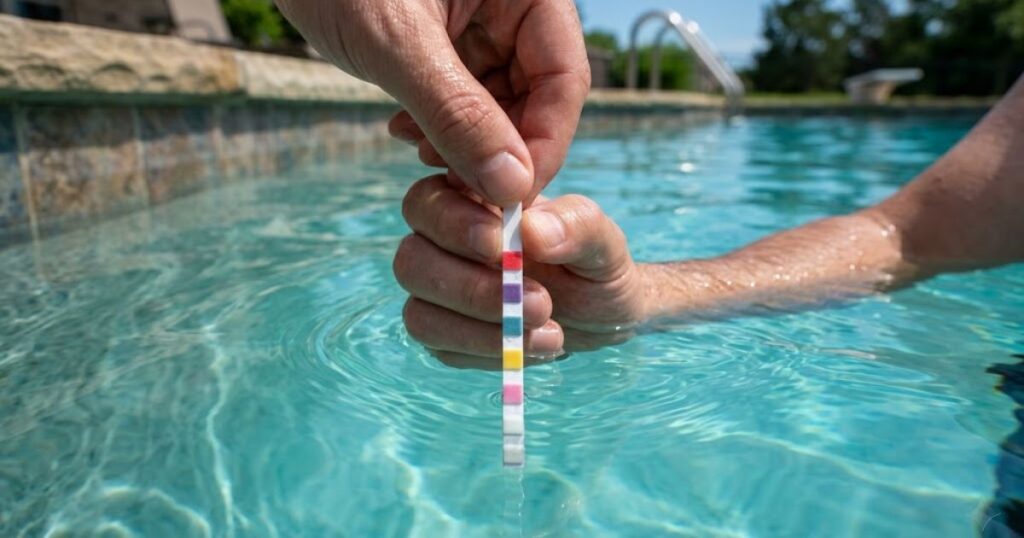
Pool test strips are the most popular testing option for homeowners because they are simple and quick to use.
Benefits of Test Strips
✓ Fast results in seconds
✓ Affordable and widely available
✓ Easy for beginners
✓ Suitable for routine monitoring
- ✓ Accurate pool testing is the foundation of every clear, safe, and trouble-free swimming pool.
Limitations
While convenient, test strips have accuracy limitations. They typically measure total chlorine rather than distinguishing between free chlorine and combined chlorine. This can make it difficult to identify chloramine buildup and other water quality issues.
Additionally, test strips can become unreliable when chlorine levels exceed 5 ppm, especially after shocking the pool.
How to Use Pool Test Strips Correctly
- Collect water from the middle of the pool.
- Dip the strip for one second.
- Hold it horizontally.
- Wait according to manufacturer instructions.
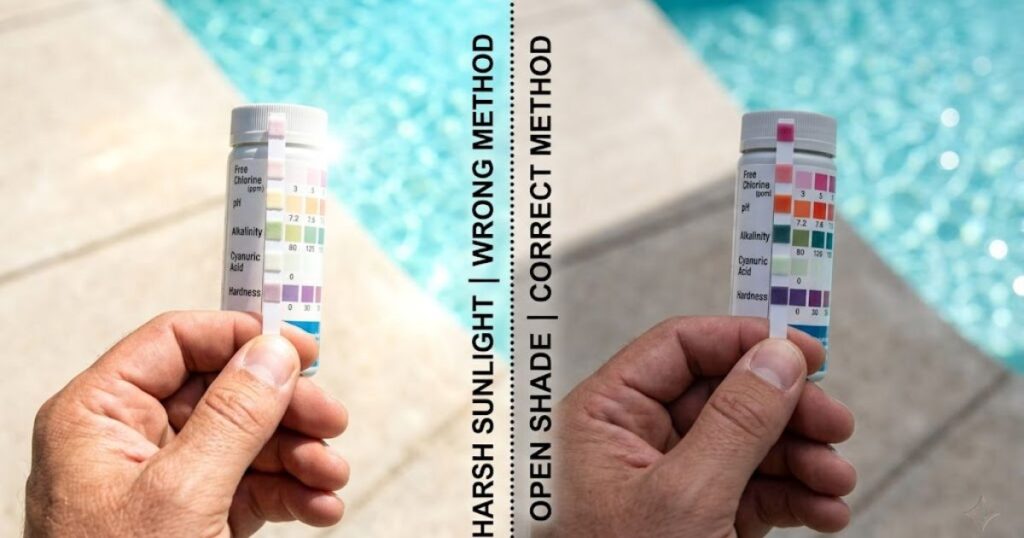
- Compare colors in shaded or indirect light.
For best results, avoid reading strips in direct sunlight.
DPD Liquid Test Kits: The Professional Standard
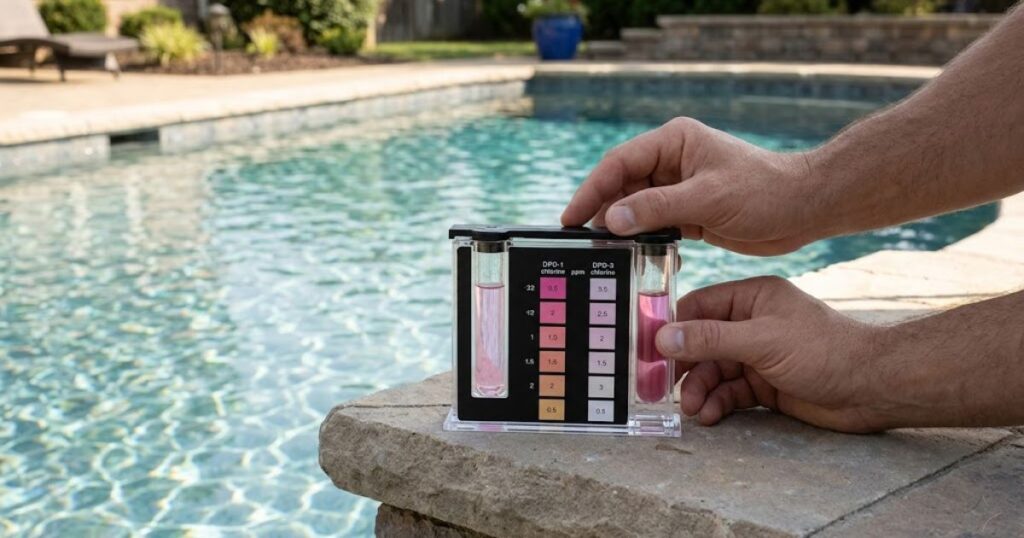
For homeowners who want more accurate readings, DPD liquid test kits are considered the gold standard.
Unlike test strips, DPD kits can separately measure:
✓ Free Chlorine
✓ Total Chlorine
✓ Combined Chlorine
This provides a much clearer picture of your pool’s sanitation level.
Advantages of DPD Test Kits
✓ Highly accurate readings
✓ Detect chloramine buildup
✓ Reliable for chlorine management
✓ Preferred by pool professionals
How DPD Testing Works
First, DPD-1 reagent measures free chlorine. Then DPD-3 reagent measures total chlorine. The difference between the two readings equals combined chlorine.
This information helps identify whether your pool needs shocking or additional treatment.
How to Perform a DPD Test
- Collect water from elbow depth.
- Fill the testing tube to the marked level.
- Add the recommended DPD reagent drops.
- Mix gently.
- Compare the color against the testing scale.
- Record the results.
For most residential pools, a DPD test kit provides the ideal balance of accuracy and affordability.
Digital Photometers: Maximum Accuracy
Digital photometers use light-based technology to analyze water chemistry. Instead of relying on color comparisons, these devices calculate chemical levels electronically.
Benefits of Photometers
✓ Extremely precise readings
✓ Eliminates human interpretation errors
✓ Measures multiple water parameters
✓ Professional-grade testing
Drawbacks
The primary disadvantage is cost. Most residential photometers range between $100 and $300 or more.
For average pool owners, the improved accuracy often does not justify the additional expense. However, they are valuable for indoor pools, commercial facilities, and pool service businesses.
How to Test Pool Water Properly
Accurate results depend on proper testing technique.
Follow these steps every time:
1. Collect Water Correctly
Take the sample from:
✓ The center of the pool
✓ Elbow depth below the surface
✓ Away from return jets
✓ Away from the skimmer
This ensures the sample represents the entire pool.
2. Test Key Parameters
Start with:
✓ Total Alkalinity
✓ pH
✓ Free Chlorine
✓ Combined Chlorine
Then check:
✓ Cyanuric Acid
✓ Calcium Hardness
3. Record Results
Maintaining a testing log helps identify trends before problems develop.
Tracking results over time often reveals issues long before they become visible.
How Often Should You Test Pool Water?
Consistent testing is essential for maintaining balanced water.
Summer Testing Schedule
| Parameter | Frequency |
| Free Chlorine | Every 2–3 days |
| pH | Every 2–3 days |
| Total Alkalinity | Weekly |
| Combined Chlorine | Weekly |
| Cyanuric Acid | Every 4–6 weeks |
| Calcium Hardness | Monthly |
Winter Testing Schedule
Pool chemistry changes more slowly during cooler months.
✓ Chlorine and pH: Weekly
✓ Alkalinity: Monthly
✓ Calcium Hardness: Once per season
✓ CYA: At opening and closing
Always test after:
✓ Heavy rainfall
✓ Pool parties
✓ Shock treatments
✓ Large water additions
Common Pool Water Testing Mistakes
Many inaccurate readings result from simple testing errors.
Testing Near Return Jets
Water near return jets contains freshly treated water that does not represent overall pool conditions.
Reading Test Strips in Direct Sunlight
Sunlight can alter strip colors and produce false results.
Testing Immediately After Adding Chemicals
Allow at least 30 minutes of circulation before testing.
Ignoring Combined Chlorine
Many pool owners only test total chlorine and overlook chloramines.
Testing Too Infrequently
Small chemistry issues become major problems when left unchecked for days or weeks.
Which Pool Testing Method Is Best?
The best choice depends on your goals.
Choose Test Strips If:
✓You want fast daily checks.
✓You need a budget-friendly option.
✓Convenience is your priority.
Choose a DPD Test Kit If:
✓You want professional-level accuracy.
✓You manage your own pool chemistry.
✓You need separate free and combined chlorine readings.
Choose a Digital Photometer If:
✓You maintain multiple pools.
✓You require laboratory-level precision.
✓You operate a commercial or indoor pool.
For most homeowners, a quality DPD liquid test kit provides the best overall value.
Pool Water Testing FAQs
How often should I test my pool water?
Free chlorine and pH every 2–3 days in summer. Alkalinity weekly. Cyanuric acid every 4–6 weeks. Calcium hardness monthly. Always retest within 24 hours of heavy rain, a pool party, or shock treatment.
What is the best way to test pool water at home?
A DPD liquid test kit, Taylor Technologies K-2006C is the residential standard. It separately measures free and combined chlorine using DPD-1 and DPD-3 reagents. Test strips are fine for daily checks but can’t diagnose chloramine problems.
Do pool test strips measure free chlorine?
Most strips measure total chlorine only and cannot separate it from combined chlorine. For an accurate free chlorine reading, use a DPD liquid kit with DPD-1 reagent. The difference between DPD-1 and DPD-3 readings gives you combined chlorine.
Where should I collect a pool water sample for testing?
Mid-pool at elbow depth, arm fully extended into the water, away from return jets, the skimmer, and the pool wall. Surface water and water near equipment is not representative of the bulk water your swimmers are in.
What should I do if my pool test reading looks wrong?
Check your method first, correct location, at least 30 minutes after adding chemicals, reading in shade. If using strips and results look suspicious, retest with a DPD liquid kit. If chlorine may be extremely high, dilute the sample 50/50 with tap water, test, and multiply the result by two.
The Bottom Line
Accurate pool water testing is the foundation of effective pool maintenance. Whether you’re preventing algae growth, balancing pH, or maintaining proper chlorine levels, every treatment decision should begin with reliable testing.
While test strips offer convenience, DPD liquid test kits deliver the accuracy most pool owners need. Digital photometers provide exceptional precision but are typically best suited for professionals.
By testing consistently, collecting samples correctly, and monitoring key water chemistry parameters, you’ll enjoy cleaner water, fewer chemical problems, and a safer swimming experience throughout the season.