
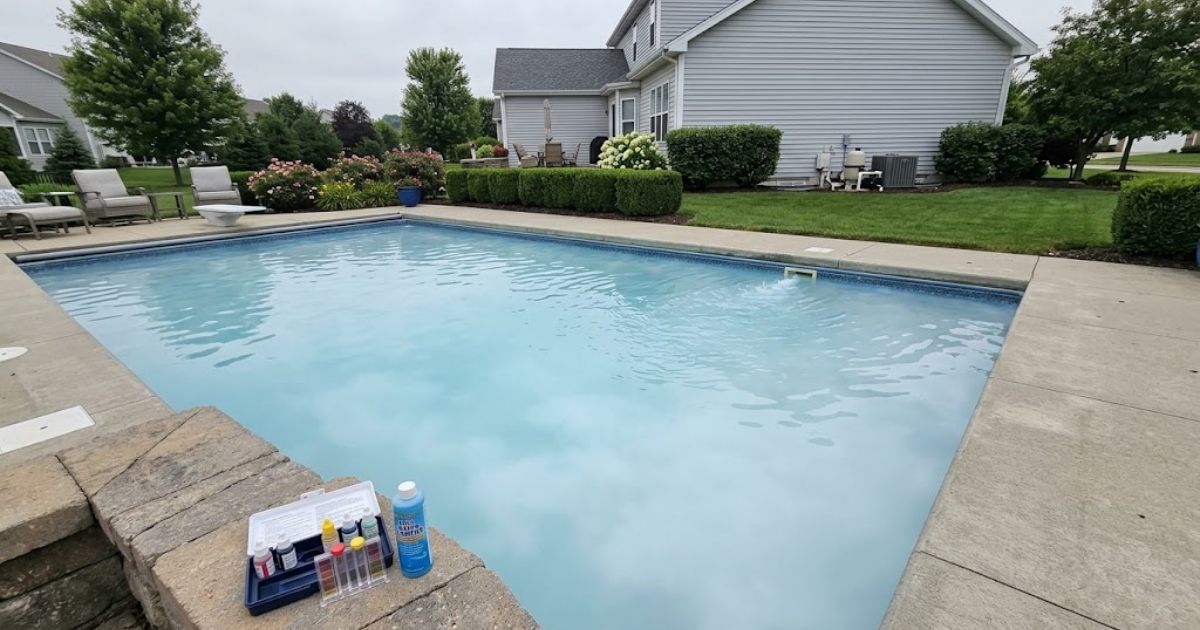
In this guide, we’ll explain why your pool is still cloudy after shocking, identify the most common causes, and provide proven solutions to help you get your pool sparkling clean again.
cloudy pool water after shocking
You shocked the pool last night. You wake up this morning and the water is cloudy, white, or hazy. The green is gone,which is progress, but the pool still looks wrong.
This is one of the most common questions in pool care. Cloudy water after shocking is almost always a temporary and fixable condition. But the right fix depends on which of five specific causes is actually behind it, and getting that wrong wastes days and money on the wrong treatment.
📌 KEY TAKEAWAYS
✓ Milky white cloudiness after cal-hypo shock = likely calcium precipitation, lower pH first
✓ Green-grey haze = dead algae suspended in the water, run filter, add clarifier or flocculant
✓ Cloudiness not clearing after 48 hours = clogged or overwhelmed filter, backwash and clean
✓ Don’t add more shock to clear cloudiness, the issue is almost never insufficient chlorine at this stage
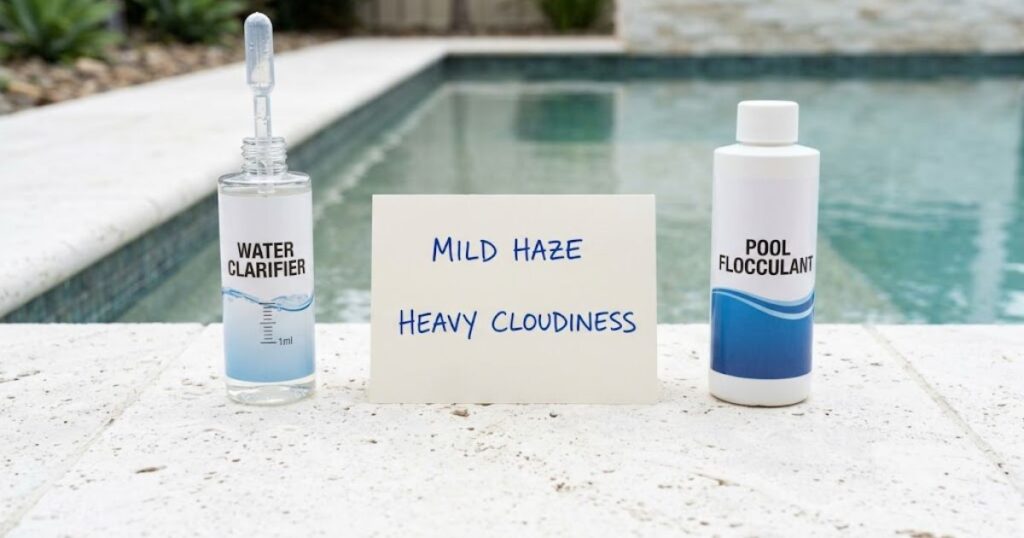
✓ Clarifier = mild haze, filter running | Flocculant = heavy cloudiness, vacuum to waste after
✓ Always run the filter 24–48 hours continuously after shocking
Why Is My Pool Cloudy After Shocking?
Cloudy pool water after shocking is caused by one of five conditions: dead algae and fine particles suspended in the water, calcium precipitation from cal-hypo shock at high pH, a clogged or overwhelmed filter, incomplete shock treatment, or high total dissolved solids. Most cases clear within 24–72 hours with correct filter management and the right clearing agent.
Shocking a pool destroys algae, bacteria, and chloramines, but it doesn’t remove the physical debris. Dead algae cells are extremely fine particles, often smaller than what standard pool filters can capture on the first pass. They stay suspended in the water column, turning it hazy until the filter cycles the full water volume enough times to capture them.
Here’s the thing: that milky haze is usually a sign the shock worked, not a sign something went wrong. You killed the algae. Now you need to remove the bodies.
The exception is when cloudiness has a different cause entirely, calcium precipitation, a clogged filter, or incomplete treatment. Each one looks slightly different and responds to a different fix.
Diagnosis Table: Symptom → Cause → Fix
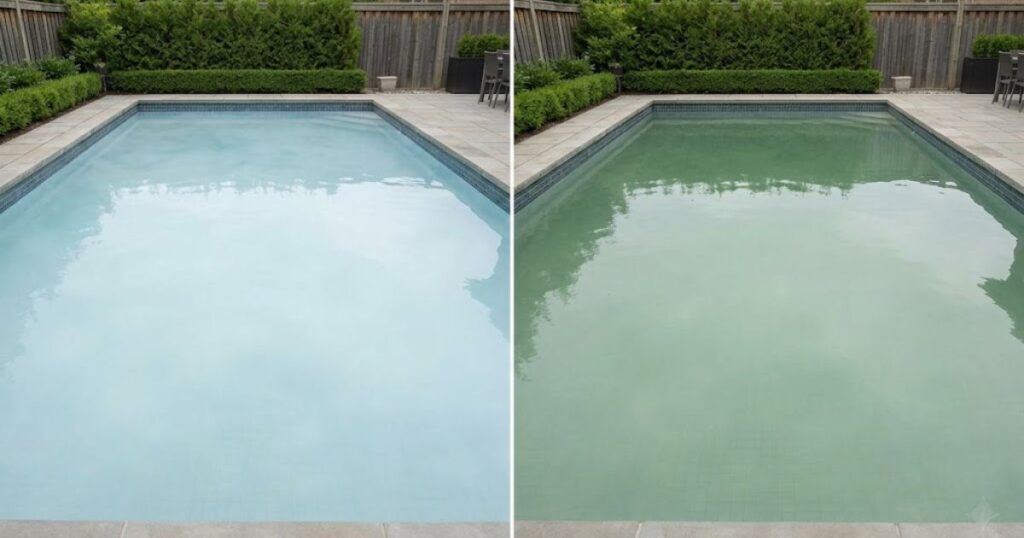
Diagnosing cloudy pool water after shocking requires matching the visual appearance to the likely cause. Milky white uniform haze suggests calcium precipitation from cal-hypo shock at high pH. Green-grey cloudiness indicates dead algae suspension. Cloudiness worsening after 24 hours suggests a clogged filter. Water that won’t clear after 48 hours with correct chemistry may require partial drain and refill.
| Pool Appearance | Most Likely Cause | Fix |
|---|---|---|
| Milky white, uniform throughout | Calcium precipitation (cal-hypo + pH above 7.6) | Lower pH to 7.2, run filter 24 hrs, check calcium hardness |
| Green-grey cloud, algae smell gone | Dead algae suspended in water | Clarifier or flocculant + continuous filter |
| Cloudiness worsening after 24 hrs | Filter clogged — no longer cycling effectively | Backwash immediately, clean filter, run 48 hrs |
| White haze clearing slowly | Fine particles passing through filter | Add clarifier, run pump 24 hrs |
| Not clearing after 72 hrs + correct chemistry | TDS too high, incomplete shock, or wrong filter size | Partial drain + refill, re-shock if needed |
| Blue-white haze with adequate chlorine | Water balance off (low alkalinity or high calcium) | Full chemistry rebalance before more shock |
5 Causes of Cloudy Pool Water After Shocking
Cause 1: Dead Algae Suspended in the Water
The most common cause. And the one that’s actually progress.
When shock kills algae, the dead cells break apart into microscopic fragments. At this scale, often 1–5 microns, standard sand and cartridge filters don’t capture them efficiently on the first pass. They stay suspended in the water column, giving it a green-grey or blue-grey haze. The algae smell is gone. The colour is improving. The filter just needs time and help to finish the job.
Fix: Run the filter continuously. Add a pool clarifier to coagulate the fine particles into larger clumps the filter can capture. Backwash or rinse the filter every 4–6 hours during the first 48 hours. This is working, give it time.
Cause 2: Calcium Precipitation from Cal-Hypo Shock
Calcium hypochlorite (cal-hypo) contains calcium. Adding a large shock dose raises the calcium hardness of your pool water temporarily. When calcium hardness is already high, above 400 ppm, and pH is above 7.6, calcium carbonate precipitates out of solution as a fine white cloud.
Or maybe I should say it plainly: the calcium falls out of the water and floats through it as a white haze. It looks almost like milk. This is different from dead algae cloudiness and responds to a different fix.
Fix: Test and lower pH to 7.2–7.4 using pH minus (sodium bisulfate). The cloudiness usually clears significantly within 24 hours once pH is corrected. If calcium hardness is above 400 ppm, a partial drain and refill is the longer-term solution.
“To prevent cal-hypo precipitation, always test and adjust pH before shocking : here’s the complete pool shock guide”
Cause 3: Clogged or Overwhelmed Filter
Dead algae clogs pool filters fast. What was a correctly sized filter for normal pool maintenance becomes undersized within hours of an algae treatment shock. As the filter clogs, water flow slows, pressure rises, and fine particles start bypassing the filter media or passing right through at reduced efficiency.
The sign: cloudiness that looks the same or worse after 24 hours despite the pump running continuously.
Fix: Backwash a sand filter immediately when pressure rises 8–10 psi above the clean baseline reading. For a cartridge filter, remove and rinse the cartridge under running water every 4–6 hours during the first 48 hours post-shock. A severely algae-clogged cartridge may need to be replaced before it returns to effective filtration.
Cause 4: Incomplete Shock Treatment
If shock was added in daylight, at the wrong pH, or at insufficient dose for the severity of the algae bloom, the treatment was partially effective. Enough algae died to reduce the visible green, but enough survived and fragmented to keep the water hazy.
Here’s how you tell: test combined chlorine 24 hours after shocking. If it’s still above 0.5 ppm, the job isn’t finished. Incomplete treatment leaves organic debris in the water that cloudiness will keep expressing until a full breakpoint dose destroys it.
Fix: Re-test pH and combined chlorine. If needed, add a second shock dose at the correct strength, at night, with pH at 7.2–7.4, using the dosing calculations from the shock guide.
Cause 5: High Total Dissolved Solids (TDS)
Pool water accumulates dissolved minerals, chemicals, and organic compounds over time, collectively called total dissolved solids (TDS). Above roughly 3,000 ppm, TDS can reduce water clarity independent of all other chemistry parameters. Shocking adds more dissolved material to already saturated water, pushing cloudiness beyond what the filter can resolve.
Fix: Partial drain and refill is the only reliable way to reduce TDS. Drain 30–50%, refill with fresh water, rebalance chemistry, and then re-assess clarity. This also reduces cyanuric acid and calcium hardness simultaneously if either is elevated.
How to Clear Cloudy Pool Water Fast
To clear cloudy pool water after shocking, follow these steps:
- Test pH and correct to 7.2–7.4 before adding any clearing agent
- Run the filter at full speed, do not turn it off
- Backwash or clean the filter if pressure has risen above normal
- Choose the right clearing agent: clarifier for mild haze, flocculant for heavy cloudiness
- Continue running the filter 24–48 hours after adding clarifier
- If using flocculant: turn the pump off for 8–12 hours after dosing, then vacuum directly to waste
- Re-test water chemistry after clearing, rebalance alkalinity, calcium, and CYA if off
Clarifier vs Flocculant: Which One Do You Need?
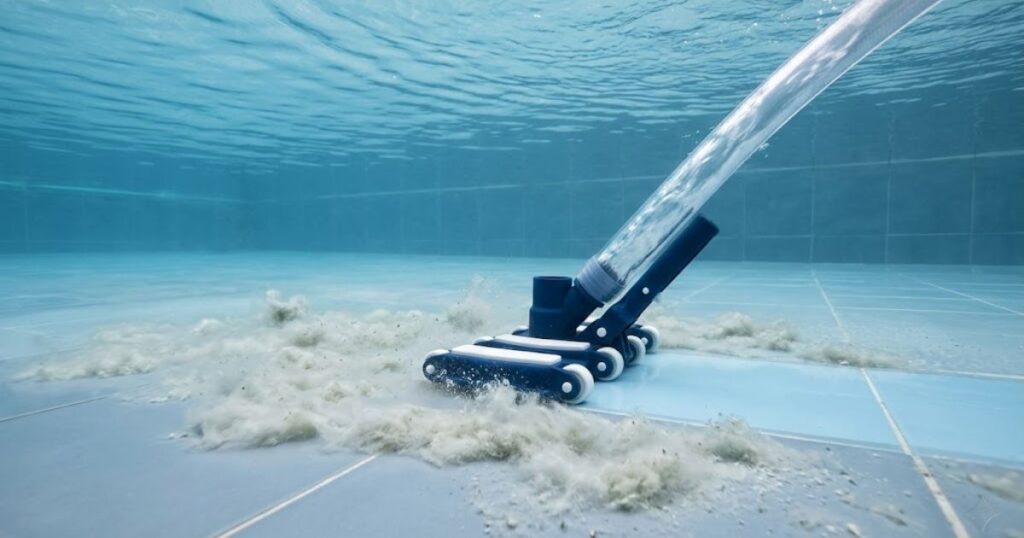
Pool clarifier and flocculant both clear cloudy water but work differently. Clarifier coagulates fine particles into larger clusters that the running filter can capture, best for mild haze with a working filter. Flocculant drops all suspended particles to the pool floor as a mass for vacuuming to waste, best for heavy algae cloudiness where the filter alone is insufficient.
Use clarifier when:
✓ Cloudiness is mild to moderate, you can see 12+ inches into the water
✓ Your filter is running and cycling normally
✓ You have 24–48 hours to let it work gradually
✓ You want a low-effort solution that runs passively
Use flocculant when:
✓ Cloudiness is heavy, you can’t see the pool floor at all
✓ Dead algae is present in high volume and clarifier alone won’t be enough
✓ You’re willing to vacuum to waste after the treatment settles
Flocculant process:
- Add flocculant with pump running for 2 hours to distribute it
- Turn the pump completely off for 8–12 hours — allow particles to settle to the floor
- Vacuum the settled mass directly to waste — not through the filter
- Refill pool to correct level and resume normal filtration
Look, flocculant is faster for severe cloudiness, but the vacuum-to-waste step is mandatory. Vacuuming through the filter after a heavy flocculant treatment will re-suspend everything and clog the filter simultaneously. Waste only.
Filter Run Time and Backwash Timing
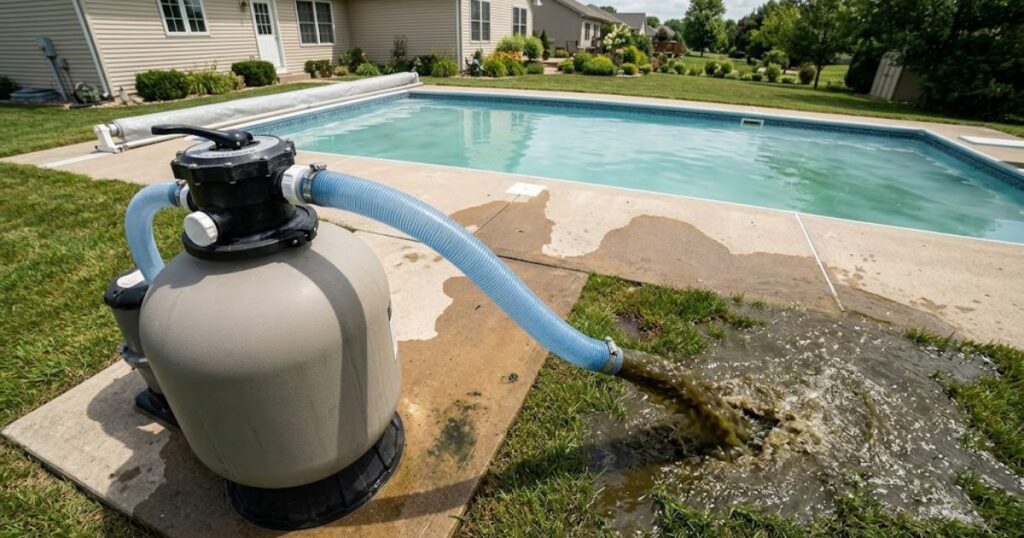
After shocking a green or cloudy pool, run the filter continuously for a minimum of 24–48 hours. For sand filters, backwash whenever pressure rises 8–10 psi above the baseline clean reading, this typically happens every 4–6 hours during the first day of algae recovery. Cartridge filter owners should rinse cartridges under running water every 4–6 hours.
Sand filter:
✓ Run continuously for 24–48 hours post-shock, no stopping
✓ Backwash when the pressure gauge rises 8–10 psi above your clean baseline
✓ After backwashing, run to waste for 2 minutes before returning to filter mode
✓ Expect to backwash 3–5 times in the first 24 hours after treating heavy algae
Cartridge filter:
✓ Remove and rinse every 4–6 hours during recovery
✓ Severely clogged cartridges from heavy algae: soak overnight in cartridge cleaning solution
✓ A cartridge used through a major algae recovery may need replacing, the fibres pack with fine algae particles that rinsing cannot fully remove
D.E. filter:
✓ Backwash and re-charge with fresh D.E. powder when pressure rises, same 8–10 psi rule
✓ D.E. filters are the most effective at capturing fine dead algae particles and typically clear cloudiness faster than sand
“Once the pool clears and free chlorine is confirmed safe, here is how to lower it if it’s still above 5 ppm”
confirms filtration run time recommendations, backwash timing, and TDS thresholds for residential pools
Frequently Asked Questions
How long does a pool stay cloudy after shocking?
For mild cloudiness, 24–48 hours with continuous filtration and a clarifier is typical. For heavy algae treatment cloudiness, 3–5 days with multiple filter backwashes and possibly a flocculant treatment. Any cloudiness persisting beyond 72 hours suggests a filter problem, pH issue, or incomplete shock.
Should I add more shock if my pool is cloudy after shocking?
Not automatically. Test free chlorine first, if it’s above 1 ppm, the shock worked and cloudiness is a filtration issue, not a dosing issue. Only re-shock if combined chlorine is still above 0.5 ppm or if free chlorine is already below 1 ppm.
Should I use clarifier or flocculant for cloudy pool water after shocking?
Clarifier for mild to moderate haze, add it with the pump running and leave the filter to do the work over 24–48 hours. Flocculant for heavy cloudiness after treating a green pool, it drops everything to the floor for vacuuming to waste, which is faster but requires more effort.
Can I swim in a cloudy pool after shocking?
Not until the water is clear enough to see the bottom and free chlorine confirms 1–3 ppm. Cloudy water prevents you from seeing a swimmer in distress on the pool floor, which is a safety hazard entirely separate from chemistry.
Why is my pool white and cloudy after shocking with calcium hypochlorite?
White milky cloudiness specifically after cal-hypo shock is usually calcium precipitation, calcium falling out of solution as fine calcium carbonate particles. It happens when pH is above 7.6 or calcium hardness is already high. Lower pH to 7.2–7.4 immediately and run the filter continuously.
Final Thoughts
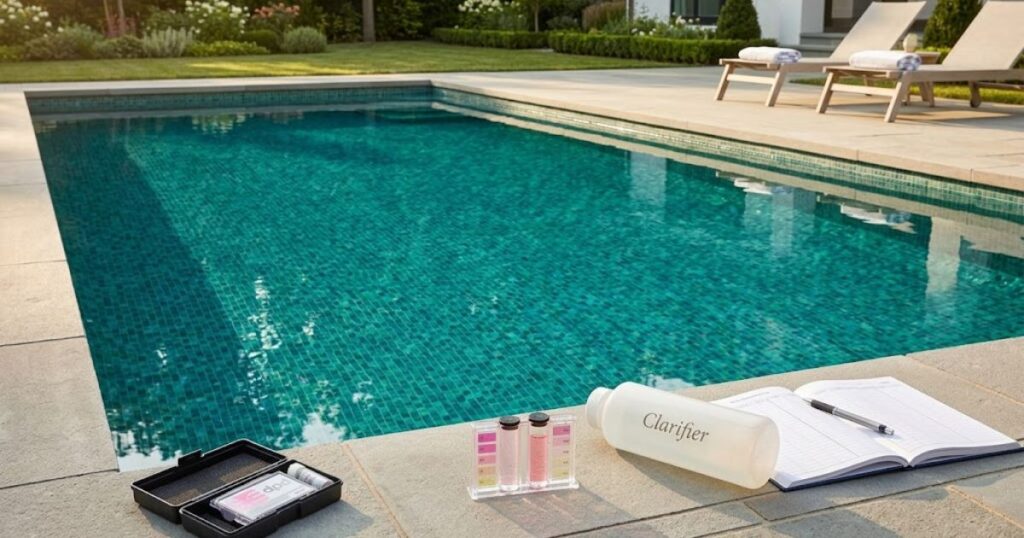
Experiencing cloudy pool water after shocking can be concerning, but it’s usually a temporary problem with a straightforward solution. Whether the cause is dead algae, calcium precipitation, an overloaded filter, incomplete shock treatment, or high total dissolved solids, identifying the source allows you to take the correct corrective action.
Focus on maintaining proper water balance, running your filtration system continuously, cleaning your filter regularly, and using a clarifier or flocculant when necessary. With the right approach, your pool still cloudy after shocking problem can often be resolved within a few days, leaving you with clear, healthy, and inviting water once again.