
Cold plunge pools have become one of the biggest home wellness trends, but many owners discover an unexpected problem after the excitement wears off.
The water looks perfectly clear, yet the pH keeps changing. Chlorine seems to disappear faster than expected, or the water suddenly turns cloudy even though it was balanced a few days ago.
If that sounds familiar, you’re not alone.
Most water chemistry advice online is written for swimming pools or hot tubs. A cold plunge is different. Its lower water temperature changes how chemicals react, how quickly sanitizer works, and how often you need to make adjustments.
The good news is that maintaining a cold plunge isn’t difficult once you understand how cold water behaves.
In this guide, you’ll learn how to maintain cold plunge water chemistry, keep your cold plunge pool pH balanced, and avoid the common mistakes that shorten water life or reduce sanitizer performance.
Quick Answer
The ideal cold plunge pool pH is 7.2 to 7.6, with free chlorine between 2 and 4 ppm, total alkalinity between 80 and 120 ppm, and calcium hardness between 150 and 250 ppm. Cold water naturally slows chemical reactions, so pH often stays stable longer than it does in a hot tub. However, slower reactions also mean chlorine needs more time to break down contaminants, making regular testing just as important as maintaining the correct chemical levels.
Why Cold Water Chemistry Is Different
This is the biggest misunderstanding among new cold plunge owners.
Many people assume cold water stays cleaner simply because it’s cold.
It doesn’t.
Cold temperatures slow bacterial growth, but they don’t stop sweat, body oils, dead skin cells, sunscreen, or other contaminants from entering the water every time someone uses the plunge.
The real difference is reaction speed.
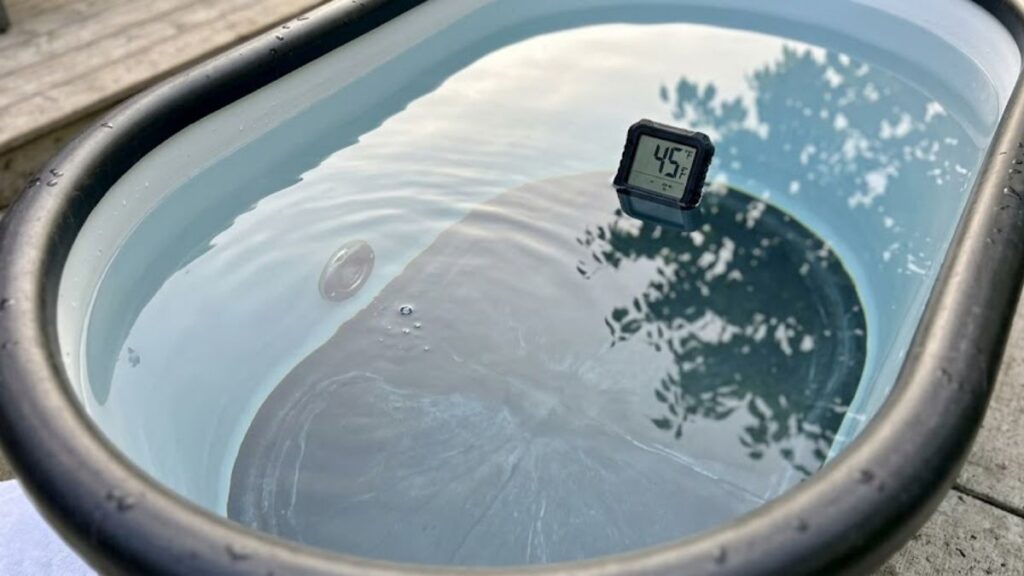
A heated spa reaches around 100°F to 104°F, while most cold plunges stay between 39°F and 60°F. At these lower temperatures, nearly every chemical reaction happens more slowly.
That creates two important differences.
First, pH usually changes more gradually, so you won’t see the rapid swings that are common in hot tubs.
Second, chlorine oxidizes contaminants more slowly, which means sanitizer can appear less effective after heavy use even when your test kit shows an acceptable reading.
This is why experienced pool technicians never judge water quality by appearance alone.
A cold plunge can look crystal clear while sanitizer levels are already dropping.
Testing the water regularly is far more reliable than waiting for visible problems.
The Biggest Difference Between a Pool and a Cold Plunge
Most backyard pools contain 15,000 to 25,000 gallons of water.
A residential cold plunge often holds 80 to 150 gallons.
That single difference changes everything.
Imagine finishing an intense workout before stepping into your plunge.
Within minutes, the water receives sweat, body oils, proteins, and other organic contaminants.
In a swimming pool, those contaminants are diluted across thousands of gallons.
In a cold plunge, they remain concentrated in a much smaller volume of water.
As a result, sanitizer demand increases much faster, especially if multiple people use the plunge on the same day.
This explains why many owners think their chlorine “stopped working.”
In reality, the chlorine is simply working harder because there’s far less water available to dilute contaminants.
Ideal Cold Plunge Water Chemistry
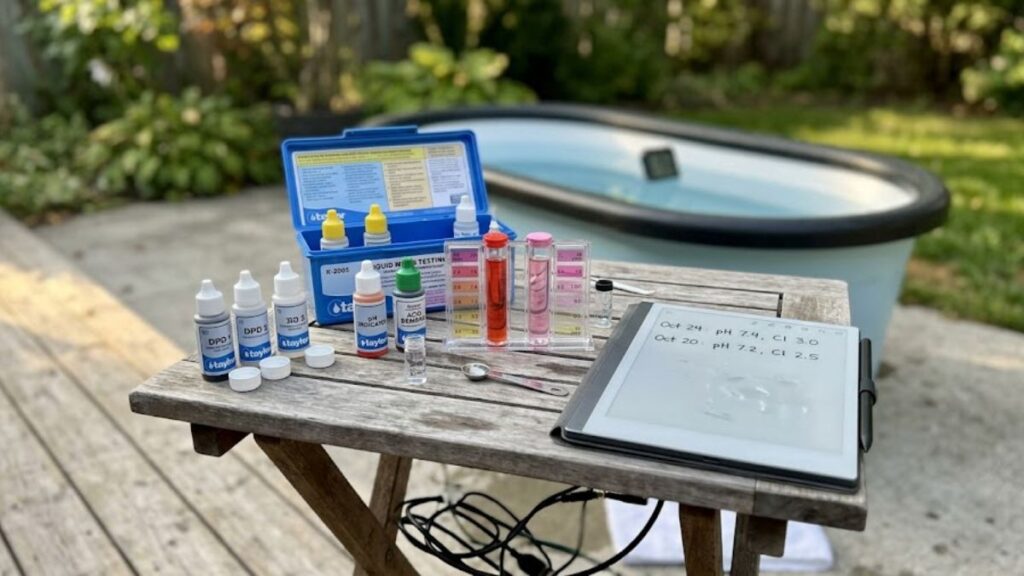
Keeping these four readings within their recommended ranges will prevent most water quality problems before they start.
| Water Parameter | Recommended Range |
|---|---|
| pH | 7.2 to 7.6 |
| Free Chlorine | 2 to 4 ppm |
| Total Alkalinity | 80 to 120 ppm |
| Calcium Hardness | 150 to 250 ppm |
Don’t focus on one number in isolation.
These values work together.
For example, if total alkalinity is too high, your pH will continue rising no matter how much acid you add. Likewise, if pH drifts above the recommended range, chlorine becomes less effective even though the test kit still shows enough sanitizer.
How to Maintain Cold Plunge Water Chemistry
Most water problems don’t happen because owners use the wrong chemicals.
They happen because the water isn’t tested often enough or because one reading is corrected without checking the others.
The easiest way to keep your cold plunge clean is to follow the same routine every week. Small adjustments are safer, cheaper, and much more effective than trying to fix several problems at once.
1. Test Before Adding Any Chemicals
Never guess.
Always test the water before adding chlorine, muriatic acid, or any balancing product.
Check these four readings together:
✓ pH
✓ Free chlorine
✓ Total alkalinity
✓ Calcium hardness
Looking at only one number can lead to the wrong solution.
For example, if pH keeps climbing, adding more acid may seem like the answer. However, the real problem is often high total alkalinity. Unless alkalinity is corrected first, pH will continue rising.
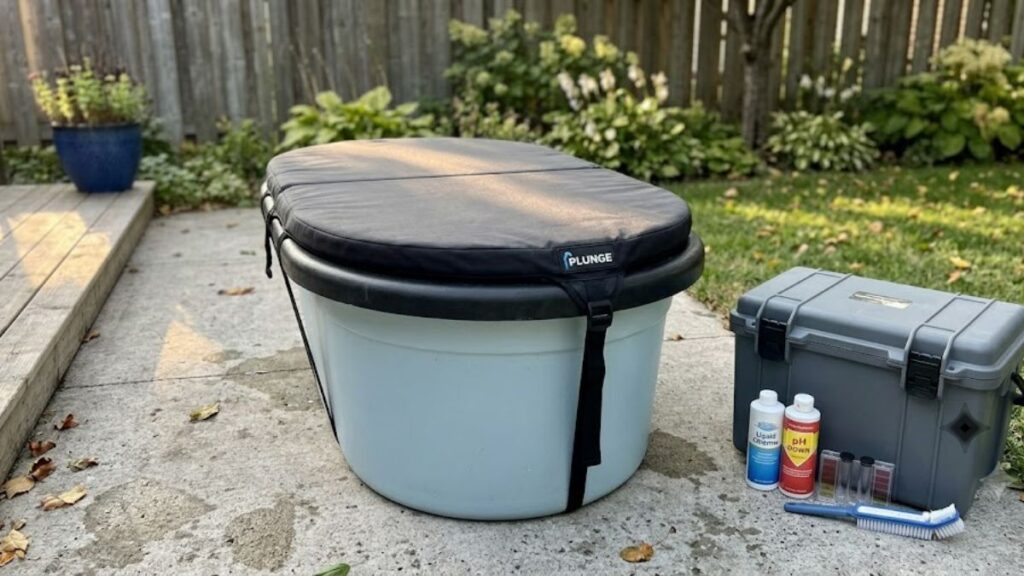
A liquid drop test kit is more accurate than inexpensive test strips and is worth the investment if you use your cold plunge regularly.
2. Keep pH Between 7.2 and 7.6
The ideal cold plunge pool pH is between 7.2 and 7.6.
This range gives you the best balance between sanitizer performance, equipment protection, and comfortable water.
If pH rises above 7.8, chlorine becomes less effective. The water may still look clear, but it becomes harder for chlorine to kill bacteria and break down organic waste.
If pH falls below 7.2, the water becomes acidic and may damage metal components, rubber seals, pumps, and other equipment over time.
When you need to lower pH, make small adjustments instead of trying to fix everything in one treatment.
Retest after the water has circulated before adding more acid.
The full step-by-step safety guide is in the how to add muriatic acid to pool article.
3. Maintain Free Chlorine Between 2 and 4 ppm
Chlorine is your primary sanitizer.
Its job is to destroy bacteria, viruses, and organic contaminants before they affect water quality.
Many owners believe more chlorine always means cleaner water.
It doesn’t.
If pH is too high, chlorine becomes less efficient regardless of how much you add.
This is why professional pool technicians always evaluate chlorine and pH together, not as separate readings.
Use the muriatic acid pool calculator for a precise dose based on your exact readings.
Why Your Cold Plunge pH Keeps Rising
If you find yourself lowering pH every week, don’t blame the cold water.
One of these issues is usually responsible.
High Total Alkalinity
This is the number one cause.
Alkalinity acts like a buffer that resists pH changes.
When it rises above 120 ppm, it continually pushes pH upward.
Many homeowners keep adding muriatic acid without realizing they’re treating the symptom instead of the cause.
Lower alkalinity first, and pH usually becomes much easier to control.
Fresh Fill Water
Every time you top off the plunge, you introduce water with different chemistry.
Municipal water often contains naturally high alkalinity and a higher pH.
After adding fresh water, test the plunge before making assumptions about its chemistry.
Heavy Aeration
Powerful circulation pumps and return jets increase water movement.
As water moves, carbon dioxide slowly escapes into the air.
That natural process causes pH to rise over time.
This is completely normal and usually requires only small adjustments.
Spend five minutes testing your water after your busiest usage day each week. Catching small chemistry changes early is the easiest way to avoid cloudy water, wasted chemicals, and costly equipment repairs.
Why Your Cold Plunge Pool Chlorine Is Not Working
Another common question is:
“Why is my chlorine level normal, but the water still doesn’t feel clean?”
In most cases, chlorine isn’t the problem.
Something else is reducing its effectiveness.
High pH
High pH is the most common reason chlorine appears weak.
Even with a free chlorine reading of 3 ppm, sanitizer works much less efficiently if pH is above the recommended range.
Always correct pH before increasing chlorine.
Heavy Use
Every person who enters a cold plunge introduces sweat, oils, and other organic contaminants.
Unlike a large swimming pool, a cold plunge has very little water to dilute those contaminants.
If several people use the plunge in one day, chlorine demand can increase dramatically.
Testing after heavy use helps prevent cloudy water before it develops.
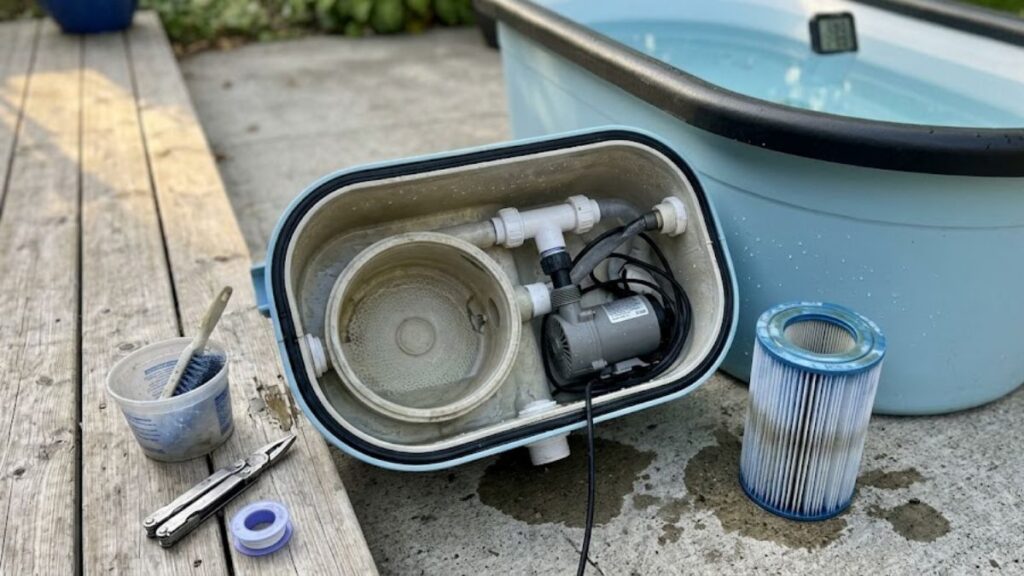
Dirty Filter
Water chemistry and filtration work together.
A dirty filter traps debris, reduces circulation, and forces chlorine to work harder than necessary.
If your water becomes cloudy despite balanced chemistry, clean the filter before adding more chemicals.
Many owners are surprised by how often this solves the problem.
Cold Plunge Water Balance Checklist
Instead of chasing individual numbers, aim for overall balance.
| Parameter | Target Range | Why It Matters |
|---|---|---|
| pH | 7.2–7.6 | Keeps chlorine effective and protects equipment |
| Free Chlorine | 2–4 ppm | Sanitizes water and prevents bacteria growth |
| Total Alkalinity | 80–120 ppm | Stabilizes pH and reduces constant adjustments |
| Calcium Hardness | 150–250 ppm | Helps prevent corrosion and mineral scale |
When all four readings stay within range, your water remains easier to maintain, your equipment lasts longer, and you’ll spend less money correcting preventable problems. more frequent testing, but they can stay just as clean when you keep the water covered and follow a regular maintenance routine.
Industry standards for residential pool and spa water chemistry
Frequently Asked Questions
1. What is the ideal pH for a cold plunge pool?
The ideal cold plunge pool pH is 7.2 to 7.6. This range keeps chlorine working efficiently, helps prevent corrosion and calcium scale, and makes the water comfortable for every plunge.
2. How do I maintain cold plunge water chemistry?
Test your water two to three times per week and keep pH between 7.2 and 7.6, free chlorine between 2 and 4 ppm, total alkalinity between 80 and 120 ppm, and calcium hardness between 150 and 250 ppm. Clean the filter regularly and make small chemical adjustments instead of large corrections.
3. Why does my cold plunge pH keep rising?
High total alkalinity is the most common reason. Other causes include alkaline fill water and aeration from return jets. Test total alkalinity before adding more acid, as lowering alkalinity often solves recurring pH problems.
4. Why is my cold plunge pool chlorine not working?
If chlorine seems ineffective, check your pH first. High pH reduces chlorine’s sanitizing power even when chlorine levels appear normal. A dirty filter, poor circulation, or heavy bather load can also increase chlorine demand and reduce its effectiveness.
5. How often should I test my cold plunge water?
For most home cold plunges, test the water two to three times a week. If the plunge is used daily or by multiple people, test it after heavy use and before making any chemical adjustments. Regular testing helps prevent cloudy water, bacteria growth, and unbalanced chemistry before problems develop.
Conclusion
Keeping your cold plunge water chemistry balanced is much easier than most people think. The key is to focus on consistency instead of constantly adding more chemicals. Keep your pH between 7.2 and 7.6, maintain free chlorine at 2 to 4 ppm, and check total alkalinity whenever pH becomes difficult to control. Regular testing, proper filtration, and small chemical adjustments will prevent most common water quality problems before they start.
Remember, cold water changes how quickly chemicals react, not what your target water balance should be. By following a simple maintenance routine and correcting small issues early, you’ll keep your cold plunge clean, safe, and ready for every recovery session while protecting your equipment and extending the life of your water.