
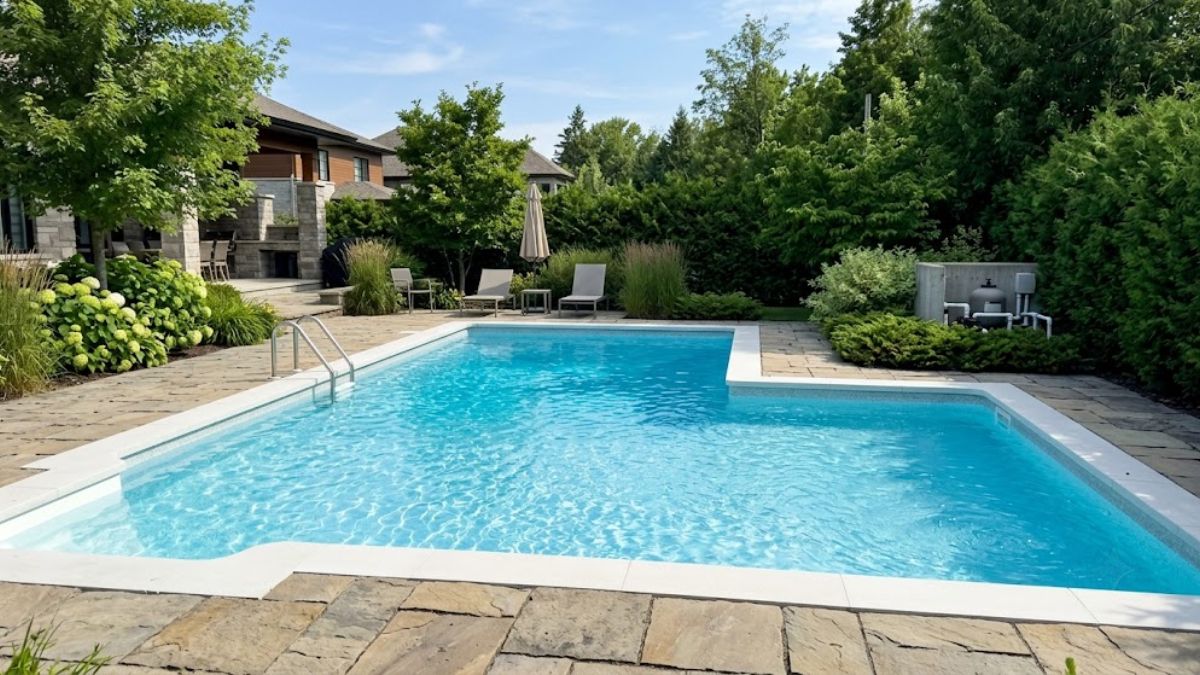

Your saltwater pool looked perfect a few days ago. You added muriatic acid, the pH dropped into the ideal range, and everything seemed fine. Then you tested the water again, and the pH was back above 7.8.
Saltwater Pool pH Always High
If this keeps happening, you’re not alone.
One of the most common questions pool owners ask is, “Why does my saltwater pool pH always keep rising?” Many assume the salt cell is broken or they’re adding the wrong chemicals. In reality, a slowly rising pH is completely normal in a saltwater pool. The challenge is knowing when it’s expected and when it points to a water balance problem that needs attention.
Most articles stop at telling you to add more muriatic acid. That lowers pH for a short time, but it doesn’t explain why you’re stuck repeating the same treatment every week. Understanding the root cause helps you reduce acid use, protect expensive equipment, and keep your chlorine working efficiently.
In this guide, you’ll learn why saltwater pools naturally experience pH drift, what causes some pools to rise faster than others, and the practical fixes that actually last.
Quick Answer
A saltwater pool pH always rises because the salt chlorine generator produces tiny hydrogen gas bubbles while making chlorine. Those bubbles increase aeration, allowing carbon dioxide to escape from the water. As carbon dioxide leaves, pH naturally increases. High total alkalinity, waterfalls, spa spillovers, new plaster, and alkaline fill water can speed up this process. The long-term solution is balancing total alkalinity, reducing unnecessary aeration, and making small pH adjustments before levels become too high.
Saltwater Pool pH Always High
Is It Normal for a Saltwater Pool pH to Rise?
Yes. Every saltwater pool experiences some degree of pH drift.
Unlike a traditional chlorine pool where chlorine is added manually, a saltwater system continuously generates chlorine throughout the day. That process changes the water chemistry in a way that naturally pushes pH upward over time.
The important question isn’t whether your pH rises. It’s how fast it rises.
A well-balanced saltwater pool may only need a small acid adjustment every few weeks. If you’re reaching for muriatic acid every weekend, another issue is likely accelerating the process.
Why Saltwater Pools Naturally Have Higher pH
Many homeowners believe the salt itself raises pH.
That’s one of the biggest myths in pool care.
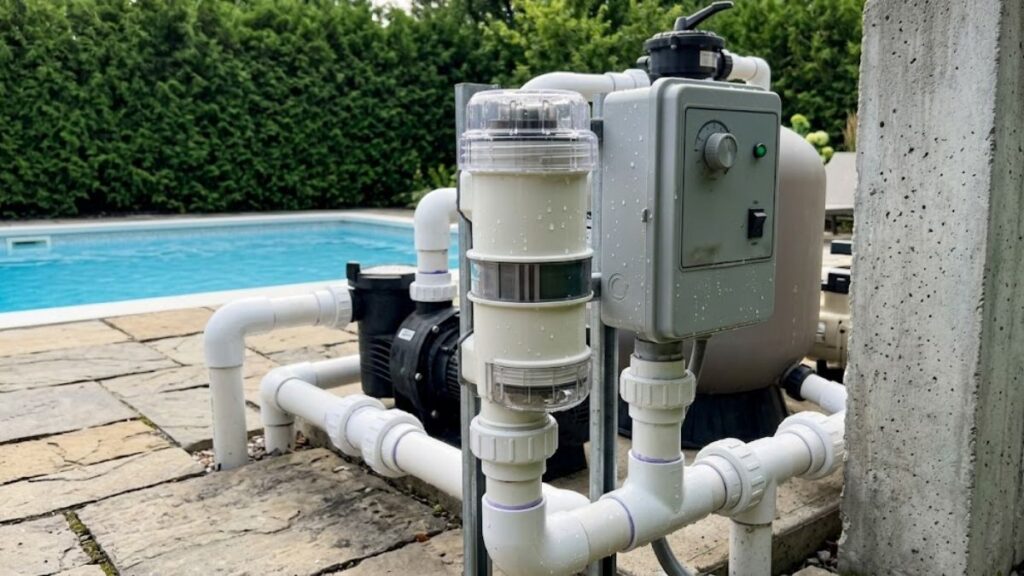
Salt simply provides the raw material needed for the salt chlorine generator (SWG) to produce chlorine. The real change happens inside the salt cell.
As electricity passes through saltwater, the generator produces free chlorine along with thousands of microscopic hydrogen gas bubbles. These bubbles travel through the plumbing and return jets before reaching the pool water.
Those tiny bubbles create continuous aeration.
Aeration allows dissolved carbon dioxide to escape into the air. As carbon dioxide leaves the water, the pH gradually rises.
A simple way to picture this is opening a bottle of sparkling water. Once the bubbles escape, the drink goes flat because carbon dioxide has left the liquid. A saltwater pool experiences a similar process every day, just much more slowly.
This is why many pool owners notice the same frustrating pattern:
✓ Add muriatic acid.
✓ pH returns to 7.5.
✓ Test again a few days later.
✓ pH climbs back above 7.8.
✓ The acid isn’t failing.
It’s simply correcting a natural process that’s still happening every time your salt system runs.
Why Some Saltwater Pools Need Acid Every Week
Here’s something many guides never explain.
Two neighbors can own nearly identical saltwater pools, use the same salt system, and still have completely different maintenance routines.
One may only add acid once a month.
The other may need it every week.
The difference isn’t usually the salt chlorine generator.
It’s everything else affecting the water balance.
High total alkalinity, decorative water features, long pump run times, fresh plaster, and even local tap water all influence how quickly pH rises. When several of these factors occur together, pH drift becomes much more noticeable.
Instead of asking, “How much acid should I add?”, the better question is “What’s making my pH rise so quickly?”
That’s the question we’ll answer in the next section.
According to the Pool & Hot Tub Alliance (PHTA), keeping pH between 7.4 and 7.6 and maintaining balanced total alkalinity helps chlorine sanitize effectively while reducing scale formation and protecting pool equipment.
7 Reasons Your Saltwater Pool pH Keeps Rising
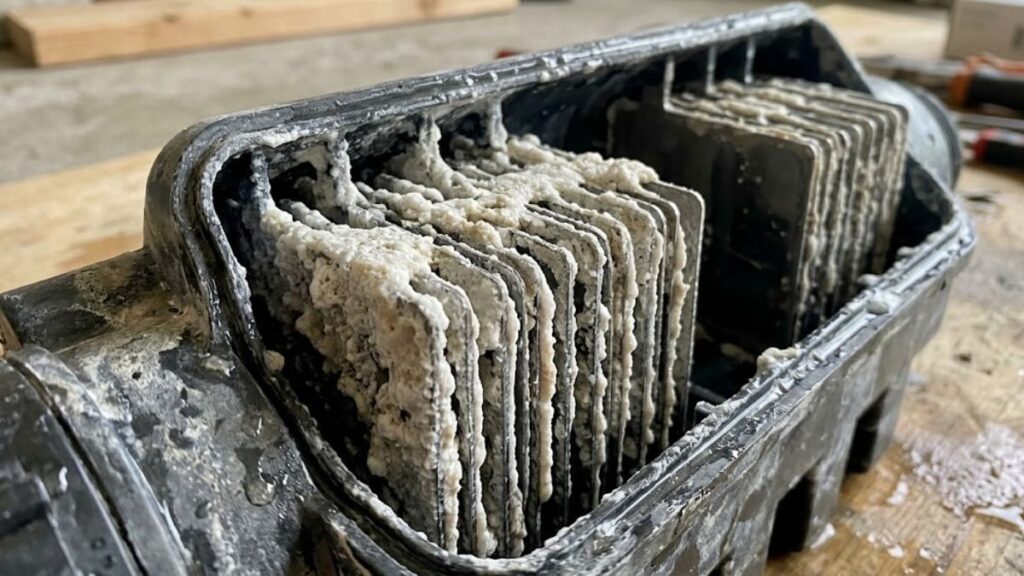
If your pH climbs above 7.8 just a few days after adding muriatic acid, the problem usually isn’t the acid itself. One or more factors are naturally pushing the pH upward. Finding the real cause will save you time, money, and unnecessary chemicals.
1. High Total Alkalinity
High total alkalinity (TA) is the most common reason pH keeps rising. When TA is above 120 ppm, it continuously releases carbon dioxide, causing pH to drift upward. Lowering TA to 80–100 ppm usually makes pH much easier to control.
Internal Link: Learn how to lower pool alkalinity before adding more acid if your TA is too high.
2. The Salt Chlorine Generator Creates Aeration
A salt chlorine generator doesn’t directly raise pH, but it produces tiny hydrogen gas bubbles while making chlorine. These bubbles increase aeration, allowing carbon dioxide to escape and gradually raising the pH. This is a normal part of saltwater pool operation.
3. Water Features Speed Up pH Drift
Waterfalls, spa spillovers, deck jets, and fountains add extra aeration to the water. The more these features run, the faster carbon dioxide escapes, causing pH to rise. Reducing their run time can noticeably slow pH drift.
4. High Alkalinity Fill Water
Every time you top off your pool, you’re also adding the chemistry of your tap water. If your fill water has high pH or high alkalinity, it can slowly raise your pool’s pH throughout the season. Testing your source water can help identify this hidden cause.
5. New Pool Plaster
Fresh plaster naturally releases calcium compounds while curing, which increases pH for several months. If your pool is less than a year old, needing more frequent acid additions is completely normal.
6. Salt Cell Output Is Too High
Running your salt chlorine generator at maximum output creates more chlorine and more hydrogen bubbles than necessary. If your chlorine level stays above the recommended range, lower the output by 10–20% and monitor the results for a few days.
7. You’re Waiting Too Long to Adjust pH
Many pool owners don’t act until pH reaches 8.0. By then, larger acid doses are required and calcium scale may already be forming. Testing your water two or three times a week and correcting pH around 7.7–7.8 keeps the water much more stable.
Quick Troubleshooting Checklist
| Problem | Check First |
|---|---|
| pH rises every week | Total alkalinity |
| Heavy acid use | Fill water chemistry |
| Scale inside salt cell | High pH & calcium hardness |
| Waterfall runs daily | Excess aeration |
| Pool less than one year old | New plaster curing |
| Chlorine always high | Salt cell output setting |
How to Permanently Reduce Saltwater Pool pH Drift
You can’t completely stop pH from rising in a saltwater pool, but you can slow it enough that balancing your water becomes much easier.
Start by keeping total alkalinity between 80 and 100 ppm. High alkalinity is the biggest reason pH keeps climbing, so correcting it first often reduces how often you need muriatic acid.
Next, maintain your pH between 7.4 and 7.6 instead of waiting until it reaches 8.0. Small adjustments use less acid and help prevent calcium scale from forming inside the salt cell.
If your pool has waterfalls, spa spillovers, or deck jets, reduce their run time when they’re not being used. Less aeration means slower pH drift.
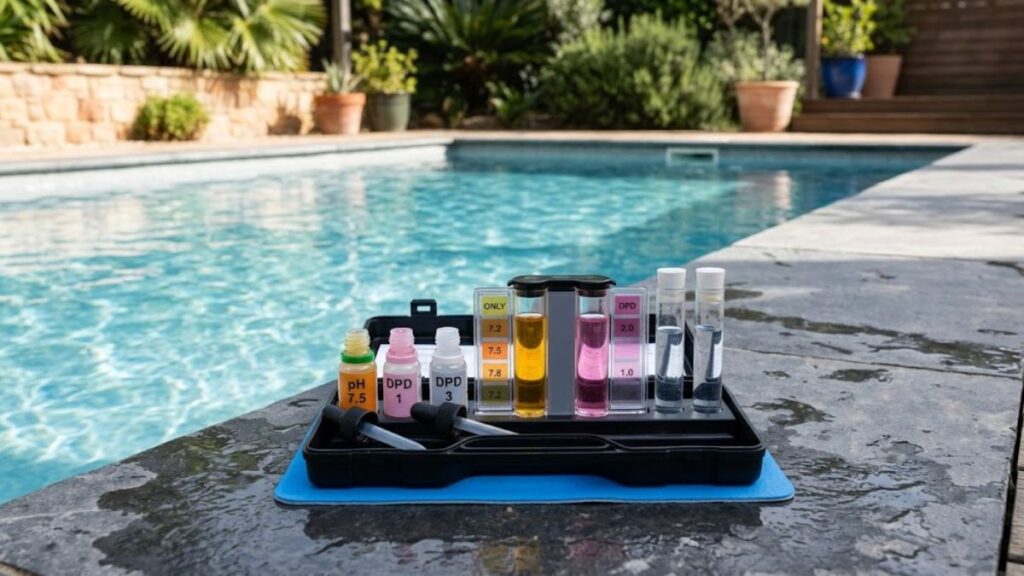
Finally, test your pool water two or three times each week during swimming season. Regular testing helps you catch small changes before they become expensive problems.
One habit that has made the biggest difference in my own pool maintenance is logging pH and total alkalinity every week. It quickly shows why the water is changing and helps avoid unnecessary chemical adjustments.
Weekly Saltwater Pool Maintenance Checklist
| Task | Frequency |
|---|---|
| Test pH and chlorine | 2–3 times per week |
| Test total alkalinity | Weekly |
| Brush pool walls | Weekly |
| Empty skimmer basket | Weekly |
| Inspect salt cell | Monthly |
| Check salt level | Monthly |
- Muriatic Acid Pool Calculator for accurate acid dosing.
- How to Add Muriatic Acid to a Pool for safe application.
- How to Lower Pool Alkalinity if your TA is too high.
Frequently Asked Questions
Why does my saltwater pool pH always stay high?
Saltwater pools naturally produce hydrogen gas during chlorine generation. This increases aeration, allowing carbon dioxide to escape and causing pH to rise. High total alkalinity and water features can make the problem worse.
How often should I add muriatic acid to a saltwater pool?
There isn’t a fixed schedule. Add muriatic acid only when testing shows the pH is above 7.8. Most well-balanced saltwater pools need acid every few weeks rather than every few days.
What is the ideal pH for a saltwater pool?
The ideal pH range is 7.4 to 7.6. Keeping pH in this range helps chlorine sanitize effectively while reducing calcium scale and protecting pool equipment.
Can a salt chlorine generator cause high pH?
Yes, but only indirectly. The salt cell creates hydrogen gas bubbles that increase aeration and gradually raise pH. In most cases, high alkalinity or excessive water movement has a greater impact than the generator itself.
Conclusion
A saltwater pool naturally experiences rising pH, but it shouldn’t become a weekly battle. In most cases, high total alkalinity, excessive aeration, or source water chemistry is causing the problem rather than the salt chlorine generator itself.
By keeping your pH between 7.4 and 7.6, maintaining total alkalinity in the recommended range, and testing your water regularly, you’ll reduce acid use, improve chlorine performance, and protect your pool equipment for years to come.