
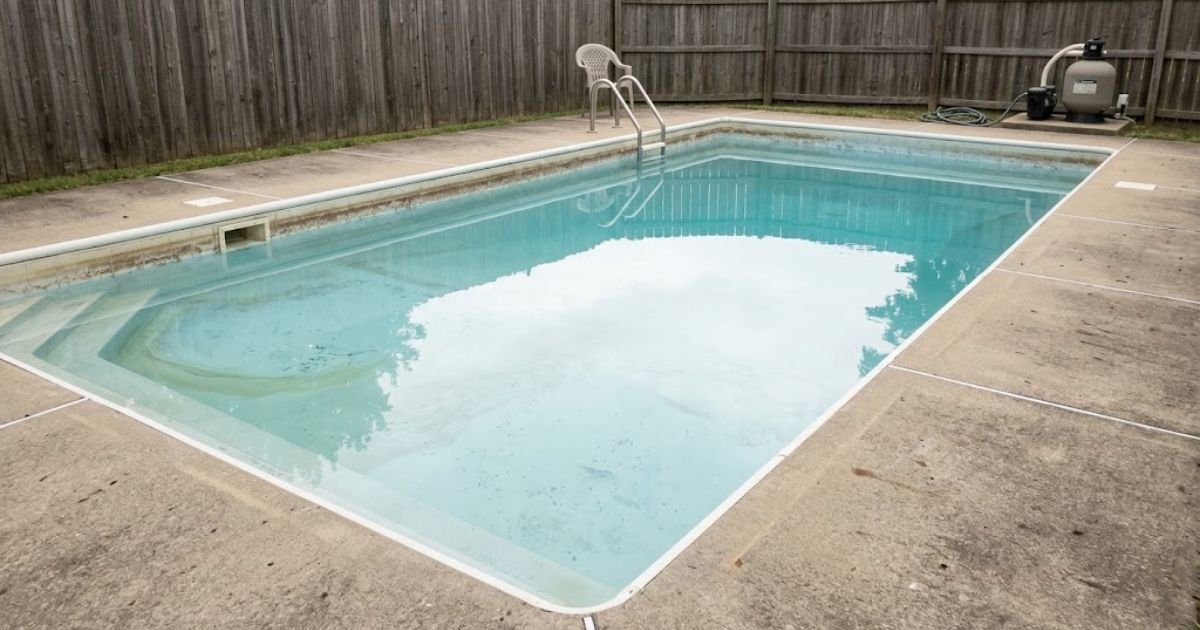
When pool water feels slimy, it is almost always caused by one of six problems: biofilm forming on surfaces, early-stage algae growth before the water turns green, high pH reducing chlorine’s effectiveness, heavy bather load depleting your sanitizer, elevated total dissolved solids building a film, or organic contamination from sunscreen and body oils accumulating faster than your chlorine can oxidize it.
The fix depends entirely on which cause is actually in your pool. Shocking without diagnosing first is the most common mistake. And the question you’re probably asking right now, whether it’s safe to get back in, has a specific answer that most articles skip.
Pool Water Feels Slimy
Is Slimy Pool Water Safe to Swim In Right Now?
No. Get everyone out of the pool until you’ve identified and treated the cause.
That’s not an overcautious answer. Slimy or slippery pool water is a health indicator, not just a comfort issue. The slick sensation you feel on your skin, on the pool walls, or on the steps is physically caused by one of two things: a chemical imbalance that has allowed bacteria or algae to begin establishing on surfaces, or organic compounds accumulating because your sanitizer can’t keep up. Neither situation is safe for continued swimming until it’s corrected.
Pool water that feels slimy and looks clear is the scenario that catches most homeowners off guard. Clear water is not the same as safe water. According to a peer-reviewed study published in the Journal of Water and Health (2018), Pseudomonas aeruginosa, the primary biofilm-forming bacterial pathogen in pools, was detected in 59% of backwash samples collected from 127 Atlanta-area residential and commercial pools that were operating with normal chlorine and pH readings at the time of collection. The water looked fine. The slime was already there.
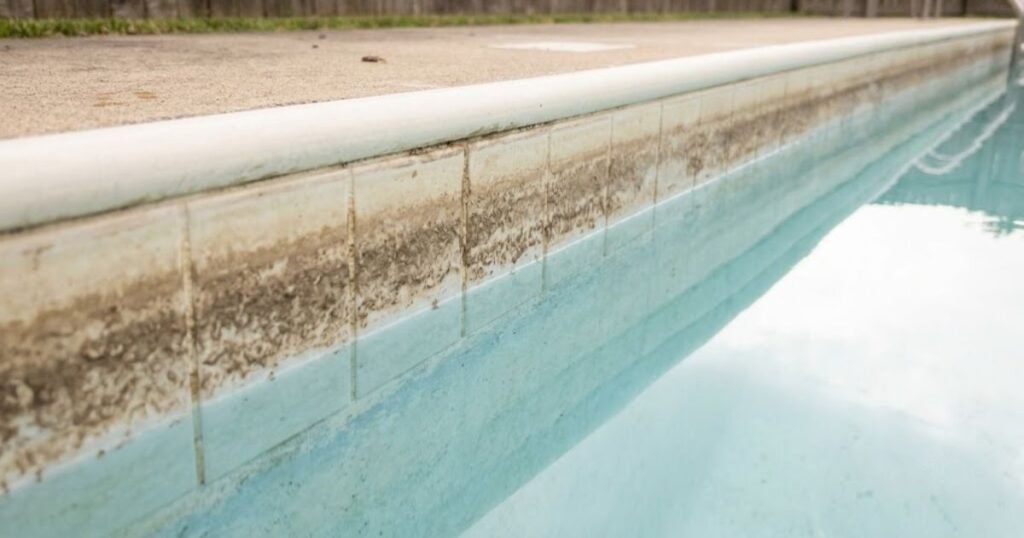
The U.S. Centers for Disease Control and Prevention (CDC) estimates that 65% of human bacterial infections associated with aquatic environments involve biofilms. Biofilm is the slimy coating you feel on pool walls and steps. It isn’t algae. It isn’t just dirt. It’s a structured bacterial colony that anchors itself to wet surfaces and produces a protective matrix that regular chlorine levels struggle to penetrate.
Or maybe I should say it this way: the slippery feeling on your pool steps isn’t the problem itself. It’s the visible symptom of an invisible microbial event that’s already in progress.
Health disclaimer: This article provides general pool chemistry guidance. If anyone who swam in a slimy pool develops skin rash, ear pain, eye irritation, or gastrointestinal symptoms after exposure, consult a physician. Pseudomonas aeruginosa is associated with swimmer’s ear, hot tub rash, and skin infections in people with compromised immunity.
The 6 Real Causes of Slimy Pool Water
Most guides name two or three causes. There are six. Knowing which one applies to your pool determines the entire treatment sequence.
Biofilm: The Invisible Culprit Most Guides Never Mention
Biofilm is the most common cause of slimy pool walls and steps when the water still looks clear. It’s a structured colony of bacteria, primarily Pseudomonas aeruginosa and related species, that anchors to wet surfaces and encases itself in a polysaccharide matrix, essentially a self-produced slime layer that makes it mechanically resistant to low chlorine concentrations.
Here’s the thing: biofilm doesn’t need a dirty pool to establish itself. It forms whenever free chlorine drops below 1 ppm for an extended period, which happens during heavy use, after rain, in hot weather that accelerates chlorine degradation, or when a chlorine tab runs out and nobody notices for two or three days. The water can read 1 to 2 ppm on a test strip and still have established biofilm on surfaces, because test strips measure bulk water chlorine, not the surface concentration actually contacting the colony.
What most guides skip is that normal shock doses are often insufficient to kill established biofilm. A standard shock dose of 1 pound of calcium hypochlorite per 10,000 gallons raises free chlorine to roughly 5 to 10 ppm in the bulk water. But biofilm on surfaces needs direct contact with chlorine at higher concentrations, combined with physical brushing to break up the matrix. Without brushing first, you can shock repeatedly and the slime keeps coming back.
why shocking alone isn’t clearing the slime
Early-Stage Algae Before the Water Turns Green
Algae doesn’t start green. It starts invisible and slimy.
Before a pool turns visibly green, algae spores establish on surfaces as a thin biofilm, typically starting in corners, behind steps, along the waterline, and on shaded walls. The slippery feeling underfoot or on pool walls is often this pre-visible algae layer, and it’s the moment when treatment is fastest and cheapest. Once the water turns green, you’re dealing with a full bloom that requires multiple shock doses and days of filter running.
The tell between early algae and bacterial biofilm: algae slime tends to feel slightly gritty or textured when you run your hand across it, whereas pure biofilm tends to feel uniformly smooth and frictionless. Both need brushing and elevated chlorine, but algae also needs an algaecide.
clear water that still has biological contamination
High pH Making Your Chlorine Useless
This is the most underappreciated chemical cause of slimy pool water.
Chlorine’s disinfecting power is almost entirely pH-dependent. At pH 7.0, roughly 73% of your chlorine exists as hypochlorous acid, the active killing form. At pH 7.8, only about 33% is active. At pH 8.0, you’re working with less than 20% effective chlorine even if your total chlorine reading looks normal. Your test kit might show 2 ppm free chlorine and you might assume the pool is fine. But if pH is 8.0, you’re getting the equivalent disinfecting power of about 0.4 ppm effective sanitizer. That’s not enough.
When chlorine stops killing bacteria efficiently, bacteria establish. The slimy feeling follows.
Heavy Bather Load Draining Your Sanitizer Fast
Every person who swims introduces nitrogen compounds, body oils, sunscreen, and organic carbon into the water. These compounds react with free chlorine to form chloramines (combined chlorine), which are ineffective at disinfection but show up on basic test kits as “chlorine.” This creates the situation where your test reads “fine” but your sanitizer demand has already been met and there’s little to nothing left for actual disinfection.
The result is organic buildup on surfaces that creates the greasy, slimy feel, particularly in the 12 to 24 hours after heavy pool use. A hot summer weekend with six to eight swimmers in a 20,000-gallon pool can deplete effective chlorine within hours.
High TDS: The Overlooked Film-Builder
Total dissolved solids, or TDS, refers to the accumulation of everything that’s ever dissolved into your pool water: minerals, chemicals added over the season, sunscreen residue, sweat compounds, and chemical reaction byproducts. As TDS climbs above 1,500 ppm, the water starts to feel noticeably different, slightly thick, slightly slick, as the density of dissolved material begins to affect the tactile quality of the water itself.
I’ve seen conflicting data on the exact TDS threshold where the slippery feeling becomes noticeable. Some pool chemistry references cite 1,500 ppm as the point of concern, others place it at 2,000 ppm. My read is that TDS above 1,500 ppm is worth testing for as a contributing factor, particularly in pools that have never had a partial drain and refill. It rarely causes the slimy feeling alone, but it amplifies the effect of other causes.
Organic Contamination from Oils, Sunscreen, and Sweat
Body oils, sunscreen, hair products, and sweat create a persistent organic load in pool water. Chlorine oxidizes these compounds, but in heavily used pools, the organic load can outpace the oxidation capacity of the sanitizer, especially during peak summer use. The result is a faint oily film at the waterline and a slightly greasy feel to the water itself.
The distinction between this cause and biofilm: organic contamination feels more like touching oily water, while biofilm feels specifically slick on hard surfaces like steps and walls. Organic contamination tends to be worse after heavy use days. Biofilm tends to be consistent until you physically remove it.
Quick Diagnosis: Match Your Symptom to the Cause
Quick Comparison Table:
| Symptom | Most Likely Cause | Key Test | First Action |
|---|---|---|---|
| Slippery walls and steps, clear water | Biofilm | Test combined chlorine with K-2006 kit | Brush all surfaces, then shock to 20 ppm |
| Slippery walls and steps, slightly hazy water | Early-stage algae | Visual + check chlorine below 1 ppm | Shock + algaecide |
| Greasy skin feel after swimming | Organic load / high combined chlorine | Test combined chlorine | Shock to oxidize |
| Slick feel but chemistry looks normal | High pH blocking chlorine | Test pH and alkalinity | Lower pH to 7.2 before anything else |
| Persistent slime despite repeated shocking | Established biofilm or TDS | Full panel test including TDS | Physical brush first, then super-chlorinate |
| Slimy only after heavy bather use | Sanitizer demand from organic load | Test free vs. combined chlorine | Shock within 24 hours of heavy use |
Biofilm vs. early algae: Biofilm is better suited to a combined chlorine test and super-chlorination approach because it’s a bacterial problem requiring high contact-time chlorine. Early algae works better with algaecide added after shocking because algaecide is formulated to penetrate algae cell walls in a way that chlorine alone may not accomplish quickly. The key difference is what’s growing on your surfaces.
How to Fix Slimy Pool Water in the Correct Order
Look: if you’ve already shocked the pool once and the slime came back within three days, you skipped Step 1. Brushing is not optional. You cannot chemically destroy a biofilm you haven’t physically disrupted first.
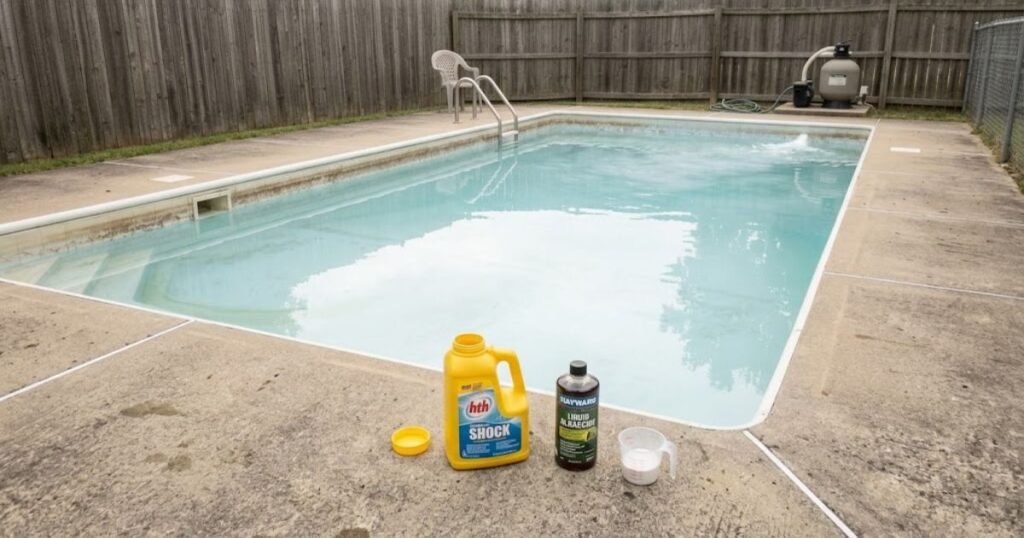
To fix slimy pool water, follow these steps:
- Get everyone out of the pool. Stop swimming until treatment is complete.
- Run a full water test: free chlorine, combined chlorine, pH, alkalinity, and TDS.
- Brush every surface hard: walls, steps, floor, behind ladders, waterline tile.
- Adjust pH to 7.2 before adding any shock. Shock is far less effective above 7.4.
- Super-chlorinate: shock to 20 ppm free chlorine for biofilm, 10 to 12 ppm for algae.
- Run the pump continuously for 24 to 48 hours after shocking.
- Add BioGuard Banish algaecide 24 hours after shocking, once chlorine drops below 5 ppm.
- Backwash or clean the filter after 24 hours of pump run. Dislodged biofilm goes to the filter.
- Add Natural Chemistry Pool Perfect + PHOSfree to eliminate the phosphate food source.
- Retest. Do not let anyone swim until free chlorine is between 1 and 3 ppm and combined chlorine is below 0.2 ppm.
Why 20 ppm for biofilm? Standard shock doses raise free chlorine to 5 to 10 ppm. Research on biofilm destruction in recreational water systems suggests that contact-time chlorine at higher concentrations, combined with physical disruption, is required to penetrate the protective EPS matrix. This is not standard maintenance shock. It’s targeted remediation.
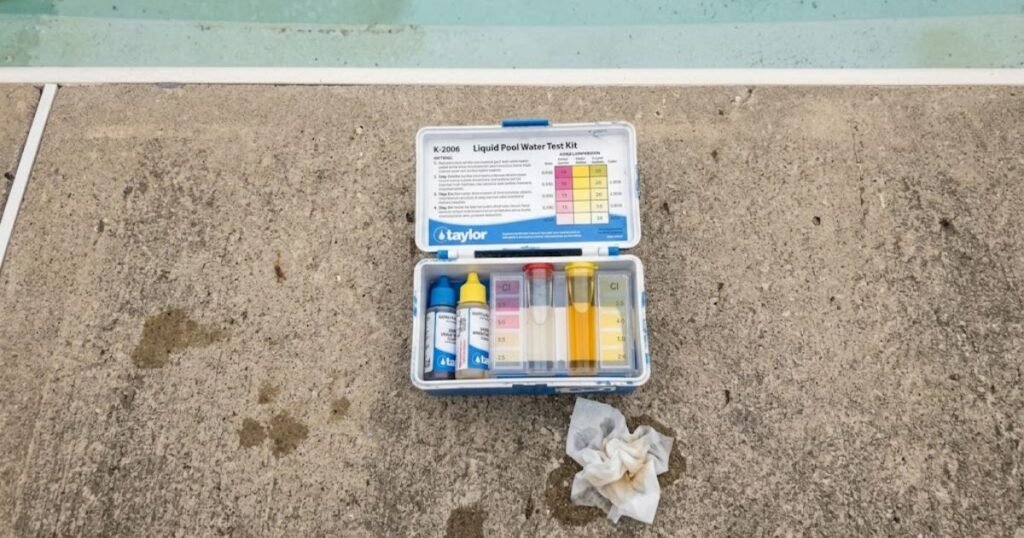
Quick note: The Taylor Technologies K-2006 liquid test kit is strongly preferred over test strips for this diagnosis. Strips cannot accurately measure combined chlorine or phosphate levels, both of which are key data points in the slimy water diagnosis. The K-2006 uses DPD reagent chemistry and gives reliable combined chlorine readings.
How to Clean Biofilm Off Pool Walls Properly
Physical removal is the step that separates a successful fix from a recurring problem.
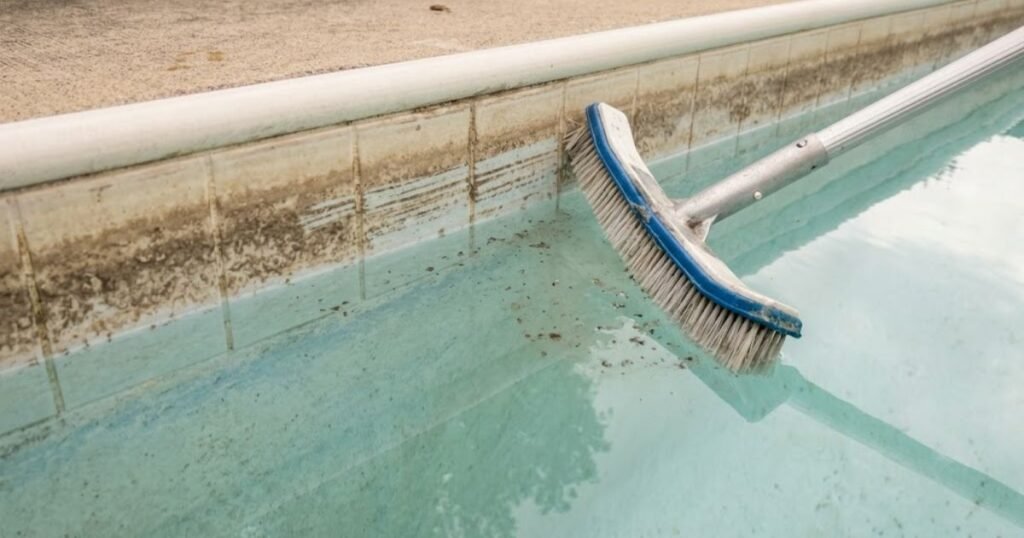
Biofilm anchors to pool surfaces through the EPS matrix. Chlorine diffuses into that matrix slowly and at reduced concentration. If you shock without brushing, the biofilm colony may be thinned on the outside but remains structurally intact underneath and repopulates within days. This is the exact situation where homeowners report “I shocked it and the slime came back in three days.”
Use a stiff-bristle pool brush, not a soft nylon brush, for this process. Brush the walls in overlapping strokes from the waterline down to the floor. Pay particular attention to pool steps, the area behind ladders, corners, and any shaded sections of the pool wall where sunlight doesn’t hit directly. These are the zones where biofilm establishes first because UV radiation from sunlight provides some natural antimicrobial effect at the surface.
After brushing, the dislodged material enters the bulk water where your elevated chlorine level kills it. The dead material then flows to the filter. That’s why cleaning or backwashing the filter 24 hours after treatment matters as much as the shock itself. A filter loaded with killed biofilm will recirculate contaminated water.
Some experts argue that a phosphate remover is unnecessary if chlorine levels are kept consistently in range. That’s valid if you’re in a low-phosphate environment. But if your pool is surrounded by lawns, landscaping, or trees, phosphate loading from debris and pollen can be significant enough that maintaining adequate chlorine levels alone is an ongoing battle. Natural Chemistry Pool Perfect + PHOSfree removes that food source so bacteria and algae have less to sustain themselves on between treatments.
How to Prevent Slimy Pool Water From Coming Back
The most common reason slimy pool water recurs is that homeowners treat the symptom once and return to the same maintenance routine that allowed the problem to develop. Prevention requires two changes from typical summer pool care.
First: test for combined chlorine, not just total or free chlorine. Most homeowners use test strips that show a single “chlorine” reading. That reading is usually total chlorine, which includes both free chlorine (active sanitizer) and combined chlorine (chloramines, which are inactive). A pool can read 2 ppm total chlorine and have 0.3 ppm free chlorine left, which is below the minimum effective sanitizer level. The Taylor Technologies K-2006 kit, which uses DPD-1 and DPD-3 reagents separately, gives you both numbers. The target is free chlorine above 1 ppm and combined chlorine below 0.2 ppm consistently.
Second: brush the pool walls weekly, even if they look clean. Biofilm is invisible in its early stages. Brushing before you can see or feel it disrupts the colony before it establishes enough to create the slimy texture. Weekly brushing combined with consistent free chlorine above 1 ppm makes biofilm establishment nearly impossible.
Prevention checklist:
- Test free chlorine and combined chlorine separately, three times per week during summer
- Keep pH between 7.2 and 7.4 rather than letting it drift to 7.8 or above
- Brush walls, steps, and floor weekly
- Shock within 24 hours after heavy bather use days
- Add a phosphate remover once per month during swim season
- Clean or backwash the filter monthly minimum
- Run the pump at least 8 to 10 hours per day during summer to maintain circulation
- Check and replace chlorine tabs before they run out completely
Frequently Asked Questions
Why does my pool water feel slimy even though it looks clear?
Clear pool water can still have biofilm on surfaces. Biofilm is a bacterial colony that forms on pool walls and steps when free chlorine drops below 1 ppm, even temporarily. It creates a slippery feel before any visible cloudiness or color change appears.
Is it safe to swim in slimy pool water?
No. Get out and test the water before swimming again. The CDC links 65% of aquatic bacterial infections to biofilm. Slimy water indicates bacteria or algae are establishing on surfaces, which means your sanitizer is insufficient to protect swimmers.
How do I fix slimy pool water fast?
Brush all pool surfaces hard first, then lower pH to 7.2, then super-chlorinate to 20 ppm free chlorine. Run the pump for 48 hours, clean the filter, then add algaecide once chlorine drops below 5 ppm. Do not shock without brushing first.
Why does my pool keep getting slimy after I shock it?
Because shocking without brushing doesn’t destroy established biofilm. The colony survives at depth in its protective matrix and repopulates within days. Brush all surfaces before and after every shock treatment to physically disrupt the biofilm structure.
What’s the best way to prevent slimy pool walls?
Brush pool walls every week, keep free chlorine consistently above 1 ppm (test with a liquid kit, not strips), and maintain pH between 7.2 and 7.4. Add a phosphate remover monthly to eliminate the nutrient source that feeds biofilm and algae growth.
Wrapping Up: What Your Slimy Pool Is Actually Telling You
Slimy pool water is not a minor texture issue. It’s your water chemistry telling you that sanitizer has been compromised long enough for bacteria or algae to start establishing on surfaces. The fix is specific and sequential: brush first, adjust pH second, then shock, then filter, then algaecide, then phosphate removal.
Most people shock the pool and skip straight to getting back in. The slime comes back within a week and they repeat the cycle without understanding why. The answer is almost always brushing. Physical disruption of the biofilm surface is what makes the shock actually work.
This guide works best for standard residential chlorine pools where the chemistry baseline is known. If your pool has had a persistent slime problem for multiple seasons, or if the slime recurs despite following all of these steps, a full TDS test and partial drain and refill may be necessary to reset the water.