

how to Shock a pool after heavy rain
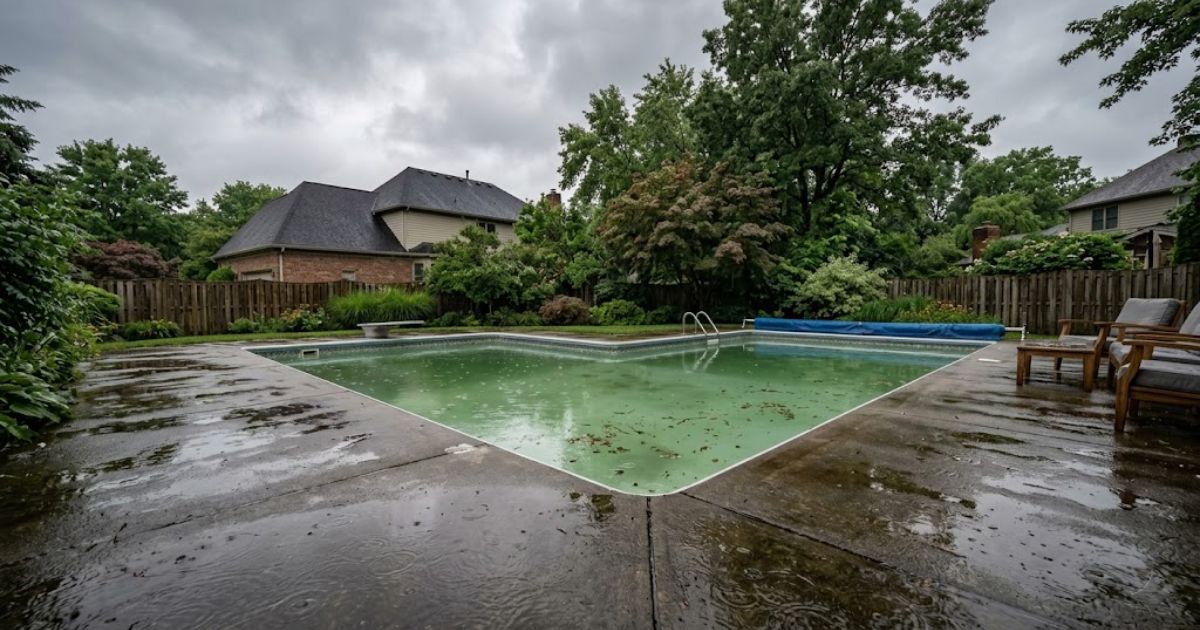
Heavy rain hits. Next morning, the pool looks off, cloudy, faintly green, or just strange. Most pool owners grab a bag of shock and dump it in. That’s the instinct. It’s also why the water stays cloudy three days later.
Shocking a pool after heavy rain only works if you do it in the right order. Test the water first. Balance pH and alkalinity second. Then shock. Skip either of those steps and the chlorine won’t reach full strength, no matter how much you add.
This guide walks through the exact sequence, explains what rain actually does to your water chemistry, and covers the one thing most articles miss entirely: CYA (cyanuric acid), which rain dilutes and which controls whether your shock even works outdoors.
Shocking a pool after heavy rain means raising free chlorine (FC) to a level high enough to oxidize contaminants, kill bacteria, and break down chloramines that rainfall introduces into the water. The ideal shock target is 10 ppm FC for standard treatment, or up to 30 ppm for green/algae situations.
What Heavy Rain Actually Does to Your Pool Water
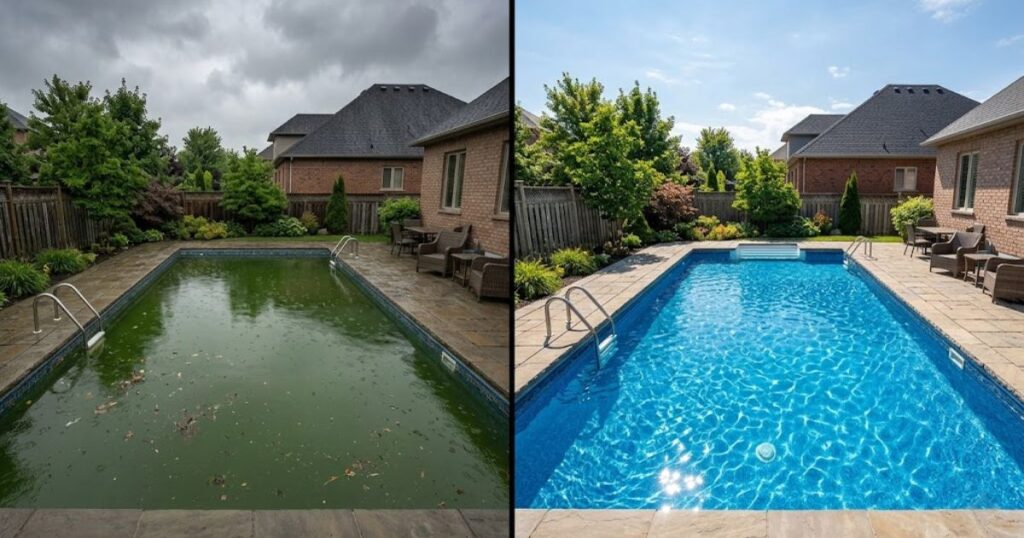
Rain looks clean. It isn’t, at least not for your pool.
According to Superior Pool Routes (2026), pools can lose approximately 50% of their chlorine levels after heavy rainfall, due to a combination of dilution and the sudden spike in organic demand from contaminants washing in.
Here’s what’s happening across four chemical levels at once:
Chlorine drops fast. Rainwater contains zero sanitizer. Every gallon that falls into the pool dilutes your free chlorine, and the debris, pollen, fertilizer runoff, and bird waste coming with it immediately consume what’s left.
pH swings. Rainwater is naturally acidic, typically pH 5.0–5.5. When large volumes enter your pool, they push your pool’s pH down. Low pH makes chlorine more reactive but also more unstable, it burns off faster and irritates skin.
Alkalinity falls. Pure rainwater has a total alkalinity near zero. Heavy rain can drop your pool’s TA by 5–10 ppm in a single storm, which then causes pH to swing unpredictably and makes balancing harder.
CYA (stabilizer) gets diluted. This one almost never gets mentioned. Cyanuric acid is what protects chlorine from UV breakdown. When rain dilutes your CYA below about 30 ppm, any chlorine or shock you add will burn off within hours of sunlight, before it has a chance to work. You’ll add shock, test the next morning, and scratch your head wondering where it went.
Or maybe I should say it this way: rain doesn’t just weaken your pool chemistry, it breaks the system that keeps chlorine alive long enough to do its job.
What Happens When Levels Are Off
This section matters because throwing chemicals at a pool with unbalanced water is how people waste $50 and two days.
| Parameter | Ideal Range | Post-Rain Risk | Effect If Off |
|---|---|---|---|
| Free Chlorine (FC) | 1–3 ppm | Drops 50%+ | Bacteria, algae, cloudy water |
| pH | 7.4–7.6 | Drops (acidic rain) | Chlorine burns off; eye irritation |
| Total Alkalinity (TA) | 80–120 ppm | Falls 5–10 ppm | pH becomes unstable |
| CYA (Stabilizer) | 30–50 ppm | Diluted by water volume | Shock evaporates in sunlight within hours |
| Calcium Hardness (CH) | 200–400 ppm | Diluted slightly | Corrosive water, plaster damage long-term |
Quick Comparison — Which shock type to use after rain:
| Option | Best For | Key Benefit | Limitation |
|---|---|---|---|
| Cal-Hypo (calcium hypochlorite) | Standard post-rain treatment | High chlorine %, no added CYA | Raises calcium hardness over time |
| Dichlor (sodium dichloro) | Above-ground pools, quick dissolve | Dissolves fast, adds some CYA | Steadily raises CYA — bad long-term |
| Liquid chlorine | Saltwater pools, daily maintenance | No added calcium or CYA | Lower concentration, need more product |
| Non-chlorine oxidizer | Lightly used pools, fast turnaround | Swim in ~15 min | Doesn’t kill bacteria — not for heavy rain |
For most backyard pools after heavy rain: calcium hypochlorite is the right call. Leslie’s Power Powder Plus (cal-hypo, ~68% available chlorine) and In The Swim’s calcium hypochlorite shock are both solid, widely available options.
The Correct Order of Operations
how to shock a pool after heavy rain
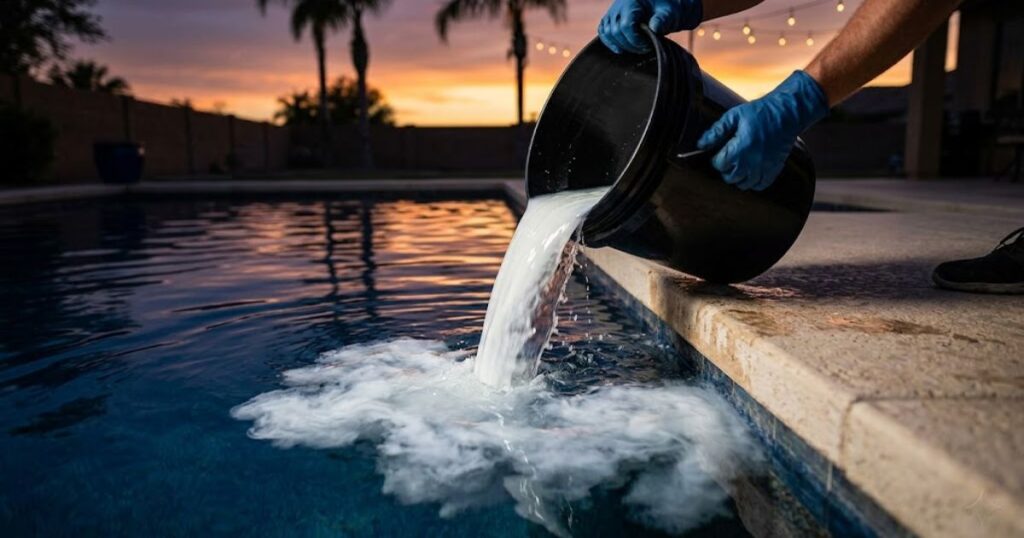
Look — if you’re standing at the edge of your pool right now with a bag of shock in hand, here’s what actually works.
To shock a pool correctly after heavy rain, follow these steps:
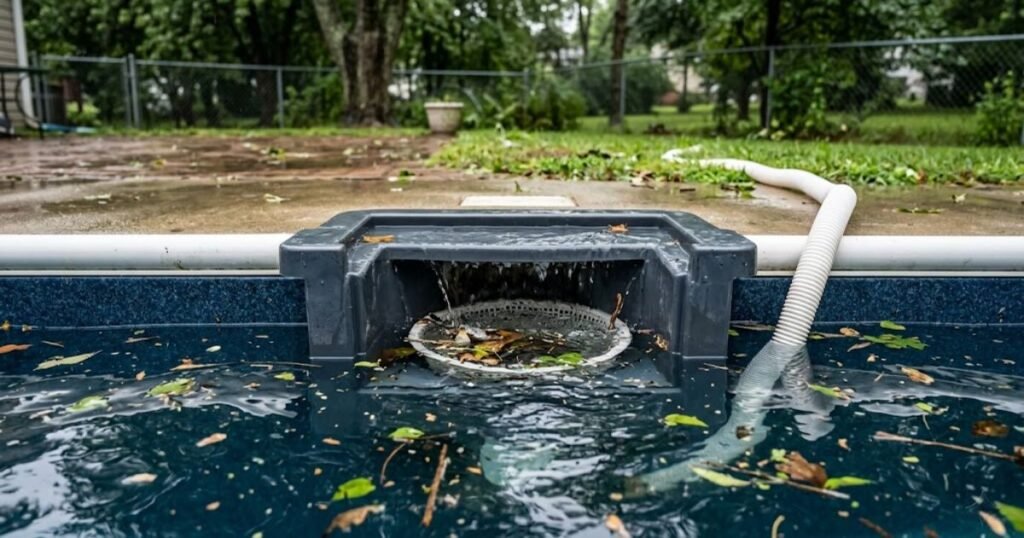
- Skim debris first. Remove leaves, bugs, and surface material before any chemicals go in. Organic debris creates chlorine demand.
- Check and lower water level if needed. Ideal level is mid-skimmer opening. Drain excess via your multiport valve (waste setting) or a submersible pump.
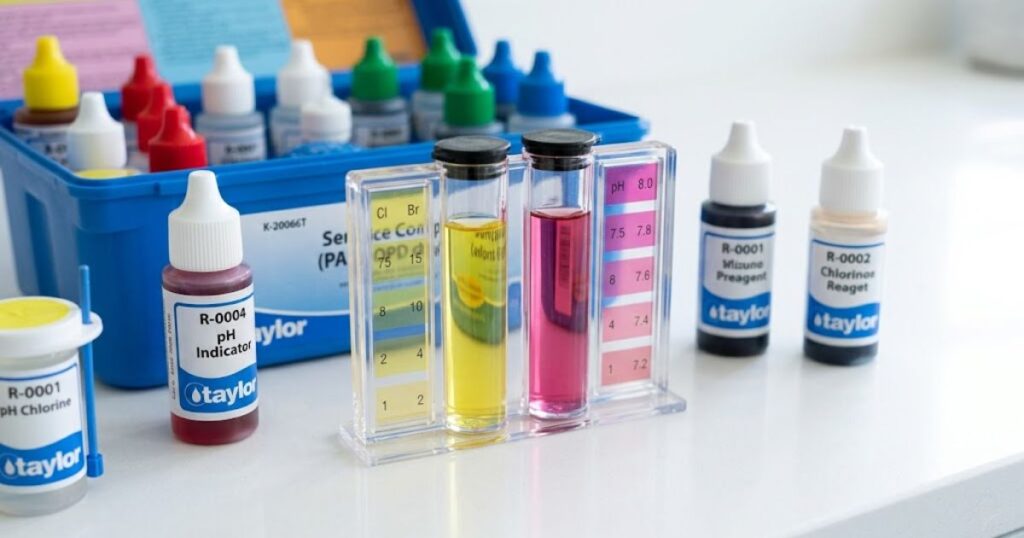
- Test the water — fully. Use a reliable liquid reagent kit. The Taylor K-2006C is the gold standard, it measures FC, CC, pH, TA, CYA, and calcium hardness accurately. Test strips often misread CYA, which is the critical measurement here.
- Balance alkalinity first. If TA is below 80 ppm, add sodium bicarbonate (baking soda). Wait 30 minutes, run the pump.
- Adjust pH to 7.4–7.6. Add muriatic acid to lower pH or soda ash to raise it. This step must happen before shock — chlorine is 50–80% more effective at the correct pH.
- Check CYA. If below 30 ppm (common after heavy rain), add cyanuric acid (stabilizer/conditioner) dissolved in a sock hung over a return jet. Target 30–50 ppm.
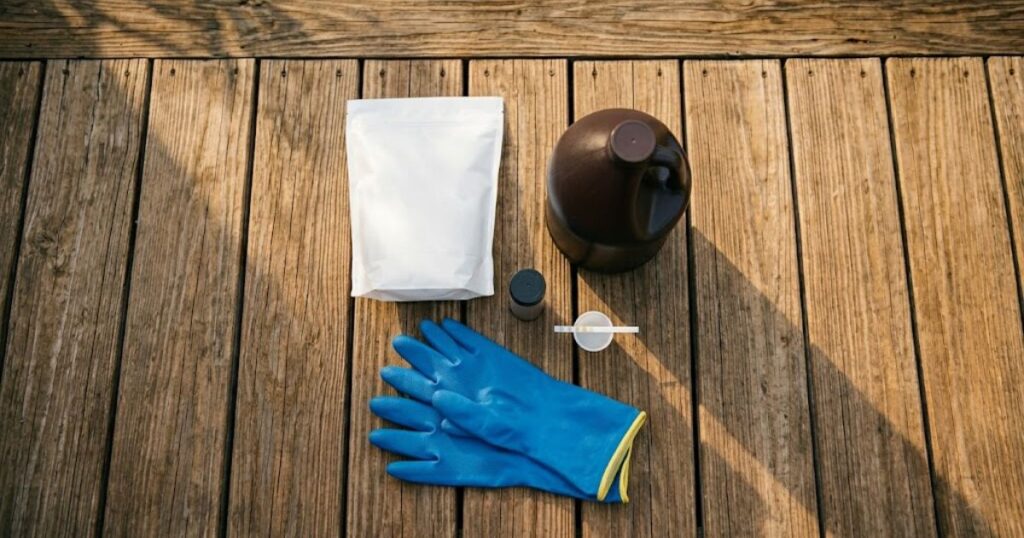
- Add shock at dusk or after sunset. Sunlight destroys free chlorine rapidly. Evening dosing gives the treatment all night to work. For standard treatment: 1 lb cal-hypo per 10,000 gallons.
- Run the pump for 8–12 hours. Circulation distributes the shock evenly.
- Retest before swimming. FC should be back to 1–3 ppm. If it’s above 5 ppm, wait. If it’s still too low after 24 hours, recheck CYA first — that’s almost always the culprit.
Quick note: don’t shock if your pool is overflowing. Chemicals will wash out with the water before they can circulate. Drain to the mid-skimmer mark first.
The CYA Problem No One Talks About
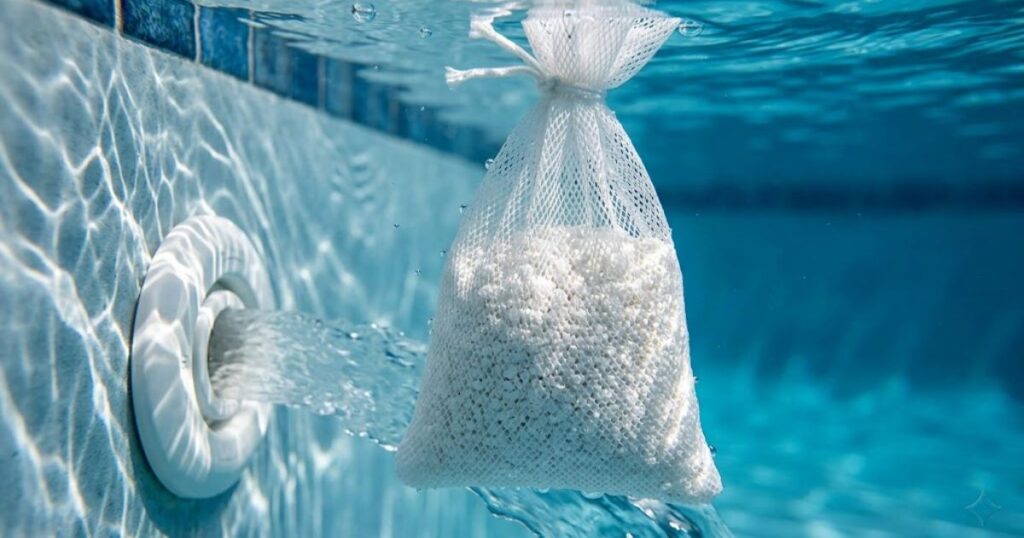
Most guides tell you to shock and run the pump. Few explain why the shock “disappears” by morning.
Here’s the thing: if your CYA is below 30 ppm, which is entirely possible after a major storm dilutes your pool volume, every bit of chlorine you add will be destroyed by UV sunlight within 1–4 hours. You could add 3 bags of shock and have nothing left by noon.
I’ve seen conflicting recommendations on this, some sources say to shock regardless and test CYA separately later, others say always fix stabilizer first. My read: if you’re shocking in late afternoon or evening and will retest at night, sequence matters less. But if you’re treating in the morning and expecting chlorine to hold through a sunny afternoon, check CYA first or the whole treatment is wasted effort.
Some experts argue that CYA levels rarely drop significantly from a single rainstorm. That’s valid for a light drizzle. But if you’ve had 2+ inches of rain in 24 hours, or if your pool was already at the low end of the recommended 30–50 ppm range, dilution can absolutely push you below the functional threshold.
“If you overcorrect and chlorine spikes too high, here’s how to lower it safely”
Do You Need to Shock After Every Rain?
Short answer: no. Not always.
Light rain, under half an inch — rarely disrupts well-balanced pool chemistry enough to require shocking. Test the water. If FC, pH, and TA are within range, you might just need a small top-up of chlorine.
Heavy rain, over an inch, sustained storms, or anything that visibly changes the water color or clarity, nearly always warrants a full test and likely a shock treatment.
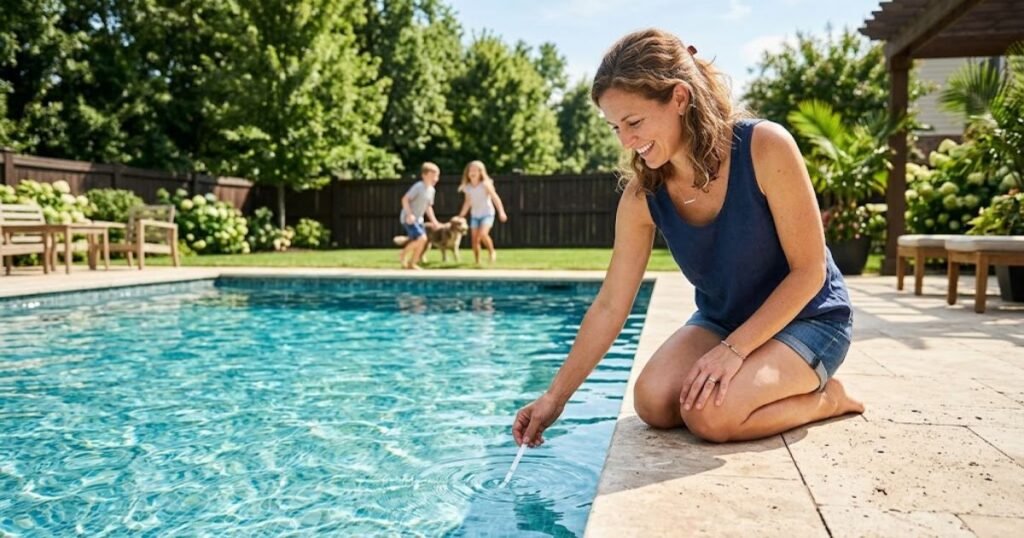
The rule of thumb used by most pool professionals: if the rain event raised your water level visibly (more than 1–2 inches), treat it as a chemical disruption event and run through the full process.
FAQs
What’s the best shock to use after heavy rain?
Calcium hypochlorite (cal-hypo) is the best choice for most pools after rain. It adds no extra stabilizer or calcium at standard doses and delivers high available chlorine — around 65–73%.
How much shock should I add after heavy rain?
Add 1 lb of cal-hypo shock per 10,000 gallons for standard treatment. For green or severely cloudy water, use 2–3 lbs per 10,000 gallons
Should I balance pH before shocking my pool after rain?
Yes — always balance pH to 7.4–7.6 before adding shock. Chlorine loses 50–80% of its effectiveness when pH is outside that range, making the treatment far less useful.
Why does my pool stay cloudy after I shock it?
Cloudy water after shocking usually means pH was off when you added shock, CYA is too low (shock burned off in sunlight), or the filter hasn’t run long enough. Run the pump for 12 hours and retest before adding more chemicals.
When should I shock my pool after it rains?
Shock at dusk or after sunset. Sunlight rapidly degrades free chlorine, so evening treatment gives the chemicals overnight to work without UV interference. Retest the next morning before anyone swims.