
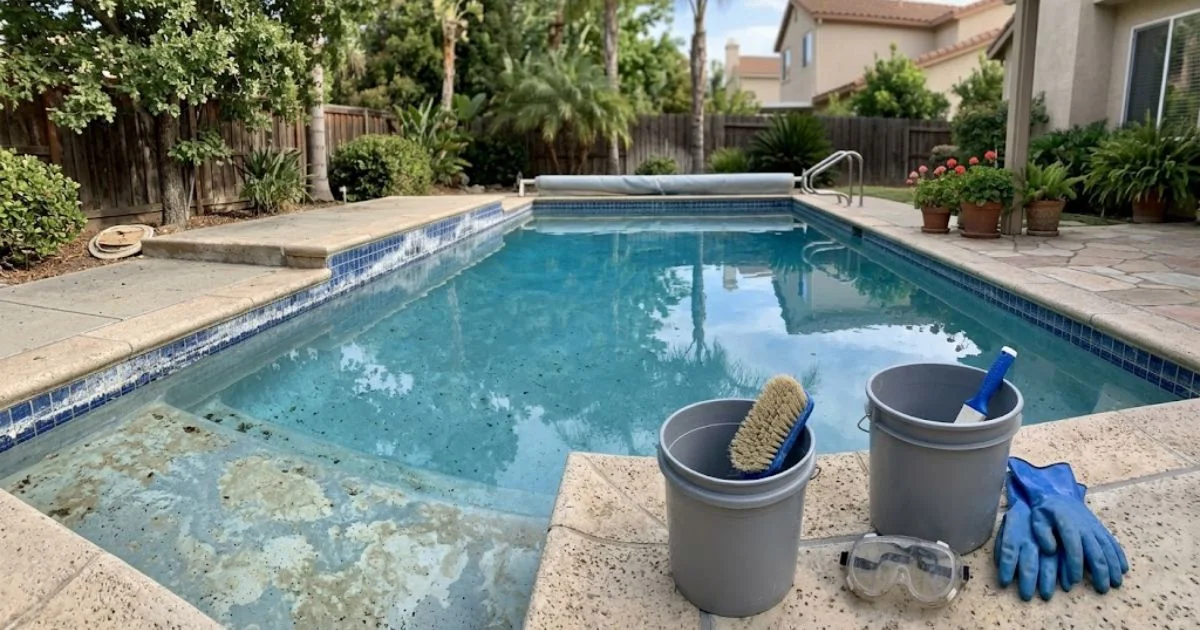

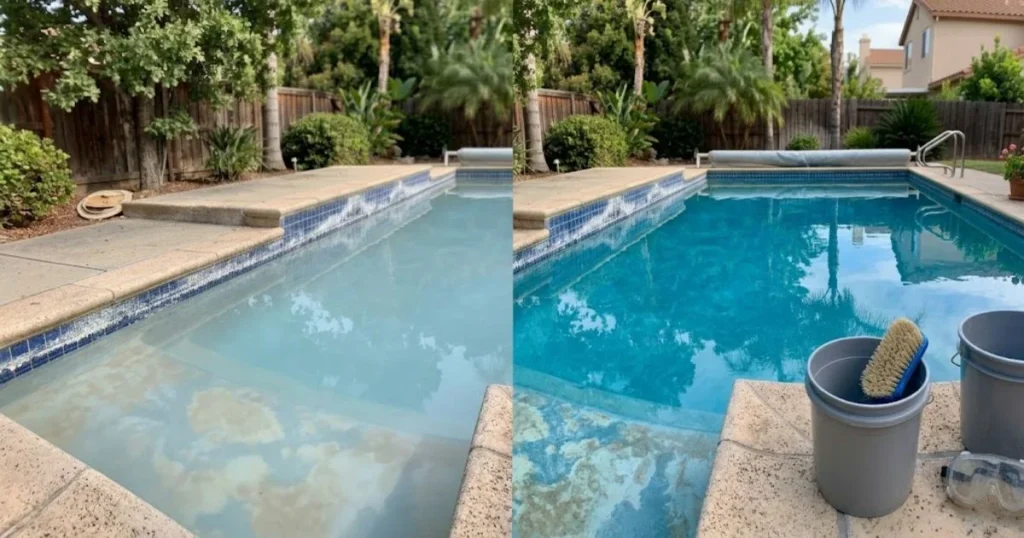
Muriatic acid cleans pools by dissolving calcium scale, mineral deposits, and white water line stains from plaster, tile, and concrete surfaces. It also clears cloudy water caused by high pH. What it does NOT do: kill algae, remove metal stains, or fix cloudiness caused by filtration problems. Using acid on the wrong type of pool problem can make it worse. Knowing which category your problem falls into takes 2 minutes and saves hours of wasted effort.
Muriatic Acid Pool Cleaning
Most pool cleaning guides treat muriatic acid as a cure-all. It is not. It is a highly effective tool for a specific set of problems.
What Muriatic Acid Actually Cleans in a Pool
Muriatic acid is diluted hydrochloric acid. It dissolves calcium carbonate and mineral compounds by breaking the chemical bond that attaches them to pool surfaces.
It cleans three things reliably:
Calcium scale and white deposits. The chalky buildup on plaster, tile, and waterline surfaces. This is the primary pool cleaning use for muriatic acid.
Cloudy water from high pH. When pH climbs above 7.8, calcium drops out of suspension and creates hazy water. Acid lowers pH, calcium returns to solution, and clarity improves within hours.
Scale on equipment surfaces. Heater cores and return jet fittings accumulate scale in hard water areas. Diluted acid removes it when used carefully and rinsed immediately.
Pool Stain Identification: Does Your Problem Need Acid?
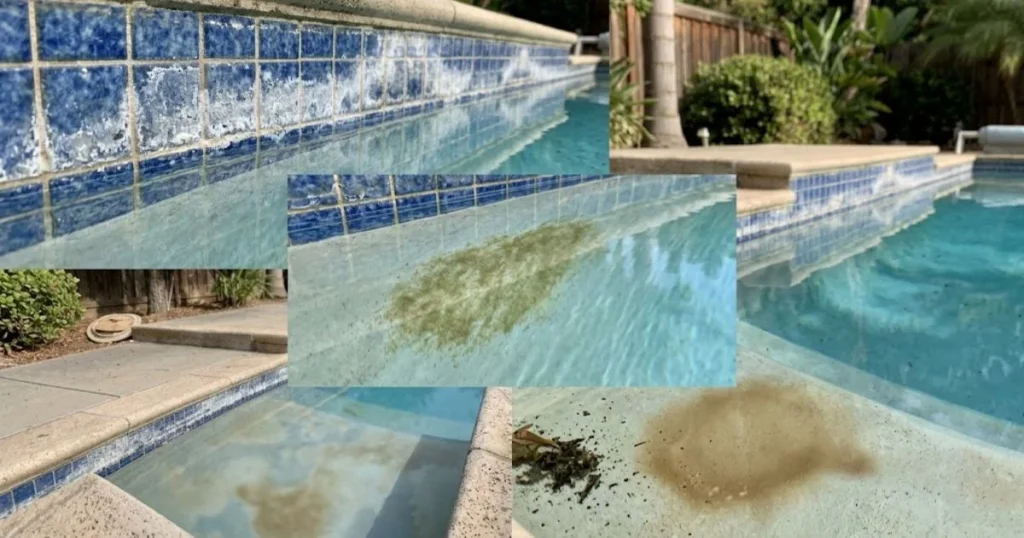
This is what every competitor misses. Before adding any acid to your pool, identify what you are actually dealing with.
| Stain Type | Color | Texture | Does Acid Fix It? |
|---|---|---|---|
| Calcium carbonate scale | White, powdery | Soft, flaky | YES: acid dissolves it |
| Calcium silicate scale | Gray-white | Hard, rough | NO: needs pumice stone |
| Algae (green, black, mustard) | Green, black, yellow | Slimy or fuzzy | NO: needs shock treatment |
| Metal stains (iron, copper) | Brown, blue, green | Smooth, flat | NO: acid makes it worse |
| Organic stains (leaves, tannins) | Brown, tan | Flat | PARTIAL: acid helps but shock works better |
Metal stain warning: If your pool has brown, rust-colored, or blue-green stains on plaster, do not add muriatic acid. Iron and copper stains react poorly with acid. Acid lowers pH which causes dissolved metals to precipitate out of solution and stain surfaces even more aggressively. Metal stains need a sequestrant or metal stain remover, not acid.
To test whether your stain is calcium or metal, place a small amount of vitamin C tablet (ascorbic acid) on the stain. If it lightens immediately, the stain is metal-based. If it does nothing, it is calcium or organic.
Does Muriatic Acid Kill Algae?
No. This is one of the most common misunderstandings in pool maintenance.
Muriatic acid does not sanitize pool water. It contains no disinfecting agents. It cannot kill algae, bacteria, or any biological contaminant in your pool.
What acid does is create better conditions for chlorine to kill algae. High pH makes chlorine ineffective. Pool owners with persistent algae problems often find that adding acid to lower pH allows their existing chlorine to finally work. The acid did not kill the algae. The chlorine did, once pH allowed it to function properly.
The correct sequence:
- Lower pH to 7.2 with muriatic acid if above 7.6
- Brush visible algae off walls and floor
- Shock with calcium hypochlorite at the correct dose
- Run pump continuously for 24 to 48 hours
- Vacuum dead algae to waste, not through the filter
- Retest and balance after algae clears
Muriatic acid plays a supporting role in step one. Chlorine does the actual work.
We see pool owners add muriatic acid to a green algae pool and wait for it to clear. It never does. Acid is not a sanitizer. If your pool turned green, that is a chlorine problem, not a pH problem, even if pH also happens to be high. Fix the chlorine first with a proper shock treatment, then address pH once the algae is dead. Trying to kill algae with acid alone wastes time and money.
Muriatic Acid for Cloudy Pool Water: When It Works and When It Does Not
Cloudy pool water has multiple causes. Muriatic acid fixes exactly one of them.
Acid fixes cloudiness when: pH is above 7.8 and calcium is dropping out of suspension. Water looks milky or hazy. There is often scale buildup on surfaces at the same time. Testing confirms high pH and possibly high alkalinity.
Acid does NOT fix cloudiness when:
✓ Chlorine is low or absent (bacteria bloom)
✓ Filter is dirty or undersized
✓ Heavy bather load introduced contaminants
✓ Calcium hardness is too high overall
✓ Algae bloom is beginning
Test before treating. A drop-test kit reading tells you whether high pH is causing the cloudy water or something else is.
If pH is in range and water is still cloudy, the answer is not acid. Run the filter longer, backwash or clean the filter element, shock with chlorine, and add a pool clarifier if needed.
Two Ways to Use Muriatic Acid for Pool Cleaning
Method 1: In-Water Treatment (pH and Cloudiness Correction)
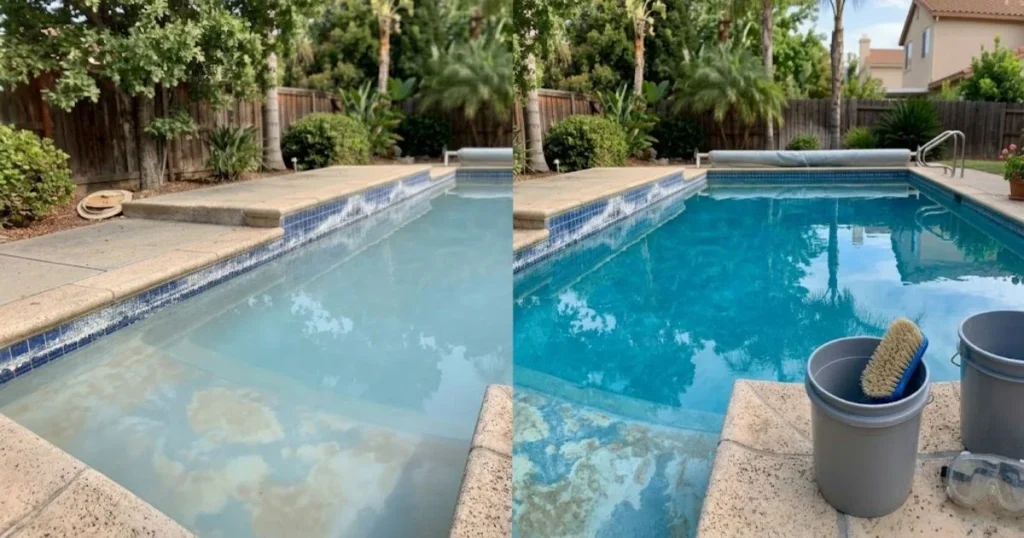
Use when the pool is full and the goal is chemistry correction. Dilute acid in a bucket, pour near return jets with the pump running, run for 4 hours, then retest.
Full steps and safety detail are in the how to add muriatic acid to pool guide. Use the muriatic acid pool calculator for your exact dose.
Method 2: Acid Wash (Surface Cleaning on Drained Pool)
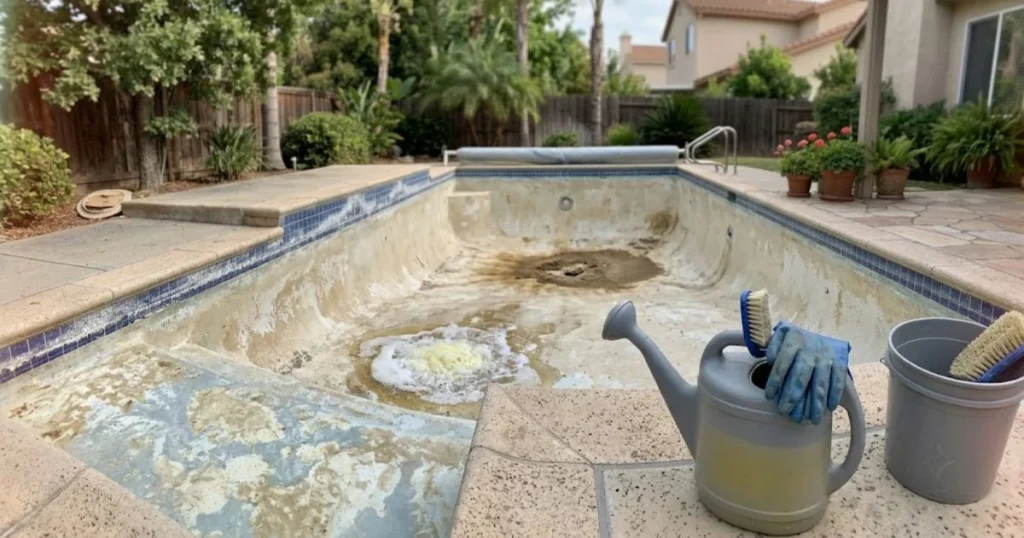
Use this when pool surfaces have heavy calcium deposits, staining, or discoloration that in-water treatment cannot reach.
An acid wash requires draining the pool fully or partially and applying a diluted acid solution directly to pool surfaces.
Standard acid wash ratio: 1 part muriatic acid to 4 parts water.
Steps for a pool acid wash:
- Drain completely and gear up: gloves, goggles, respirator, full body coverage
- Mix 1 part acid to 4 parts water in a plastic watering can
- Work in 4-foot sections from top to bottom
- Apply solution, let sit 30 seconds maximum, scrub while fizzing
- Rinse each section immediately before moving on
- Collect runoff in the deep end, neutralize with soda ash, then pump out
- Rinse the entire surface twice before refilling
- Rebalance water chemistry before swimming
Poolie’s cleaning guide notes that the bubbling and fizzing reaction during acid washing indicates the acid is actively breaking down and lifting contaminants from the surface, and scrubbing while fizzing is active produces the best results.
When to acid wash vs when NOT to:
Acid washing removes a thin layer of plaster each time. Most pools can handle 3 to 4 acid washes over their lifetime. After that, the plaster becomes too thin and replastering is needed. Do not acid wash a pool that was already acid washed within the last 3 to 5 years unless absolutely necessary.
Rebalancing Water Chemistry After Muriatic Acid Pool Cleaning
This is the step most guides skip entirely, and it directly affects swimmer safety and pool longevity.
After any acid cleaning session, the pool water chemistry will be off.
After in-water treatment: Retest pH after 4 hours. Target 7.2 to 7.6. Check alkalinity (80 to 120 ppm) and free chlorine (above 2 ppm).
After acid wash: Run the pump 24 hours before testing. Fresh refill water often reads very low pH, 6.5 to 7.0. Add soda ash in quarter-pound doses until pH reaches 7.4. Do not allow swimming until free chlorine is 2 to 4 ppm and pH is in range.
The Pool and Hot Tub Alliance recommends a complete water test after any significant chemical treatment before resuming pool use.
Muriatic Acid Pool Cleaning: What to Use for What
| Pool Problem | Use Muriatic Acid? | Better Alternative If No |
|---|---|---|
| Cloudy water from high pH | Yes | N/A |
| White calcium scale on plaster | Yes | Pumice stone for light buildup |
| Calcium tile deposits | Yes | See tile cleaning guide |
| Green algae | No | Chlorine shock treatment |
| Black algae | No | Chlorine + physical scrubbing |
| Metal stains (brown, blue) | No | Sequestrant or ascorbic acid treatment |
| Cloudy water from low chlorine | No | Shock treatment |
| Cloudy water from dirty filter | No | Filter cleaning |
| Calcium silicate deposits | No | Pumice stone or bead blasting |
Frequently Asked Questions
Can muriatic acid clear a cloudy pool?
Yes, but only if high pH is causing the cloudiness. Test pH first. If pH is above 7.8, add muriatic acid to lower it to 7.2 to 7.6 and cloudiness from calcium precipitation will clear within hours. If pH is already in range, cloudy water has a different cause and acid will not help.
Does muriatic acid remove algae from a pool?
No. Muriatic acid does not kill algae or sanitize pool water. It lowers pH, which allows chlorine to work more effectively. If your pool has algae, shock with chlorine first, then use muriatic acid to correct pH after the algae is dead.
How do I use muriatic acid to clean pool stains?
Identify the stain type first. Muriatic acid works on calcium carbonate scale and organic deposits. It does not work on calcium silicate or metal stains. For calcium stains: dilute 1 part acid to 10 parts water, apply with a brush, let fizz for 15 to 30 seconds, then rinse. For stains on a full pool, the water chemistry adjustment approach in the how to add muriatic acid to pool guide is safer.
How often should I use muriatic acid to clean my pool?
For water chemistry correction, test twice weekly and add acid only when pH reads above 7.6. For surface acid washing, no more than once every 3 to 5 years to protect plaster. For tile cleaning, once or twice per season for calcium buildup, depending on your water hardness and how consistently pH is maintained.
Conclusion
Muriatic acid is one of the most effective pool cleaning chemicals available, but only for the right problems.
It fixes: calcium scale, white deposits, and cloudy water from high pH.
It does not fix: algae, metal stains, filtration problems, or cloudiness from low chlorine.
Test before treating. Identify whether your problem is chemistry-based or contamination-based. Apply acid at the correct ratio for the job. Rebalance water chemistry after every treatment before anyone swims.
That sequence prevents the wasted chemical treatments and frustrated follow-up searches that most pool owners go through before finding the right answer.