
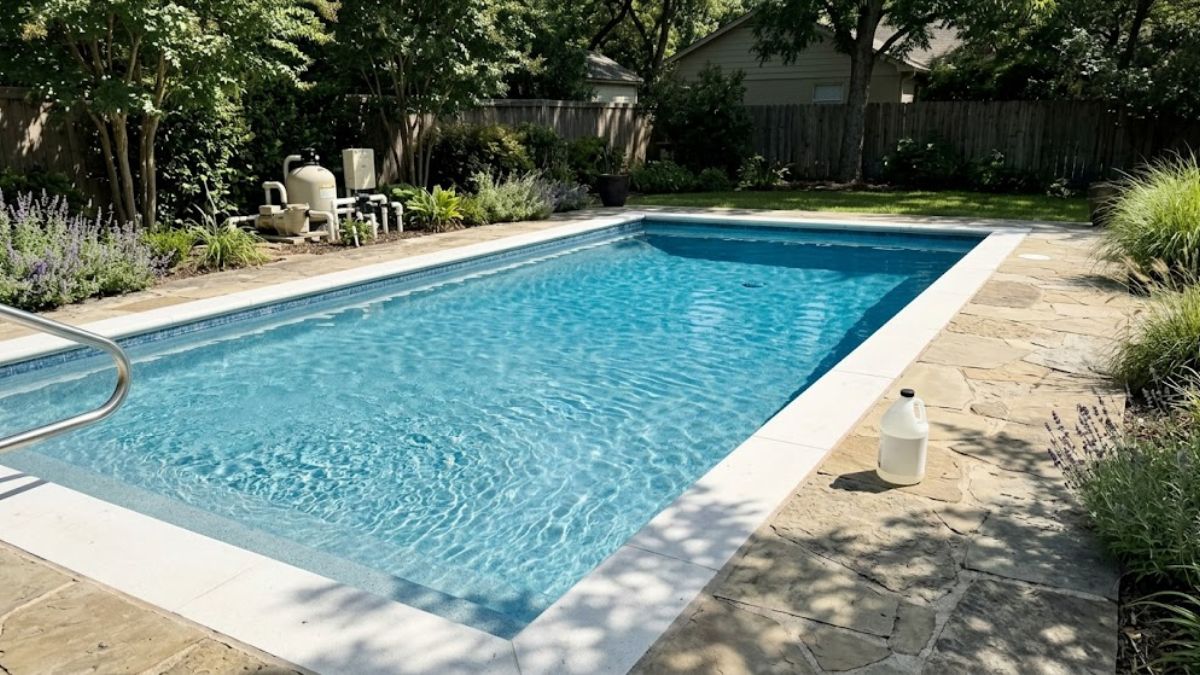

To lower pool alkalinity with muriatic acid, turn the pump OFF, pour the acid in one concentrated spot in the deep end, and let it sit for 10 to 15 minutes before turning the pump back on. This method is called slug dosing. It works because concentrated acid attacks alkalinity more effectively than dispersed acid does. For a 10,000-gallon pool, use about 26 fl oz of 31.45% muriatic acid to drop alkalinity by 10 ppm.
Muriatic Acid to Lower Pool Alkalinity
Most guides tell you to add acid. They do not tell you how. That difference is why so many pool owners add muriatic acid and watch alkalinity barely move.
Why High Alkalinity Is Harder to Fix Than High pH
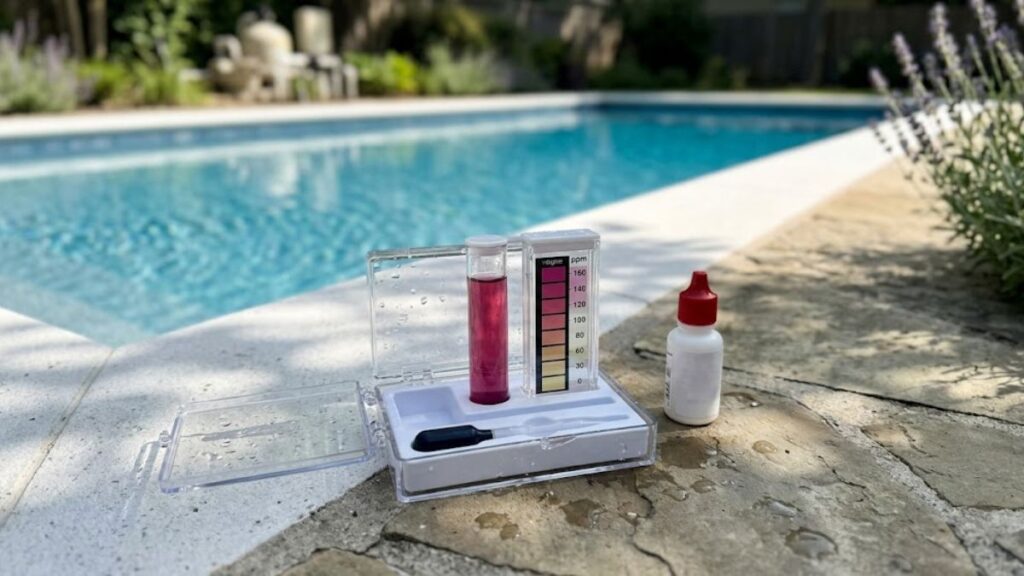
Total alkalinity and pH are connected but they are not the same problem.
pH measures how acidic or basic your water is right now. Alkalinity measures how strongly your water resists pH change. Think of alkalinity as a shield around your pH level.
When alkalinity is above 120 ppm, that shield is too strong. You add acid to lower pH, the water absorbs it, and pH barely moves. You add more acid, same result. You feel like the pool is broken.
It is not broken. The alkalinity is consuming your acid before it can touch pH.
The Pool and Hot Tub Alliance recommends keeping total alkalinity between 80 and 120 ppm for residential pools. Above 120 ppm, your pool water becomes chemically resistant to treatment. Above 150 ppm, you will spend money on chemicals that disappear into the water with almost no visible result.
We see this constantly with new pool owners who have been adding muriatic acid every week and wondering why pH keeps rising. Nine out of ten times, their TA is sitting at 160 to 180 ppm and nobody told them. Test alkalinity first. It changes everything.
How Muriatic Acid Lowers Alkalinity: The Science in Plain English
Muriatic acid is hydrochloric acid diluted to 31.45% concentration. When it enters pool water, it reacts with bicarbonate ions, which are the main component of total alkalinity. This reaction produces carbon dioxide gas and chloride ions.
The carbon dioxide escapes into the air. The alkalinity drops.
Here is what most guides skip: this reaction needs concentration to work efficiently on alkalinity. When you add acid with the pump running and it disperses instantly through 15,000 gallons of water, it becomes too diluted to efficiently target alkalinity. It lowers pH instead.
When you add acid in one concentrated spot with the pump off, it stays dense. The bicarbonate reaction happens in a focused area with much higher efficiency.
That is the entire logic behind slug dosing. Concentration beats dispersion when your target is alkalinity.
How Much Muriatic Acid to Lower Pool Alkalinity
According to AQUA Magazine, it takes 25.6 fl oz of 31.45% muriatic acid to lower total alkalinity by 10 ppm in a 10,000-gallon pool.
Use this as your baseline:
Alkalinity Reduction Dosage Chart (31.45% Muriatic Acid)
| Pool Size | Lower TA by 10 ppm | Lower TA by 20 ppm | Lower TA by 30 ppm |
|---|---|---|---|
| 10,000 gallons | 26 fl oz | 52 fl oz | 78 fl oz |
| 15,000 gallons | 39 fl oz | 78 fl oz | 117 fl oz |
| 20,000 gallons | 52 fl oz | 104 fl oz | 156 fl oz |
| 25,000 gallons | 65 fl oz | 130 fl oz | 195 fl oz |
Important: Never add more than 32 fl oz in a single slug dose session. For large drops, split across multiple days. One session per day maximum.
For your exact dose based on current TA readings, use the free muriatic acid pool calculator which calculates alkalinity reduction separately from pH correction.
Step by Step: How to Lower Pool Alkalinity with Slug Dosing
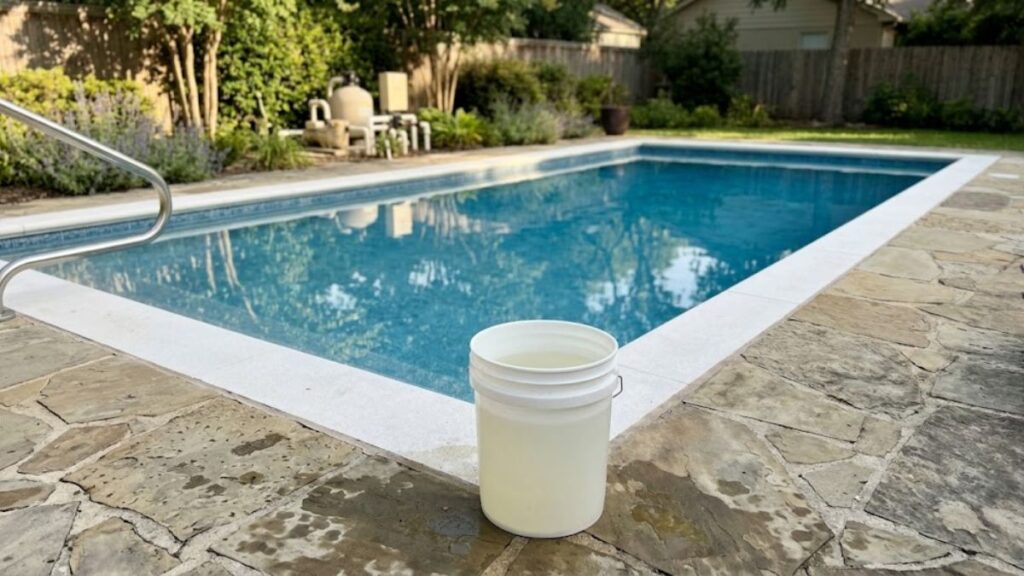
To lower pool alkalinity with muriatic acid using the slug dose method:
- Test total alkalinity with a drop-test kit and record the reading
- Calculate your dose from the chart above
- Put on gloves, goggles, and old clothing
- Turn the pool pump completely OFF
- Turn off all water features, fountains, and aerators
- Fill a plastic bucket three-quarters full with pool water
- Slowly pour the measured acid into the bucket, acid into water
- Walk to the deepest part of the pool
- Pour the entire diluted solution slowly into one concentrated spot
- Wait 10 to 15 minutes without turning the pump on
- Turn the pump back on and run for 4 hours
- Retest total alkalinity and pH before the next session
The full safety guide for handling muriatic acid is in the how to add muriatic acid to pool article.
What Happens to pH When You Lower Alkalinity
This is the part that catches most pool owners off guard.
When you use slug dosing to lower alkalinity, pH will drop significantly at the same time. Often below 7.0. Sometimes as low as 6.5. This is completely normal and expected.
Do not add soda ash or any pH increaser immediately after slug dosing.
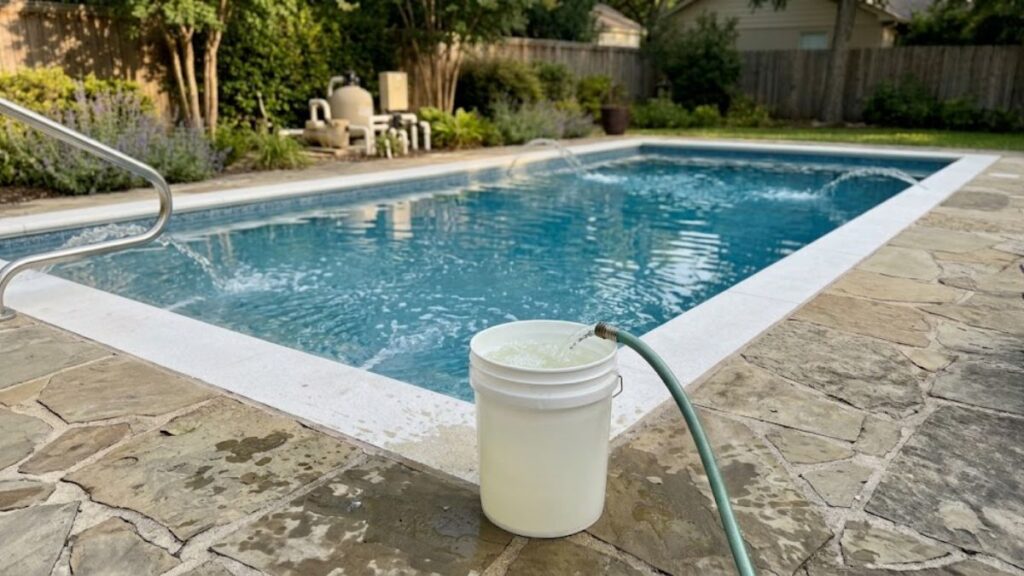
Instead, aerate the water. Point your return jets upward. Run any fountains or water features. Let the pump run on high speed if possible.
Aeration naturally raises pH by driving off carbon dioxide. This is important: aeration raises pH without raising alkalinity. It is the only way to bring pH back up after slug dosing without undoing your alkalinity work.
Within 24 to 48 hours of aeration, pH will climb back to the 7.2 to 7.6 range on its own.
Aim to get alkalinity down to around 90 to 100 ppm rather than trying to hit exactly 80. Once aeration brings pH back up, alkalinity will settle slightly higher than where you left it. Landing at 90 after slug dosing usually means you end up at a perfect 95 to 100 ppm after the water stabilizes. This is exactly where you want to be.
How Often Should You Slug Dose?
One session per day. Maximum.
Slug dosing is aggressive chemistry. Doing it twice in one day risks dropping pH below 6.5, which corrodes metal fittings, strips plaster, and damages vinyl liners.
If your alkalinity is at 180 ppm and target is 90 ppm, you need to drop 90 ppm. At 26 fl oz per 10 ppm per 10,000 gallons, that is a serious treatment plan spread over several days.
A rough schedule for a 15,000-gallon pool dropping from 180 ppm to 90 ppm:
| Day | Session | Expected TA After |
|---|---|---|
| Day 1 | 39 fl oz slug dose | 170 ppm |
| Day 2 | Retest, aerate, 39 fl oz | 155 ppm |
| Day 3 | Retest, aerate, 39 fl oz | 140 ppm |
| Day 4 | Retest, aerate, 39 fl oz | 125 ppm |
| Day 5 | Retest, aerate, 26 fl oz | 110 ppm |
| Day 6 | Retest, aerate if needed | 95 to 100 ppm |
Actual results vary depending on your water temperature, pool surface type, and how much aeration you do between sessions. Plaster pools tend to respond slightly faster than vinyl.
Slug Dosing vs Regular Dosing: Which to Use When
This is where pool owners get confused. Both use muriatic acid. The pump position is the only real difference.
Pump ON (regular dosing): Use when your primary goal is to lower pH. Acid disperses quickly and hits pH efficiently. Total alkalinity drops a little but not as much.
Pump OFF (slug dosing): Use when your primary goal is to lower total alkalinity. Concentrated acid hits bicarbonate harder. Both pH and TA drop, but the TA drop is proportionally larger.
If both pH and TA are high, lower alkalinity first with slug dosing. Let aeration bring pH back up naturally. Then check if pH still needs adjustment. In most cases, once alkalinity is in range, pH becomes easy to manage with small regular doses.
Frequently Asked Questions
Q: How much muriatic acid do I need to lower pool alkalinity?
About 26 fl oz of 31.45% muriatic acid lowers total alkalinity by 10 ppm in a 10,000-gallon pool. Use the slug dose method with the pump off for best results. For larger drops, spread treatment over multiple days at one session per day.
Q: Why does my pool alkalinity keep going back up after adding muriatic acid?
You are likely adding acid with the pump running, which disperses it too quickly. Switch to slug dosing: pump off, pour in one concentrated spot, wait 10 to 15 minutes, then turn pump on. Also check if you are adding baking soda or alkalinity increaser at any point, which directly raises TA.
Q: Can I lower alkalinity and pH at the same time?
Yes, muriatic acid lowers both simultaneously. But managing them separately gives better results. Lower alkalinity first with slug dosing. Then let aeration raise pH naturally. Trying to manage both at once usually results in overshooting one or the other.
Q: How low should I let alkalinity drop when slug dosing?
Target 80 to 100 ppm. After aeration raises pH, alkalinity will stabilize slightly higher than where you left it. Aiming for 90 ppm gives you a final result of around 95 to 100 ppm, which is ideal for most pools.
Conclusion
High alkalinity makes your pool resist every chemical treatment you throw at it. Muriatic acid fixes it, but only when used correctly.
Turn the pump off. Pour the acid in one concentrated spot in the deep end. Wait 10 to 15 minutes. Turn the pump on. Let aeration bring pH back up over the next 24 to 48 hours.
Do not rush it. One slug dose per day until alkalinity reaches 80 to 100 ppm. Check the muriatic acid pool calculator for your exact dose before each session.