
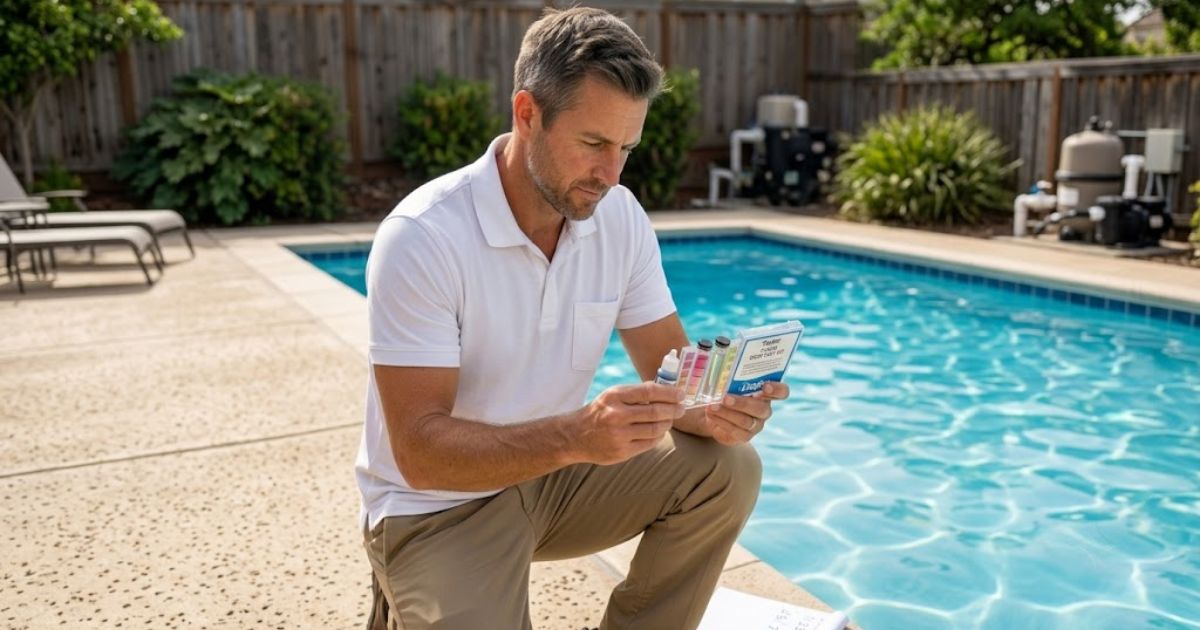

Why Does My Pool pH Keep Dropping
You test your water, add pH Up, and feel good about it. A few days later, the pH has crashed again, and now you’re stuck on a confusing question: should you add baking soda? Someone told you it works better than plain pH increaser. But your alkalinity is already high, and baking soda raises that too.
pool ph keeps dropping ,
You test your water, add pH Up, and feel good about it. A few days later, the pH has crashed again, and now you’re stuck on a confusing question: should you add baking soda? Someone told you it works better than plain pH increaser. But your alkalinity is already high, and baking soda raises that too.
So now you’re afraid to add anything.
You’re not alone, and you’re not doing anything wrong. This is one of the most common pool chemistry mix-ups, and it has a simple, specific fix, once you understand that pH and alkalinity don’t have to move together.
Why pH and Alkalinity Don’t Always Move Together
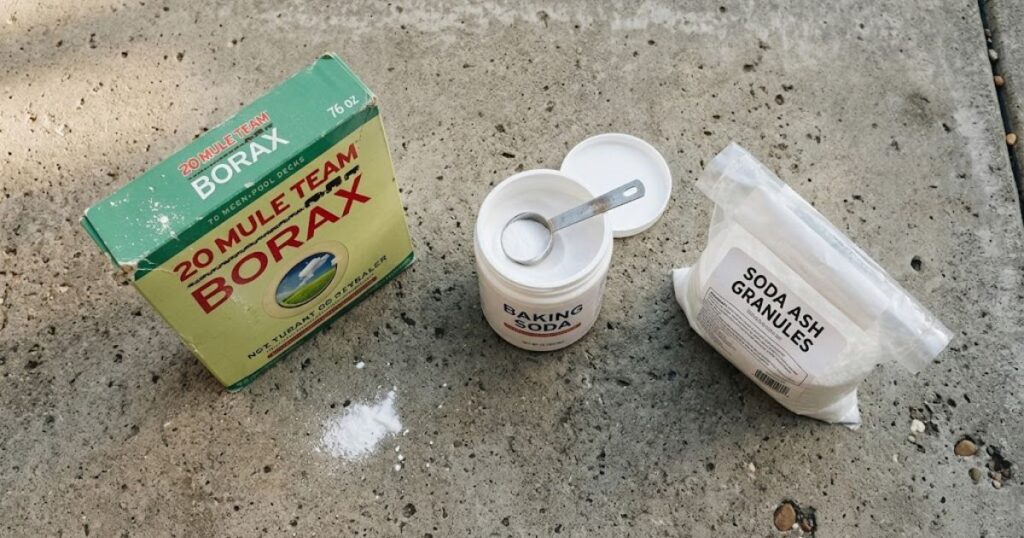
Most pool owners assume pH and alkalinity are basically the same thing, or that anything that raises one automatically raises the other. That’s only half true, and it depends entirely on which chemical you reach for.
✓ Borax raises pH and barely touches alkalinity.
✓ Baking soda (sodium bicarbonate) raises both pH and alkalinity.
✓ Soda ash (sodium carbonate) raises pH strongly and alkalinity moderately.
✓ Muriatic acid / dry acid lowers both pH and alkalinity.
This is the part that gets skipped in most quick answers: if your alkalinity is already on the high side and your pH is low, reaching for baking soda, the “stronger” option people often recommend, is exactly the wrong move. It fixes the pH problem you have while creating an alkalinity problem you don’t.
The Exact Fix When pH Is Low But Alkalinity Is Already High
If your test results look like this:
✓pH: low (below 7.2)
✓Total Alkalinity: already high (above 120 ppm)
Use borax, not baking soda or soda ash.
Borax raises pH with minimal effect on alkalinity, which means you can correct the low pH without pushing your TA any higher than it already is.
General dosing guide (always confirm with your product label and pool volume):
| Pool Size | Approx. Borax to Raise pH by ~0.2 |
|---|---|
| 10,000 gallons | 20 oz |
| 15,000 gallons | 30 oz |
| 20,000 gallons | 40 oz |
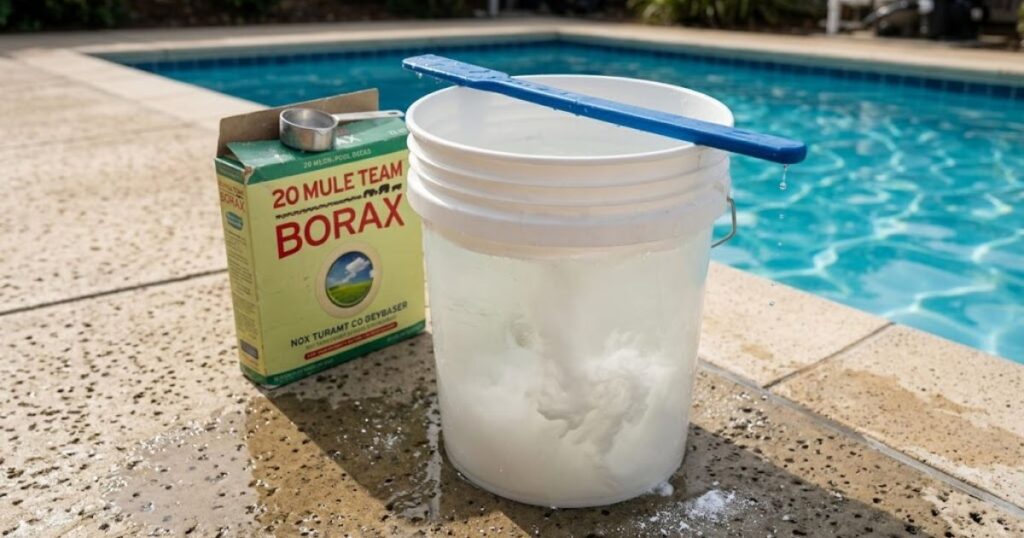
Add it dissolved in a bucket of water, broadcast it across the surface with the pump running, and retest after a few hours before adding more.
- ✓ If your alkalinity is already high but your pH keeps dropping, don’t reach for baking soda, it will push your TA even higher. Borax raises pH without meaningfully touching alkalinity, which is exactly what you need in this situation.
Why Your Chlorine Might Be Disappearing Fast Too
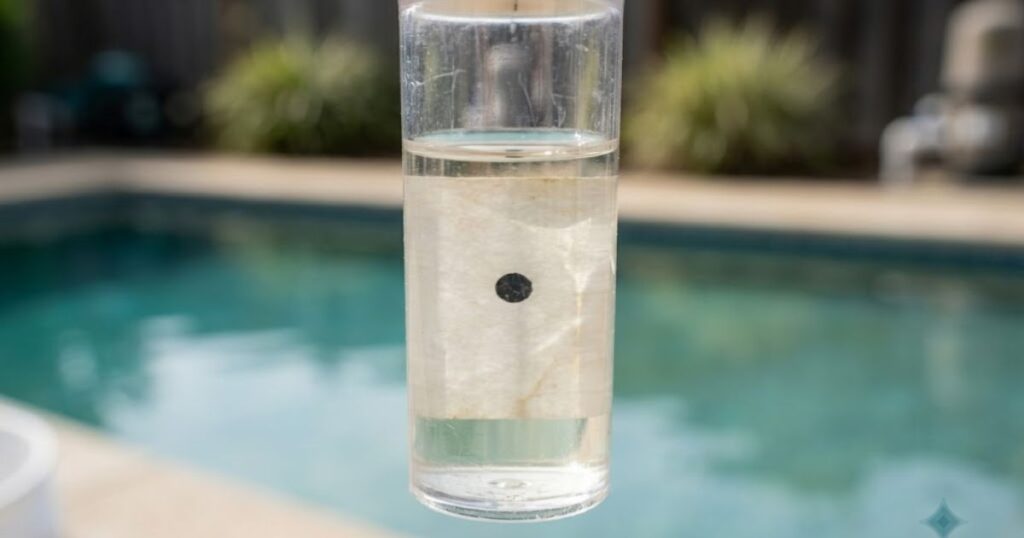
If you’re also seeing chlorine drop unusually fast, readings crashing within a day or two even after shocking, that’s often a separate but related issue, and it’s worth ruling out at the same time:
✓ Low cyanuric acid (CYA): Without enough CYA acting as a “sunscreen” for chlorine, UV rays from the sun burn through your chlorine far faster than normal, especially during hot, sunny stretches.
✓Heavy heat and sun exposure: Even with adequate CYA, intense heat accelerates chlorine loss.
✓Low pH itself: While low pH doesn’t directly “waste” chlorine, it does make chlorine more reactive and less stable in some conditions, compounding the problem.
If your pH keeps crashing and your chlorine keeps disappearing, test your CYA level before doing anything else. A CYA reading below 30 ppm is a strong sign this is part of what’s going on.
Step-by-Step: What to Do Right Now
Step 1: Test CYA first. If it is below 30 ppm, stabilizer is the root problem. Add cyanuric acid to reach 30–50 ppm before chasing pH or chlorine numbers. Adding chlorine to an unstabilized pool in summer is like filling a bucket with a hole in the bottom.
Step 2: Raise pH with borax only. If alkalinity is at or above 120 ppm, do not use baking soda or soda ash. Pre-dissolve in a bucket, add with pump running, retest after 4 hours.
Step 3: Retest pH and TA together before adding more. Confirm the borax moved pH without meaningfully raising TA. If TA went up noticeably, something else is adding alkalinity, check what chlorine product you are using.
Step 4: Test chlorine separately once pH is stable. pH affects how accurately chlorine reads on a test. Fix pH first, then assess free chlorine from a stable baseline. Do not try to fix both in the same session.
Step 5: Do not add acid unless TA is genuinely too high on its own. If TA is above 150–180 ppm and not responding to borax + aeration, that is when acid becomes appropriate, and even then, the controlled acid-then-aerate method is safer than a single large acid dose.
Quick Reference: Which Chemical Does What
| Chemical | Raises pH | Raises Alkalinity |
|---|---|---|
| Borax | Yes | Minimal |
| Baking Soda | Yes | Yes |
| Soda Ash | Yes (strongly) | Yes (moderately) |
| Muriatic Acid | Lowers | Lowers |
FAQ
Can I raise pH without raising alkalinity?
Yes, borax is the standard choice for this. It increases pH with little to no measurable effect on total alkalinity, unlike baking soda or soda ash.
Does baking soda raise pH or alkalinity?
Both. Baking soda (sodium bicarbonate) is primarily used to raise alkalinity, but it raises pH as a side effect. If your alkalinity is already high, this isn’t the right tool for a pH-only fix.
Why does my chlorine disappear in one day even after shocking?
This is most commonly caused by low cyanuric acid combined with strong heat and direct sun exposure. Test your CYA level, if it’s below 30 ppm, that’s likely the main driver.
Is it normal for pH to drop a full point in just a few days?
A drop from 7.6 to 7.0 in a few days is unusual without a clear cause. Heavy swimmer load, rain, or adding acidic chemicals can all contribute, but if alkalinity is high and you haven’t added acid, it’s worth double-checking your test kit accuracy too.
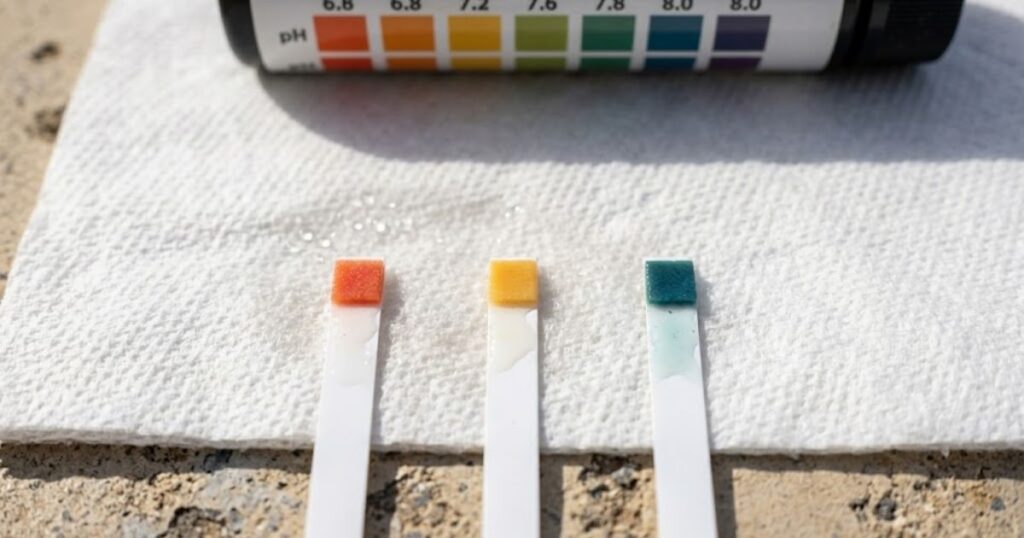
The key thing to remember: High alkalinity causes pH to resist change, which sounds like it should prevent pH from dropping, but it does not stop it from dropping. It just makes it harder to bring back up. Borax lets you raise pH in a high-alkalinity situation without pushing TA even further out of range. Fix one number at a time.