
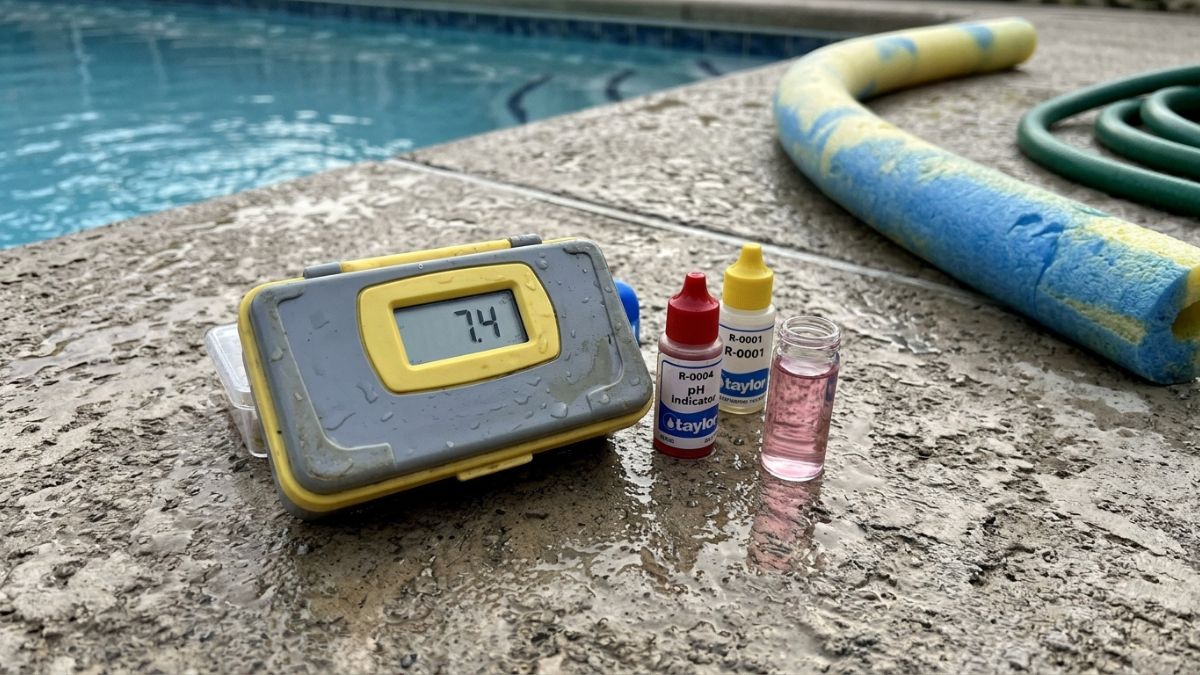

Why is pool pH higher in the evening than in the morning is one of those pool chemistry questions that confuses even experienced pool owners. You test at 8 AM and pH reads 7.4. You test again at 6 PM and it reads 7.8. You panic, add pH Down, and the next morning it reads 7.2 and now you have overcorrected.
The reading changed because pool pH naturally rises throughout the day and drops overnight. This happens in every pool, every single day, and most pool owners never realize it because they test at different times and assume the chemistry is unstable when it is actually working normally.
Understanding this daily cycle saves you money, prevents unnecessary chemical additions, and makes your water easier to manage. Here is exactly what is happening and what to do about it.
Quick Answer: Pool pH rises during the day because sunlight-driven photosynthesis from algae and microorganisms raises pH, and CO2 evaporates faster in warm water. pH drops overnight when photosynthesis stops and CO2 reabsorbs into the cooler water. A daily swing of 0.1 to 0.5 units is completely normal and does not require chemical correction.
Key Takeaways
✓ Pool pH naturally rises during the day and drops at night in every pool
✓ A daily swing of 0.1 to 0.5 pH units is normal and needs no treatment
✓ Testing pH at inconsistent times gives misleading readings and causes unnecessary chemical addition
✓ Morning is the best time to test pH for accurate baseline readings
✓ Evening is the best time to add chlorine, morning is best for pH and alkalinity adjustments
✓ If pH swings more than 0.5 units daily, that signals a chemistry problem worth investigating
What Causes Pool pH to Change Through the Day
Two separate processes drive daily pH changes in pool water. Both are natural. Neither means your pool has a problem.
Carbon dioxide balance. Pool water constantly exchanges CO2 with the air above it. During hot daylight hours, water temperature rises and CO2 escapes from the water faster. Less dissolved CO2 means less carbonic acid, which means higher pH. At night, water cools, CO2 reabsorbs into the water, carbonic acid increases, and pH drops back down. This process happens every single day regardless of what chemicals you have added.
Photosynthesis from microorganisms. This is the part most guides skip entirely. Even in clean, properly sanitized pool water, microscopic algae and photosynthetic microorganisms exist in low numbers. During daylight hours, these microorganisms absorb CO2 to produce energy through photosynthesis, removing CO2 from the water and raising pH. When sunlight disappears at night, photosynthesis stops. CO2 builds back up and pH drops.
According to Fluidra’s pool water chemistry reference, a daily pH variation of 0.1 to 0.5 units is normal and expected. Action is only needed when the swing exceeds 0.5 units or when pH sits outside the 7.2 to 7.8 range at the time of your consistent morning test.
Why Is Pool pH Higher in the Evening
The Normal Daily pH Swing Explained
Here is what a normal pool pH cycle looks like over 24 hours:
| Time of Day | Typical pH Movement | Cause |
|---|---|---|
| Early morning (6 to 8 AM) | Lowest reading of the day | CO2 reabsorbed overnight, photosynthesis not yet active |
| Mid-morning (9 to 11 AM) | Slight rise begins | Sunlight warming water, photosynthesis starting |
| Afternoon (12 to 4 PM) | Peak or near peak reading | Maximum CO2 loss, full photosynthesis activity, warm water |
| Evening (5 to 7 PM) | Often highest reading | Day’s full CO2 loss accumulated, still warm |
| Night (8 PM to 6 AM) | Gradual drop | Photosynthesis stopped, CO2 reabsorbing, water cooling |
A pool that reads 7.4 in the morning and 7.7 in the evening is working exactly as expected. If you add pH Down based on the evening reading and test again the following morning, pH will often be 7.0 or lower, not because the acid was too strong, but because the natural overnight cycle also lowered it.
This is one of the most common causes of pH overcorrection in residential pools, and it is almost entirely avoidable by testing at a consistent time each day.
Why Evening pH Readings Are Higher
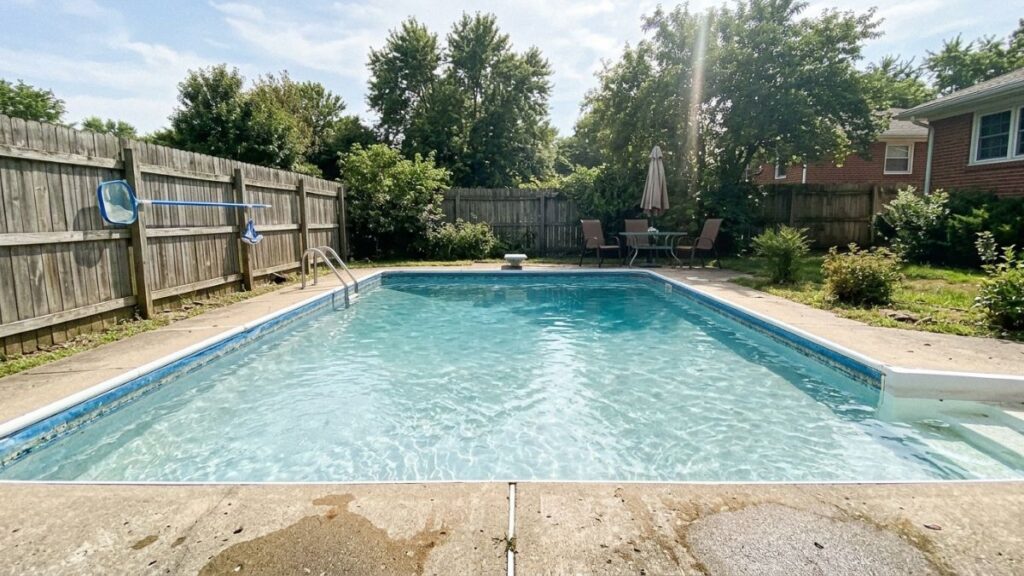
By early evening, your pool has experienced:
✓ A full day of sunlight warming the water
✓ Hours of CO2 evaporation driven by temperature and aeration
✓ Maximum photosynthesis activity from any microorganisms present
Any swimmers who have been using the pool (bather load tends to push pH up through CO2 release from breath and body chemistry)
All of these effects compound throughout the day. The evening pH reading reflects the full accumulated daily shift, which is why it is consistently higher than the morning reading in most pools. This is not a problem that needs fixing. It is the pool working normally.
If you are also running water features, fountains, or spa spillovers in the afternoon and evening, additional aeration accelerates the process. Our guide on why pool pH keeps rising covers aeration-driven pH rise in detail.
Why Morning pH Readings Are Lower
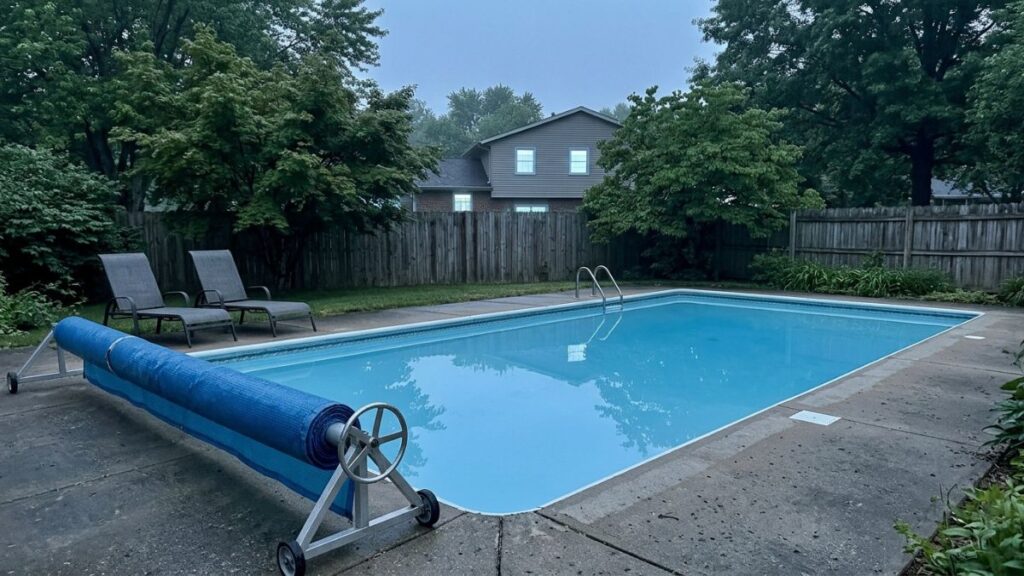
By early morning, your pool has experienced:
✓ Hours of darkness with no photosynthesis
✓ Cooler overnight temperatures encouraging CO2 reabsorption
✓ Reduced aeration from no swimming activity
✓ Natural gas exchange bringing pH closer to equilibrium
The morning reading is the most stable and accurate measurement of your pool’s true baseline chemistry. It is not artificially elevated by the day’s activity and reflects what is actually in your water before the day’s variables begin affecting it.
This is why pool chemistry professionals consistently recommend morning testing as the standard practice for accurate pH and alkalinity readings. Testing at 7 AM and again at 5 PM and comparing those numbers as if they represent the same chemical state is what leads to the confusion and over-treatment that wastes chemicals and money.
What Time Should You Test Pool pH
For pH and alkalinity: test in the morning.
Specifically, test between 7 AM and 10 AM before the pool receives significant sunlight and before any swimmers use it. This gives you the most stable, repeatable baseline that you can compare consistently from day to day.
For chlorine: test in the evening or early morning.
Sunlight destroys free chlorine throughout the day. An afternoon chlorine reading does not tell you what your pool started the day with, only what survived the UV exposure. Adding chlorine based on a 2 PM reading often results in overcorrection. Evening testing shows genuine depletion and morning testing shows overnight loss, both useful readings for chlorine management.
For a comprehensive chemistry check: test in the morning.
If you need to test everything, pH, alkalinity, chlorine, CYA, all in one session, morning is the correct time. Results are most representative of the pool’s actual chemistry state before daily variables distort individual readings.
The CDC’s guidance on residential pool maintenance recommends maintaining pH between 7.2 and 7.8 with consistent, regular testing. Consistency in testing time is what makes that maintenance reliable.
For the best testing method and kit comparison, our guide on how to test pool water correctly covers test strips, liquid kits, and digital testers in detail.
When Daily pH Swing Becomes a Problem
A swing of 0.1 to 0.5 units between morning and evening is normal. A swing greater than 0.5 units suggests an underlying chemistry issue worth investigating.
| Daily Swing | Status | Action |
|---|---|---|
| 0.1 to 0.3 units | Normal | No action needed |
| 0.3 to 0.5 units | Acceptable | Monitor, check TA |
| 0.5 to 0.8 units | High | Test total alkalinity, check for algae early growth |
| Above 0.8 units | Problem | Total alkalinity likely low or very high, aeration issue |
Large swings usually mean total alkalinity is off. When TA is low, the water has insufficient buffering capacity to resist pH changes from CO2 and photosynthesis. Every small influence moves pH dramatically. When TA is too high, the same CO2 cycle creates a larger absolute pH movement because more carbonate is available to drive the change.
Check your TA reading against our pool alkalinity levels chart if your daily pH swing seems excessive.
How to Stop Unnecessary Chemical Additions
The single most effective thing you can do to stop wasting pH chemicals is test at the same time every day.
Pick a time, morning is best, and commit to it. A reading of 7.6 at 8 AM every day tells you your pool is stable. A reading of 7.4 at 8 AM one day and 7.8 at 6 PM the next day tells you nothing useful because you are comparing two different points in the pH cycle, not two different pool conditions.
Before adding pH Down, ask yourself:
✓ When did I last test?
✓ Is this an evening reading?
✓ When did I last add any chemicals?
✓ Is total alkalinity in range?
Many pool owners who feel like they are constantly fighting high pH are actually just testing in the evening, adding chemicals, and then being surprised when morning shows the water has dropped below 7.2. The pH Down worked fine. The evening reading was artificially elevated by the daily cycle.
If your pH genuinely stays above 7.8 at the consistent morning test, that is a real problem worth treating. Our guide on how to lower pool pH naturally covers the correct acid-and-aerate method for real high pH treatment.
For the related situation where pH is normal but chlorine is not working, our guide on pool pH normal but chlorine not working covers what else could be affecting your sanitizer.
Pick one testing time and stick to it. Morning is best. A consistent testing time makes it possible to actually compare results day to day. Testing at random hours gives you data points that are incomparable and leads to chemical decisions based on where your pool is in its daily cycle rather than its actual chemistry state.
Testing Schedule That Actually Works
| Day | What to Test | When | Why |
|---|---|---|---|
| Monday | pH, TA, Free Chlorine | 7 to 9 AM | Full chemistry baseline |
| Wednesday | pH, Free Chlorine | 7 to 9 AM | Midweek check |
| Friday | pH, Free Chlorine | 7 to 9 AM | Pre-weekend check |
| After rain | pH, TA, Chlorine | Next morning | Rain dilutes and shifts chemistry |
| After shock | pH, Chlorine | 12 hours after shocking | Confirm chemistry stabilized |
| After heavy swim | Chlorine | Same evening | Immediate sanitizer check |
The key is morning testing for chemistry decisions and evening chlorine dosing for maximum overnight effectiveness.
Chlorine added after sunset is not destroyed by UV rays until the following morning, giving it more contact time with the water.
From the Author
I have managed pool chemistry for residential and small commercial pools for several years, and the single most common source of confusion I encounter is pool owners comparing morning and evening pH readings as if they are the same measurement. I have seen people add pH Down at 7 PM because pH read 7.9, only to test the next morning and find pH at 6.9, frustrated that the acid was too strong. The acid was fine. The starting point was artificially high from the daily cycle. Switching to consistent morning testing eliminated that problem for almost every pool I have worked with.
Frequently Asked Questions
Why is my pool pH higher in the evening than the morning? Pool pH rises during the day because sunlight drives CO2 out of warmer water and photosynthesis from microorganisms removes additional CO2. At night, both processes reverse. A swing of 0.1 to 0.5 units between morning and evening is completely normal.
Should I test pool pH in the morning or evening? Morning, between 7 and 10 AM, before sunlight and swimmers affect the readings. Evening readings are artificially elevated by the day’s CO2 loss and photosynthesis activity and do not accurately represent your pool’s stable chemistry.
Is a daily pH change of 0.3 units normal? Yes. A swing of 0.1 to 0.5 units between morning and evening is expected in all pools. Only swings above 0.5 units warrant investigation, usually indicating a total alkalinity problem.
Can I add pH chemicals in the evening? You can, but base your decision on a morning reading, not an evening one. Adding pH Down based on an elevated evening reading often results in overcorrection to low pH by the following morning.
Why does my pool pH drop overnight? Overnight, photosynthesis stops and CO2 reabsorbs into cooler water, increasing carbonic acid levels and lowering pH. This is the reverse of the daytime process and is completely normal.
How do I know if my pH swing is a problem? Test at the same time every morning for one week. If the morning readings are consistently within the 7.2 to 7.8 range and stable from day to day, your pool is fine. If morning readings themselves are swinging dramatically, check total alkalinity.
Final Thoughts
Pool pH being higher in the evening than the morning is not a malfunction. It is a predictable daily cycle driven by temperature, CO2 exchange, and photosynthesis that happens in every pool without exception. Understanding it prevents unnecessary chemical additions and the overcorrection cycle that follows.
Test in the morning. Make chemical decisions based on morning readings. Add chlorine in the evening for maximum effectiveness. A daily pH swing within 0.5 units is normal and requires no treatment whatsoever.
If your morning pH readings are consistently outside the 7.2 to 7.8 range, that is the time to act. Our guide on pool pH too high or too low covers both directions with step-by-step fixes.