
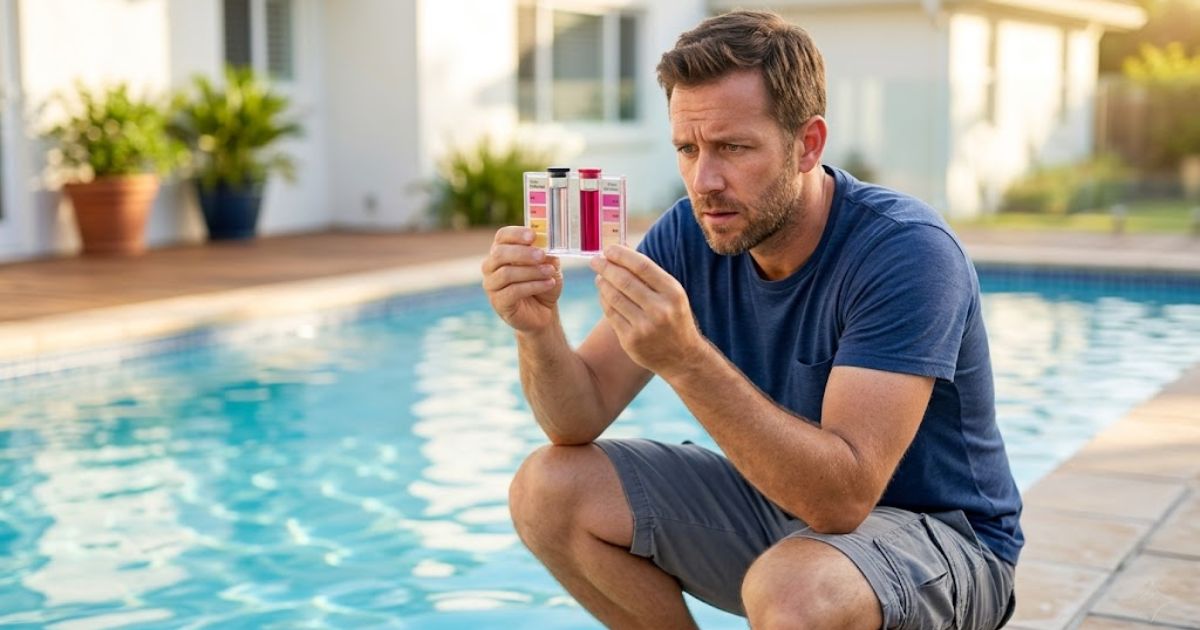

You tested your pool. The reading came back dark pink, or the comparator maxed out entirely.
Nobody can swim. You’re not sure whether to wait it out, drain water, or reach for a chemical. And most of what you’ve found online tells you to add baking soda or wait a few days, neither of which is going to help you today.
Here’s what actually works. Five methods, ranked fastest to slowest, with exact product dosing, a pool volume calculator, and a clear answer on when each approach is the right one.
📌 KEY TAKEAWAYS — Read This First
- Safe free chlorine for swimming: 1–3 ppm — do not swim above 5 ppm
- Fastest fix (30–60 min): sodium thiosulfate chlorine neutralizer
- Free fix (4–24 hrs): remove cover, run pump in full direct sun
- Levels above 10 ppm: partial drain and refill first, then neutralizer
- High CYA above 80 ppm will stop chlorine from dropping — see the troubleshooting section below
- Always re-test before swimming — never go by time alone, always by the confirmed reading
This guide covers residential outdoor pools only. Swim spa and hot tub chlorine reduction uses very different dosing, water volume is too small for these quantities.
What Is a Safe Chlorine Level — and Why Does It Matter?
A safe chlorine level for swimming is 1–3 ppm of free chlorine. This range actively kills bacteria and algae without irritating swimmers’ eyes, skin, or lungs. According to the Association of Pool & Spa Professionals (APSP), free chlorine above 5 ppm causes discomfort in most swimmers. Above 10 ppm, the pool should be closed until levels are confirmed safe by a DPD test.
Two numbers matter here: free chlorine and combined chlorine. Most people only track one.
Free chlorine is the active sanitizer, the part of your reading that’s actually killing bacteria. This is the number to fix. Combined chlorine (chloramines) is the spent byproduct that forms when free chlorine reacts with sweat, sunscreen, and organic debris in the water. Chloramines are what cause that sharp “pool smell” most people blame on too much chlorine. Here’s the thing, that smell usually means free chlorine has been consumed, not that it’s dangerously high. Testing both numbers before treating tells you which problem you actually have.
One thing most guides don’t mention about testing at high chlorine: when free chlorine exceeds 10 ppm, it can bleach your DPD test reagent before the pink colour has time to develop, giving you a falsely clear or pale reading. This is called a chlorine washout effect. If your strip reads clear but people have red eyes and the water smells sharp, dilute your pool water sample 50/50 with tap water, test the diluted sample, then multiply the result by two. That’s your actual reading.
Always use a DPD liquid test kit, not strips, when chlorine is elevated. Strips are unreliable above 5 ppm.
“Is high CYA making your chlorine impossible to lower? Read our complete guide to cyanuric acid and chlorine lock”
5 Methods how to Lower Chlorine in a Pool
Five proven methods lower chlorine in a pool: stopping all chlorine additions, exposing the water to direct sunlight for UV photolysis, partially draining and refilling with fresh water, adding a sodium thiosulfate chlorine neutralizer, and running the circulation pump continuously. A sodium thiosulfate neutralizer is the fastest method, typically reducing levels within 30–60 minutes when correctly pre-dissolved and applied near the return jets.
Method 1 — Sodium Thiosulfate Neutralizer: Fastest Fix Available
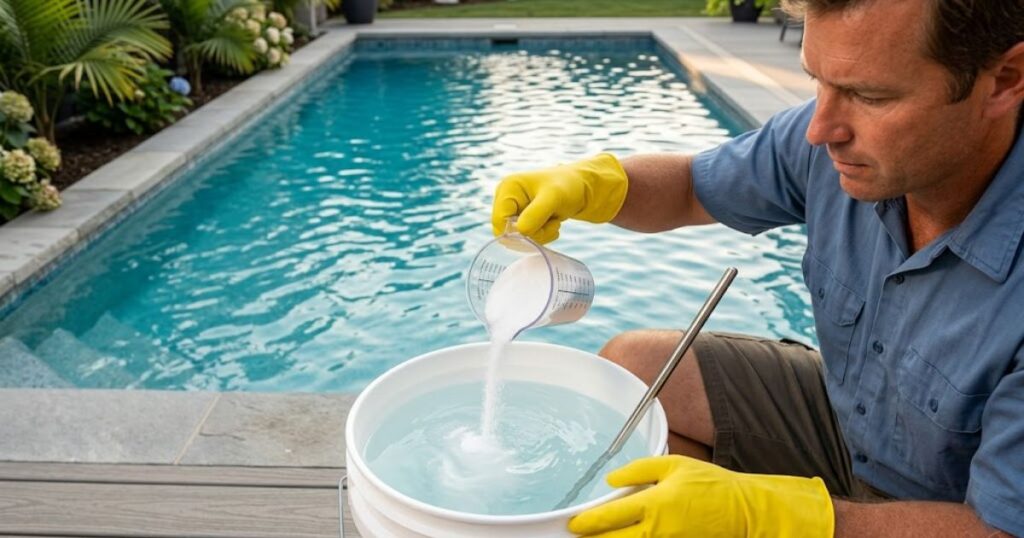
Sodium thiosulfate (Na₂S₂O₃) reacts directly with free chlorine and neutralizes it within 30–60 minutes. This is the right call any time you need the pool safe the same day.
Products like HTH Chlorine Neutralizer, In The Swim Chlorine Reducer, and Clorox Pool & Spa Chlorine Reducer all use sodium thiosulfate as the active ingredient. Buy any of them — the chemistry is identical, only the label differs.
One thing most guides skip: sodium thiosulfate temporarily consumes dissolved oxygen as it reacts. Adding a full large dose at once can cause a brief pH drop and oxygen dip in the water. Split any treatment that reduces chlorine by more than 3 ppm into two or three smaller doses, wait 30 minutes between each, and re-test before adding more.
Exact steps — how to use a chlorine neutralizer correctly:
- Test your pool and note the exact current ppm reading
- Calculate your pool volume using the formula below
- Measure 75% of your calculated dose, always start conservative
- Pre-dissolve the powder completely in a bucket of pool water, never add directly
- Pour slowly near the return jets with the pump running at full speed
- Wait 30 minutes then re-test from mid-pool at arm’s depth
- Add more in small stages if levels are still elevated, never dump all at once
Best for: Any elevated reading when you need results today. The only reliably fast option.
Method 2 — Sunlight and UV Exposure: Free but Takes Time
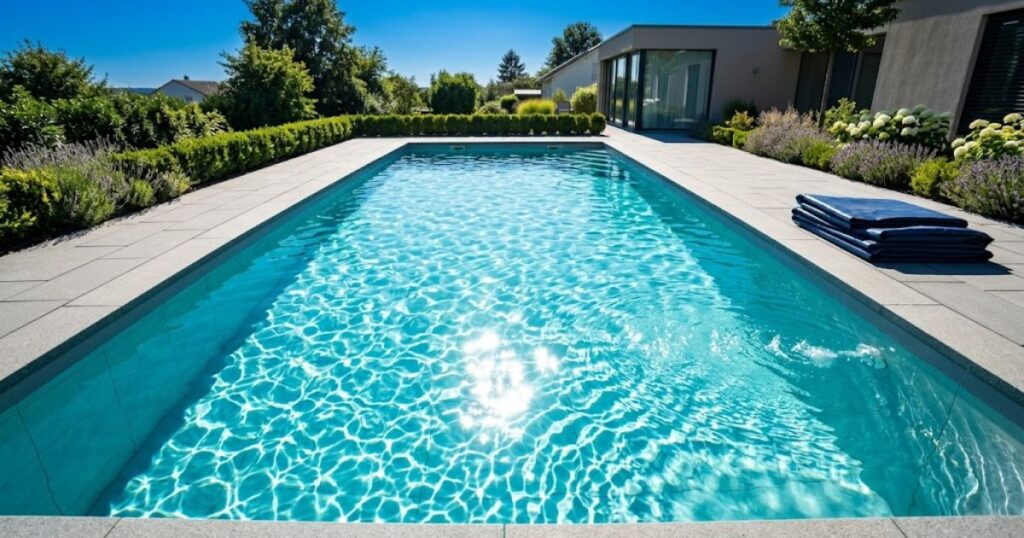
Direct sunlight breaks down free chlorine through UV photolysis, the same reason outdoor pools without a stabilizer lose chlorine so rapidly in summer. Remove the pool cover completely and run the pump. On a clear, hot day, an unstabilized pool can drop 1–3 ppm every 8 hours.
The key variable is your cyanuric acid (CYA) level. CYA bonds with chlorine molecules and shields them from UV, which is exactly what it’s designed to do. If your CYA is at the ideal 30–50 ppm range, UV exposure works reasonably well. If CYA is above 80 ppm, sunlight barely touches your chlorine and this method may take several days to produce meaningful results.
Best for: Readings of 5–8 ppm with clear sunny weather and no urgent time pressure. Most effective when combined with Method 3.
Method 3 — Stop All Chlorine Additions: Free, Necessary First Step
Switch off the automatic chlorinator. Remove trichlor or dichlor tablets from the floater. Confirm the salt system is turned down or off. Check the inline chemical feeder.
On its own, stopping additions produces slow results, an unstabilized pool might drop 0.5–1 ppm per day naturally. A well-stabilized pool takes longer. But it’s a mandatory first step alongside every other method. If you’re adding neutralizer while the chlorinator is still running at full output, you’re fighting yourself.
Best for: Mildly elevated readings (4–5 ppm) when a few days before the next swim is acceptable. Always do this alongside any other treatment.
Method 4 — Partial Drain and Refill: Most Thorough Reset
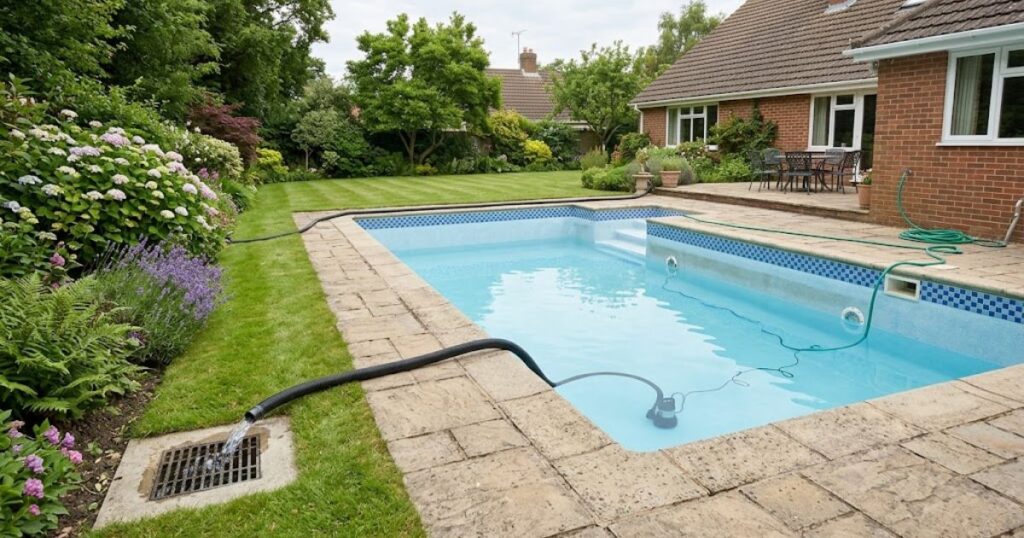
Dilution works every time and leaves zero chemical residue in the water. Drain a portion of the pool and replace with fresh tap water to reduce concentration proportionally.
Calculate the exact fraction to drain:
(Current ppm − Target ppm) ÷ Current ppm = Fraction to drain
Worked example: Chlorine reads 12 ppm. Target is 2 ppm.
(12 − 2) ÷ 12 = 0.83 → drain approximately 83% and refill with fresh water.
That’s a large amount, real cost in water bills and time. The benefit is that draining also removes cyanuric acid buildup, chloramines, and total dissolved solids simultaneously. For a pool where multiple chemistry parameters are off, this is the most complete reset available short of a full drain.
Drain to waste, not back through the filter. After refilling, wait 24 hours before rebalancing all chemistry.
Best for: Chlorine above 10 ppm, pools where CYA is also elevated above 80 ppm, or any time chemistry has drifted across multiple parameters at once.
Method 5 — Run the Filter and Pump Continuously: Non-Negotiable Support
Running your filtration pump at full speed doesn’t lower chlorine on its own.
But it makes every other method work 20–30% faster.
Continuous circulation distributes chemical treatments evenly through the full pool volume, increases surface agitation that speeds natural chlorine dissipation, and prevents high-concentration pockets of untreated water sitting in corners or behind fittings. Adding a neutralizer without running the pump means it never reaches the far end of the pool.
Don’t turn it off while treating.
Best for: Always, run it alongside every method above.
- ✓ High chlorine levels can make swimming uncomfortable, so lowering them safely is the key to restoring a balanced and enjoyable pool.
Which Method Is Right for Your Situation? Quick Reference
| Method | Speed | Cost | Best Scenario | When Can You Swim? |
|---|---|---|---|---|
| Sodium thiosulfate neutralizer | 30–60 min | $8–$20 | Any level, same-day need | 30 min post-dose + re-test at 1–3 ppm |
| Sunlight + UV photolysis | 4–24 hours | Free | 5–8 ppm, sunny forecast | After confirmed re-test |
| Stop all chlorine additions | 2–7 days | Free | 4–5 ppm, no time pressure | After confirmed re-test at 1–3 ppm |
| Partial drain + refill | 2–8 hours | Water cost | 10+ ppm, high CYA, multiple issues | After 24 hr wait + re-test |
| Run pump continuously | Supportive | Electricity | Always — combine with above | Accelerates all other methods |
“Did an over-shocking mistake cause your spike? Read our complete pool shock guide to understand the correct dosing”
Chlorine Neutralizer Dosing Table
The standard dose to lower pool chlorine by 1 ppm using sodium thiosulfate is approximately 2 oz (57g) per 10,000 gallons. According to pool chemistry guidance validated by the APSP, always start with 75% of the calculated dose and re-test after 30 minutes before adding more. Overshooting and dropping chlorine below 1 ppm creates an immediate algae risk.
Pre-dissolve everything in a bucket. Start with 75%. Re-test at 30 minutes. Add more if needed. This sequence prevents the two most common errors: over-treatment and uneven distribution.
| Product | Active Ingredient | Dose per 10,000 gal to lower 1 ppm | Price Range |
|---|---|---|---|
| HTH Chlorine Neutralizer | Sodium Thiosulfate | 2 oz / 57g | $10–$14 |
| In The Swim Chlorine Reducer | Sodium Thiosulfate | 2 oz / 57g | $8–$12 |
| Clorox Pool & Spa Reducer | Sodium Thiosulfate | 1.5 oz / 43g | $12–$16 |
| Generic sodium thiosulfate (bulk) | Sodium Thiosulfate | 2 oz / 57g | $0.50–$1/dose |
⚠️ Four dosing mistakes that waste your money:
- Baking soda: raises alkalinity and pH — does absolutely nothing to lower chlorine
- Vitamin C (ascorbic acid): designed for metal stain removal — not reliable for chlorine reduction
- Hydrogen peroxide: unpredictable reactions in pool water — stick to sodium thiosulfate
- Adding dry powder directly: causes surface bleaching and concentrated pockets — always pre-dissolve in a bucket
confirms safe free chlorine ranges and health effects of over-chlorination in recreational water
Pool Volume Calculator — Get Your Dose Right
Accurate pool volume is essential before any chlorine treatment. Guessing volume causes under-treatment (chlorine stays dangerously high) or over-treatment (chlorine crashes below 1 ppm, risking algae). Calculate volume using: Length × Width × Average Depth × 7.48 for rectangular pools. Round pools: Diameter × Diameter × Average Depth × 5.9. All measurements in feet give gallons.
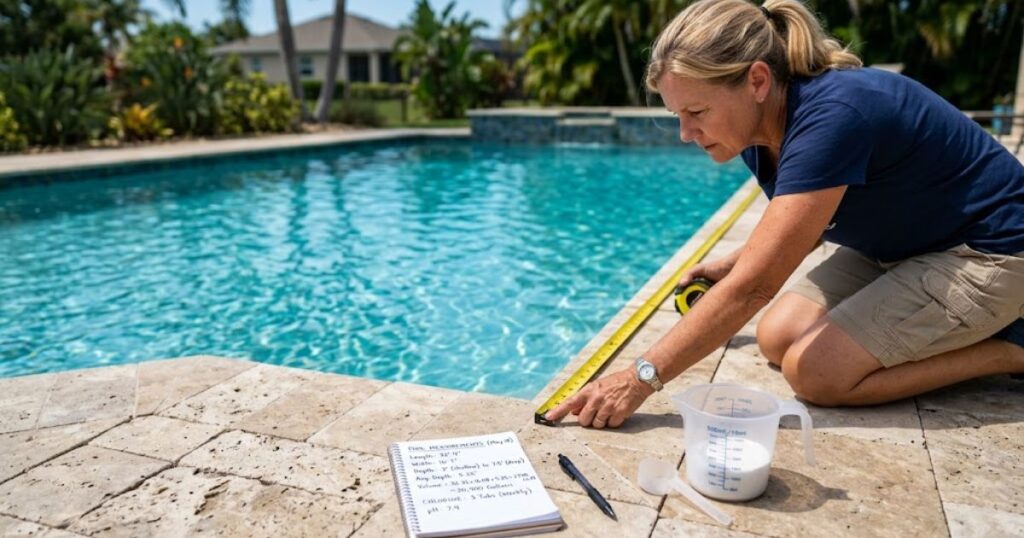
Rectangular or square pool:
Length (ft) × Width (ft) × Average Depth (ft) × 7.48 = Gallons
Round pool:
Diameter (ft) × Diameter (ft) × Average Depth (ft) × 5.9 = Gallons
Oval pool:
Long Diameter × Short Diameter × Average Depth × 5.9 = Gallons
Finding average depth: (Shallow end depth + Deep end depth) ÷ 2
Worked example — 15 ft × 30 ft rectangular pool, 3 ft shallow end, 6 ft deep end:
Average depth = (3 + 6) ÷ 2 = 4.5 ft
Volume = 15 × 30 × 4.5 × 7.48 = 15,147 gallons
Chlorine reads 8 ppm. Target is 2 ppm. That’s a 6 ppm reduction needed.
Using HTH Chlorine Neutralizer at 2 oz per 10,000 gal per 1 ppm:
- For 6 ppm reduction per 10,000 gal: 6 × 2 oz = 12 oz
- Adjusted for 15,147 gal: 12 × (15,147 ÷ 10,000) = ~18 oz total
- Divide into 3 rounds of 6 oz — dose, wait 30 min, re-test, repeat
To calculate your exact dose:
- Measure pool dimensions and calculate volume from formulas above
- Test water and record current ppm and your target ppm
- Subtract target from current to get ppm reduction needed
- Calculate: (ppm to reduce) × 2 oz × (your volume ÷ 10,000)
- Start with 75% of that figure, add more in stages after re-testing
Warning Signs Your Chlorine Is Too High
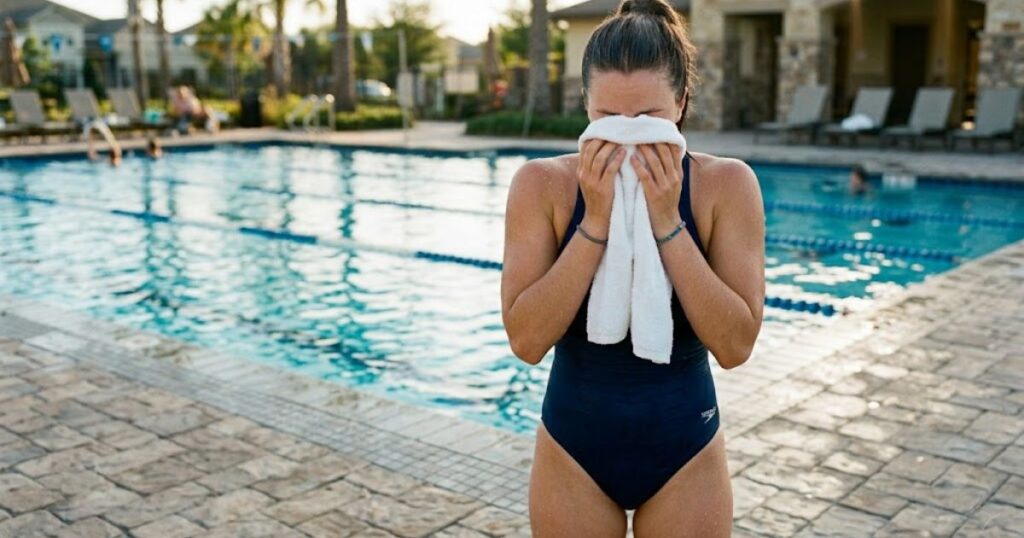
Physical symptoms that appear before you think to test:
- Red, stinging eyes after swimming — the clearest early warning signal
- Dry, itchy skin or hair that feels stripped or tight after getting out
- Bleached or faded swimwear — high chlorine aggressively breaks down fabric dye
- Headache or nausea after time in or close to the pool
- Strong, sharp chemical smell at water level — note this is usually chloramines rather than pure excess free chlorine; but always test when you notice it
- Faded pool liner, grout, or tile — a sign of prolonged over-chlorination, not an isolated spike
Symptoms point you toward a problem. A DPD kit tells you exactly what the problem is. Never dose based on smell or eye irritation alone, always confirm the reading first.
What If the Chlorine Won’t Go Down?
You’ve added neutralizer, removed the cover, let it run all day, and the reading barely moved. Three specific causes account for almost every case of stubborn high chlorine:
1. High cyanuric acid (CYA) above 80 ppm.
CYA bonds with chlorine molecules and shields them from both UV and chemical neutralizers. When CYA climbs above 80 ppm, a condition called chlorine lock develops, chlorine is present in the water but its dissipation is dramatically slowed. Or maybe I should put it this way: it’s like trying to neutralize something that’s been wrapped in protective packaging. The chemical can’t fully reach the chlorine bond.
If your CYA is the culprit, the only genuine solution is partial drain and refill. No neutralizer product fully overcomes very high CYA.
“Full explanation: what is cyanuric acid in a pool, what causes chlorine lock, and how to lower CYA effectively”
2. Continuous dosing source still active.
A salt chlorinator, inline feeder, or tablet floater that’s still running will replace neutralized chlorine as fast as you remove it. Double-check every possible chlorine source is off before concluding the treatment isn’t working.
3. Chlorine washout giving false test readings.
At very high concentrations, above 10 ppm — free chlorine can bleach DPD reagent before it develops the pink color, showing a falsely low or clear result. If your pool clearly has eye-irritating water but the test reads near zero, the test itself failed. Dilute pool water 50/50 with tap water, test the diluted sample, and multiply the result by two. That’s the real number.
How to Stop Chlorine Spiking Again
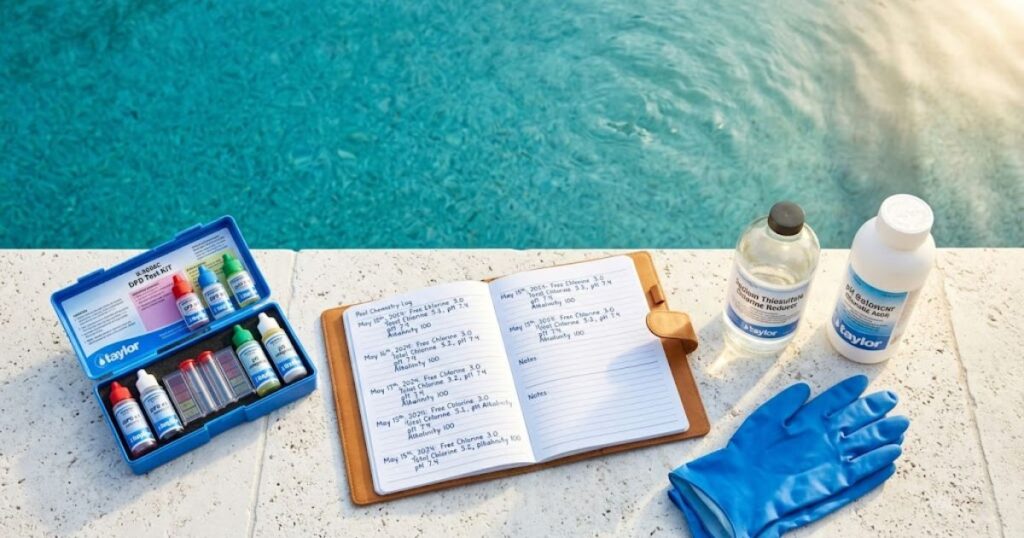
Chlorine spikes are almost always a management problem, not a product problem. Four habits prevent the majority of them:
Test before every dose, not on a fixed calendar. Pool owners who dose on a weekly schedule without testing first consistently over-treat. Chlorine demand changes with temperature, rain, bather load, and season. A DPD test takes 90 seconds and eliminates every guessing variable. This single habit change prevents more over-chlorination events than any other.
Know your pool volume and use it every time. Write it on a sticker inside your chemical storage box. Over-chlorination almost always traces back to not knowing exact volume and adding “a bit extra for safety.” Eyeballing is how pools end up at 12 ppm.
Wait at least 30 minutes after shocking before testing. Shock added to un-circulated water concentrates near the addition point. Testing five minutes later gives an extreme reading at the surface, not a true measure of the whole pool. Run the pump for 30 minutes, then test from the middle of the pool at arm’s depth.
Keep cyanuric acid between 30–50 ppm. Below 30 ppm, chlorine burns off too fast in sun and you’ll keep compensating with higher doses. Above 80 ppm, chlorine becomes genuinely harder to control. Test CYA every 4–6 weeks, it doesn’t deplete like chlorine but builds slowly from every stabilized chlorine addition.
Went too far in the other direction? Here’s how to raise pool chlorine back to safe levels quickly
Confirms ideal free chlorine range, cyanuric acid levels, and testing frequency recommendations for residential pools
FAQs
How long does chlorine take to lower on its own in a pool?
Between 1 and 7 days without treatment, depending on sunlight exposure, temperature, and cyanuric acid level. Unstabilized pools in direct summer sun can drop 1–3 ppm per day. Pools with high CYA take significantly longer — sometimes a week or more without intervention.
What is the fastest way to lower chlorine in a pool?
Sodium thiosulfate chlorine neutralizer — HTH Chlorine Neutralizer, In The Swim Chlorine Reducer, or generic sodium thiosulfate. Pre-dissolve in a bucket, add near return jets with pump running, and re-test after 30 minutes. Most pools see significant reduction within the hour.
Can I swim if pool chlorine is at 5 ppm?
Briefly, but most swimmers experience eye and skin irritation at 5 ppm. The APSP recommends staying out until free chlorine returns to 1–3 ppm. Children, contact lens wearers, and anyone with sensitive skin or respiratory conditions should always wait for a confirmed safe test reading.
Does draining pool water actually lower chlorine?
Yes — draining 25–50% and refilling with fresh water reduces chlorine by the same proportion. It’s slower than a neutralizer but simultaneously lowers cyanuric acid, total dissolved solids, and chloramines. Best option when multiple chemistry parameters are off, not just chlorine alone.
Why does my pool smell strongly of chlorine but the reading is already high?
That sharp smell is almost always chloramines — combined chlorine — not excess free chlorine. It means free chlorine has been consumed by organic contaminants and converted into a non-sanitizing form. The fix is usually a shock treatment to destroy the chloramines, not reducing chlorine. Test both free and total chlorine: if total is significantly higher than free, chloramines are the real issue.
The Bottom Line
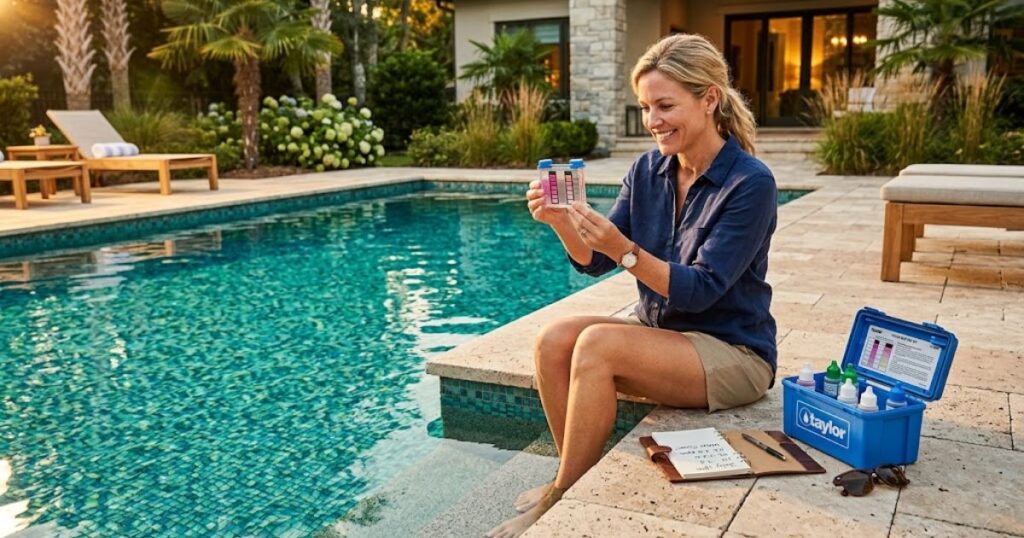
High chlorine is solvable. Every time.
Need the pool back today? Sodium thiosulfate neutralizer, dosed in stages, re-tested every 30 minutes until confirmed safe. Have a sunny day and 24 hours? Pull the cover off, run the pump, and let UV work for free. Dealing with levels above 10 ppm or a reading that won’t budge? Partial drain, refill, and a chemistry audit, because something is causing the spike to keep recurring.
One rule covers every scenario: re-test before anyone swims. Not by time. Not by how the water looks. By the confirmed DPD reading.
“Did high chlorine combine with algae growth? Here’s how to shock a green pool back to clarity”