
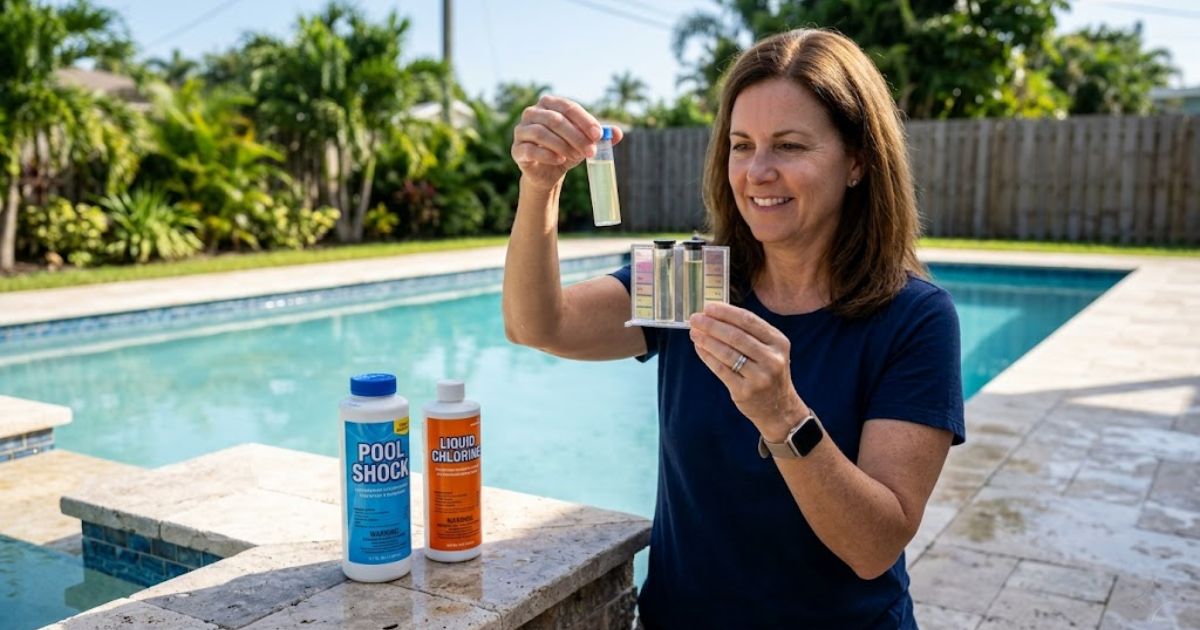

How to raise chlorine in a pool
You test your pool and the reading comes back pale yellow or practically clear.
You test your pool and the reading comes back pale yellow or practically clear.
Low chlorine means bacteria and algae have nothing stopping them. A pool without adequate free chlorine is unsanitary within hours in warm weather, and visible algae can take hold within 24–48 hours once levels hit zero.
The fix is straightforward. Four products can raise your chlorine quickly, and which one you reach for depends on how low the reading is and how fast you need results.
📌 KEY TAKEAWAYS
- Target free chlorine: 1–3 ppm for safe swimming
- Fastest fix: liquid chlorine (sodium hypochlorite) — raises levels within 30–60 minutes
- For crashed levels or early algae: use pool shock (calcium hypochlorite)
- Chlorine tablets are for maintenance only — not for emergency raises
- Always re-test before swimming; never go by time alone
Why Does Pool Chlorine Drop?
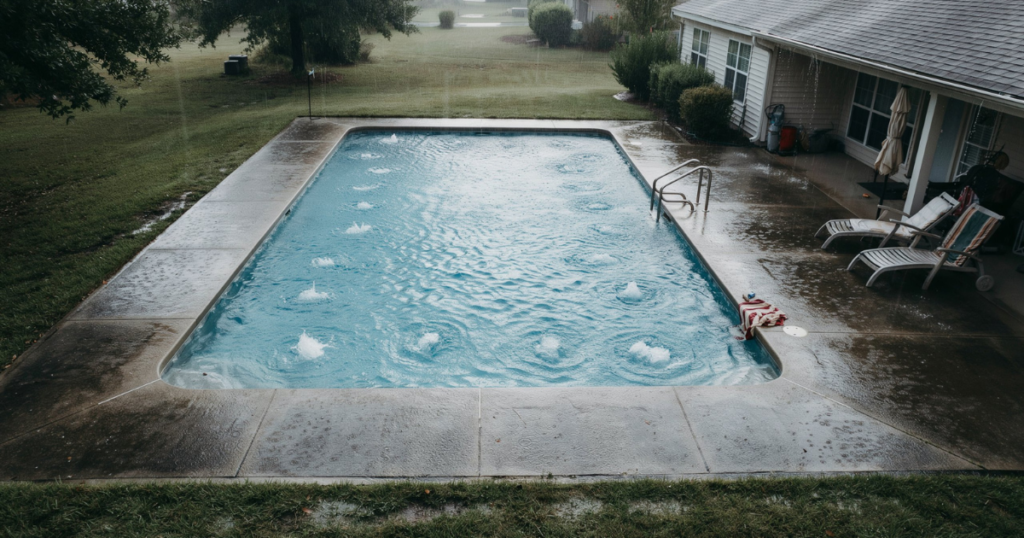
Pool chlorine drops for four main reasons: UV exposure breaking down unstabilised chlorine through photolysis, heavy rain diluting the water, high bather load consuming chlorine faster than it can be replenished, and low or absent cyanuric acid leaving chlorine unprotected from sunlight. Understanding which cause applies helps you choose the right fix and prevent it happening again.
UV light and heat are the biggest culprits for outdoor pools. Direct sunlight breaks down free chlorine through photolysis, in an unstabilised pool, a full day of summer sun can wipe out nearly all free chlorine. This is why outdoor pools need cyanuric acid (pool stabilizer) to shield chlorine from UV degradation.
Heavy rain dilutes pool water and drops chlorine concentration two ways, by adding volume and by washing in organic matter that the chlorine then has to sanitize. A heavy summer storm can push a well-maintained pool from 2 ppm to under 0.5 ppm in hours.
High bather load means more sweat, sunscreen, and organic material entering the water — all of which create chlorine demand and consume free chlorine faster than normal. Pool parties are the single most common trigger for a chlorine crash.
Insufficient dosing. Sometimes the answer is simple. The pool needed more chlorine than it was getting, and the deficit caught up.
Here’s the thing: fixing the cause matters as much as fixing the level. If you raise chlorine without addressing why it dropped, it’ll crash again within days.
4 Methods: How to Raise Chlorine in a Pool
The four methods to raise chlorine in a pool are: adding liquid chlorine (sodium hypochlorite), adding granular chlorine (calcium hypochlorite), using chlorine tablets (trichlor or dichlor) for slow-release maintenance, and shock treating with a high-concentration dose. Liquid chlorine and granular shock are the fastest options. Tablets are too slow for emergency raises and should not be used alone.
Method 1 : Liquid Chlorine (Fastest, Most Controlled)
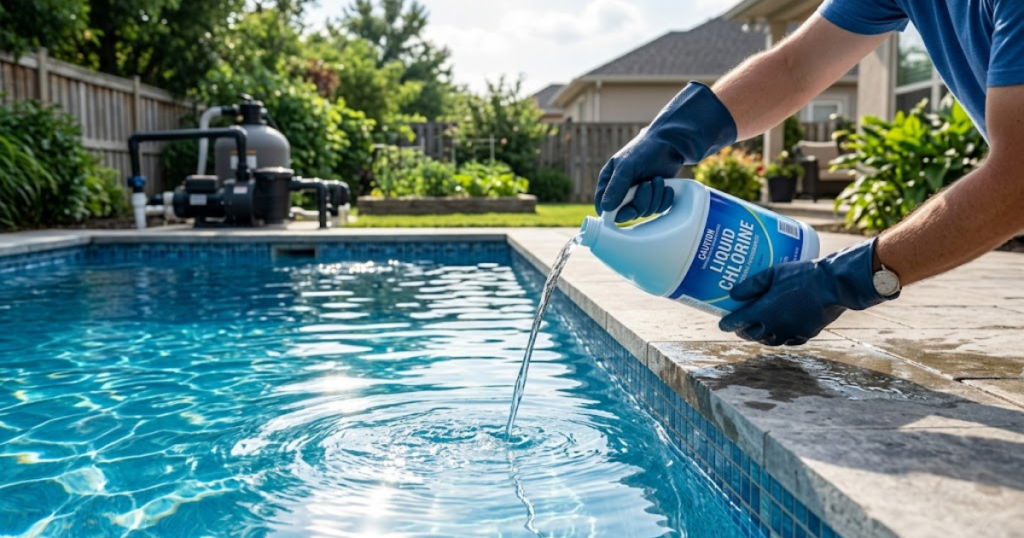
Liquid chlorine — sold as sodium hypochlorite pool solution at 10–12.5% concentration, is the fastest way to raise free chlorine precisely.
It mixes immediately with the water and starts working within minutes. Because it’s unstabilised, it doesn’t add cyanuric acid to the pool, making it the right choice when your CYA is already at or above the target range of 30–50 ppm.
Pour it slowly around the pool perimeter with the pump running. Add near the return jets to aid distribution. Don’t pour it near the skimmer, concentrated chlorine can damage skimmer components if it sits without circulating.
Best for: Quick emergency raises, pools with adequate CYA, saltwater pool owners supplementing their system.
Method 2 : Granular Chlorine (Fast and Flexible)
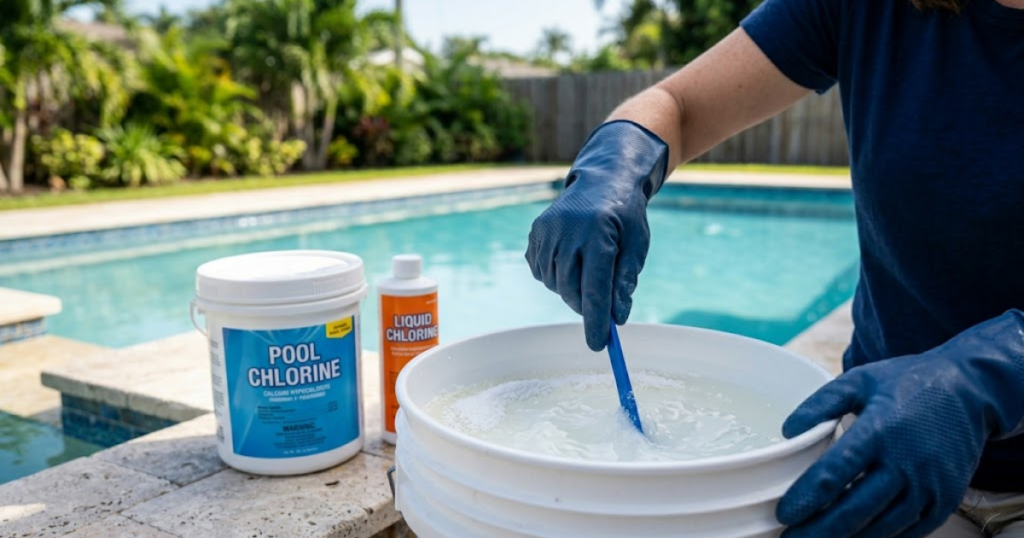
Granular chlorine — usually calcium hypochlorite (cal-hypo) at 65–73% available chlorine dissolves quickly and raises levels fast. It’s the standard choice for regular maintenance dosing and recovering from a moderate drop.
One important note: cal-hypo raises calcium hardness with every dose. In pools already running high calcium (above 400 ppm), repeated use can cause scaling. If that’s your situation, liquid chlorine or dichlor granules are the better long-term choice.
Always pre-dissolve granular chlorine in a bucket of pool water before adding. Never add powder directly, it can bleach the liner and settle on the bottom undissolved.
Best for: Regular maintenance raises, pools with low to moderate calcium hardness.
Method 3 : Chlorine Tablets (Slow Release — Maintenance Only)
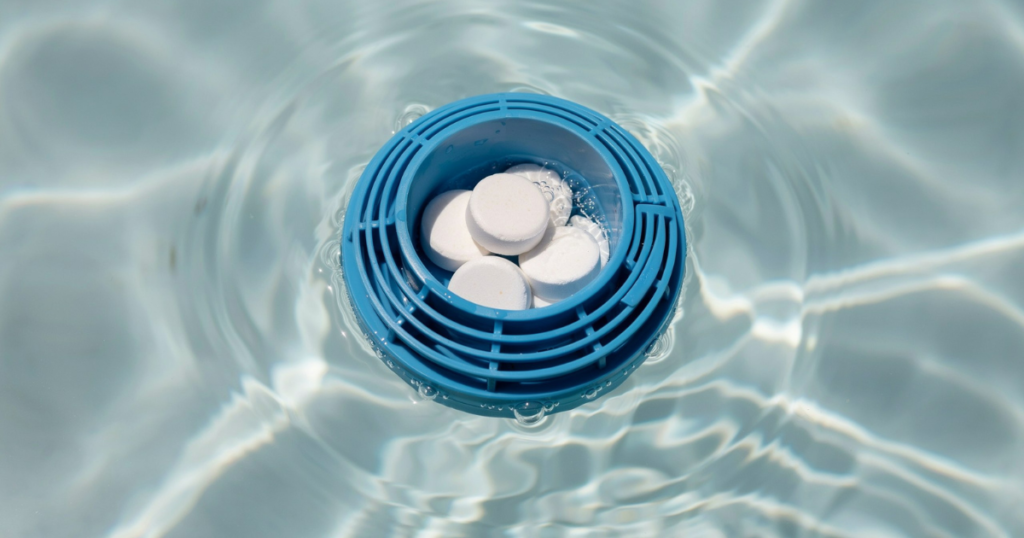
Trichlor tablets dissolve slowly in floaters or automatic chlorinators, releasing chlorine at a steady rate over several days. They’re the backbone of routine pool maintenance, and completely wrong for an emergency raise.
A single 3-inch trichlor tablet in a standard floater raises chlorine in a 10,000-gallon pool by roughly 0.5–1 ppm over 3–5 days.
If your chlorine has crashed to near zero, tablets simply can’t respond fast enough. You’ll be waiting days while your pool turns green.
Use tablets to maintain levels once they’re correct. Not to fix a crash.
Best for: Ongoing maintenance between tests. Never for emergency recovery.
Method 4 : Pool Shock (For Crashed Levels or Algae Risk)
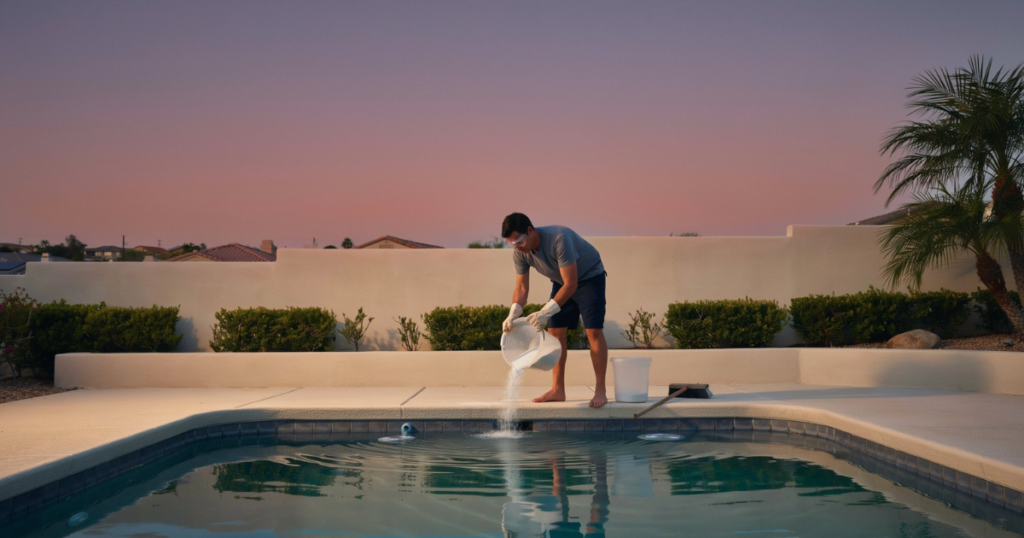
Look, if your free chlorine has hit zero or you’re seeing the early signs of algae (faint green tint, slippery walls, strong chloramine smell), reach for pool shock rather than regular chlorine.
Pool shock — typically calcium hypochlorite at 65–73% — is added at a high enough dose to super-chlorinate the water, temporarily raising free chlorine to 10 ppm or above to kill bacteria, algae spores, and break apart combined chlorine (chloramines).
Always shock at dusk or night. Adding shock in direct sunlight burns off a significant portion before it has time to work. Run the pump overnight after shocking.
Best for: Chlorine crashes, algae prevention, after heavy bather loads, following heavy rain.
- ✓ Raising chlorine correctly helps restore sanitation fast without creating water balance problems that lead to bigger issues.
Quick Comparison: Which Method for Which Situation?
| Method | Speed | Best For | CYA Impact | Cost |
| Liquid chlorine | 30–60 min | Any raise, controlled dosing | None | $5–$15 |
| Granular cal-hypo | 30–60 min | Maintenance raises | Raises calcium | $8–$18 |
| Chlorine tablets | 3–5 days | Ongoing maintenance ONLY | Raises CYA | $15–$30/pack |
| Pool shock | 8–24 hrs | Crashed levels, algae risk | Varies by type | $10–$20 |
Dosing Table: How Much to Add
📌 FEATURED SNIPPET — How-To Steps
To raise chlorine in a pool: 1) Test and record the exact ppm reading. 2) Calculate your pool volume. 3) Find your product dose in the table below. 4) Pre-dissolve granular products in a bucket first. 5) Add with the pump running at full speed. 6) Wait 30–60 minutes, re-test, and repeat if still low.
Doses below raise free chlorine by 1 ppm per 10,000 gallons. Multiply by the ppm increase needed and adjust for your pool size.
| Product | Type | Dose / 10,000 gal / 1 ppm raise | Wait to swim |
| Liquid chlorine (10–12.5%) | Sodium hypochlorite | 10–13 oz | 30–60 min + re-test |
| HTH Super Shock (73%) | Calcium hypochlorite | 1.5 oz (42g) | 8–24 hrs + re-test |
| In The Swim Cal-Hypo (68%) | Calcium hypochlorite | 1.5 oz (42g) | 8–24 hrs + re-test |
| Trichlor tablets (90%) | Stabilized chlorine | 1 × 3″ tab per 10K gal | Maintenance only |
| Dichlor shock granules (56%) | Stabilized granular | 2 oz (57g) | 30–60 min + re-test |
⚠️ Three raising mistakes that cost pool owners time and money:
- Shocking in daylight — UV burns off a large percentage before it circulates. Always shock at dusk or after dark.
- Skipping pre-dissolving — granular cal-hypo added directly bleaches liners and damages pool surfaces.
- Testing too early — testing within 10 minutes gives a false surface reading. Run the pump 30–60 minutes first, then test from the middle of the pool.
How Long Before You Can Swim After Raising Chlorine?
The answer isn’t a fixed number of hours. It’s a confirmed test reading.
For liquid chlorine and granular chlorine at normal doses, most pools return to 1–3 ppm within 30–60 minutes with the pump running. Test at that point, if the reading is confirmed safe, swimming is fine.
After pool shock, the timeline is longer. Super-chlorination pushes free chlorine to 10 ppm or above. You need to wait for levels to fall below 5 ppm before anyone gets in, usually 8–24 hours depending on dose, pool size, sunlight, and temperature.
A small pool that was over-shocked on a cool, cloudy day may still read 8 ppm after 24 hours. A large pool in full summer sun may drop faster. Neither scenario fits a fixed waiting time.
Test, don’t guess.
How to Stop Chlorine Dropping Again
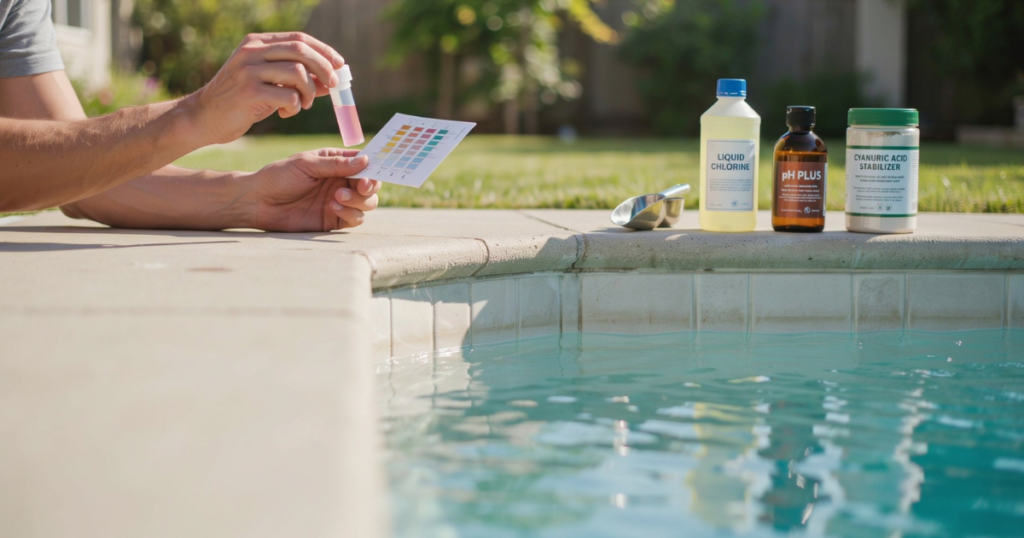
Keep cyanuric acid between 30–50 ppm. Without it, outdoor pool chlorine degrades dramatically every sunny day through UV photolysis. With it, the same chlorine dose lasts 4–5 times longer. Test your CYA monthly, not just your chlorine.
Test 2–3 times per week in summer. Chlorine demand changes with weather, bather load, and temperature. Weekly testing misses mid-week crashes. Twice-weekly testing catches them before they become visible algae problems.
Dose at dusk. Adding chlorine in the evening means it circulates overnight without immediate UV loss. Morning chlorine readings after a nighttime dose are consistently higher than after an identical daytime dose.
Understand your pool’s chlorine demand. Some pools, those near trees, with heavy use, or with slower filtration, consume chlorine faster than standard dosing charts suggest. If you’re consistently finding low chlorine despite regular dosing, the issue is demand, not schedule.
FAQs
What is the fastest way to raise chlorine in a pool?
What is the fastest way to raise chlorine in a pool?
A: Liquid chlorine (sodium hypochlorite) — pour around the pool perimeter with the pump running and levels rise within 30–60 minutes. For crashed levels or early algae, pool shock is the better choice.
How much chlorine do I add to raise it by 1 ppm?
A: Approximately 10–13 oz of liquid chlorine (10–12.5%) or 1.5 oz of 73% granular cal-hypo per 10,000 gallons. Always calculate your pool volume first before dosing.
Can I swim right after adding chlorine?
After a standard liquid or granular dose, wait 30–60 minutes, then re-test. If free chlorine reads 1–3 ppm, it’s safe. After shock treatment, wait until levels drop below 5 ppm — usually 8–24 hours.
Why does my chlorine keep dropping even with regular dosing?
Usually low cyanuric acid leaving chlorine unprotected from UV, high chlorine demand from heavy bather load or organic debris, or a pool volume that requires more chemical than the current schedule provides.
Should I use tablets or liquid chlorine to raise pool chlorine fast?
Liquid chlorine or granular shock — every time. Tablets raise a 10,000-gallon pool by only 0.5–1 ppm over several days. Use tablets to maintain correct levels, never to recover from a drop.
The Bottom Line
Want to keep your water crystal clear? Read our [Guide to Pool Vacuuming]
Low chlorine is one of the easier pool problems to fix, and faster than most people expect.
For a moderate drop, liquid chlorine brings levels back within an hour. For a crash or early algae signs, shock overnight and re-test in the morning. Tablets maintain the level once you’re back in the correct range.
The piece most people skip is the prevention. Get your cyanuric acid to 30–50 ppm, test twice a week in summer, and dose at night. Those three habits eliminate most emergency chlorine situations before they start.