
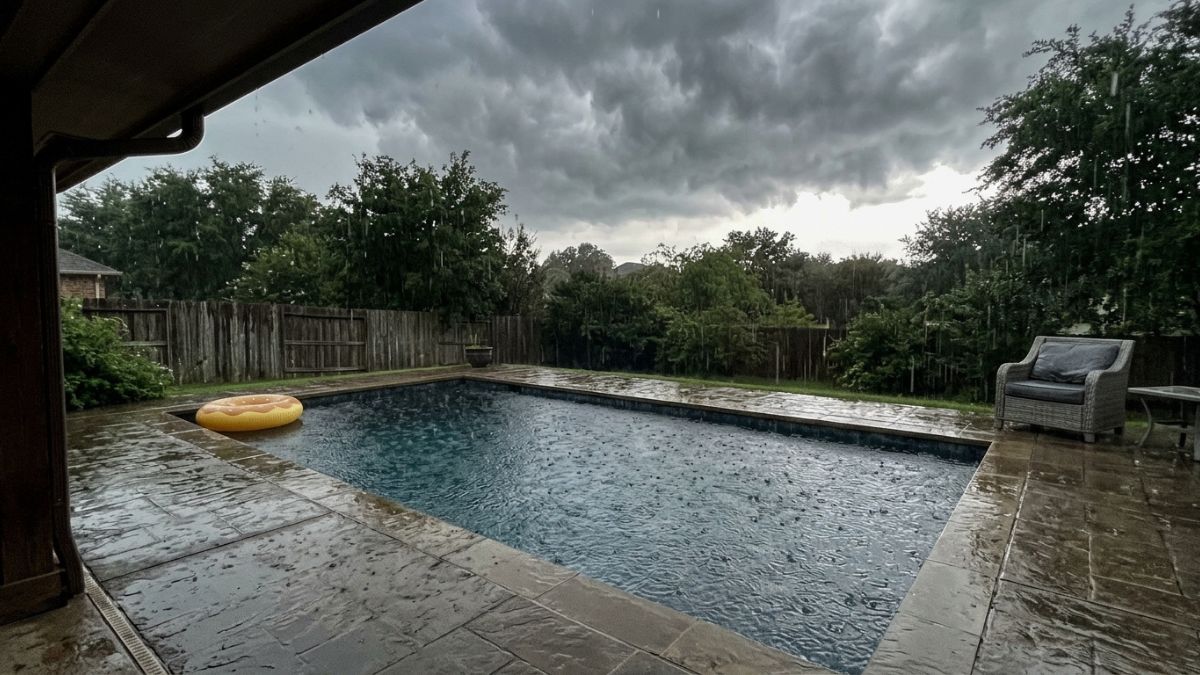

Does rain lower or raise pool pH is one of those questions that seems simple until you actually look at what pool owners experience. Some report pH dropping after heavy rain. Others watch pH climb after a storm. A few see no change at all. And almost everyone tests at the wrong time and gets confused about what they are actually looking at.
The honest answer is: rain itself lowers pH, but storms often raise it anyway. Both statements are true. Understanding why makes the difference between correct treatment and chasing a problem you created yourself.
Quick Answer: Rainwater has a pH of 5.0 to 6.5 and initially lowers pool pH when it enters. However, heavy rain aeration, lawn and concrete runoff, and diluted total alkalinity often cause pH to rise or swing unpredictably after a storm. Always test the morning after rain, checking total alkalinity before pH.
Key Takeaways
✓ Pure rainwater is acidic at pH 5.0 to 6.5 and initially lowers pool pH
✓ Heavy rain aeration from impact on the pool surface actually raises pH through CO2 loss
✓ Runoff from concrete, soil, and lawns can carry alkaline compounds that push pH up
✓ The bigger effect of heavy rain is diluting total alkalinity, making pH unstable for days
✓ Always test the morning after rain, not during or immediately after
✓ Check TA before pH after any storm low TA after rain is the root cause of post-storm instability
✓ Light rain under half an inch rarely needs any chemical correction
What pH Does Rainwater Actually Have
Rainwater is not neutral. As water vapor rises and condenses into rain droplets, it absorbs carbon dioxide from the atmosphere, forming carbonic acid. This gives rain a naturally acidic pH before it even reaches the ground.
Rain has an average pH of around 5.6, meaning it is slightly acidic. In areas with air pollution, industrial emissions, or high atmospheric sulfur dioxide, acid rain can fall in the 5.5 to 6.5 pH range, low enough to affect pool pH levels.
Your pool water should sit between 7.2 and 7.8. Rainwater entering at pH 5.6 is introducing water that is significantly more acidic than your target. In a large pool, this is diluted quickly and the immediate pH effect is small. In a smaller above-ground pool or a pool already at the lower end of the acceptable range, the drop can be enough to take pH below 7.2 after a significant rainfall.
This is the straightforward part. What confuses pool owners is that after many rain events, pH actually goes up rather than down.
Why Rain Can Both Lower and Raise Pool pH
This is the part most guides skip entirely, and it explains why pool owners get contradictory results and advice.
The pH of the rain itself, which is usually acidic with low total alkalinity, does not change pool pH much. Rains can cause significant aeration, which raises pH.
In other words, the rain water is acidic and lowers pH slightly. But the process of rain hitting the pool creates aeration, which raises pH. These two effects often cancel each other out or tip in either direction depending on rain intensity, duration, and what else is going on with your pool chemistry.
A gentle rain shower adds slightly acidic water with minimal aeration impact. Net result: slight pH drop.
A heavy thunderstorm pounds the pool surface with thousands of raindrops per minute, each one creating a tiny splash and agitation that releases CO2 from the pool water. Net result: pH rises from the aeration despite the acidic rainwater entering.
During a storm, there is a lot of aeration which raises pH. One pool owner reported pH going from 7.2 to 7.8 after getting about an inch of water in a few hours.
This is why experienced pool owners in South Florida, where five to ten inches per month of rain is common, usually need to add acid to rebalance pH after heavy rain rather than raising it. The aeration from tropical storm rainfall is significant enough that it overcomes the acidic dilution effect.
The Hidden Cause: Rain Aeration
Understanding this mechanism removes most of the confusion about post-rain pH behavior.
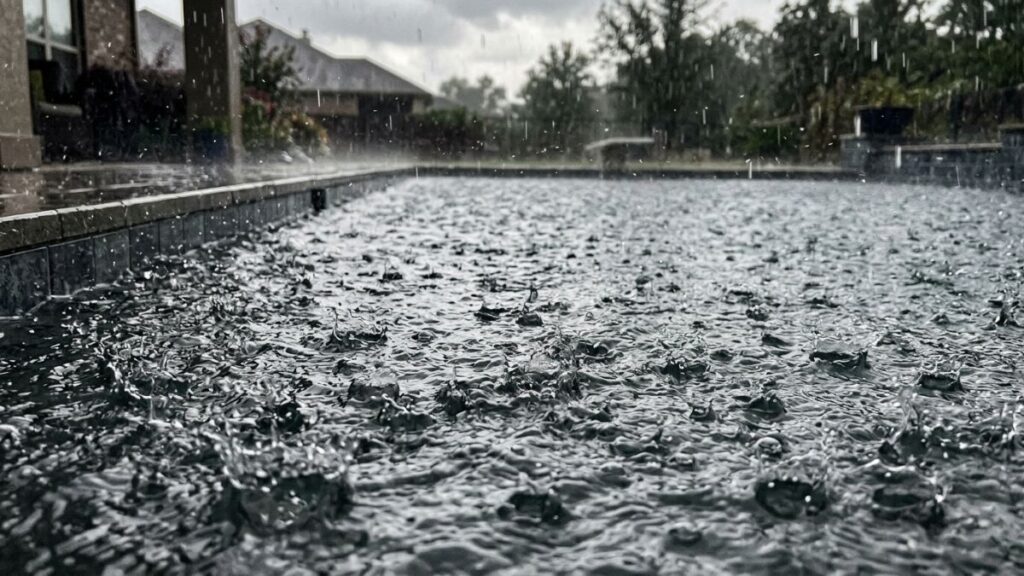
When rain hits a pool surface, it creates:
✓ Physical surface agitation from thousands of impact points
✓ Splashing that introduces air into the water
✓ Turbulence that accelerates the escape of dissolved carbon dioxide
Aeration from heavy rain can raise pH. The heavier and more sustained the rainfall, the more aeration occurs at the surface and the more CO2 escapes from the pool water.
This is exactly the same mechanism by which return jets pointed upward, spa spillovers, and waterfalls raise pH over time. The rain is effectively acting as a temporary massive aeration event on your pool surface.
The practical implication: after a heavy storm, do not be surprised if your pH is higher the following morning than it was before the storm, even though pure rainwater is acidic. The aeration effect frequently dominates over the dilution effect, especially in pools with higher total alkalinity.
Our guide on why pool pH keeps rising covers the CO2-pH relationship in detail, which is the same mechanism driving post-rain pH rise through aeration.
How Runoff Changes the Equation
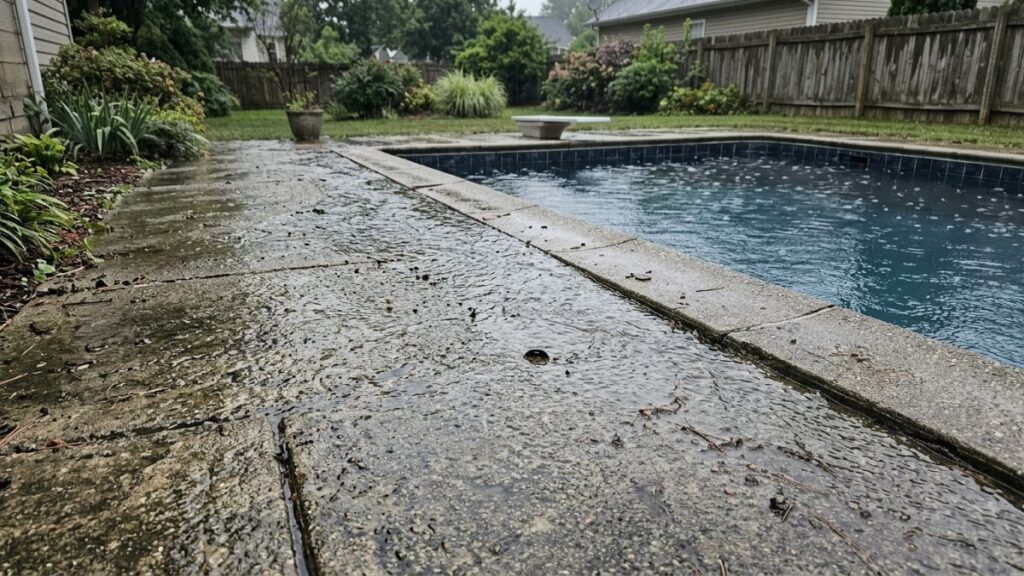
The rain that falls directly into your pool is only part of what enters during a storm. In most backyard pool situations, the pool also receives runoff from:
Concrete and paving. Water running across concrete, cement, or stone surfaces picks up calcium carbonate and other alkaline compounds from the material. Once rain hits the ground or stonework, its pH and TA change as it absorbs alkaline materials like calcium. This runoff entering the pool can push both pH and TA upward, opposite to what the rainfall alone would do.
Lawn and garden areas. Runoff across grass, flower beds, and fertilized garden areas carries phosphates, nitrates, and soil compounds into the pool. One TroubleFreePool member described having four acres of planted field above their pool and noted that the runoff likely had high fertilizer and nitrogen content which is basic, contributing to pH staying out of range for days after the storm.
Roof and gutter runoff. Water running off roof shingles can pick up tar compounds, mineral deposits, and debris. When gutters or downspouts direct water toward the pool area, this adds another variable to post-storm chemistry.
Organic debris. Leaves, twigs, insects, and grass clippings that blow or wash into the pool during a storm increase organic load, which raises chlorine demand and can contribute to pH shifts as organic compounds break down.
The combination of direct rain, aeration from rain impact, and runoff from surrounding surfaces means that two pools receiving the same amount of rain can experience completely different pH responses depending on their surroundings.
The Diluted Alkalinity Problem Nobody Talks About
This is the most important and least discussed effect of heavy rain on pool chemistry.
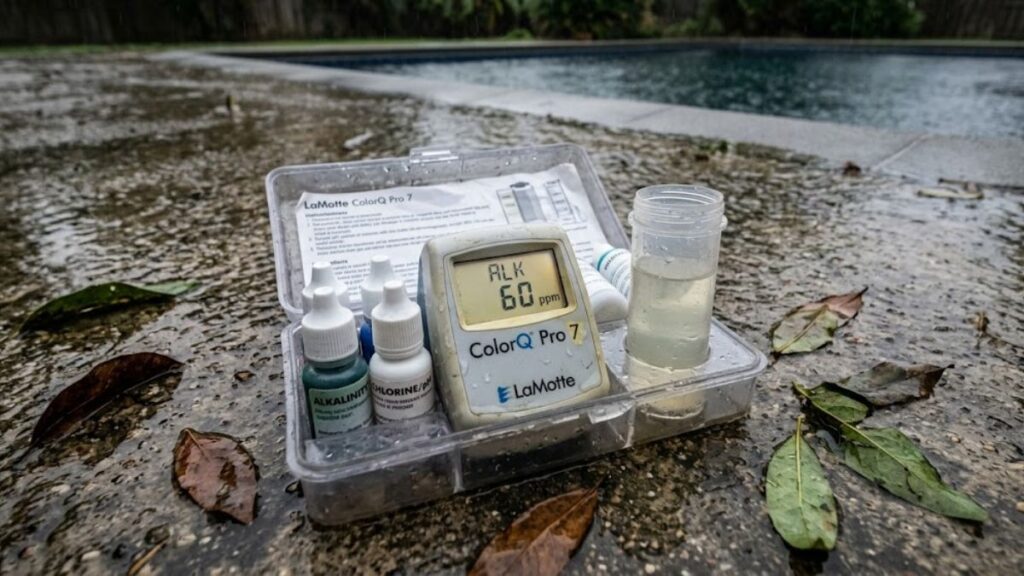
Rainwater has a total alkalinity near zero. Heavy rains will dilute your pool alkalinity level, causing it to fall by 5 to 10 ppm a day.
Total alkalinity is what keeps pH stable. It acts as a chemical buffer that resists pH changes. When TA drops significantly, the same inputs that would normally cause a small pH shift cause a large one. Your pool becomes chemically reactive and unstable.
Rainwater also dilutes alkalinity and calcium hardness levels, which can cause damage to the pool’s plaster and other surfaces. Without proper balance, corrosive water can lead to costly repairs and equipment replacement over time.
This is why pool owners often experience several days of chemistry instability after a significant rain event, not just an immediate pH change. The rain lowered TA, which removed the buffering protection, which means every subsequent variable (swimmers, sunlight, chemicals) has an outsized effect on pH until TA is restored.
The sequence that causes confusion:
- Heavy rain falls aeration raises pH slightly
- TA drops from dilution
- Pool owner adds acid based on slightly elevated pH
- Without adequate TA buffering, the acid drops pH too far
- Pool owner adds pH Up
- pH overshoots again because low TA means no resistance
The fix is always to restore TA first, then adjust pH. Check our pool alkalinity levels chart to confirm where your TA needs to be after a storm.
How Much Rain Actually Changes Your Pool
Rain volume relative to pool volume is what determines the significance of the chemistry impact.
| Rain Amount | Volume Added to 15,000 gal Pool | Chemistry Check Needed |
|---|---|---|
| Under 0.5 inch | Under 300 gallons, under 2 percent dilution | Usually not needed |
| 0.5 to 1 inch | 300 to 600 gallons, 2 to 4 percent | Test next morning |
| 1 to 2 inches | 600 to 1,200 gallons, 4 to 8 percent | Test pH, TA, and chlorine |
| 2 to 4 inches | 1,200 to 2,400 gallons, 8 to 16 percent | Full test, likely needs correction |
| Above 4 inches | Significant dilution plus likely overflow | Full test, drain excess first |
Adding an inch or two of rainwater has no measurable impact on water chemistry in a large pool. High TA changes come from chemicals like baking soda or washing soda additions or high TA fill water, not rain. However, aeration from storm impact is a separate factor that can raise pH regardless of volume.
For above-ground pools under 5,000 gallons, even moderate rain represents a proportionally larger dilution and should be tested after any significant event.
What to Test After Rain and When
Test the morning after rain, not during or immediately after.
Testing while rain is still falling or immediately afterward gives you a reading from incompletely mixed water. Let the pool pump run for at least two hours after rain stops, then test the following morning for stable, representative results.
Test in this order:
1. Total Alkalinity first. This tells you whether your buffering capacity survived the storm. If TA has dropped, restoring it takes priority over everything else. A pH reading means very little if TA is too low to keep it stable.
2. pH second. With TA confirmed, adjust pH toward the 7.2 to 7.8 target. Knowing TA first tells you how stable any pH adjustment will be.
3. Free Chlorine third. Rainfall does not contain chlorine. As well, rainfall brings with it small amounts of contaminants that are washed into the pool. Leaves, dust and debris also create a higher chlorine demand and use up your chlorine.
4. Calcium Hardness if rain was heavy. Rainwater is soft water having near zero hardness. If your pool water is soft to begin with, the addition of hundreds of gallons of rainwater can decrease your pool water calcium hardness.
According to CDC residential pool maintenance guidelines, testing after events that alter water chemistry is a standard recommendation. Rain is specifically one of those events.
For an accurate testing method and kit comparison, our guide on how to test pool water correctly explains why liquid drop kits outperform strips in post-storm testing where debris and disturbed water affect strip accuracy.
Step-by-Step Post-Rain Recovery
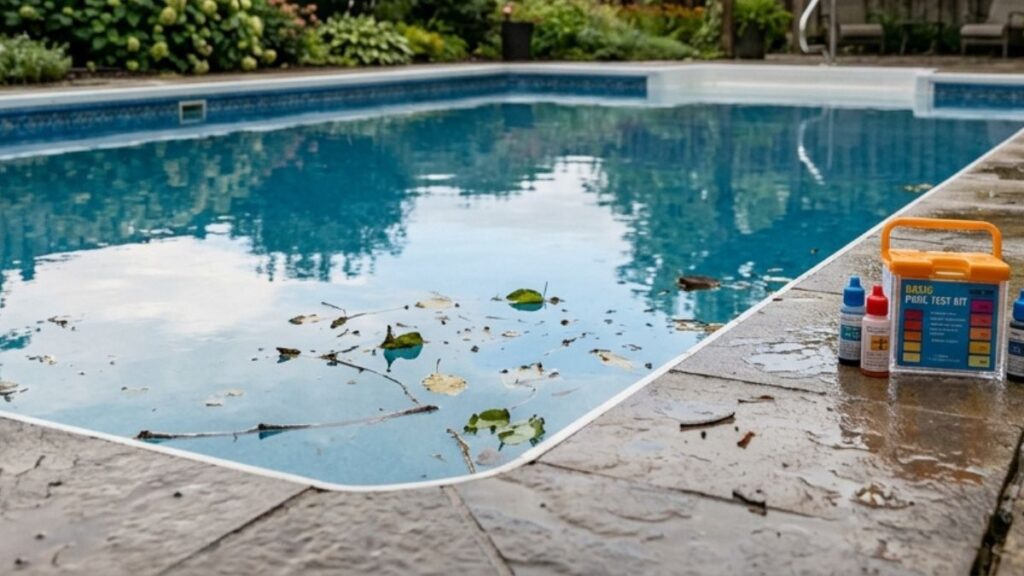
Step 1: Remove all visible debris. Leaves, grass, insects, and organic matter entering during rain increase chlorine demand and provide nutrients for algae. Remove debris before adding any chemicals or the chemicals will fight the organic load instead of balancing chemistry.
Step 2: Drain excess water if needed. If there was enough rain to disrupt your pool’s chemistry, there was probably also a rise in the overall water level. Make sure to drain back down to the desired level before rebalancing the pool’s chemical levels. If you adjust your chemistry and drain the excess, you will just have to adjust your chemistry again.
Step 3: Run pump and filtration for two hours. Circulate fully before testing. Undistributed water gives readings that do not represent actual pool chemistry.
Step 4: Test TA, pH, and chlorine. Use a liquid drop test kit. Strips are less reliable in disturbed post-storm water with higher debris and organic content.
Step 5: Restore total alkalinity if below 80 ppm. Add sodium bicarbonate in small doses. Our guide on how to lower alkalinity in a pool covers both raising and the process for when it is too high from runoff.
Step 6: Adjust pH after TA is confirmed stable. If pH dropped from rain: use soda ash or borax, depending on your TA level. Our guide on how to raise pool pH without raising alkalinity covers which chemical to choose. If pH rose from runoff or aeration: use muriatic acid per the process in our guide on how to lower pool pH naturally.
Step 7: Shock if chlorine is below 2 ppm. After any storm that added significant organic load or heavy rain, shock the pool. Chlorine diluted by rain and consumed by organic debris needs active restoration. Our complete guide on how to shock a pool correctly covers product selection and timing.
Step 8: Retest 12 to 24 hours later. Confirm chemistry is stable before regular swimming resumes.
If your pool pH is behaving strangely after rain, check TA before adding anything. Heavy rain dilutes alkalinity, which removes the buffer that keeps pH stable. Correcting pH without restoring TA first means every small input, a few swimmers, sunlight, or a chemical addition, will swing pH unpredictably again.
Before the Storm: How to Protect Your Pool Chemistry
Prevention reduces post-storm recovery time significantly.
| Pre-Storm Action | Benefit |
|---|---|
| Raise chlorine to 3 to 4 ppm before storm | Accounts for rain dilution and increased demand |
| Check TA and raise to 100 ppm if below 80 | Better dilution resistance during rain |
| Remove loose debris from pool area | Reduces organic load entering during storm |
| Cover pool if possible | Eliminates rain dilution entirely |
| Lower water level 2 to 3 inches before major storm | Prevents overflow and loss of treated water |
| Note your pre-storm readings | Makes post-storm change assessment accurate |
From the Author
Managing pool chemistry through summer storm seasons taught me quickly that post-rain testing is one of the most mishandled situations in residential pool care. The most common mistake I see is pool owners testing immediately after rain while water is still disturbed, getting an unusual reading, adding chemicals, and then retesting two hours later to find the problem has reversed or worsened. Rain chemistry takes time to distribute and settle. My consistent advice: remove debris, run the pump for two hours, test in the morning. Make chemical decisions from stable, representative readings rather than reactive ones taken during or immediately after the storm.
Frequently Asked Questions
Does rain lower or raise pool pH? Rainwater itself lowers pool pH because rain is naturally acidic at pH 5.0 to 6.5. However, aeration from rain impact on the pool surface raises pH, and runoff from concrete, soil, and lawns can push pH higher. The net effect depends on rainfall intensity, duration, and surrounding surfaces.
Should I add chemicals after every rain? Not after light rain under half an inch. After moderate or heavy rain, test the following morning and add only what the numbers show is needed. Reactive chemical additions based on assumed rain effects often overcorrect.
Why did my pool pH go up after rain? Three possible causes: aeration from heavy rain impact on the pool surface releasing CO2, alkaline runoff from concrete or fertilized areas entering the pool, or early algae growth consuming CO2 through photosynthesis. Test TA alongside pH to understand which correction is needed.
Why did my pool pH go down after rain? Direct acidic rainwater diluted the pool without significant aeration. This is more common after gentle, steady rain than after heavy storms. Raise pH using the appropriate chemical based on your current TA level.
How long after rain should I test pool water? Test the morning after rain ends, after running the pump for at least two hours. Testing during or immediately after rain gives unrepresentative readings from incompletely mixed, disturbed water.
Does rain cause algae in pools? Not directly, but rain creates conditions that lead to algae. Rainwater introduces phosphates and nitrates which serve as nutrients for algae and bacteria. Rain also reduces chlorine levels. Together, these create ideal algae conditions if not corrected promptly.
What is the most important thing to check after heavy rain? Total alkalinity. Most pool owners check pH first, but the dilution of TA is what makes chemistry unstable for days after a storm. Restore TA first and pH management becomes significantly easier.
Final Thoughts
Rain both lowers and raises pool pH depending on which effect dominates: acidic dilution from the rain itself, aeration from storm impact, or alkaline runoff from surroundings. Knowing which is happening in your specific pool, with your specific surrounding landscape, on a particular type of storm, is what determines the correct response.
The consistent answer is: test the morning after any significant rain, check TA before pH, correct TA first, then pH, then chlorine. That sequence handles every post-rain scenario correctly regardless of which direction pH moved.
If you want to understand what your pool’s daily pH cycle looks like independently of rain effects, our guide on why pool pH is higher in the evening than the morning explains the natural daily pH pattern that continues alongside any weather-related changes.