
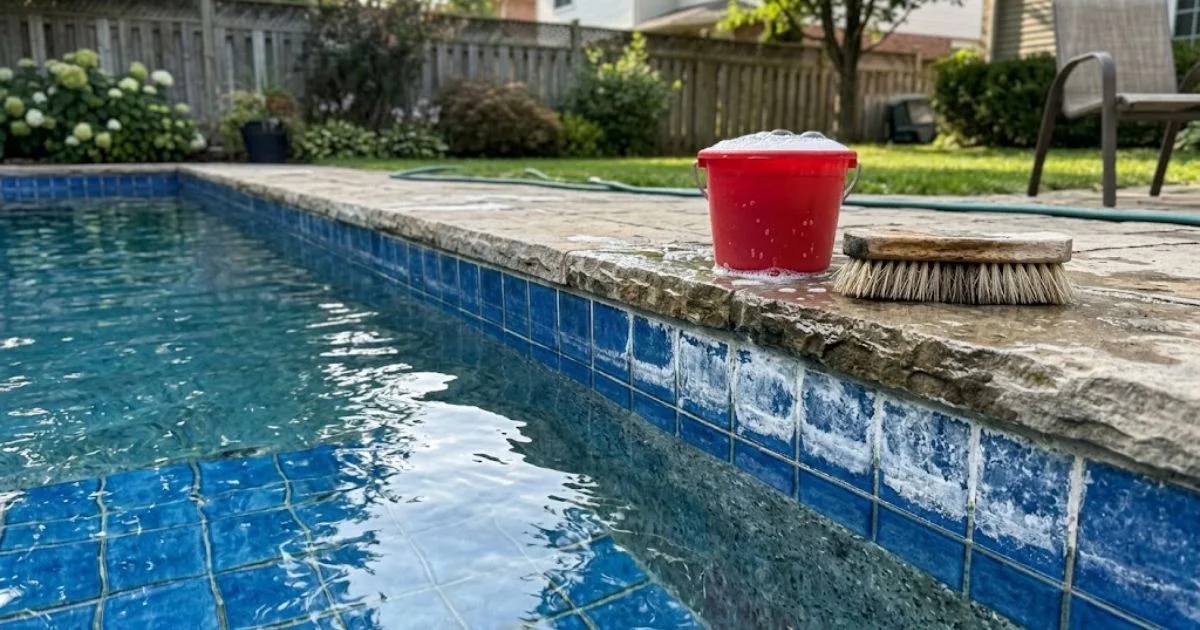

To clean pool tile with muriatic acid, mix 1 part acid with 10 parts water, apply to the calcium deposits with a natural bristle brush, let it react for 15 to 30 seconds, scrub while fizzing, then rinse immediately. But before you open the acid jug, do one thing first: drop a few drops of muriatic acid onto the deposit. If it fizzes, you have calcium carbonate and muriatic acid will clean it. If nothing happens, you have calcium silicate and acid will not work at all.
That test takes 30 seconds and saves you from the most common tile cleaning mistake pool owners make.
Why Pool Tiles Get White Buildup at the Waterline
The white or gray crust on your pool tile is calcium scale. It forms when calcium carbonate or calcium silicate in your pool water deposits onto the tile surface as water evaporates at the waterline.
Hard water makes it worse. High pH speeds it up. Low calcium hardness causes the opposite problem where water pulls calcium from plaster and grout to compensate. Either way, the tile takes the hit.
According to Mineral Tiles, calcium carbonate appears as a white flaky residue and responds well to acid treatment, while calcium silicate forms harder grayish deposits over a longer period and requires different treatment methods entirely.
Understanding which type you have before picking up any chemical saves you time, money, and potential tile damage.
The Drop Test: Identify Your Calcium Type Before Cleaning
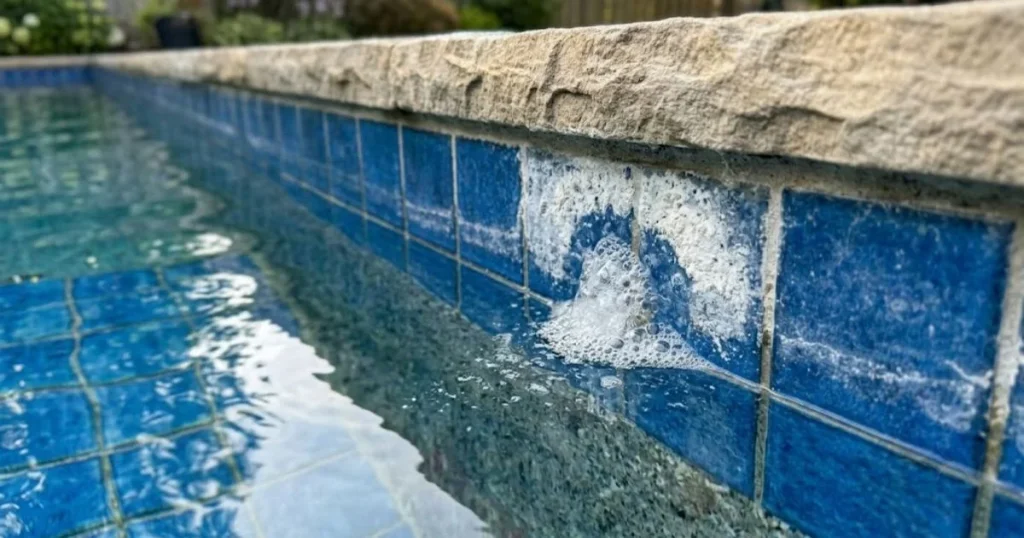
This step is missing from most guides. Competitors jump straight to the cleaning method without telling you whether it will actually work on your specific deposit.
Here is how to identify which type of calcium you have:
- Put on gloves and goggles
- Use a dropper or your fingertip to place 2 to 3 drops of muriatic acid directly on the calcium deposit
- Watch for 10 seconds
Fizzes and foams: You have calcium carbonate. Muriatic acid will clean it. Follow the steps in this guide.
No reaction at all: You have calcium silicate. Muriatic acid will not remove it. You need a pumice stone for smaller areas or professional bead blasting for widespread deposits.
Which Tile Types Can Handle Muriatic Acid?
This is the other critical gap most guides skip. Muriatic acid is aggressive. It does not damage all tiles equally.
| Tile Type | Muriatic Acid Safe? | Notes |
|---|---|---|
| Ceramic tile | Yes | Standard pool tile, handles acid well |
| Porcelain tile | Yes | Dense and acid-resistant |
| Natural stone (travertine, slate) | No | Acid etches and permanently damages surface |
| Glass tile | No | Acid can dull or etch the finish permanently |
| Hand-painted or glazed tile | No | Acid strips glaze and paint |
| Fiberglass pool surface | No | Use scaling treatment only, never acid or pumice |
If your pool has glass, natural stone, or hand-painted tiles, stop here. Use a commercial calcium descaler designed for those surfaces. Muriatic acid on glass tile will dull the finish in one application and the damage is permanent.
What You Need Before Starting
✓ Acid-resistant rubber gloves
✓ Safety goggles or face shield
✓ Natural bristle brush or acid-resistant scrub brush (never wire or metal bristles)
✓ Large plastic bucket
✓ Garden hose with running water nearby
✓ 31.45% muriatic acid
✓ Plastic measuring cup
✓ Baking soda for spill neutralization
✓ Painter’s tape or plastic sheeting to protect grout lines if possible
Grout warning: Muriatic acid dissolves grout. This is the detail almost every competitor misses. If you let the diluted acid solution sit on grout lines for more than 30 seconds, it begins breaking down the grout material. Work quickly, apply to tile faces only, and rinse immediately after scrubbing.
Muriatic Acid Ratio for Pool Tile Cleaning
The ratio depends on how heavy the calcium buildup is.
| Buildup Level | What It Looks Like | Acid Ratio |
|---|---|---|
| Light (new deposits) | Thin white haze, wipes with wet cloth | 1:20 (acid:water) |
| Medium (seasonal buildup) | Visible white crust, does not wipe off | 1:10 (acid:water) |
| Heavy (neglected, thick scale) | Gray-white thick crust, rough texture | 1:4 (acid:water) |
Start with the weaker ratio. You can always apply a second round with stronger solution if the first does not fully clean the tile. You cannot undo acid damage to tile or grout.
Step-by-Step: How to Clean Pool Tile With Muriatic Acid
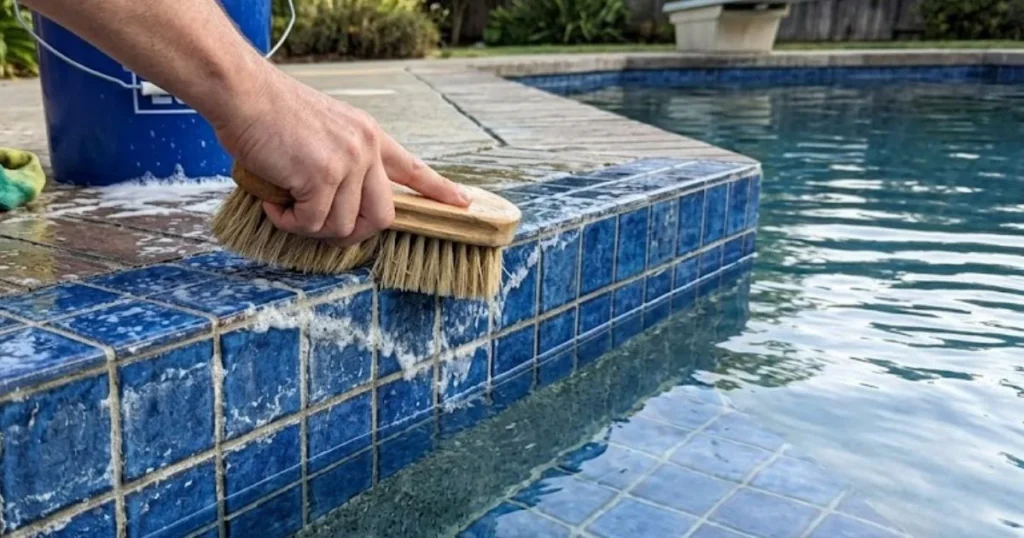
To clean pool tile with muriatic acid:
- Do the drop test first to confirm you have calcium carbonate
- Lower pool water level 2 to 3 inches below the tile line if possible
- Gear up: gloves, goggles, old clothing
- Fill a plastic bucket with water, then add the measured acid
- Wet the tile surface with a garden hose before applying acid
- Dip a natural bristle brush into the solution
- Apply to a small 2-foot section of tile at a time
- Let the solution react for 15 to 30 seconds maximum
- Scrub in circular motions while the fizzing is active
- Rinse thoroughly with the garden hose immediately after each section
- Move to the next section and repeat
- Neutralize any solution remaining in the bucket with baking soda before disposal
- Once all tile is clean, run the pool pump for 2 hours to circulate and rebalance water
Work in small sections. Never apply to the entire tile run at once. The acid acts fast and you want to rinse each section before moving to the next one.
Application method matters. Pool Research and most competitors recommend spray bottles. Dreame Pool correctly notes that gel-based cleaners or brush application is better because it keeps the acid where you put it. Spray bottles cause airborne acid mist that drifts toward your face, surrounding surfaces, and nearby plants. Use a brush and apply directly.
Can You Clean Pool Tile Without Draining the Pool?
Yes, for waterline tile. You do not need to drain a pool to clean the tile at the waterline.
Lower the water level 2 to 3 inches below the tile you want to clean. This exposes the tile and keeps acid from diluting in the pool water. After cleaning, refill the pool to normal level and test pH and alkalinity. Muriatic acid used on tile will affect pool water chemistry if any runs into the pool.
If you are cleaning tile on a fully drained pool for a complete acid wash, the process is the same but you are working on the entire pool surface rather than just the waterline strip. Rebalancing water chemistry after refilling is essential.
After tile cleaning, test your pool water. Use the muriatic acid pool calculator to adjust pH and alkalinity back to target range.
Calcium Silicate: When Muriatic Acid Will Not Work
If your drop test showed no fizzing, muriatic acid cannot help you. Calcium silicate is formed by long-term water chemistry imbalance and it bonds to tile surfaces differently than calcium carbonate.
According to Pool Tile Cleaning Vegas, calcium silicate’s presence on tiles usually means there are calcium deposits in filters and pipes as well, which may require a pool professional to address properly.
For calcium silicate on tile, your options are:
Pumice stone: Works on ceramic, porcelain, and concrete only. Never use on glass, natural stone, or fiberglass. Wet both the stone and the tile surface before scrubbing. Dry pumice on wet tile scratches the glaze permanently.
Professional bead blasting: The most effective method for widespread calcium silicate. Glass beads are blasted at the tile surface under controlled pressure to remove deposits without damaging the tile. Worth the cost for pools with years of buildup.
Commercial descalers: Products containing hydrochloric or sulfamic acid in gel form are available from pool supply stores. Gel form stays on the tile longer than diluted liquid acid and is more effective on stubborn deposits while being easier to control than DIY dilutions.
- ✓ Before reaching for stronger chemicals, always check your water balance first. A clean-looking tile surface can still develop scale again if your pH and calcium levels stay out of range. In most cases, preventing the chemistry problem saves more time than repeatedly removing the buildup.
How to Prevent Calcium Buildup on Pool Tile
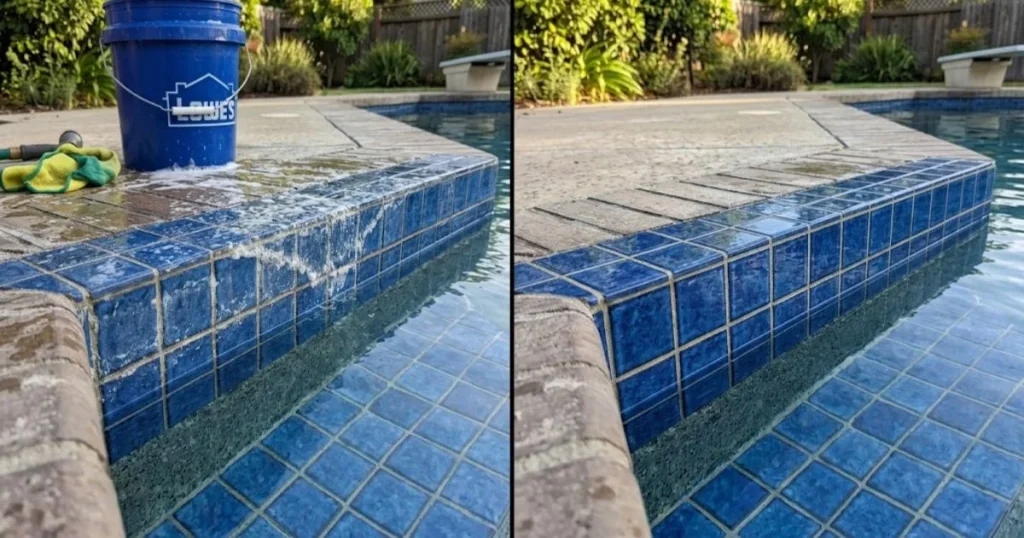
Cleaning pool tile with muriatic acid is a fix. Prevention is what keeps you from doing it every season.
Calcium scale forms when pH climbs above 7.8 consistently. High pH causes calcium in the water to drop out of solution and attach to tile, plaster, and equipment.
One thing many pool owners don’t realize is that calcium buildup usually happens slowly, not overnight. In most cases, it’s the result of weeks or months of high pH, elevated calcium hardness, or an unbalanced Calcium Saturation Index (CSI). As water evaporates at the waterline, those dissolved minerals are left behind and gradually harden into the white deposits you see on the tile. Cleaning them with muriatic acid removes the existing scale, but keeping your pool water chemistry balanced is what helps prevent the same problem from coming back.
Keep pH between 7.2 and 7.6. That single habit reduces tile scale formation dramatically.
If your pool is in a hard water area where calcium hardness exceeds 400 ppm, partial draining and refilling is the only way to reduce calcium concentration in the water itself.
Weekly brushing of tile at the waterline with a standard tile brush removes early-stage deposits before they harden. A deposit that formed last week scrubs off with a brush. The same deposit left for three months needs acid.
Consistent pH control is the most effective tile protection there is. The how much muriatic acid to lower pool pH guide covers how to keep pH in range between cleanings.
Frequently Asked Questions
What ratio of muriatic acid to water for pool tile cleaning?
For medium calcium buildup, use 1 part acid to 10 parts water. For light buildup, use 1:20. For heavy, neglected scale, use 1:4. Always start with the weaker ratio and apply a second round if needed. Never let the solution sit on tile or grout for more than 30 seconds before scrubbing and rinsing.
Can I clean pool tile with muriatic acid without draining the pool?
Yes. Lower the water level 2 to 3 inches below the tile line to expose the waterline without fully draining. After cleaning, refill and retest pH and alkalinity since any acid that enters the pool will affect water chemistry.
Why is muriatic acid not removing the calcium from my pool tile?
If acid does not fizz on contact with the deposit, you have calcium silicate rather than calcium carbonate. Muriatic acid does not dissolve calcium silicate. You need a wet pumice stone for ceramic and porcelain tile, or professional bead blasting for heavy deposits.
Will muriatic acid damage pool tile grout?
Yes, if left in contact too long. Muriatic acid dissolves grout material. Apply the solution to tile faces only, work in small 2-foot sections, and rinse immediately after each section. Never let diluted acid solution sit on grout lines for more than 30 seconds.
Conclusion
Do the drop test first. If the deposit fizzes with acid, it is calcium carbonate and muriatic acid cleans it. If no fizz, it is calcium silicate and you need a pumice stone or professional help.
Use a 1:10 ratio for medium buildup. Apply with a brush in small sections, scrub while fizzing, rinse immediately. Never spray, never use wire bristles, never let acid sit on grout.
After cleaning, test your pool water and rebalance pH and alkalinity. The Pool and Hot Tub Alliance recommends maintaining pH between 7.2 and 7.6 as the most effective long-term strategy to prevent calcium scale from forming on tile in the first place.