
| why is my pool water foamy |
| pool foam after adding chemicals |
| pool water foamy after rain |
| new pool foamy water cause |
| pool foam after party |
| how to get rid of foam in pool |
You checked your pool this morning and it looked fine. After a party or after adding algaecide, white foam covers the surface and won’t go away. You shocked it. Ran the filter. Skimmed it. Nothing worked.
The reason most fixes fail: people treat the foam, not what is causing it.
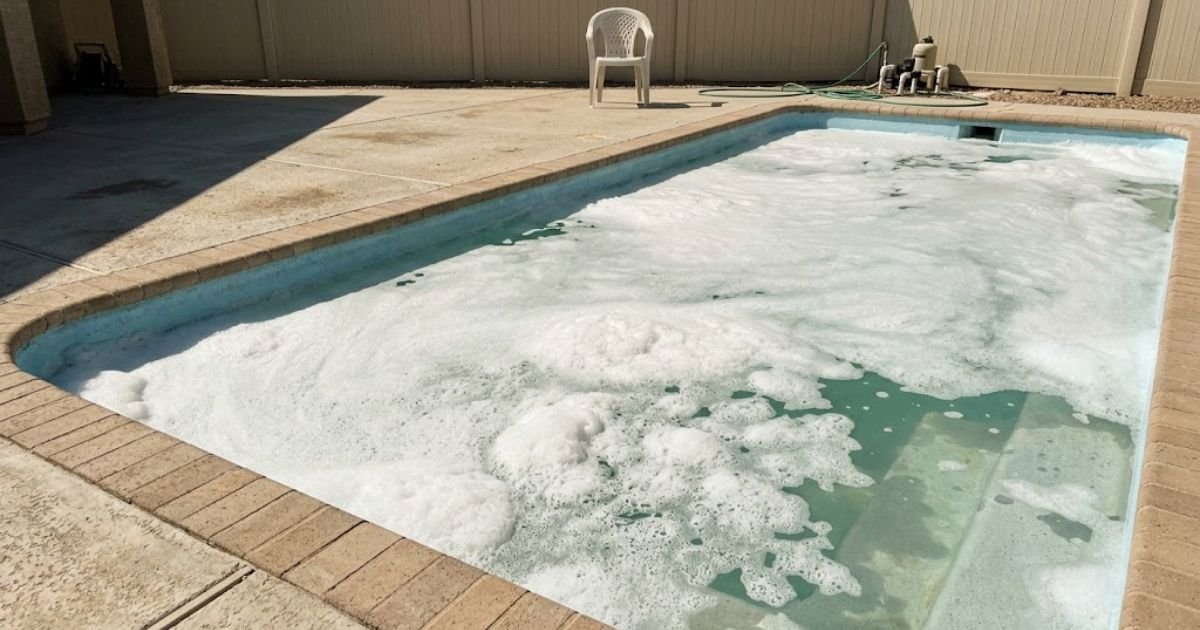
Foamy pool water occurs when surfactants build up and trap air as bubbles. They come from chemicals you added, people who swam, or water chemistry that is out of balance. The source determines the fix.
Is Pool Foam Dangerous?
Foam itself is not toxic. But it is always a warning sign.
When foam appears, it usually means organic waste has built up faster than your chlorine can handle, or your water chemistry has drifted. The Pool and Hot Tub Alliance recommends free chlorine 1 to 3 ppm, pH 7.2 to 7.8, total alkalinity 80 to 120 ppm, and calcium hardness 200 to 400 ppm. Foam is often the first visible sign these numbers are off.
If foam comes with cloudy water, read our guide on why pool water stays cloudy even when chlorine seems normal first.
The 8 Real Causes of Foamy Pool Water
1. Algaecide Overuse (Most Common and Most Missed)
Most pool owners never hear this. It is the number one cause of pool foam that most guides skip entirely.
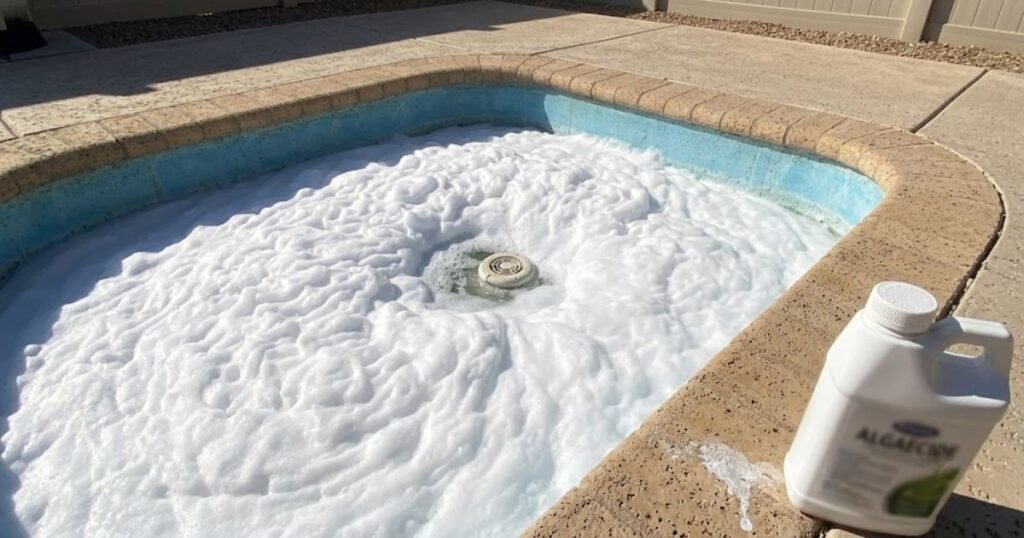
Consumer algaecides contain quaternary ammonium compounds (quats) or polyoxyethylene compounds. Both are surfactants by design. Add too much and you have poured a surfactant concentrate into your pool. The foam is thick, stable, and does not respond to shocking. As Lo-Chlor explains in their foam analysis, overdosing these compounds is the most predictable cause of stubborn pool foam.
The fix is dilution and a partial water change, not a defoamer. BioGuard Back Up 2 Algaecide is a polymer-based option with a lower foaming profile for future use.
Read: What to do when pool pH is normal but chlorine isn’t working
2. Body Oils, Sunscreen, and Lotion From Swimmers
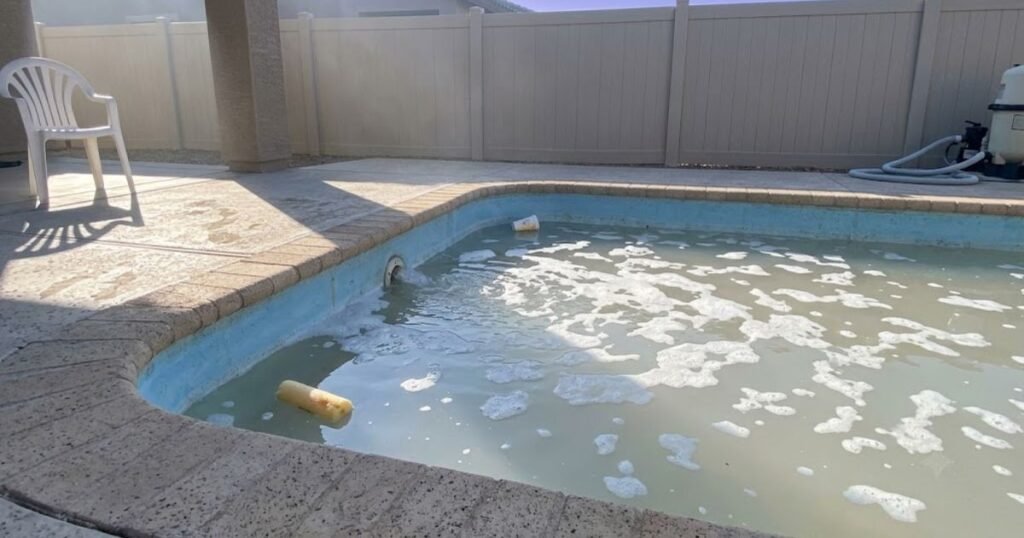
Every swimmer brings roughly 1 to 3 tablespoons of oils, sweat, and product residue into the water. A party with 15 people introduces up to 45 tablespoons of organic contamination in one afternoon. This foam is soft and lighter than algaecide foam. It usually clears within 24 to 48 hours with shocking and continuous filtration — see how to shock a pool correctly.
3. New Pool or New Liner
Vinyl liners, fiberglass coatings, and plasticizers release residues into new pool water during the first few weeks. This foam is temporary and resolves on its own within 2 to 4 weeks with balanced chemistry and daily filtration.
4. Low Calcium Hardness
This explains a lot of “mystery foam” cases where everything else tests fine.
When calcium hardness drops below 150 to 175 ppm, water becomes soft. Soft water foams far more easily because calcium ions help stabilize surface tension. Taylor Technologies identifies low calcium hardness as one of the three most commonly misread parameters in residential pools. The K-2006 test kit gives accurate readings since test strips routinely under-read calcium levels.
Check your numbers against our pool alkalinity and calcium hardness levels chart before adding anything.
5. Cheap Pool Chemicals With Fillers
Budget chlorine tablets from non-pool stores often contain binders and anti-caking agents that create mild foam when dissolved. It clears within a few hours. If foam appears only when you add chemicals and fades quickly, switch to a professional-grade product.
6. Soap or Detergent Contamination
Soap contamination produces the most dramatic foam you will see in a pool. Thick, overflowing, relentless. Sources include swimsuits not fully rinsed after washing or cleaning products that splashed in. As Mav Aqua Doc notes, detergent compounds bind to water strongly and resist normal filtration, which is why soap foam is so persistent.
7. Aeration From Return Jets or Features
Not all bubbles are foam. Return jets angled upward, waterfalls, and bubblers introduce air that looks exactly like foam. Turn off the pump. If bubbles disappear within 5 minutes, it is just aeration. Adjust return jets downward.
8. Rain and Organic Debris
Heavy rain washes pollen, leaves, and fertilizer runoff into your pool. These organics consume chlorine quickly and trigger foaming as they break down. Rain also dilutes calcium hardness and alkalinity, creating conditions where foam forms more easily. Always test after rain before adding anything.
Read: How to test pool water accurately after a storm
Quick Diagnosis Table
| Foam Appearance | When It Shows Up | Most Likely Cause |
|---|---|---|
| Thick, stable, won’t move | After adding algaecide | Algaecide overuse |
| Light bubbles near jets only | Constantly while pump runs | Aeration, not foam |
| Soft, soapy, fades slowly | After a pool party | Body oils and sunscreen |
| Extreme, overflowing | Sudden and severe | Soap or detergent |
| Moderate, returns daily | No clear trigger | Low calcium hardness |
| Light foam across whole surface | After rain | Organic debris, diluted chemistry |
How to Remove Pool Foam Step by Step
To fix foamy pool water, follow these steps:
- Test your water first using the Taylor Technologies K-2006. Test strips are not accurate enough.
- Check calcium hardness. If it is under 200 ppm, raise it before anything else.
- Shock the pool if free chlorine is below 1 ppm or organic contamination is suspected.
- Run the filter continuously for at least 24 hours.
- If algaecide caused the foam, do a partial drain and refill of 15 to 20 percent. This dilutes the surfactant concentration faster than any product.
- Retest after 24 hours before adding anything new.
For organic contamination from body oils, Natural Chemistry Pool First Aid is an enzyme treatment that breaks down the organic compounds rather than suppressing surface bubbles.
PoolProGuide Tip: What Actually Works
After covering hundreds of pool troubleshooting cases at poolproguide.com, one pattern repeats more than anything else: pool owners add a defoamer, foam disappears, and it comes back within 48 hours.
Defoamers break surface bubbles by reducing local surface tension. They do not remove surfactants from the water. The surfactant source is still there, so foam returns.
We have seen pools with weeks of persistent foam clear completely after a calcium hardness correction and a 20 percent water change. No defoamer needed.
Test calcium hardness monthly. Most pool owners test pH and chlorine regularly but skip calcium hardness. It drifts faster than expected and causes more foam than almost any other single factor.
When to Use a Pool Foam Remover
Use a defoamer when you need the pool swimmable in the next hour. It buys time. It does not fix the problem.
| Option | Best For | Fixes Root Cause? |
|---|---|---|
| Chemical defoamer | Immediate visual fix | No |
| Enzyme treatment (Pool First Aid) | Organic contamination | Yes |
| Partial drain and refill | Algaecide overdose | Yes |
| Calcium hardness correction | Persistent or recurring foam | Yes |
How to Prevent Pool Foam From Coming Back
Keep calcium hardness between 200 and 400 ppm and test it monthly. This single step prevents the most common category of persistent foam.
Ask swimmers to rinse before entering. A 60-second shower removes most sunscreen and body lotion. Use polymer-based algaecides at the correct dose. Run your filter 8 to 12 hours daily. Shock proactively after heavy swim days or rain rather than waiting for foam to appear.
Frequently Asked Questions About Foamy Pool Water
Why is my pool water foamy after adding chemicals? Algaecide is the most common cause. Most algaecides contain surfactants that create foam when overdosed. Pool shock doesn’t foam on its own, but it can accelerate organic breakdown that temporarily increases surface bubbles.
Is foamy pool water safe to swim in? Foam signals compromised water quality. Swim only after identifying the cause and confirming free chlorine is at 1 to 3 ppm and pH is between 7.2 and 7.8.
Why is my pool foamy after rain? Rain washes in organic debris and dilutes calcium hardness and alkalinity. Test after rain and correct chemistry before adding anything.
Can too much algaecide cause pool foam? Yes. Algaecides contain surfactants. Overdosing creates thick, persistent foam that does not respond to shock. Partial drain and refill is the fastest fix.
Why does my pool have bubbles only near the return jets? That is aeration. Turn off the pump. If bubbles disappear within 5 minutes, adjust your return jets downward. No chemistry fix needed.
What is the best pool foam remover? Any commercial defoamer works for immediate suppression. For organic contamination, Natural Chemistry Pool First Aid addresses the actual cause. For algaecide foam, partial drain and refill works best.
Conclusion
Foamy pool water always has a specific cause. The fix only works when you match it to that cause. Test first, identify whether you are dealing with a surfactant overload, a chemistry imbalance, or just aeration from your jets, then treat accordingly.
If foam keeps returning, low calcium hardness is almost always the answer. Raise it to 200 to 400 ppm, do a partial water change if algaecide was overdosed, and run your filter consistently. Most cases resolve within 48 to 72 hours once the root cause is fixed.
For more pool chemistry guides and troubleshooting walkthroughs, visit poolproguide.com.