
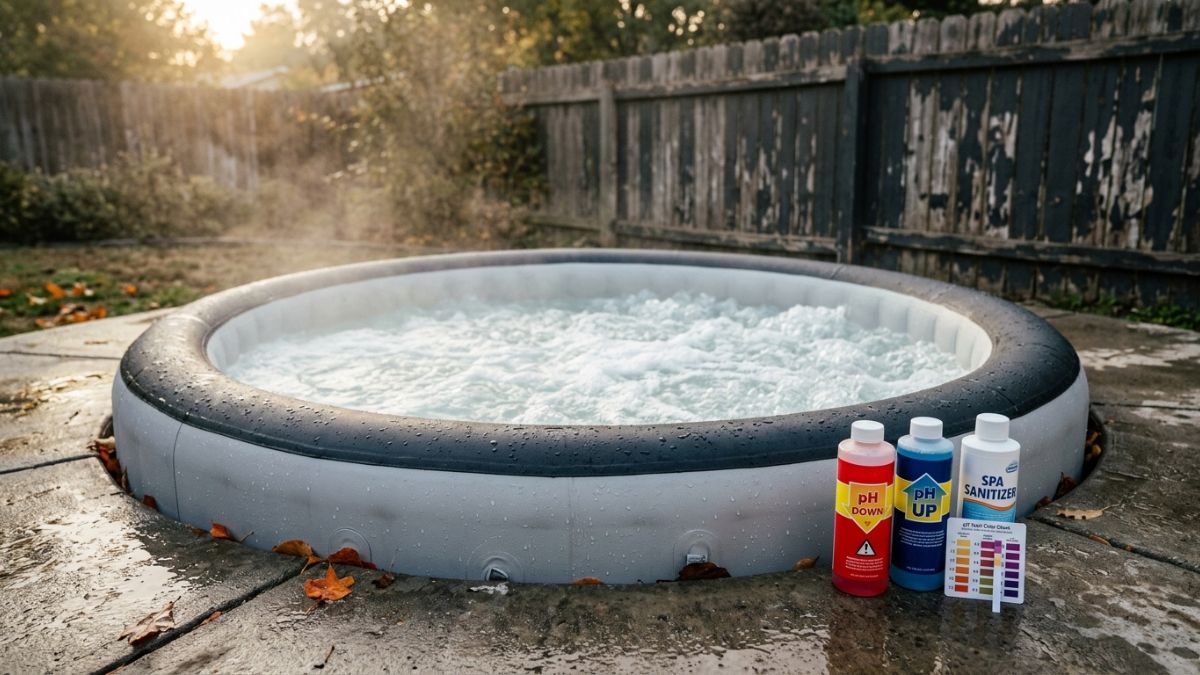
Inflatable hot tub pH keeps rising is one of the most searched hot tub problems online, and the frustration behind it is real. You add pH Down, watch the reading drop to 7.4, feel good about it, and the next day it is back at 8.0 or higher. You go through bottle after bottle of chemicals with nothing to show for it.
One Reddit user described wasting three-quarters of a bottle of pH Down over two weeks only to discover that a single air jet had been left on, and simply turning it off meant one small dose of pH Down brought the water to perfect balance immediately.
That is the reality of inflatable hot tub chemistry. The causes are specific to how portable spas work, and the fixes are different from what most pool guides recommend. This article covers exactly why your inflatable tub keeps fighting you on pH and what to do about each cause.
Quick Answer: Inflatable hot tub pH keeps rising primarily because air jets create constant aeration that releases CO2 from water, pushing pH upward continuously. The secondary cause is total alkalinity running too high. The fix is turning off air jets when not soaking, lowering TA to 40 to 60 ppm (lower than for pools), and adding pH Down only with jets off and pump running.
Key Takeaways
✓ Air jets are the single biggest cause of rising pH in inflatable hot tubs most owners never realize this
✓ Turn off air jets before adding any chemicals and keep them off during chemical circulation
✓ Hot tub TA target is 40 to 60 ppm, significantly lower than the pool standard of 80 to 120 ppm
✓ Borates at 50 ppm dramatically slow pH rise in aerated inflatable tubs
✓ Small water volume means chemistry changes faster and more dramatically than in a full-size pool
✓ Adding pH Down with air jets running is like pouring money into the drain the aeration undoes it immediately
Why Inflatable Hot Tubs Are Different From Pools and Acrylic Spas
Most pH guides are written for pools or permanent acrylic spas. Inflatable hot tubs behave differently in two important ways that most guides never acknowledge.
Small water volume: A typical inflatable tub holds 200 to 400 gallons. A standard pool holds 10,000 to 20,000 gallons. Every chemical addition, every person who soaks, every raindrop has a proportionally larger effect on chemistry in a small tub. What takes a week to shift chemistry in a pool can happen overnight in an inflatable.
Constant air jet aeration: Inflatable hot tubs use air-driven bubble systems as their primary massage feature. Unlike acrylic spa jets that move water, inflatable tub air jets pump air bubbles through the water continuously. Every bubble that rises to the surface carries dissolved CO2 out of the water. Less CO2 in the water means lower carbonic acid levels means higher pH. This process never stops as long as the air system is running.
According to TroubleFreePool’s chemistry methodology, hot tubs and spas should target total alkalinity at a lower range than pools specifically because of this aeration effect. The standard pool target of 80 to 120 ppm is too high for an aerated inflatable spa and actively makes the pH rising problem worse.
The 7 Real Causes of Rising pH in Inflatable Hot Tubs
Cause 1: Air Jets Running During and After Chemical Addition
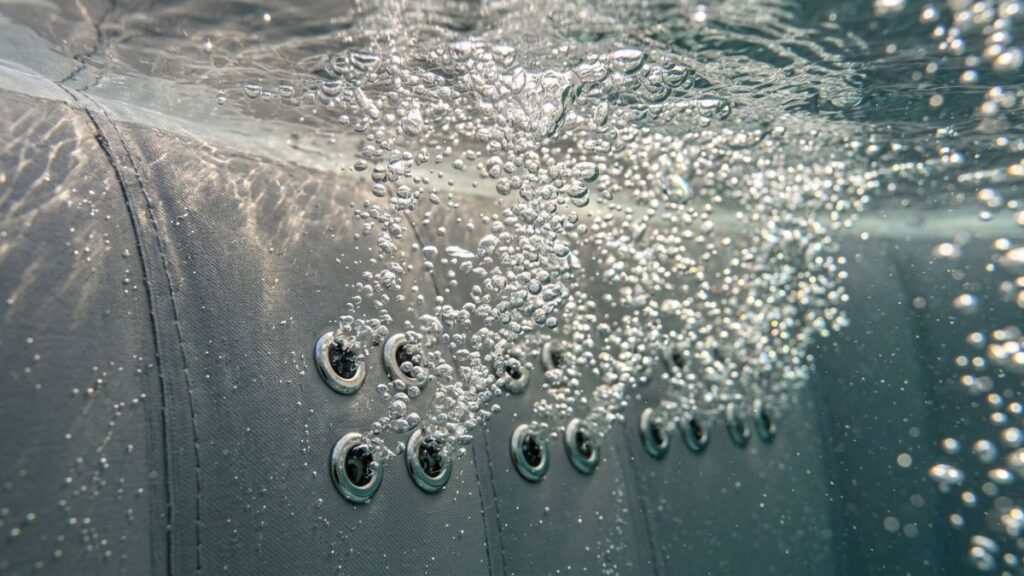
This is responsible for the majority of inflatable hot tub pH problems. The air bubble system is constantly removing CO2 from the water, which raises pH continuously. When you add pH Down with the air jets running, the chemical is working against the aeration simultaneously. You get a small temporary drop and then immediate recovery.
The Reddit community confirmed this repeatedly: “Aeration via air jets will raise your pH.” One user described going through four or five rounds of adding pH Down in one day with almost no effect, only to solve the problem completely by turning off the air before adding chemicals.
Fix: Turn off air jets completely before adding any chemicals. Run only the circulation/filtration pump. Wait at least 30 to 60 minutes after adding chemicals before turning air back on. Test water with air off for accurate readings.
Cause 2: Total Alkalinity Too High for a Hot Tub
The standard pool advice of 80 to 120 ppm TA is wrong for inflatable hot tubs. In an aerated tub, that level of alkalinity creates a powerful CO2 buffer that continuously drives pH upward. Multiple experienced hot tub owners in online communities have independently discovered that TA needs to be at 40 to 60 ppm to achieve stable pH in an aerated inflatable.
One forum member with a 325 gallon tub described months of struggling with pH until discovering the lower TA target: “I’ve found that my alkalinity needs to be around 50 to 60 to have any pH balance. I know that’s below the recommended level but if I let my alkalinity go to 80 to 100, I’m just chasing pH.”
Check your TA using our pool alkalinity levels chart and compare your reading against the hot tub specific targets below.
Cause 3: Fill Water Has High pH and High Alkalinity
Many municipal water supplies come out of the tap at pH 7.8 to 8.5 with high alkalinity. One Reddit user noted their city water tested at 8.5 pH. In a 250 gallon inflatable tub, filling with high-pH water means starting a chemistry battle before anyone has even soaked in it.
The water needs several doses of pH Down over the first few days to settle. This is normal but confuses new owners who think their tub has a permanent problem when it is just the fill water chemistry working through the system.
Cause 4: Chlorine or Bromine Type Being Used
Different sanitizers affect pH differently. Liquid chlorine (sodium hypochlorite) raises pH. Trichlor tablets lower pH. Bromine tends to slightly raise pH over time. Many inflatable tub owners use sodium dichloroisocyanurate granules, which have a near-neutral pH effect, but mixing different sanitizer types or overusing one type can push pH in unexpected directions.
Cause 5: Overusing Alkalinity Increaser or Baking Soda
Pool store advice often includes raising TA with baking soda or alkalinity increaser. In an inflatable hot tub context, this is frequently counterproductive. Any addition that raises TA above 60 ppm in an aerated tub creates a stronger buffer that pushes pH higher. Every time you add baking soda to stabilize the water, you may be making the long-term pH problem worse.
Cause 6: Small Volume Chemistry Swings
A bather who has used lotion, sunscreen, or personal care products introduces organic load that affects water chemistry in a 250 gallon tub far more than in a 15,000 gallon pool. Each soak session can measurably shift pH, chlorine demand, and total dissolved solids in a way that would be undetectable in a pool.
Cause 7: Not Circulating Long Enough After Adding Chemicals
Many inflatable hot tub owners add chemicals, wait 10 to 15 minutes, and retest. In a small volume tub, full chemical distribution can take 30 to 60 minutes with the pump running. Testing too early gives inaccurate low readings, causing owners to add more chemical than needed, then discovering pH has crashed when the chemical finally circulates fully.
The One Mistake Wasting Most of Your pH Down
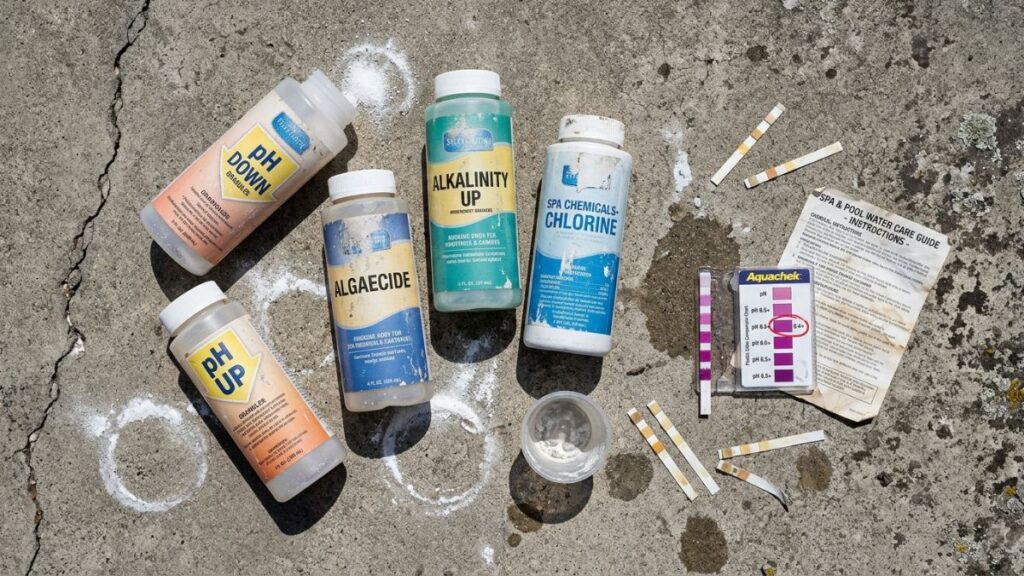
Adding pH Down with air jets running.
This single mistake accounts for a significant portion of wasted chemicals in inflatable hot tubs. The aeration from air jets removes CO2 faster than pH Down can overcome it. You can add multiple doses and see almost no net change because the aeration is continuously raising pH at a similar rate to what the acid is lowering it.
The solution is simple and completely free:
- Turn air jets fully off
- Run only the filtration pump
- Add your pH Down dose
- Circulate for 30 to 60 minutes with filtration only
- Test pH with air still off
- Only turn air jets back on once chemistry is confirmed
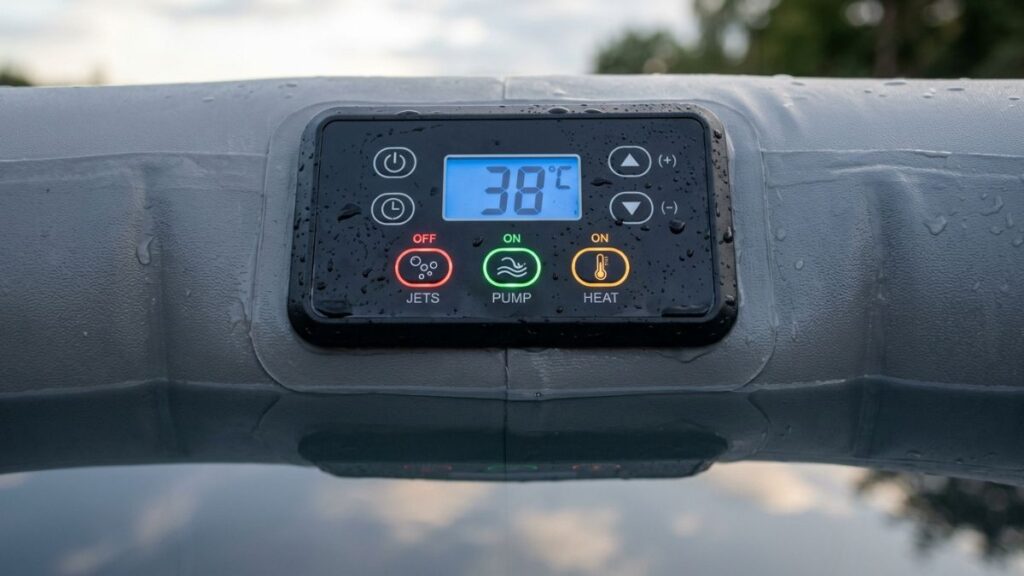
One Reddit user described this moment of realization: “I had no idea about how the air jets would increase pH. Yesterday, I probably went through four or five rounds of adding pH Down, testing, and witnessing a miniscule pH lowering each time. This morning I turned off the air on the jets, and voila. One round with 2 tsp of pH Down and my pH is perfect.”
Correct Target Numbers for Inflatable Hot Tubs
These targets differ from pool and acrylic spa recommendations. Using pool targets in an inflatable tub is one of the primary reasons the chemistry never stabilizes.
| Parameter | Pool Target | Acrylic Spa Target | Inflatable Hot Tub Target |
|---|---|---|---|
| pH | 7.2 to 7.6 | 7.2 to 7.8 | 7.2 to 7.8 |
| Total Alkalinity | 80 to 120 ppm | 80 to 120 ppm | 40 to 60 ppm |
| Free Chlorine | 1 to 3 ppm | 3 to 5 ppm | 3 to 5 ppm |
| Bromine | Not typical | 3 to 6 ppm | 3 to 6 ppm |
| Calcium Hardness | 200 to 400 ppm | 150 to 250 ppm | 100 to 200 ppm |
The TA target of 40 to 60 ppm is the most important difference. It directly controls how fast pH climbs between treatments. With TA at 100 ppm in an aerated inflatable tub, pH can return to 8.0 within 6 to 12 hours. With TA at 50 ppm and air jets managed correctly, the same adjustment can hold for 3 to 7 days.
According to the CDC’s Model Aquatic Health Code for spa facilities, pH between 7.2 and 7.8 is required for effective sanitization. Keeping it there consistently in an inflatable tub requires the correct TA target, not the pool standard.
Step-by-Step Fix for Rising Inflatable Hot Tub pH
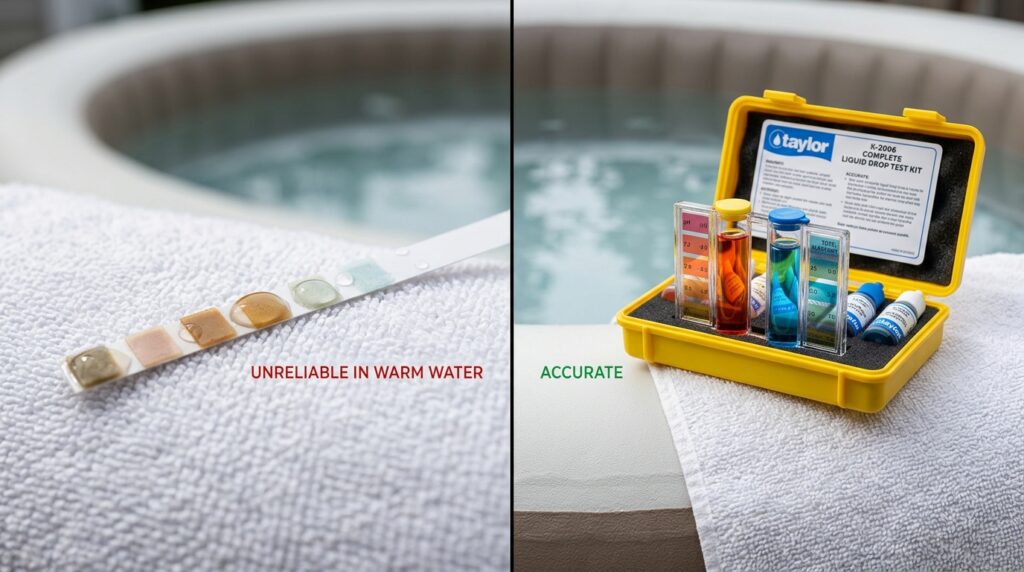
Step 1: Test both pH and TA accurately. Use a liquid drop test kit, not strips. Strips are unreliable in warm aerated water. Test with air jets off and pump circulating. Our guide on how to test pool water correctly explains which kit gives reliable readings.
Step 2: If TA is above 60 ppm, lower it first. Add a small amount of pH Down (dry acid or muriatic acid) near the intake with only the filtration pump running. Lower TA gradually to 40 to 60 ppm in small sessions of no more than 10 ppm at a time.
Step 3: After lowering TA, aerate to recover pH. Turn the air jets on for several hours. This raises pH back toward 7.4 to 7.6 without raising TA. This is the correct acid-and-aerate method applied to a hot tub context.
Step 4: Once TA is at target, maintain pH with small doses. With TA at 50 ppm and air jets managed, one small dose of pH Down should hold pH for 3 to 7 days depending on bather load and how long air jets run.
Step 5: Add chemicals in the correct order every time. Turn air off. Add chemical. Circulate 30 to 60 minutes with filtration pump. Test. Turn air back on.
For the full low-pH chemistry reference, our guide on why pool pH keeps rising explains the CO2 offgassing mechanism in depth.
Before spending another dollar on pH Down, check whether your air jets are running when you add chemicals. This single free change has solved the problem for dozens of frustrated inflatable hot tub owners. Turn the jets off, add your chemical, wait 45 minutes with only the filtration pump running, then test. Most people find one small dose works perfectly once the aeration is removed from the equation.
How Borates Help Stabilize pH in Aerated Tubs
Borates at 50 ppm are a legitimate and well-proven method for slowing pH rise in heavily aerated hot tubs. They add a secondary buffering system that holds pH more stable between treatments without meaningfully affecting TA.
One Reddit user with a stabilized ALK of 50 to 60 ppm described adding 50 ppm borates and finding pH rose significantly more slowly than before. This aligns with what pool chemistry experts have documented for years in pools and spas.
To add borates, use boric acid powder or granules. Not borax, which raises both pH and alkalinity. After adding borates, verify pH is in range, as boric acid is slightly acidic and will lower pH slightly.
Our guide on how to raise pool pH without raising alkalinity covers borax and boric acid use in more detail including the difference between the two.
Troubleshooting Table by Symptom
| What You See | Most Likely Cause | First Check |
|---|---|---|
| pH at 8.0 or above within 24 hours of treatment | TA too high plus constant aeration | Test TA, target 40 to 60 ppm |
| pH barely moves despite adding pH Down | Air jets running during treatment | Turn off air jets, retreat |
| Cloudy water with high pH | High pH forcing calcium out of solution | Lower pH and check calcium hardness |
| Chlorine disappearing fast | High pH making chlorine ineffective | Lower pH to 7.4, re-dose chlorine |
| Scale building on heater | High pH plus high calcium | Lower pH and calcium hardness |
| pH normal but sanitizer not working | pH actually higher than strips show | Switch to liquid drop test kit |
| pH crashes suddenly | Overcorrected from too much acid | Use smaller doses, retest earlier |
Inflatable Hot Tub Maintenance Schedule
| Task | Frequency |
|---|---|
| Test pH and sanitizer | Every use, minimum 3 times per week |
| Test total alkalinity | Once per week |
| Add chemicals if needed | After testing, with air jets off |
| Clean filter cartridge | Every 1 to 2 weeks depending on use |
| Drain and refill | Every 6 to 12 weeks or when TDS is high |
| Check for air jet leaks | Monthly, leaking jets cause extra aeration |
Frequently Asked Questions
Why does my inflatable hot tub pH keep rising every day? The air jet system is the primary driver. Constant aeration removes CO2 from the water, which raises pH continuously. If TA is also above 60 ppm, the problem compounds significantly. Turn off air jets when not soaking and lower TA to 40 to 60 ppm.
Should I lower alkalinity before lowering pH in my hot tub? Yes. In an inflatable hot tub with TA above 60 ppm, lowering TA first using the acid-and-aerate method will make pH adjustments hold significantly longer afterward.
Can hot tub air bubbles really raise pH? Yes, this is well established in water chemistry. Air bubbles rising through water carry dissolved CO2 out of the water. Less CO2 means lower carbonic acid levels means higher pH. In an inflatable hot tub with constant air jet use, this effect is continuous and significant.
Why does inflatable hot tub pH keep rising? Inflatable hot tub pH keeps rising because air jets create constant aeration that releases CO2 from water, pushing pH upward continuously. High total alkalinity amplifies this effect by creating a larger CO2 buffer. The primary fix is turning off air jets when adding chemicals and targeting TA at 40 to 60 ppm rather than the standard pool target of 80 to 120 ppm.
What is the correct pH for an inflatable hot tub? The ideal pH for an inflatable hot tub is 7.2 to 7.8, with 7.4 to 7.6 being optimal for sanitizer effectiveness and swimmer comfort. This is the same range as pools, but achieving it requires lower total alkalinity (40 to 60 ppm) and careful management of the air jet system.
Why does pH keep going up after adding pH Down to an inflatable hot tub? If pH returns to high levels shortly after adding pH Down, either the air jets were running during treatment (which counteracts the acid through aeration), or total alkalinity is too high (above 60 ppm for a hot tub), creating a buffer that continuously pushes pH back up.
Before spending another dollar on pH Down, check whether your air jets are running when you add chemicals. This single free change has solved the problem for dozens of frustrated inflatable hot tub owners. Turn the jets off, add your chemical, wait 45 minutes with only the filtration pump running, then test. Most people find one small dose works perfectly once the aeration is removed from the equation.
Final Thoughts
Inflatable hot tub pH keeps rising for reasons that are specific to how portable spas work. The air jet system creates constant aeration that pool guides never address. The small water volume makes chemistry shift faster than any guide written for pools can account for. And the standard pool TA target of 80 to 120 ppm is genuinely wrong for an aerated inflatable tub.
The three changes that solve this problem for most owners are: turn off air jets when adding chemicals, lower TA to 40 to 60 ppm, and consider adding borates at 50 ppm if pH drift is still faster than desired. None of these changes cost much. All of them work.
If your pH chemistry is correct but chlorine still seems ineffective, our guide on pool pH normal but chlorine not working explains what else could be consuming your sanitizer.