
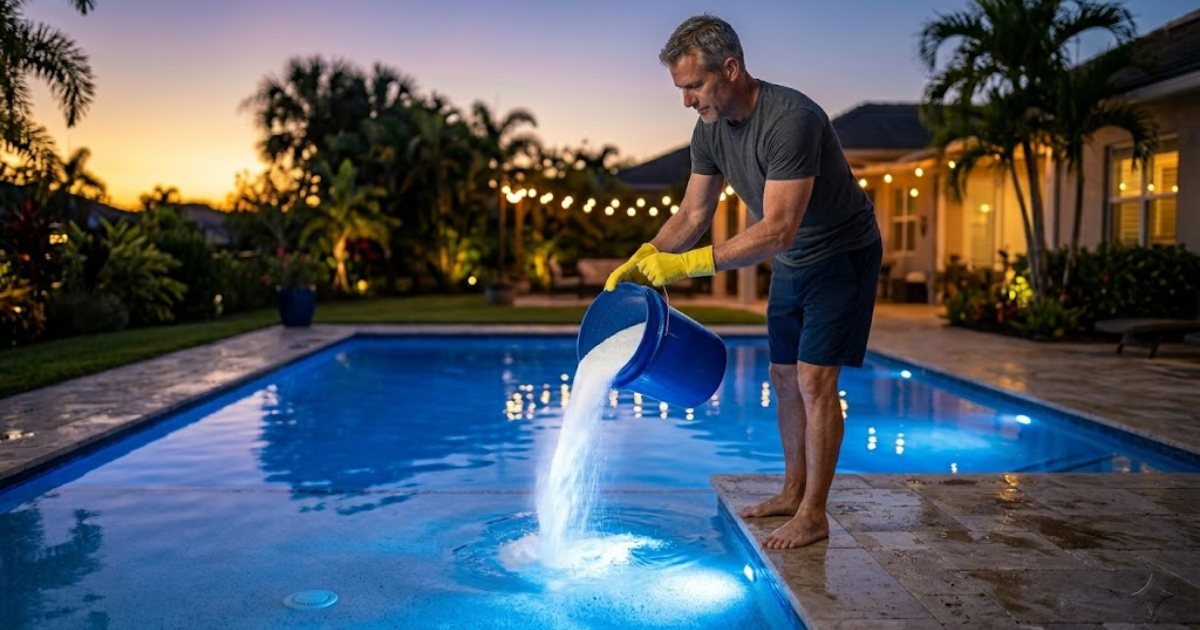
Pool shocking is one of those tasks that sounds complicated until you understand what it actually does. Then it’s obvious , and you’ll know exactly when you need it.
The short version: shocking a pool means adding a large, concentrated dose of oxidizer to the water to wipe out bacteria, destroy chloramines, and kill early algae. You’re not just raising chlorine. You’re burning through everything in the water that shouldn’t be there.
Done right, it takes about 20 minutes of active work. Done wrong, it wastes $20 of chemicals and leaves your pool just as green as before.
📌 KEY TAKEAWAYS
- Pool shocking = adding a high dose of oxidizer to super-chlorinate the water
- Always shock at night or dusk — daylight destroys shock before it works
- Three main types: calcium hypochlorite (best all-rounder), dichlor (stabilized), non-chlorine shock (fastest swim return)
- Standard maintenance dose: 1 lb of cal-hypo (73%) per 10,000 gallons
- Never swim until free chlorine drops below 5 ppm — always test before entering
What Is Pool Shocking?
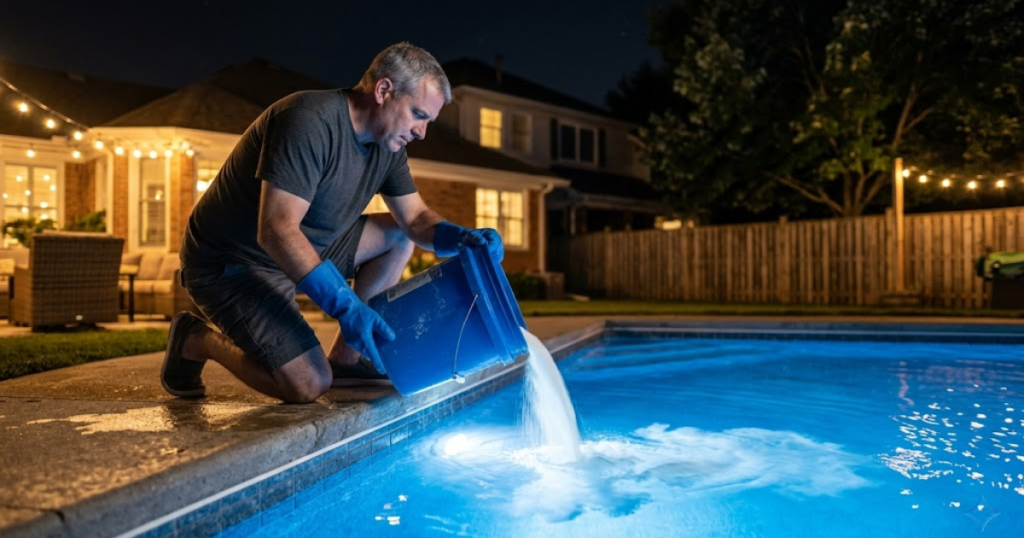
Pool shocking, also called super-chlorination, is the process of adding a concentrated oxidizing dose to pool water to destroy combined chlorine (chloramines), kill bacteria and algae, and restore water clarity. According to the Association of Pool & Spa Professionals (APSP), breakpoint chlorination, the point where chloramines are fully destroyed, requires free chlorine to reach roughly 10 times the combined chlorine level
Normal pool chemistry works on a maintenance dose, enough free chlorine to keep bacteria in check day to day. Shocking is a full reset.
When bather load gets heavy, organic matter builds up in the water, sweat, sunscreen, body oils, and reacts with free chlorine to form combined chlorine, better known as chloramines. Chloramines don’t sanitize. They sit in the water irritating eyes and skin and creating that sharp pool smell most people wrongly blame on too much chlorine.
Breakpoint chlorination is the technical term for what shocking achieves. It means raising free chlorine high enough, typically 10 ppm or above, to chemically destroy all combined chlorine in the water. Below that threshold, you’re reducing chloramines. At and above it, you’re eliminating them.
That’s why a half-dose shock rarely fixes anything. You either reach breakpoint or you don’t.
When Should You Shock Your Pool?
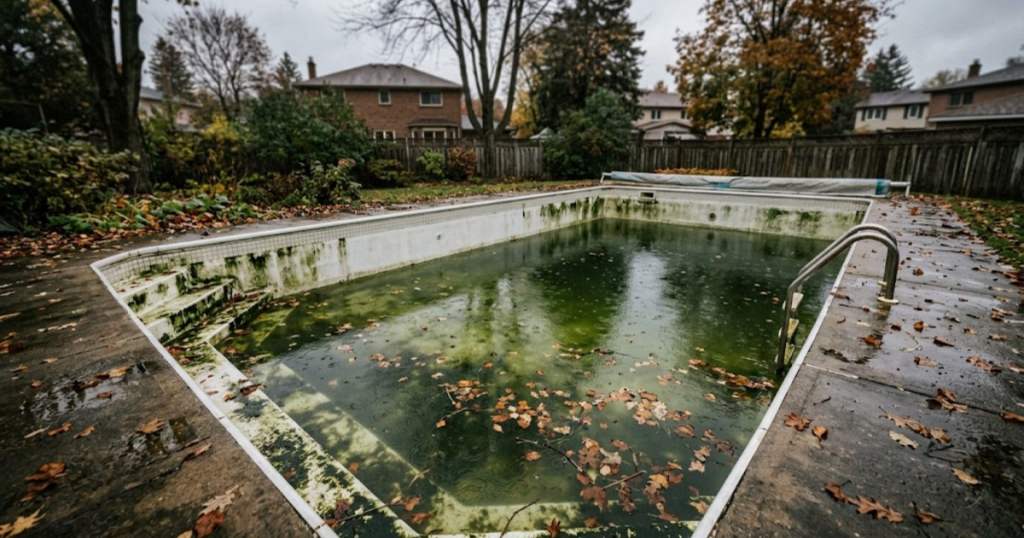
You should how to shock a pool when free chlorine falls below 1 ppm, after heavy rain or a pool party, when the water develops a strong chlorine smell indicating chloramine buildup, when algae growth is visible or suspected, at the start and end of swimming season, and as a weekly maintenance treatment during periods of heavy use.
After a pool party or heavy bather load. More swimmers means more organic matter — sweat, sunscreen, cosmetics, entering the water simultaneously. This creates a chlorine demand spike that standard maintenance dosing can’t keep up with.
After heavy rain. Rain dilutes chlorine, washes organic debris into the water, and temporarily shifts pH. A post-rain shock resets water chemistry before problems develop.
When you smell strong chlorine. That sharp smell isn’t excess chlorine. It’s chloramines, proof that free chlorine has been consumed by contaminants and converted into a form that no longer sanitizes. Shocking is the fix, not reduction.
When algae appears. Slimy walls, green tint, or cloudy green water are early algae signs. Standard maintenance chlorine can’t clear an active algae bloom. You need shock-level concentration to kill spores before they take over.
Seasonal opening and closing. Shocking when opening removes anything that grew during winter. Shocking before closing protects the water from developing problems over the off-season.
Quick note: some pool guides recommend shocking weekly regardless of conditions. I’ve seen conflicting evidence on whether that’s necessary for well-maintained pools, my read is that testing twice a week and shocking based on combined chlorine readings is smarter than a fixed calendar.
3 Types of Pool Shock — Which One Do You Need?
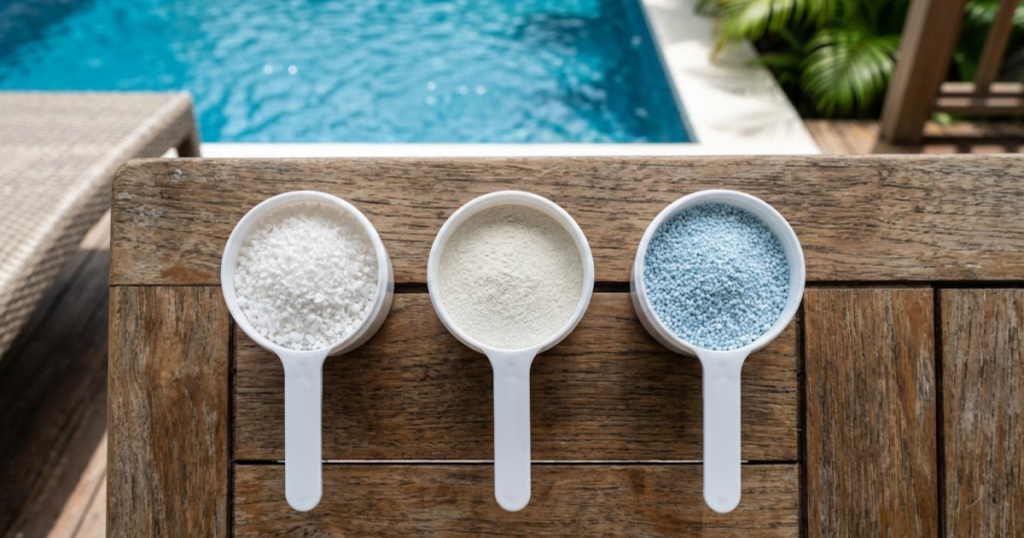
The three main pool shock types are: calcium hypochlorite (cal-hypo) at 65–73% available chlorine, the most powerful and cost-effective option; dichloro-s-triazinetrione (dichlor) shock at 56%, a stabilized option that adds cyanuric acid with each dose; and potassium monopersulfate (non-chlorine shock), an oxygen-based oxidizer that allows swimmers back in the pool within 15–30 minutes.
Type 1 — Calcium Hypochlorite (Best All-Rounder)
Cal-hypo shock at 65–73% available chlorine is the standard choice for most pool owners. It’s powerful, cost-effective, and handles algae, bacteria, and chloramines with a single treatment.
One caveat worth knowing: cal-hypo raises calcium hardness with every dose. In pools already running above 400 ppm calcium, repeated use over a season contributes to scale and cloudy water. If that’s a concern, alternate with dichlor or liquid chlorine between shock treatments.
Must be pre-dissolved in a bucket of water before adding to the pool. Never pour cal-hypo powder directly into the water — it sinks, bleaches the liner, and reacts unevenly.
Best for: Algae treatment, after heavy bather loads, seasonal opening and closing, general super-chlorination.
Type 2 — Dichlor Shock (Stabilized, More Forgiving)
Dichlor (sodium dichloro-s-triazinetrione) at 56% available chlorine contains built-in cyanuric acid. That makes it more resistant to UV degradation — which matters less when shocking at night, but is useful if you need to apply it during the day.
The trade-off: every dichlor application raises your pool’s CYA level. Over a full season of regular dichlor use, CYA can creep above 80 ppm and start interfering with chlorine effectiveness. Monitor your CYA monthly if you use dichlor regularly.
Best for: Daytime applications when nighttime shocking isn’t possible, pools in high UV climates.
Type 3 — Non-Chlorine Shock (Fastest Swim Return)
Potassium monopersulfate (MPS) is an oxygen-based oxidizer that destroys organic contaminants and breaks apart chloramines without adding any chlorine. Swimmers can re-enter the pool in 15–30 minutes after treatment, its clearest advantage over chlorine-based options.
Here’s the thing: MPS oxidizes organic matter effectively, but it doesn’t kill algae and it doesn’t raise free chlorine. If your pool has an active algae bloom or free chlorine has crashed below 1 ppm, non-chlorine shock alone won’t fix it.
Best for: Routine oxidation maintenance, after light bather loads, any situation where same-day swimming matters.
- ✓ Proper shocking doesn’t just sanitize your pool, it destroys contaminants that regular chlorine alone can’t eliminate.
Quick Comparison: Which Shock for Which Situation?
| Shock Type | Available Chlorine | Best For | Raises CYA? | Swim Return |
|---|---|---|---|---|
| Calcium hypochlorite (73%) | 73% | Algae, heavy loads, season treatment | No | 8–24 hrs |
| Dichlor (56%) | 56% | Daytime treatment, high UV climates | Yes | 8 hrs min |
| Non-chlorine / MPS | 0% (oxidizer only) | Routine oxidation, fast swim return | No | 15–30 min |
How to Shock a Pool Step-by-Step
To shock a pool correctly, follow these steps:
- Test your water first. Record free chlorine, combined chlorine, and pH. pH should be between 7.2 and 7.4 before shocking, high pH dramatically reduces shock effectiveness.
- Calculate your pool volume. Dosing without knowing your volume is guessing. Use the dosing table below.
- Wait for dusk or after dark. Shocking in direct sunlight lets UV destroy a large portion of cal-hypo or dichlor before it circulates. Night shocking preserves the full dose.
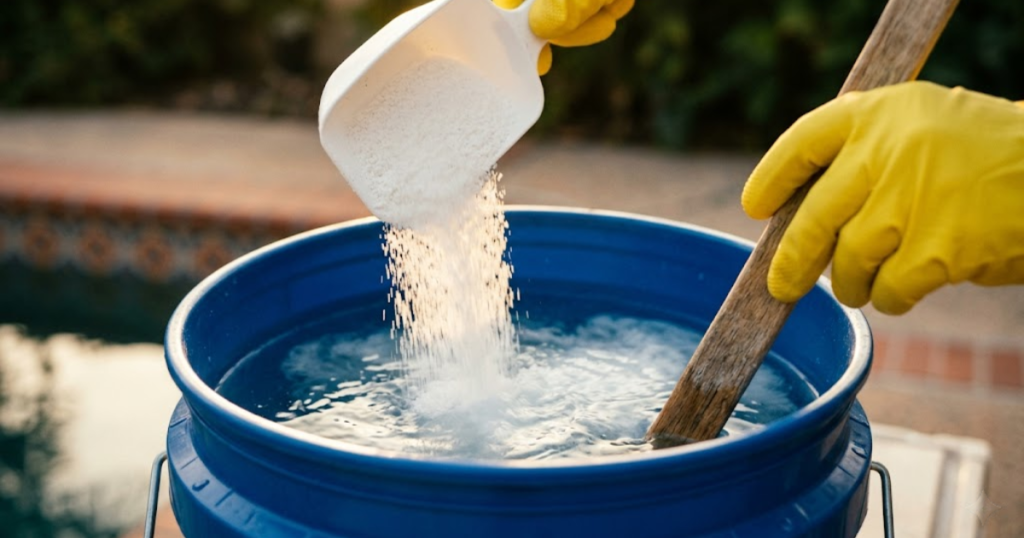
- Pre-dissolve cal-hypo in a bucket. Fill a 5-gallon bucket ¾ full with pool water. Slowly add the measured shock powder and stir until fully dissolved. Always add powder to water, never water to powder.
- Pour slowly near the return jets. Walk around the pool perimeter while pouring to distribute evenly. Stay away from the skimmer — concentrated shock damages skimmer components.
- Run the pump overnight at full speed. Continuous circulation ensures even distribution and maximum contact time with the water.
- Re-test in the morning. Confirm free chlorine is below 5 ppm before anyone swims.
Dosing Table: How Much Shock to Add
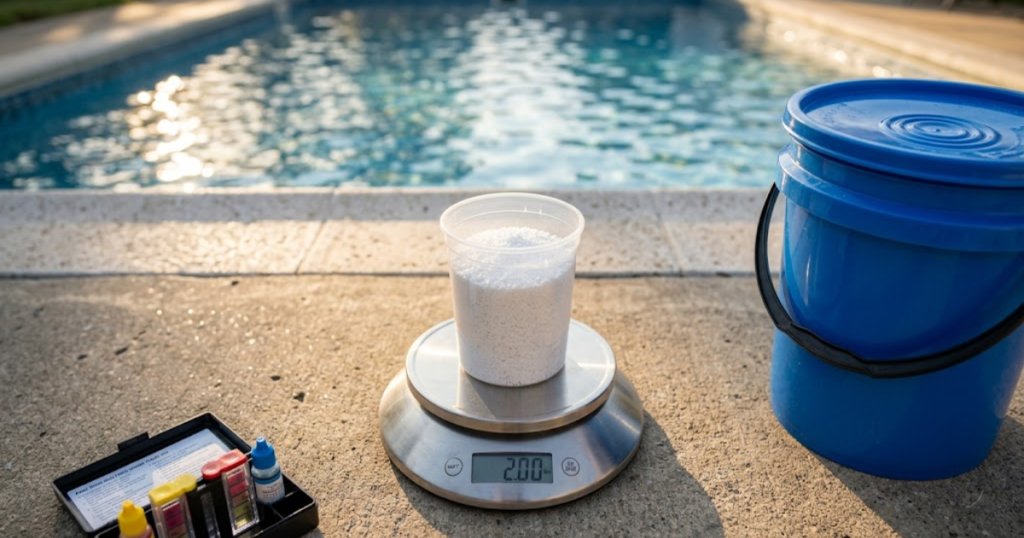
Standard super-chlorination dose raises free chlorine to approximately 10 ppm. Doses below are per 10,000 gallons, multiply for your pool size.
| Shock Type | Product Example | Maintenance / 10K gal | Algae Treatment / 10K gal |
|---|---|---|---|
| Cal-hypo 73% | HTH Super Shock, Zappit 73 | 1 lb (454g) | 2–3 lbs |
| Cal-hypo 65% | In The Swim Cal-Hypo Shock | 1.2 lbs (544g) | 2.5–3.5 lbs |
| Dichlor 56% | Rx Clear Stabilized Shock | 1.4 lbs (635g) | 2.5 lbs |
| Non-chlorine MPS | BioGuard Burn Out, Oxy-Brite | 1 lb (454g) | Not for algae |
Scale for your pool size:
- 15,000 gallons → multiply dose × 1.5
- 20,000 gallons → multiply dose × 2.0
- 25,000 gallons → multiply dose × 2.5
How Long to Wait Before Swimming After Shocking?
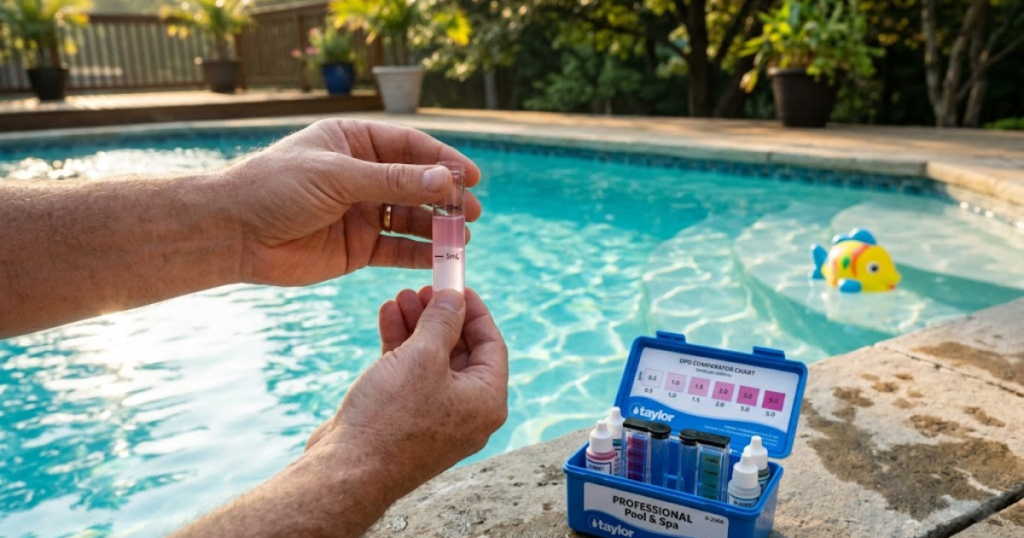
Never go by time. Always go by the test reading.
After a standard cal-hypo or dichlor shock, free chlorine rises to 10 ppm or above. It needs to drop back below 5 ppm before anyone enters the water. In most outdoor pools with the pump running overnight, that takes 8–24 hours depending on pool size, sunlight, and dose.
Non-chlorine shock is different. Because it adds no chlorine, levels don’t spike. Most pools are safe in 15–30 minutes after an MPS treatment, but still test before anyone gets in.
Look, if your kid is asking to swim three hours after a cal-hypo shock and you haven’t tested, the answer is no. Not because three hours is always too short. Because you don’t know. Test first. Always.
lower chlorine guide → “Shocked and overshot? Here’s how to lower chlorine in a pool fast
5 Common Pool Shocking Mistakes
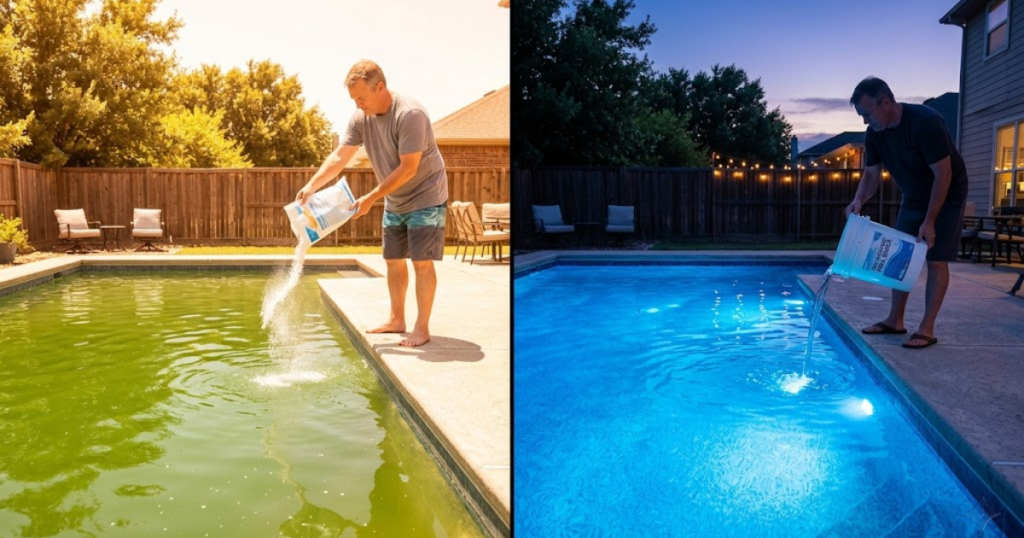
1. Shocking in daylight.
UV radiation destroys cal-hypo and dichlor rapidly in direct sunlight. Meaningful degradation happens within the first hour of UV exposure. Always shock at dusk, evening, or night. This single change makes every treatment more effective.
2. Adding shock directly to the pool without pre-dissolving.
Cal-hypo powder that contacts the pool floor or liner before dissolving bleaches on contact and creates concentrated pockets of extreme chlorine. Dissolve it in a bucket every single time.
3. Shocking near the skimmer.
Pouring shock into or near the skimmer sends undiluted oxidizer directly through your filter equipment — degrading rubber gaskets, filter media, and pump seals faster than normal. Always add near return jets.
4. Not adjusting pH first.
Chlorine-based shock at pH 7.8 or above loses a significant portion of its sanitizing power before it even circulates. Bring pH to 7.2–7.4 before shocking. A 10-minute pH correction step beforehand makes the treatment noticeably more effective.
5. Half-dosing.
Or maybe I should say it this way: a partial shock dose that doesn’t reach breakpoint chlorination doesn’t just partially work, it often doesn’t work at all. If you’re treating an algae bloom with half the recommended dose, you’re spending money to slow the algae down, not kill it. Dose to the problem.
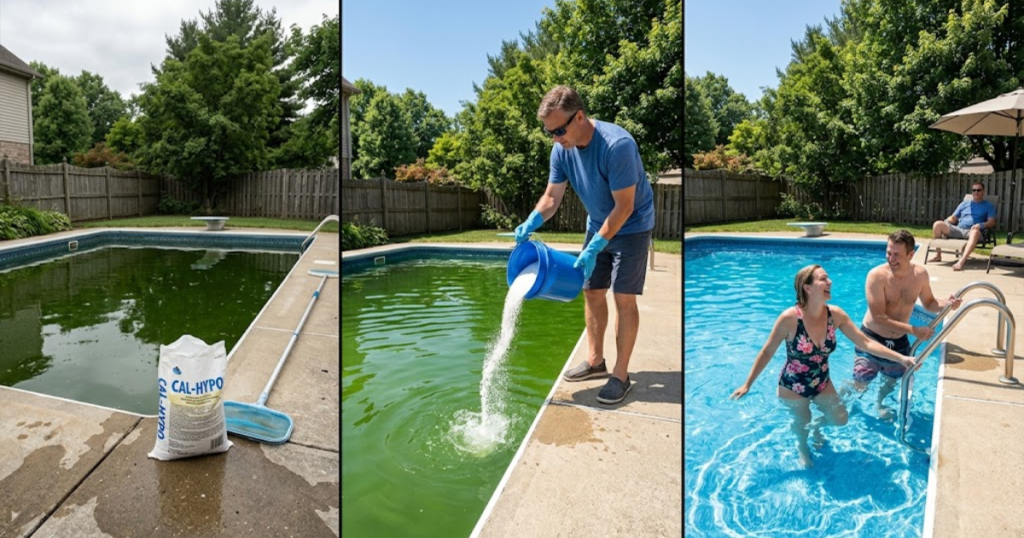
[IMAGE: alt=”pool algae bloom from under-dosing shock treatment versus clear pool after correct shocking” | Split image showing left side a green cloudy pool with algae and right side a crystal clear blue pool after correct shock dosing]
FAQs
How often should you shock a pool?
Shock whenever combined chlorine rises above 0.5 ppm, after heavy rain or a pool party, and at season opening and closing. Light-use pools may only need monthly shocking. Heavy-use summer pools often benefit from weekly treatment.
Can you swim right after shocking a pool?
Not after chlorine-based shock. Wait until free chlorine drops below 5 ppm — usually 8–24 hours. After non-chlorine shock (MPS), most pools are safe in 15–30 minutes once fully circulated and tested.
How much shock do I need for a 20,000 gallon pool?
For a maintenance shock using 73% cal-hypo, use 2 lbs. For active algae treatment, use 4–6 lbs. For heavy algae, split into two doses 12 hours apart for better penetration.
Why is my pool still green after shocking?
Three likely causes — insufficient dose, daytime application losing the shock to UV, or pH too high reducing effectiveness. Check all three before adding more chemical. Brush pool walls before shocking heavy algae to expose spores to the oxidizer.
Should I run the pump while shocking?
Yes — always. Run continuously overnight at full speed. Without circulation, shock sits in concentrated pockets where it was added and never reaches bacteria or algae in other areas of the pool.
The Bottom Line
Pool shocking works every time when it’s done correctly.
Three things determine success: shock at night, dissolve cal-hypo in a bucket first, and use the full dose for the problem you’re treating, not a partial dose to stretch the bag. Miss any one of those three and the treatment underperforms.
Non-chlorine shock for routine maintenance and fast swim return. Cal-hypo when algae, bacteria, or heavy contamination is the issue. Test before swimming. Run the pump overnight.
That’s it.
raise chlorine guide → “Need to raise chlorine without shocking? Here are 4 methods that work fast”