
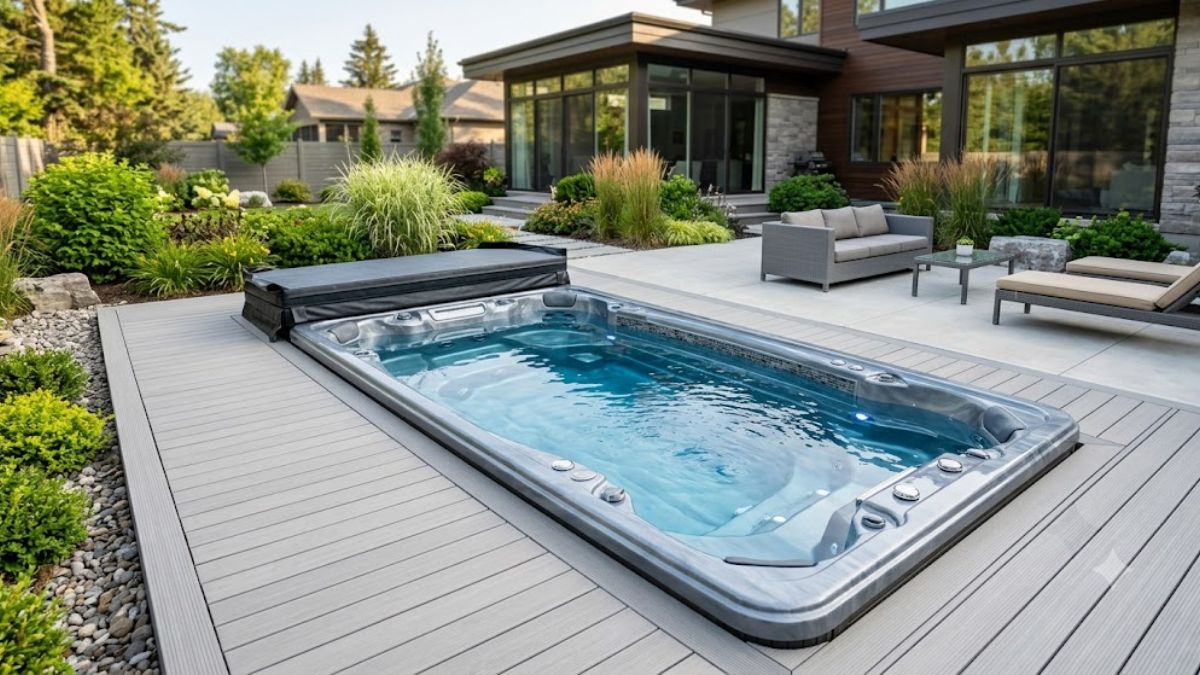

Thinking about buying a swim spa? You’re probably seeing prices anywhere from $15,000 to over $50,000, and wondering why there’s such a big difference.
The truth is that the sticker price is only part of the story.
Many first-time buyers focus on the cost of the swim spa itself but forget about installation, electrical upgrades, delivery, permits, maintenance, and monthly operating expenses. By the time everything is complete, the total investment can be much higher than expected.
If you’ve ever asked yourself:
✓ How much does a swim spa really cost?
✓ Is a swim spa cheaper than a swimming pool?
✓ What hidden costs should I expect?
✓ How much will it cost to run every month?
You’re in the right place.
This guide breaks down every major expense so you can make an informed buying decision and avoid expensive surprises.
How Much Does a Swim Spa Cost?
A residential swim spa typically costs between $20,000 and $61,000 installed, while luxury models can exceed $80,000. Most homeowners spend between $30,000 and $45,000 for a quality mid-range swim spa after installation. Monthly operating costs usually range from $75 to $150 depending on electricity rates, climate, and usage.
The final price depends on several factors, including:
✓ Swim spa size
✓ Current system
✓ Single or dual-zone design
✓ Brand
✓ Installation requirements
✓ Local labor costs
✓ Energy efficiency
✓ Long-term maintenance
Instead of asking, “How much does the swim spa cost?” a better question is:
“How much will owning a swim spa cost over the next 10 years?”
Why Many Buyers Spend More Than Expected
One of the biggest mistakes I see first-time buyers make is budgeting only for the showroom price.
A dealer may advertise a swim spa for $24,000, but that’s rarely what you’ll pay before your first swim.
Here’s why.
A swim spa cannot simply be dropped into your backyard.
It needs:
✓ A reinforced concrete base
✓ A dedicated electrical circuit
✓ Professional delivery
✓ Sometimes crane access
✓ Local permits
✓ Final inspection
These costs are often separate from the advertised price.
Knowing them upfront helps you avoid budget surprises later.
Swim Spa Price by Category
Different types of swim spas serve different needs, and their prices reflect that.
| Swim Spa Type | Average Price |
|---|---|
| Entry-Level Jet Swim Spa | $15,000 to $22,000 |
| Mid-Range Fitness Swim Spa | $22,000 to $35,000 |
| Premium Dual-Zone Swim Spa | $35,000 to $50,000 |
| Luxury Swim Spa | $50,000 to $80,000+ |
Entry-level models are ideal for relaxation and casual exercise.
Mid-range models provide stronger swim currents and better insulation.
Premium models include advanced current systems, hydrotherapy seating, smart controls, and longer warranties.
What Determines Swim Spa Cost?
No two swim spas are priced exactly the same.
Here are the biggest factors that influence cost.
1. Swim Current System
The swim current is the heart of every swim spa.
Jet-powered systems are usually more affordable and work well for casual swimming.
Propeller-driven systems create a smoother and wider current, making them a better choice for serious fitness swimmers. They also cost significantly more because of their advanced engineering.
2. Size
Larger swim spas naturally cost more.
A compact 12-foot model is much less expensive than a 19-foot dual-zone fitness spa.
A larger spa also holds more water, which increases heating and operating costs over time.
3. Single Zone vs Dual Zone
Single-zone swim spas use one temperature for the entire unit.
Dual-zone models allow the swimming section and hot tub section to operate at different temperatures.
This flexibility improves comfort but increases the purchase price.
4. Brand Reputation
Established manufacturers often charge more because they offer:
- Better insulation
- Longer warranties
- Strong dealer networks
- Easier access to replacement parts
- Higher resale value
A cheaper model may save money today but become more expensive if repairs are difficult or replacement parts are unavailable.
5. Energy Efficiency
Energy-efficient swim spas usually cost more upfront but save money every month.
Look for features like:
- Full-foam insulation
- Energy-efficient pumps
- Well-insulated covers
- Smart heating systems
Lower electricity bills can offset the higher purchase price within a few years.
Swim Spa Installation Costs
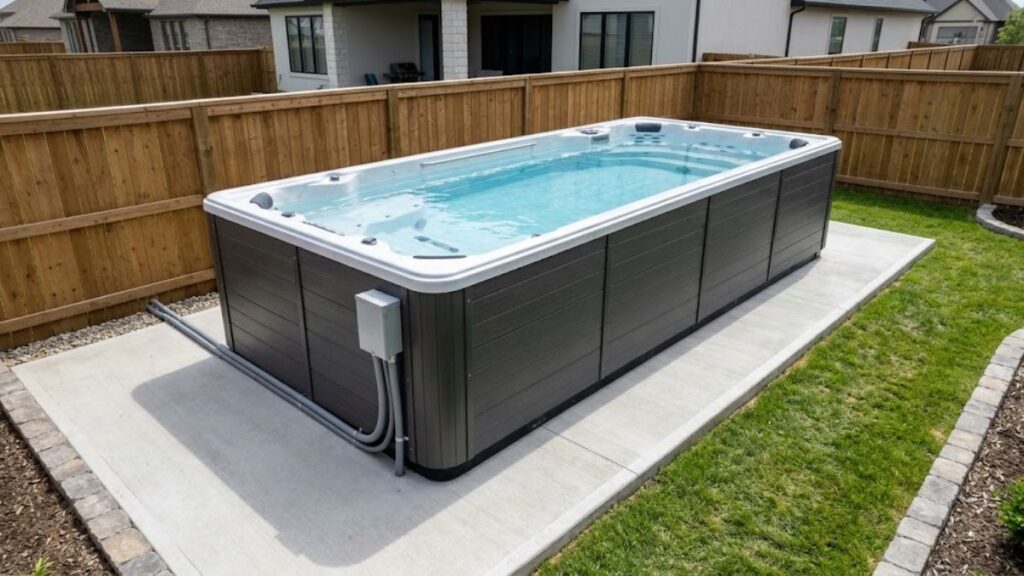
Installation is where many homeowners underestimate their budget.
Most residential installations cost between $4,500 and $11,000, depending on your property and local labor rates.
Here’s where that money goes.
| Installation Item | Average Cost |
|---|---|
| Concrete Pad | $2,000 to $5,000 |
| Electrical Installation | $1,500 to $3,000 |
| Delivery and Crane | $800 to $2,500 |
| Permits | $150 to $600 |
Every property is different.
If your backyard has limited access, steep slopes, or landscaping obstacles, delivery costs may increase.
Always request an itemized installation quote rather than accepting a single bundled price.
Monthly Running Costs
Buying the swim spa is only the beginning.
Every month you’ll also pay for electricity, water treatment, and routine maintenance.
For most homeowners, monthly operating costs range between $75 and $150.
Here’s a general breakdown.
| Expense | Monthly Cost |
|---|---|
| Electricity | $50 to $100 |
| Water Chemicals | $20 to $40 |
| Filter Maintenance | $5 to $10 |
The largest expense is usually electricity.
If you live in a colder climate, your heater will work harder during winter months, increasing your utility bill.
Well-insulated swim spas are more expensive initially but often save hundreds of dollars each year in energy costs.
The Hidden Costs Most Dealers Don’t Mention
The advertised price isn’t always the final price.
Here are a few additional expenses buyers often overlook:
- Cover lifter
- Replacement filters
- Water testing supplies
- Annual servicing
- Minor repairs
- Water replacement
- Landscaping around the spa
- Steps and safety railings
- Wi-Fi upgrades on premium models
Individually these costs may seem small, but together they can add thousands of dollars over the life of your swim spa.
Planning for them now will help you avoid financial surprises later.
Is a Swim Spa Worth the Cost?
That depends on how you plan to use it.
If your goal is occasional relaxation, a traditional hot tub may provide everything you need at a much lower price.
However, if you want year-round swimming, low-impact exercise, hydrotherapy, and family recreation without building a full-sized pool, a swim spa offers excellent long-term value.
Many homeowners find that the combination of fitness, relaxation, and lower maintenance makes a swim spa a worthwhile investment.
The 10 Year Cost of Owning a Swim Spa
A swim spa is a long-term investment, not just a one-time purchase. While the initial price is important, your total ownership cost over the next decade gives you a much clearer picture of what you’ll actually spend.
For most homeowners, a mid-range swim spa costs between $40,000 and $60,000 over 10 years, including installation, electricity, water care, routine maintenance, and occasional repairs.
| Cost Category | Estimated Cost |
|---|---|
| Swim Spa Purchase | $20,000 to $50,000 |
| Installation | $4,500 to $11,000 |
| Electricity & Chemicals (10 Years) | $9,000 to $18,000 |
| Maintenance & Repairs | $1,500 to $3,500 |
| Estimated Total | $35,000 to $82,000 |
Before buying, calculate your expected monthly expenses instead of focusing only on the purchase price. This simple step helps you avoid unexpected costs later.
Swim Spa vs Pool vs Hot Tub
Many buyers compare all three options before making a decision.
Here’s how they compare.
| Feature | Swim Spa | Inground Pool | Hot Tub |
|---|---|---|---|
| Upfront Cost | $$ | $$$$ | $ |
| Year Round Use | Yes | Depends on Climate | Yes |
| Exercise | Excellent | Excellent | Limited |
| Hydrotherapy | Excellent | Limited | Excellent |
| Maintenance | Moderate | High | Low |
| Space Required | Small | Large | Small |
Choose a Swim Spa If:
- You want year-round swimming.
- You have limited backyard space.
- You want fitness and relaxation in one unit.
- You prefer lower maintenance than a traditional pool.
Choose an Inground Pool If:
- You have a large backyard.
- You regularly entertain family and friends.
- Recreational swimming is your top priority.
Choose a Hot Tub If:
- Relaxation is your main goal.
- You have a limited budget.
- You don’t need a swimming current.
5 Smart Ways to Save Money on a Swim Spa
Buying a swim spa doesn’t have to mean paying full price. A few smart decisions can save you thousands of dollars.
1. Buy During End-of-Season Sales
Late summer and early fall are often the best times to shop. Many dealers offer discounts to clear inventory before new models arrive.
2. Compare Multiple Dealers
Never accept the first quote you receive. Compare prices, warranties, delivery charges, and installation costs from several dealers.
3. Invest in Better Insulation
An energy-efficient swim spa may cost more upfront, but lower electricity bills can save hundreds of dollars over time.
4. Request an Itemized Quote
Ask dealers to separate the cost of the swim spa, delivery, installation, electrical work, and accessories. This makes comparing offers much easier.
5. Budget for Ownership
Plan for monthly electricity, chemicals, and maintenance before making your purchase. A realistic budget helps you avoid financial surprises.
Common Questions Buyers Ask
Is a Swim Spa Worth the Money?
For homeowners who plan to use it regularly for exercise, hydrotherapy, and relaxation, a swim spa can offer excellent long-term value. Many people enjoy year-round use without the maintenance required by a full-size pool.
Do Swim Spas Use a Lot of Electricity?
Most swim spas cost between $50 and $100 per month to heat and operate. Energy-efficient insulation, local electricity rates, and climate all affect your monthly bill.
How Long Does a Swim Spa Last?
A high-quality swim spa typically lasts 15 to 20 years or more with proper maintenance and regular servicing.
Can a Swim Spa Increase Home Value?
While it may not increase resale value as much as an inground pool, a well-maintained swim spa can make your property more attractive to buyers who value wellness and outdoor living.
What Is the Best Swim Spa Size?
The best size depends on how you plan to use it. Smaller models work well for relaxation and light exercise, while larger swim spas provide more room for fitness training and family use.
Expert Buying Tips
If you’re buying your first swim spa, here are a few recommendations that can save both money and frustration.
- Visit a local showroom before buying online.
- Ask about warranty coverage and service availability.
- Test the swim current if possible.
- Choose a model that fits your long-term needs, not just your current budget.
- Read customer reviews to learn about real ownership experiences.
- Calculate your total ownership cost before signing a contract.
These simple steps can help you avoid common buying mistakes and choose a swim spa you’ll enjoy for years.
Frequently Asked Questions
How much does a swim spa cost in 2026?
Most homeowners spend between $30,000 and $45,000 for a quality installed swim spa, while premium models can exceed $80,000.
Are swim spas expensive to maintain?
Not compared to traditional swimming pools. Most owners spend $75 to $150 per month on electricity, chemicals, and routine maintenance.
Can a swim spa stay outside all year?
Yes. Most modern swim spas are designed for year-round outdoor use, even in colder climates, when properly insulated.
What is the biggest hidden cost of buying a swim spa?
Installation is often the largest unexpected expense. Electrical upgrades, concrete foundations, permits, and delivery can add several thousand dollars to the total project.
Is financing a swim spa a good idea?
Financing can make ownership more affordable, but compare interest rates carefully and include monthly operating costs in your budget before committing.
Final Verdict
A swim spa is much more than a luxury purchase. It is an investment in your health, fitness, and outdoor living space. While the upfront price may seem high, understanding the total cost of ownership helps you make a confident buying decision.
Instead of focusing only on the advertised price, calculate the full picture, including installation, monthly operating costs, maintenance, and future repairs. Buyers who plan ahead are far less likely to experience unexpected expenses.
Before choosing a model, compare several dealers, request itemized quotes, and evaluate long-term energy efficiency rather than simply selecting the lowest price.
With the right planning, a quality swim spa can provide years of exercise, relaxation, and family enjoyment while costing significantly less than installing and maintaining a traditional inground swimming pool.