
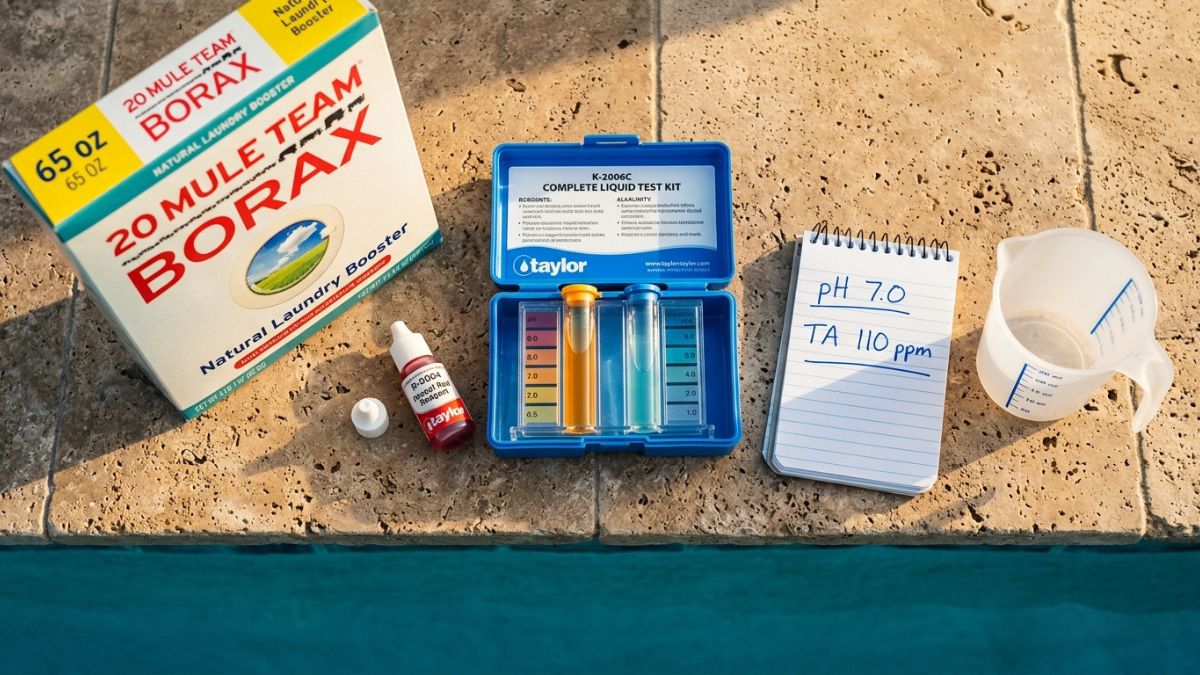

How to raise pool pH without raising alkalinity is one of the most misunderstood fixes in pool chemistry. You test your water, find pH sitting at 6.9 or 7.0, check your alkalinity and it reads 110 ppm to perfectly fine. So you reach for baking soda because that is what everyone recommends. Two days later your alkalinity is at 140 ppm, pH barely moved, and now you have a second problem on top of the first one.
This guide tells you exactly which chemicals raise pH without significantly moving alkalinity, the correct dosage for your pool size, and why the advice you have probably read elsewhere is sending you in the wrong direction.
Quick Answer: Borax (sodium tetraborate) is the most effective way to raise pool pH without significantly raising alkalinity. Aeration also raises pH naturally without affecting alkalinity at all. Soda ash raises pH strongly but also increases TA moderately. Baking soda should not be used when your goal is pH only.
Key Takeaways
✓ Borax raises pH with minimal effect on total alkalinity to it is the right chemical for this situation
✓ Baking soda raises alkalinity first and pH second to wrong choice when TA is already in range
✓ Aeration raises pH completely free with zero chemical cost and zero effect on alkalinity
✓ Soda ash raises pH strongly but also increases TA, use it only when both are low
✓ Always test with a liquid drop kit not strips to strips are notoriously inaccurate for this decision
✓ Fix pH after alkalinity is confirmed in range, not before
Why Your pH Is Low but Alkalinity Is Already Fine
This scenario is more common than most guides acknowledge. pH drops independently from alkalinity when specific triggers act on your pool water without disturbing the alkalinity buffer.
Triggers that lower pH without lowering TA:
✓ Trichlor tablets (they are strongly acidic and drop pH consistently)
✓ CO2 absorption from rain
✓ Organic debris decomposing in water
✓ High bather load introducing acidic body chemistry
✓ Muriatic acid added in previous treatments
The confusion happens because most advice treats “raise pH” and “raise alkalinity” as the same instruction. They are not. Our guide on pool alkalinity levels chart explains the difference between these two numbers and what each one actually controls.
Chemical Comparison: What Each One Actually Does
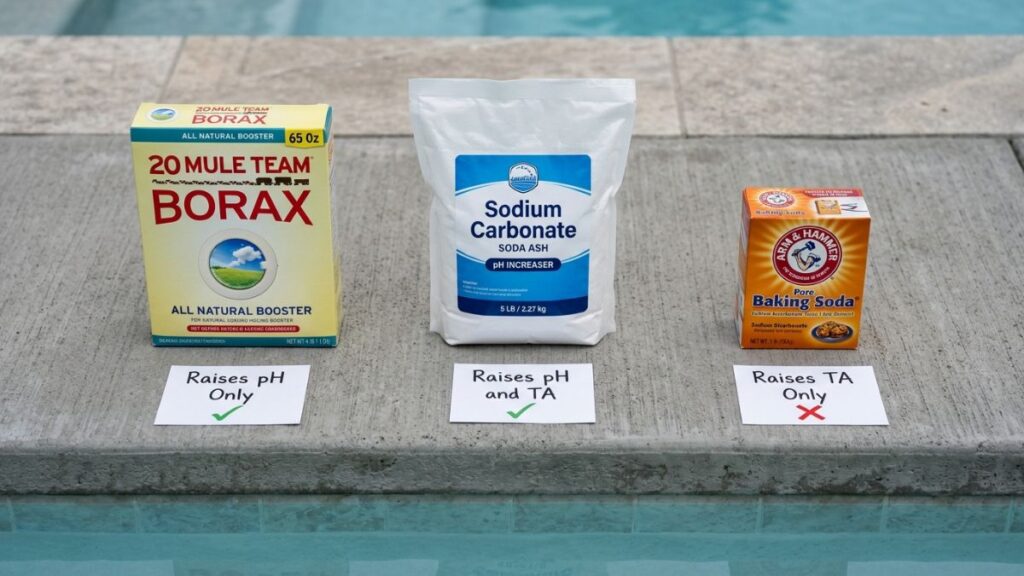
This is the table that most pool guides leave out. Read it before touching any chemical.
| Chemical | Raises pH | Raises TA | Best For | Avoid When |
|---|---|---|---|---|
| Borax (sodium tetraborate) | Yes, significantly | Minimal (2 to 4 ppm) | pH low, TA already in range | TA is very low (below 60 ppm) |
| Soda Ash (sodium carbonate) | Yes, strongly | Moderate (10 to 15 ppm) | Both pH and TA are low | TA is already at or above 100 ppm |
| Baking Soda (sodium bicarbonate) | Minimal | Yes, strongly | TA low, pH acceptable | pH is the only problem |
| Aeration (water features, jets) | Yes, gradually | None | Any situation, free method | You need fast results |
| Muriatic Acid | Lowers | Lowers | Lowering high pH and TA | pH is already low |
The real-world problem from Reddit confirms this: one user described their pH getting “dangerously close to pH lock” after repeated sodium bicarbonate additions that kept raising TA without solving the pH problem. Another noted that “pH wasn’t responding to further additions of sodium bicarbonate” to exactly what happens when you use the wrong chemical for the situation.
According to TroubleFreePool’s water chemistry methodology, borax at 50 ppm also adds secondary benefits including improved water clarity and reduced chlorine demand alongside its pH-stabilizing effect.
How to Raise Pool pH Without Raising Alkalinity
Method 1: Borax (The Right Answer for This Situation)
Borax is sodium tetraborate. It raises pH effectively while barely touching total alkalinity. A full treatment typically raises TA by only 2 to 4 ppm to well within normal testing variance. For a pool owner with pH at 7.0 and TA at 110 ppm, borax is the correct answer every time.
Step by step:
- Confirm your readings with a liquid drop test kit. Strips are inaccurate enough to give you a false picture of whether TA is actually fine. Our guide on how to test pool water correctly explains which kit to trust.
- Calculate your borax dose using the dosage chart below.
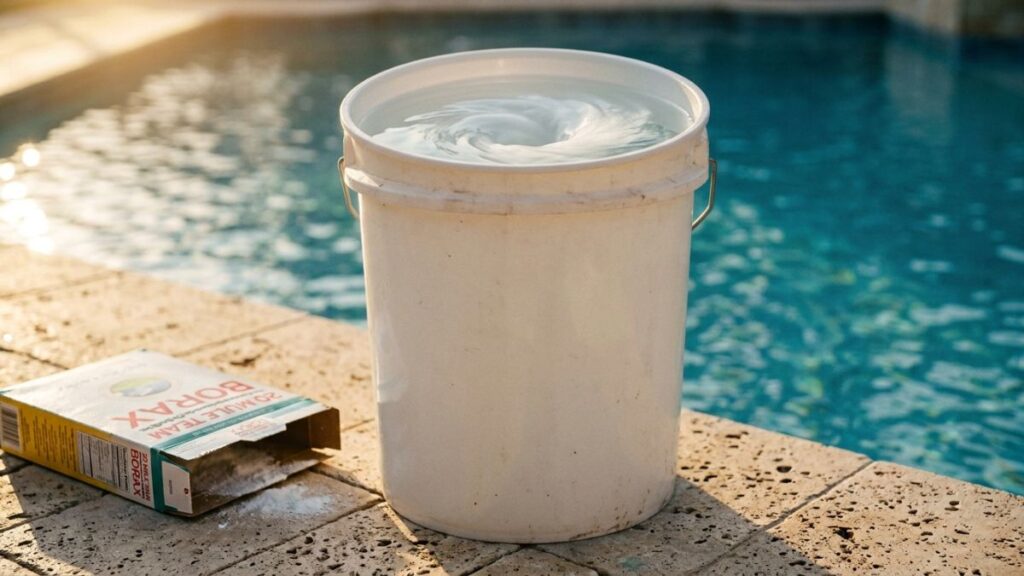
- Pre-dissolve borax in a bucket of warm pool water before adding it to the pool.
- Broadcast the dissolved solution slowly around the perimeter of the pool with the pump running.
- Run the pump for at least 4 hours.
- Retest pH. Do not retest TA immediately to TA will show only a minor movement.
- Repeat in small doses if pH is still below 7.2 after 6 hours.
What to expect: pH will rise 0.2 to 0.4 units per treatment. TA will move by 2 to 4 ppm at most. Water may cloud slightly for a few hours as borax dissolves, which is normal and clears with filtration.
Method 2: Aeration (The Free Method)
Aeration raises pH by accelerating CO2 loss from pool water. As CO2 escapes, carbonic acid levels drop and pH rises naturally to with absolutely zero effect on total alkalinity. This is the cleanest method available and costs nothing.
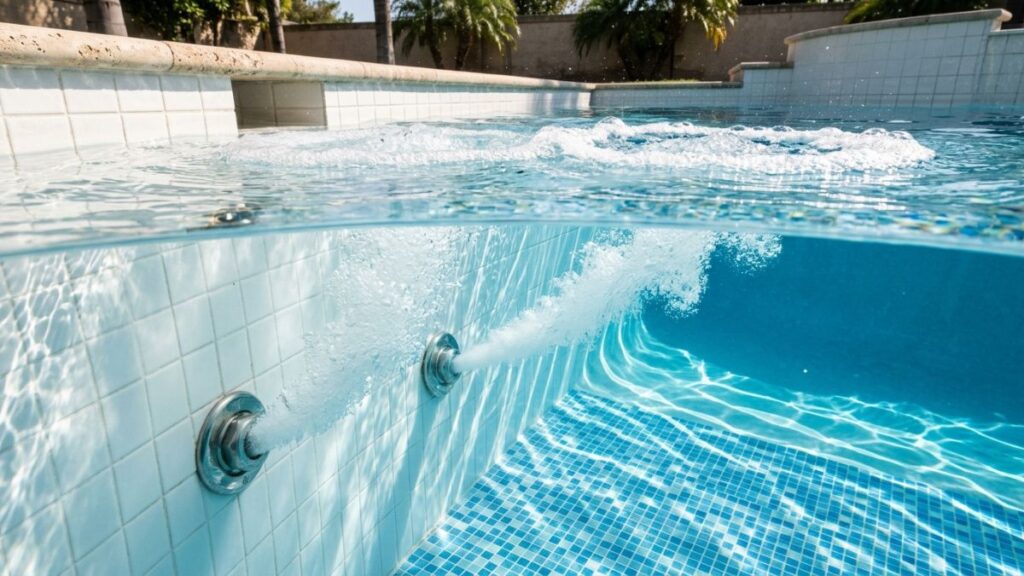
How to increase aeration:
✓ Point return jets upward to break the water surface
✓ Run your spa spillover or waterfall features
✓ Use a fountain head attachment on a return jet
✓ Run the pool overnight with jets agitating the surface
Realistic expectations: Aeration raises pH slowly. From pH 7.0 to 7.4 can take 12 to 24 hours depending on how much surface agitation you create. It is not a quick fix, but it is the right maintenance tool for pools where pH keeps drifting low without a clear chemical cause.
This method also explains why your pool’s pH rises naturally on its own during the day when swimmers are active and water is disturbed. Our guide on why pool pH keeps rising covers this CO2 mechanism in detail.
Method 3: Soda Ash (Only When Both Are Low)
Soda ash (sodium carbonate) raises pH strongly and also raises TA moderately. It is not the right choice when your TA is already in the 80 to 120 ppm range. However, if both your pH and TA are below target at the same time, soda ash handles both with one addition.
Use soda ash only when:
✓ pH is below 7.2 AND
✓ Total alkalinity is below 80 ppm
Do not use soda ash when:
✓ TA is already at 80 ppm or above
✓ You want to raise pH only
The CDC’s healthy swimming guidelines note that pH below 7.2 reduces chlorine effectiveness and increases swimmer discomfort, which is why correcting low pH quickly matters to but the chemical choice still depends on what your TA is doing at the same time.
If you remember one thing from this guide, make it this. Baking soda raises alkalinity. Borax raises pH. When your alkalinity is fine and your pH is low, use borax or aeration to not baking soda. That one decision saves most pool owners from creating a second chemistry problem while trying to solve the first one.
Borax Dosage Chart by Pool Size
Use this chart as your starting reference. Always add less than you think you need on the first dose, then retest and add more if necessary. Overcorrecting pH takes longer to fix than undercorrecting.
| Pool Size | Current pH | Target pH | Borax Needed |
|---|---|---|---|
| 10,000 gallons | 7.0 | 7.4 | 20 oz |
| 10,000 gallons | 7.2 | 7.4 | 10 oz |
| 15,000 gallons | 7.0 | 7.4 | 30 oz |
| 15,000 gallons | 7.2 | 7.4 | 15 oz |
| 20,000 gallons | 7.0 | 7.4 | 40 oz |
| 20,000 gallons | 7.2 | 7.4 | 20 oz |
| 25,000 gallons | 7.0 | 7.4 | 50 oz |
| 25,000 gallons | 7.2 | 7.4 | 25 oz |
These are starting estimates. Actual movement varies based on current TA, water temperature, and aeration levels. Add half the dose, wait 6 hours, retest, then add the remaining half if needed.
Before and After: What Correct Treatment Looks Like
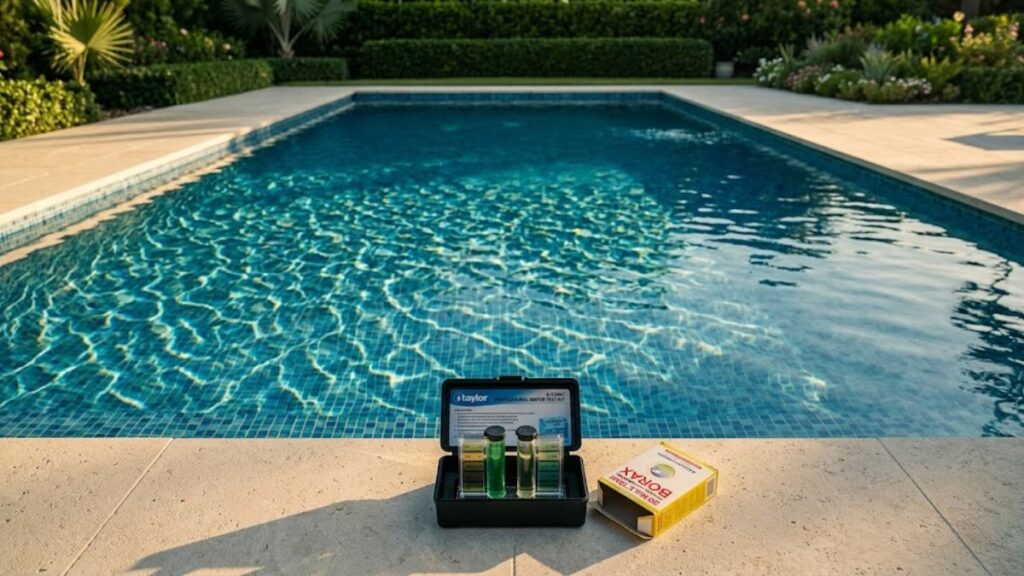
This is the result you should expect from a correct borax treatment:
| Reading | Before Treatment | After Borax Treatment |
|---|---|---|
| pH | 7.0 | 7.4 |
| Total Alkalinity | 110 ppm | 112 to 114 ppm |
| Free Chlorine | 2.0 ppm | 2.0 ppm |
| Water Appearance | Clear but acidic | Clear and balanced |
The TA movement of 2 to 4 ppm is within normal testing variance and requires no correction. This is the acceptable trade-off of using borax and it is far better than the alternative of pushing TA from 110 to 140 ppm by using baking soda.
Common Mistakes That Make This Worse
| Mistake | What Happens | Correct Action |
|---|---|---|
| Using baking soda when TA is already fine | TA climbs to 140 or 150 ppm, pH barely moves | Use borax instead |
| Adding too much at once | pH overshoots, requires acid correction | Add half dose, retest, then add more |
| Testing with strips after treatment | Inaccurate reading causes another wrong addition | Wait 6 hours, use liquid drop test kit |
| Adjusting pH before confirming TA is in range | pH adjustment does not hold | Test and confirm TA first, then adjust pH |
| Using soda ash when TA is already at 100 ppm | TA climbs above 120 ppm, pH locks | Use borax or aeration only |
Pool Type Specific Notes
| Pool Type | Recommendation |
|---|---|
| Chlorine Concrete or Plaster | Borax is ideal, standard dosage applies |
| Vinyl Liner | Borax works well, vinyl is sensitive to low pH so treat promptly |
| Fiberglass | Borax preferred, soda ash can cloud water temporarily in fiberglass |
| Saltwater Pool | Borax plus aeration is the best combination, salt cells already push pH up so use minimum effective dose |
| Above Ground | Test more frequently due to smaller water volume, use half doses first |
Frequently Asked Questions
Can I raise pool pH without raising alkalinity? Yes. Borax raises pH with only 2 to 4 ppm movement in total alkalinity, which is negligible. Aeration raises pH with zero effect on alkalinity whatsoever.
Does borax raise alkalinity at all? Very slightly to typically 2 to 4 ppm per full treatment. This is far less than soda ash or baking soda and is not significant enough to require correction in most pools.
Why can I not just use baking soda? Baking soda (sodium bicarbonate) raises total alkalinity significantly and pH only minimally. When your TA is already in range, baking soda pushes it too high without solving the pH problem you actually have.
How long does borax take to raise pH? pH typically rises 0.2 to 0.4 units within 4 to 6 hours of adding borax with the pump running. A full correction from pH 7.0 to 7.4 usually requires two treatment sessions 6 hours apart.
Can I swim after adding borax? Yes, borax is safe for swimmers and does not require any wait time at the dosage levels used for pH correction.
Why does my pool pH keep dropping after I raise it? Ongoing low pH is usually caused by trichlor tablets, high CO2 absorption from rain, or organic load. Our guide on why pool pH keeps dropping covers the specific causes and permanent fixes.
Is aeration safe for all pool types? Yes. Aeration has no chemical effect on pool water. It simply accelerates natural CO2 release. It is safe for every pool type and situation.
Should I adjust pH or alkalinity first? Always confirm alkalinity is in the correct range first, then adjust pH. If both are off, fix alkalinity first using the appropriate chemical, then use borax for pH if TA is now in range. Our pool alkalinity levels chart shows the correct target ranges.
Final Thoughts
Raising pool pH without raising alkalinity is a specific problem that requires a specific answer. The answer is borax for a chemical fix and aeration for a free fix. Both leave your total alkalinity where it is while correcting pH to the target range.
The mistake almost everyone makes is reaching for baking soda because it sounds logical. Baking soda and sodium bicarbonate are the same thing, and sodium bicarbonate is primarily an alkalinity increaser. Using it when your alkalinity is already correct does not solve the problem, it creates a new one.
Test first with a liquid drop kit. Confirm your TA is actually in range. Add borax in small increments. Retest before adding more. That sequence handles this situation correctly every time and keeps you from spending money on chemicals that are working against you.
For the companion problem where pH keeps rising despite correct alkalinity, our guide on why pool pH keeps rising explains the causes and how to manage the cycle efficiently.