

Pool water burns eyes but chlorine is normal is one of the most searched pool complaints online, and the frustration behind it is real. You test the water, free chlorine reads exactly where it should, and yet every swimmer climbing out has red, stinging eyes.
A widely discussed Reddit thread in r/IsItBullshit asked whether burning eyes come from pee rather than chlorine. The top replies actually settle the debate: “It’s generally a pH issue in the pool, not helped by chlorine, which is a major irritant for mucous membranes. Not caused by pee, which is a tiny, tiny part of the water.”
That is the reality of pool eye irritation. The cause is rarely the chemical everyone blames, and the fix is different from what most generic guides recommend. This article covers exactly why your pool keeps burning eyes despite normal chlorine, and what to do about each cause.
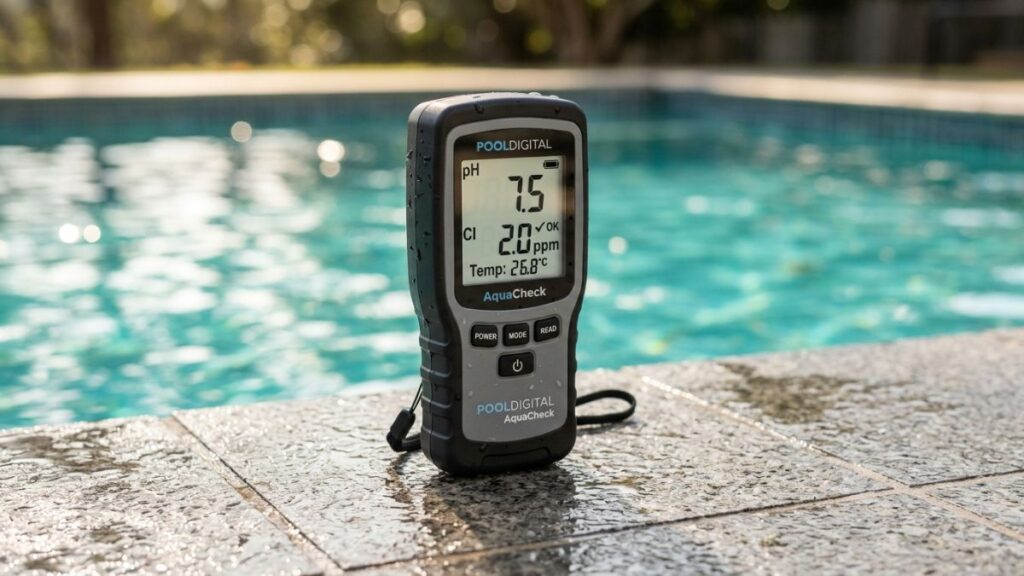
Quick Answer: Pool water burns eyes but chlorine is normal primarily because chloramines (combined chlorine formed from sweat, sunscreen, and body oils) and pH imbalance irritate the eyes, not free chlorine itself. The fix is testing pH and combined chlorine, shocking the pool to clear chloramines, and keeping pH at 7.2 to 7.6 rather than adding more chlorine.
Key Takeaways
✓ Chloramines, not free chlorine, cause most burning-eye complaints in pools with normal chlorine readings
✓ pH outside 7.2 to 7.6 disrupts the eyes’ natural tear film (which sits at 7.4) and is the second biggest cause
✓ Pee is a minor contributor to eye irritation, sweat, sunscreen, and body oils drive most chloramine formation
✓ A strong “chlorine smell” actually signals chloramine buildup, meaning the pool needs more chlorine, not less
✓ Saltwater pools still generate chlorine and are just as prone to this problem as traditional pools
✓ Shocking the pool and correcting pH resolve the vast majority of burning-eye cases within 24 hours
Why Chlorine Alone Isn’t the Problem
Most eye-irritation guides are written around a single assumption: too much chlorine burns eyes. That assumption is backwards in most real cases.
Human tears sit at a pH of about 7.4. Chlorine at proper levels (1 to 3 ppm) does not meaningfully disrupt that. What does disrupt it is pH drifting outside 7.2 to 7.6, and chloramines forming when chlorine reacts with organic contaminants swimmers bring into the water.
According to the CDC’s guidance on preventing eye irritation from pool chemicals, poorly maintained combined chlorine levels are a primary driver of swimmer discomfort, not free chlorine concentration on its own.
The 9 Real Causes of Burning Eyes in a Normal-Chlorine Pool
Cause 1: pH Too High
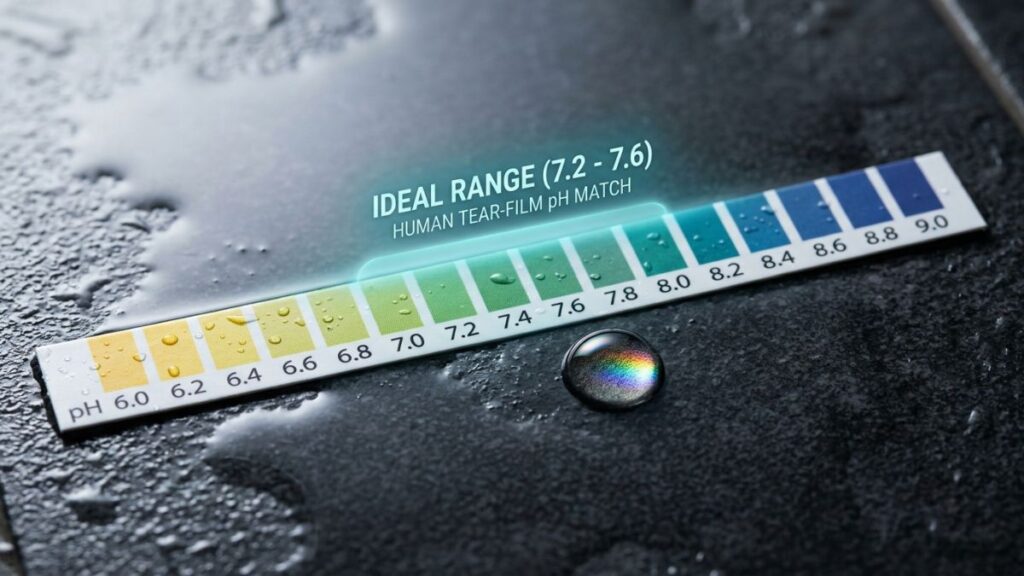
When pool pH climbs above 7.8, it pulls water further from the eyes’ natural 7.4 pH, disrupting the tear film and causing stinging and redness. High pH also weakens chlorine’s ability to sanitize, which compounds the chloramine problem below.
Fix: Lower gradually with muriatic acid or pH decreaser, then retest after an hour of circulation. Target 7.2 to 7.6.
Cause 2: pH Too Low
Acidic water is just as irritating as alkaline water, and it corrodes metal fixtures and etches plaster over time.
Fix: Raise with soda ash (sodium carbonate), then retest before swimmers return.
Cause 3: Chloramines Building Up

This is the single biggest cause. Free chlorine reacts with sweat, sunscreen, cosmetics, and other organic waste to form chloramines, the compounds responsible for both the sharp “pool smell” and the burning sensation.
Fix: Shock the pool (breakpoint chlorination) and run the filter continuously for 24 hours. Keep combined chlorine below 0.5 ppm.
Cause 4: Total Alkalinity Out of Range
Alkalinity buffers pH. Outside 80 to 120 ppm, pH becomes unstable and swings unpredictably between test days, making eye irritation more likely even when a single reading looks fine.
Fix: Adjust gradually and retest 24 hours later; large single corrections cause overshoot.
Check your reading against our pool alkalinity levels chart to see exactly where you stand.
Cause 5: Saltwater Pool Imbalance
Saltwater pools still generate chlorine through a salt cell. They are not chlorine-free, and if pH, salt level, or combined chlorine drift out of range, a saltwater pool burns eyes exactly like a traditional one.
Fix: Test the same four core parameters as a chlorine pool; don’t assume salt exempts you.
Cause 6: Poor Filtration and Circulation
Dead spots let contaminants concentrate locally, spiking chloramines in specific areas even when your overall test looks fine.
Fix: Run the pump 8 to 12 hours daily and clean the filter on a fixed schedule.
Cause 7: High Total Dissolved Solids (TDS)
Minerals, sunscreen, and dissolved chemicals accumulate over seasons. High TDS won’t necessarily cloud the water, but it reduces swimmer comfort.
Fix: Partially drain and refill older pools to reset TDS.
Cause 8: Individual Swimmer Sensitivity
Dry eyes, allergies, contact lenses, or recent eye surgery can make one swimmer react while everyone else feels fine, matching what several Reddit users described about eyes stinging “no matter what water.”
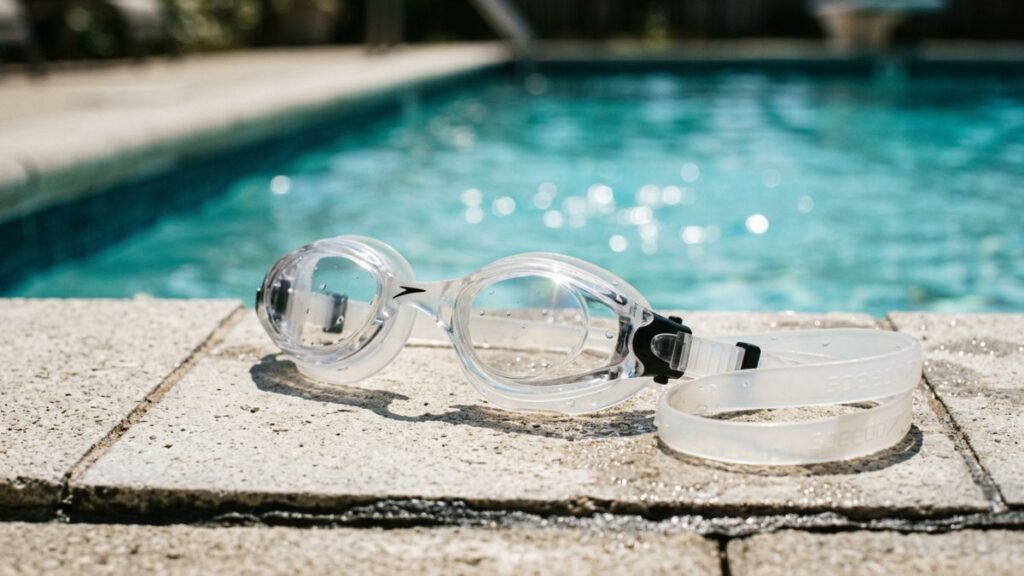
Fix: Goggles solve this regardless of what the water chemistry shows.
Cause 9: Contaminants From Swimmers (Not Just Pee)
Sweat, sunscreen, makeup, and hair products all feed chloramine formation. Urine plays a role, but as Reddit users correctly pointed out, it’s a tiny fraction of total organic load compared to sweat and body oils.
Fix: Showering before swimming cuts chloramine formation at the source.
Myth vs Fact: What’s Really Causing the Burn
| Myth | Fact |
|---|---|
| Too much chlorine always burns your eyes. | Poor pH and chloramine buildup are the real everyday cause, not high chlorine. |
| A strong chlorine smell means the pool is over-chlorinated. | That smell is chloramines, a sign the pool actually needs more chlorine and a shock. |
| Pee in the pool is the main reason eyes burn. | Sweat, sunscreen, and body oils contribute far more organic load than urine. |
| Crystal-clear water means the chemistry is balanced. | Water can look perfect while pH or chloramines are badly out of range. |
| Saltwater pools don’t use chlorine, so this can’t happen. | Salt systems generate chlorine from salt; the same imbalances still apply. |
Correct Target Numbers to Stop Eye Irritation
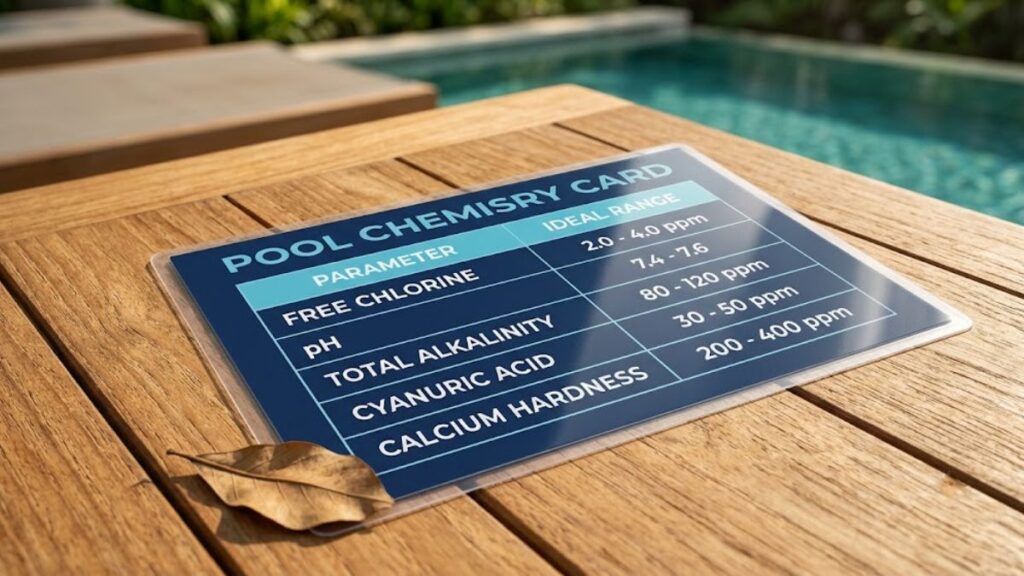
| Parameter | Ideal Range | Why It Affects Eyes |
|---|---|---|
| Free Chlorine | 1–3 ppm | Baseline sanitizer; rarely the direct irritant |
| pH | 7.2–7.6 | Closest to tear film pH of 7.4; the #1 comfort factor |
| Combined Chlorine (Chloramines) | Below 0.5 ppm | The actual irritant behind most burning-eye complaints |
| Total Alkalinity | 80–120 ppm | Keeps pH stable between tests |
| Cyanuric Acid (CYA) | 30–50 ppm | High CYA reduces chlorine efficiency, indirectly raising chloramines |
| Calcium Hardness | 200–400 ppm | Prevents scaling and cloudy water that often accompanies high pH |
Step-by-Step Fix for Burning Eyes
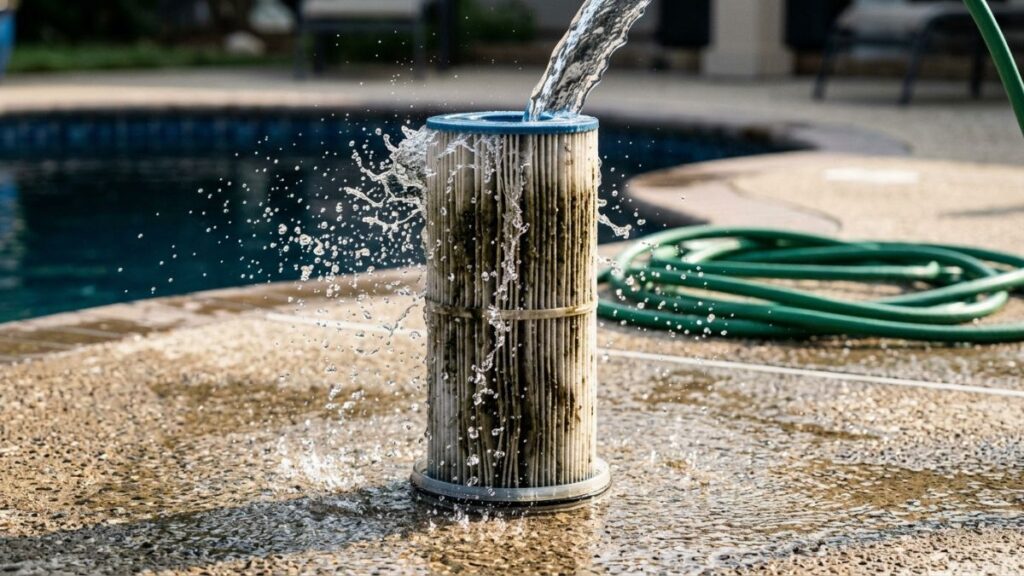
Step 1: Test free chlorine first to confirm it’s actually in range (1–3 ppm).
Step 2: If chlorine is normal, test pH next. Target 7.2 to 7.6.
Step 3: Test combined chlorine (chloramines). It should read below 0.5 ppm.
Step 4: Check total alkalinity. Target 80 to 120 ppm.
Step 5: Shock the pool if chloramines or organic load are elevated, then run the filter for 24 hours.
Step 6: Retest all four parameters before swimmers get back in.
Use a reliable liquid drop test kit for accurate readings, see our guide to testing pool water correctly if you’re relying on strips, which are often inaccurate for combined chlorine.
Before adding more chlorine, check combined chlorine specifically. If it’s elevated, more free chlorine won’t fix the burning, only shocking the pool to break down chloramines will. Most burning-eye complaints resolve within 24 hours once chloramines clear.
Troubleshooting Table by Symptom
| What You See | Most Likely Cause | First Check |
|---|---|---|
| Strong chlorine smell plus burning eyes | Chloramine buildup | Test combined chlorine, shock if elevated |
| Burning eyes but chlorine reads normal | pH outside 7.2–7.6 | Test pH before anything else |
| Only one swimmer’s eyes burn | Individual sensitivity | Try goggles; water may be fine |
| Burning eyes in a saltwater pool | Same pH/chloramine issues as chlorine pools | Test pH and combined chlorine as normal |
| Burning eyes after a party or heavy use | Spike in sweat, sunscreen, body oils | Shock the pool that night |
| Cloudy water plus burning eyes | High pH forcing calcium out of solution | Lower pH and check calcium hardness |
Pool Testing and Maintenance Schedule
| Task | Frequency |
|---|---|
| Test free chlorine and pH | 3 times per week minimum, every day in heavy use |
| Test combined chlorine (chloramines) | Weekly, or immediately if eyes burn |
| Test total alkalinity | Weekly |
| Shock the pool | Weekly, or after heavy swimmer loads |
| Clean or backwash filter | Every 1–2 weeks depending on use |
| Encourage swimmers to shower before entering | Every session |
Frequently Asked Questions
Why does my pool burn my eyes if chlorine is normal?
Because eye irritation is usually caused by pH imbalance or chloramine (combined chlorine) buildup, not by the free chlorine level itself.
Can high pH burn your eyes?
Yes. Pool pH above 7.8 disrupts the eyes’ natural tear film, which sits around 7.4, causing stinging and redness.
Do chloramines burn eyes more than chlorine?
Yes. Chloramines form when chlorine reacts with sweat, sunscreen, and other contaminants, and they are the main cause of both the burning sensation and the strong pool smell.
Is burning from pee or from pH?
Mostly pH and chloramines. Urine contributes a small amount of organic load, but sweat and body oils are the bigger factor. Pee is not the primary cause.
Why do saltwater pools still burn eyes?
Saltwater systems generate chlorine from salt, so the same pH and chloramine rules apply. An unbalanced saltwater pool burns eyes just like a traditional one.
Should I shock the pool if chlorine already reads normal?
Yes, if combined chlorine is elevated or there’s a strong chemical smell. Shocking clears chloramines specifically, which free chlorine alone won’t fix.
How often should I test pool water?
3 times per week during active swim season, and immediately after any heavy use like parties or high swimmer traffic.
Final Thoughts
Pool water burns eyes but chlorine is normal more often than most owners realize, and the fix is rarely “add more chlorine.” Test pH and chloramines first, shock when needed, and keep filtration running. Comfortable swimming comes from full water balance, not a single number on a test strip.
The two changes that solve this for most pool owners: correct pH to 7.2–7.6, and shock the pool the moment combined chlorine rises. Neither costs much, and both work fast.