

| what are phosphates in pool water |
| do pool phosphates matter |
| high phosphates in pool causing algae |
| pool phosphate remover does it work |
| how to lower phosphates in pool |
| pool phosphates vs chlorine |
Quick Answer: Pool phosphates are nutrient compounds that enter pool water through leaves, fertilizer runoff, tap water, rain, and swimmers. They do not directly consume chlorine, but they feed algae, which can increase chlorine demand over time. For most residential pools, phosphate levels below 300 ppb are usually manageable with proper chlorine maintenance. If levels exceed 1,000 ppb and algae keeps returning, a pool phosphate remover is often worth considering.
The debate about phosphates is real. Some pool professionals say treat anything above 100 ppb. Others say phosphates don’t matter if your chlorine is right. Both positions have some truth to them, and this article will give you a straight answer on where the actual threshold is.
What Are Pool Phosphates?
Pool phosphates are inorganic and organic compounds containing phosphate ions that dissolve into pool water over time. They are chemically stable, meaning chlorine does not break them down or remove them. The only way phosphates leave pool water is through dilution, backwashing, or a dedicated phosphate remover.
Phosphates exist naturally in almost every water source. They are not a sign that something went wrong. They build up gradually in every pool regardless of how well it’s maintained.
Phosphates become a problem specifically because they are algae food. Algae needs three things to grow: sunlight, carbon dioxide, and nutrients. Phosphates and nitrates are the primary nutrients. A pool with high phosphate levels gives algae a ready food supply that makes it easier for algae to take hold even when chlorine is present.
This is not the same as saying phosphates cause algae. Chlorine still kills algae. The issue is that high phosphates increase the rate at which algae can grow between chlorine doses, raising the effective chlorine demand and making algae harder to control.
phosphates as a hidden cause of chlorine demand
Where Do Phosphates Come From?
Multiple sources contribute to phosphate buildup, and most are unavoidable in a normal backyard environment.
Common sources:
- Lawn fertilizer runoff the single largest source for most pools. Standard fertilizers contain 10 to 20 percent phosphate by weight. Rain carries it directly into the pool.
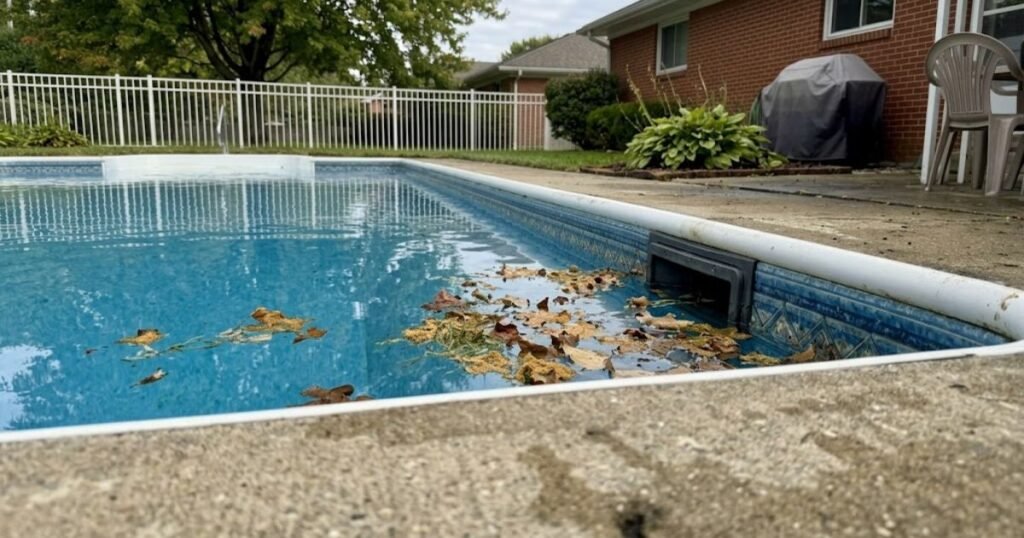
- Fallen leaves and pollen decomposing organic debris releases phosphates as it breaks down in pool water
- Municipal tap water many city water systems add phosphate-based corrosion inhibitors to protect pipe infrastructure. Levels vary by city but typically range from 20 to 200 ppb in the fill water alone.
- Swimmer waste sweat, body oils, urine, and cosmetics all contribute measurable phosphate loads
- Some pool chemicals certain algaecides, clarifiers, and metal sequestrants contain phosphonate compounds that add to total phosphate levels over time
Here’s the thing: if you live near a lawn, have mature trees dropping leaves near the pool, or fill with municipal water, phosphate buildup is essentially guaranteed. The question isn’t whether you’ll get phosphates, it’s whether the level becomes high enough to matter.
What Is a Safe Phosphate Level?
This is where most articles give vague answers. Specific numbers matter here.
| Phosphate Level | Status | Action |
|---|---|---|
| Under 100 ppb | Safe | No action needed |
| 100 to 300 ppb | Acceptable | Monitor monthly |
| 300 to 500 ppb | Elevated | Consider treatment if algae issues persist |
| 500 to 1,000 ppb | High | Use phosphate remover |
| Above 1,000 ppb | Very high | Treat before shocking; algae will be harder to control |
The 300 ppb mark is where phosphates begin contributing meaningfully to chlorine demand. The 1,000 ppb mark is where the Pool and Hot Tub Alliance (PHTA) and most pool professionals agree that phosphate remover becomes a genuinely useful tool rather than a precautionary measure.
Quick note: these thresholds assume your chlorine, pH, CYA, and alkalinity are already in range. Phosphates on top of poor water balance is a compounding problem. Phosphates with otherwise correct chemistry is a manageable one.
how phosphates interact with your target free chlorine levels
Do Pool Phosphates Actually Cause Algae?
This is the most debated question in the phosphate conversation. The answer requires a distinction that most articles skip entirely.
Phosphates do not cause algae. Insufficient free chlorine causes algae. What phosphates do is lower the effective chlorine dose needed to keep algae in check by providing algae with a strong nutrient base that accelerates growth between sanitizing cycles.
Or maybe I should say it this way: phosphates don’t start the algae fire. They’re the accelerant that makes a small spark into a much bigger problem.
I’ve seen conflicting positions on this from pool professionals, some say that any pool with correct chlorine levels will never have algae regardless of phosphate levels, and there’s data supporting that for moderate phosphate ranges. My read is that this is true up to about 500 to 600 ppb. Above 1,000 ppb, algae can outpace even well-maintained chlorine residuals in warm weather, which is where phosphate treatment changes the outcome in a measurable way.
Pool owners who’ve gone through repeated algae cycles often report that they had correct chlorine readings right before an algae bloom appeared. In most of those cases, the real sequence is: phosphates feed algae growth overnight, algae consumes free chlorine faster than the chlorine generator or dosing schedule replaces it, and by morning chlorine is depleted and algae is visible.
How to Test for Phosphates
Standard test kits, including the Taylor Technologies K-2006, do not test phosphates. Phosphate testing requires a separate kit or test strip.
To test pool phosphate levels:
- Get a dedicated phosphate test kit LaMotte and Taylor both make liquid reagent versions accurate to 25 ppb.
- Take a water sample 12 to 18 inches below the surface, away from return jets.
- Follow the reagent timing on the package exactly, phosphate tests are timing-sensitive.
- Read the result in natural light, not direct sunlight.
- Record the reading alongside your free chlorine and pH numbers for context.
Alternatively, most pool stores will test for phosphates as part of a water analysis. The test itself is accurate. The product recommendation that follows is sometimes less objective. getting an accurate water sample for phosphate testing
Pool Phosphate Remover: Does It Work, and Is It Worth It?
Phosphate remover works. The chemistry is straightforward: lanthanum chloride, the active ingredient in most commercial removers, binds to phosphate ions and forms an insoluble precipitate that the filter captures. Products like Natural Chemistry PHOSfree and Orenda PR-10000 both use this mechanism.
The real question is whether it’s worth the cost for your specific situation.
Phosphate remover decision chart:
| Situation | Recommendation |
|---|---|
| Phosphates under 300 ppb, no algae issues | Skip it. Focus on chlorine. |
| Phosphates 300 to 1,000 ppb, no algae issues | Optional. Monitor monthly. |
| Phosphates above 1,000 ppb, no algae issues | Use it before next shock treatment |
| Phosphates above 500 ppb, recurring algae | Use it. It’s a contributing factor. |
| Pool store says treat at 100 ppb | Probably unnecessary. See levels above. |
Some pool professionals argue phosphate remover should be used preventatively at any elevation. That’s valid for commercial pools managing a very high bather load where margins are tighter. For a residential pool with competent chlorine management, treating at 100 ppb is selling product more than solving a problem.
Look: if your pool is currently fighting algae and phosphates are above 500 ppb, treat the phosphates first, then shock. Treating in the wrong order wastes shock because high phosphates mean algae regrows faster than the elevated chlorine can sustain.
PHOSfree vs Orenda PR-10000:
PHOSfree is better suited for maintenance-level phosphate reduction (under 2,000 ppb) and weekly dosing. Orenda PR-10000 works better for severe cases and commercial volume because its lanthanum concentration is higher. For most residential pools dealing with 500 to 1,500 ppb, PHOSfree at the correct dose is sufficient.
treating phosphates before shocking for better results
Step-by-Step: How to Lower Pool Phosphates
To lower phosphates in a pool:
- Test current phosphate level with a dedicated kit.
- Clean the filter : phosphate remover creates precipitate that loads the filter quickly.
- Dose phosphate remover per the product label based on your pool volume, not phosphate level alone.
- Run the filter for 24 hours continuously after dosing.
- Backwash or rinse the filter thoroughly at the 24-hour mark.
- Retest phosphates 48 hours after treatment.
- Repeat if level is still above 300 ppb.
Do not add phosphate remover and shock at the same time. Treat phosphates first, wait 48 hours, then shock if needed.
How to Prevent Phosphates From Building Up
Prevention reduces how often you need to treat, not whether you ever will.
- Trim trees and shrubs overhanging the pool and remove leaves from the skimmer basket daily during fall
- Use a pool cover when the pool is not in use during heavy pollen or leaf seasons
- Rinse swimmers before they enter to reduce body oil and sweat phosphate load
- Switch to a phosphate-free algaecide if you use one regularly, check the label
- Test phosphates monthly alongside your regular chemistry check, not only when algae appears
Tap water is a bigger phosphate source than most people realize. If your city water already tests at 100 to 150 ppb and you’re adding 5,000 gallons to refill after winter, you’ve started the season at a measurable baseline before a single leaf falls. Test your fill water once and factor it in.
phosphates as the hidden cause of unexplained chlorine demand
Frequently Asked Questions About Pool Phosphates
What are pool phosphates and why do they matter?
Pool phosphates are nutrient compounds that dissolve into pool water from leaves, fertilizer, tap water, and swimmers. They matter because they feed algae, increasing chlorine demand and making algae harder to control above 500 ppb.
How do I remove phosphates from my pool?
Use a lanthanum chloride-based phosphate remover like Natural Chemistry PHOSfree or Orenda PR-10000. Dose per your pool volume, run the filter 24 hours, then backwash thoroughly. Retest after 48 hours.
Do I really need to treat pool phosphates?
Not always. Under 300 ppb with no algae problems, focus on chlorine. Above 1,000 ppb or with recurring algae above 500 ppb, phosphate remover is genuinely worth using before your next shock treatment.
Why does my pool keep getting algae even with correct chlorine?
High phosphates are a common hidden cause. Phosphates feed algae growth between chlorine doses, raising chlorine demand faster than your dosing schedule replaces it. Test phosphates if algae keeps returning despite correct chemistry.
When should I test pool phosphate levels?
Test monthly alongside routine chemistry checks, after heavy rain or leaf fall, before opening the pool for the season, and any time algae returns despite correct chlorine and pH levels.
Conclusion
Pool phosphates are a normal part of pool water, and they are not something you need to panic about. They do not destroy chlorine directly, but they can feed algae and make it harder to keep your pool clean if sanitizer levels drop. For most pools, maintaining the correct chlorine level and balanced water chemistry should always come first. If phosphate levels are very high and algae keeps coming back, a phosphate remover can be a useful part of your maintenance routine. The key is to treat phosphates when they are actually causing problems, not simply because they show up on a water test.