
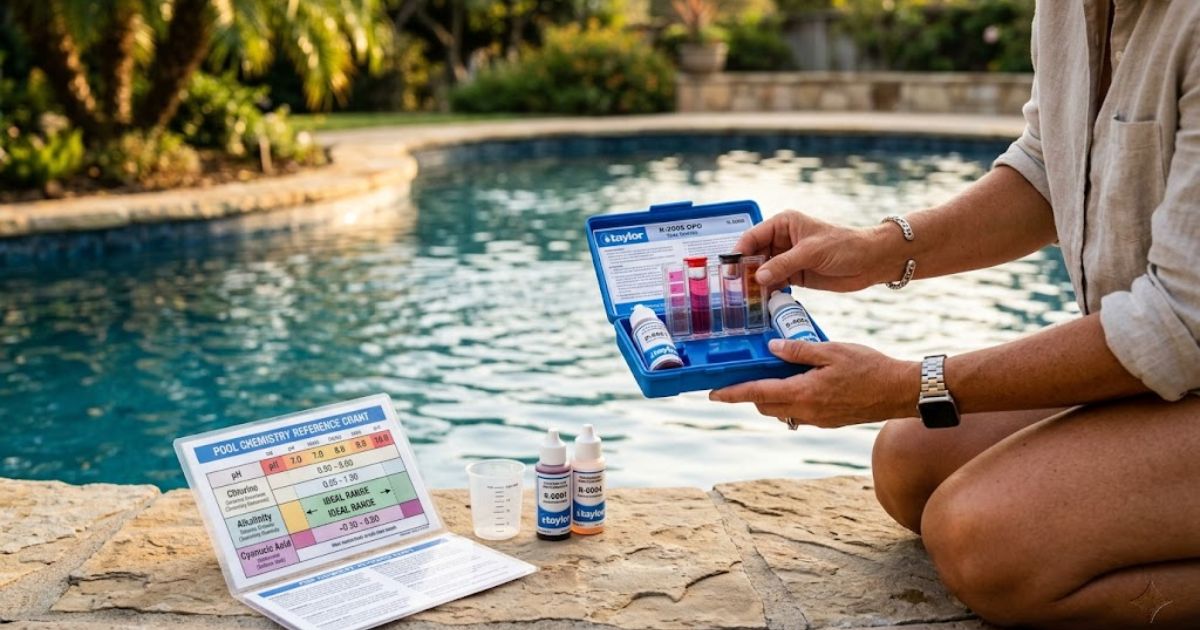
pool chlorine levels chart
Pool chemistry problems almost always start the same way: one number drifts out of range and quietly pulls every other number with it. By the time the water looks cloudy or someone’s eyes start burning, you’re usually dealing with two or three imbalances at once.
Pool chemistry problems almost always start the same way: one number drifts out of range and quietly pulls every other number with it. By the time the water looks cloudy or someone’s eyes start burning, you’re usually dealing with two or three imbalances at once.
This chart gives you every number in one place, the ideal range, the point where it’s getting dangerous, and what each level actually means for your water. Bookmark it. Test against it. Come back when something goes wrong.
📌 KEY TAKEAWAYS
- Free chlorine should always be 1–3 ppm — this is the number that matters most for safe swimming
- pH is the most critical variable: at pH 7.8, chlorine loses 80%+ of its sanitizing power
- Combined chlorine above 0.5 ppm means it’s time to shock — that smell isn’t too much chlorine, it’s not enough
- High CYA above 80 ppm makes chlorine almost impossible to control — partial drain is the only fix
- Test free chlorine and pH at minimum every 2–3 days in summer
Pool Chlorine Levels Chart: Complete Reference
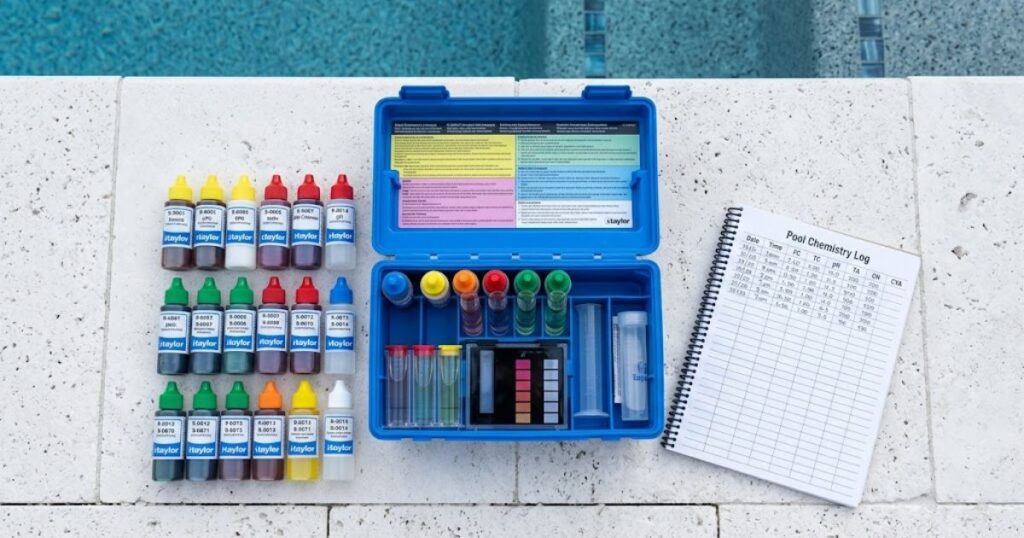
This pool chemistry chart shows the ideal range for each parameter in a residential swimming pool. Free chlorine: 1–3 ppm. Combined chlorine: below 0.5 ppm. pH: 7.2–7.4. Total alkalinity: 80–120 ppm. Cyanuric acid: 30–50 ppm. Calcium hardness: 200–400 ppm. All measurements in parts per million (ppm) unless noted.
| Chemical | Ideal Range | Too Low | Too High | Test Frequency |
|---|---|---|---|---|
| Free Chlorine | 1–3 ppm | Below 1 ppm | Above 5 ppm | Every 2–3 days |
| Combined Chlorine | Below 0.5 ppm | — | Above 0.5 ppm | Weekly |
| Total Chlorine | 1–3.5 ppm | Below 1 ppm | Above 5 ppm | Every 2–3 days |
| pH | 7.2–7.4 | Below 7.0 | Above 7.8 | Every 2–3 days |
| Total Alkalinity | 80–120 ppm | Below 60 ppm | Above 180 ppm | Weekly |
| Cyanuric Acid (CYA) | 30–50 ppm | Below 20 ppm | Above 80 ppm | Every 4–6 weeks |
| Calcium Hardness | 200–400 ppm | Below 150 ppm | Above 500 ppm | Monthly |
Saltwater pool owners: keep CYA between 60–80 ppm to account for continuous low-level chlorine generation from your salt system.
What Each Level Means in Plain English
A pool chlorine levels chart covers seven key chemistry parameters. Free chlorine is the active sanitizer. Combined chlorine measures spent, non-sanitizing chlorine. pH determines how effectively chlorine works. Total alkalinity stabilizes pH from sudden shifts. Cyanuric acid protects chlorine from UV degradation. Calcium hardness prevents corrosion. Each parameter interacts with the others, they don’t work in isolation.
Free Chlorine: The Number That Actually Matters
Free chlorine is the active sanitizer in your pool. At 1–3 ppm it kills bacteria, algae spores, and viruses within minutes. Below 1 ppm, bacteria survive and algae establish footholds within 24–48 hours. Above 5 ppm, swimmers experience eye and skin irritation and swimwear bleaching.
Here’s the thing: free chlorine doesn’t work the same at every pH level. At pH 7.2, approximately 65% of your free chlorine exists in its most reactive form (hypochlorous acid). At pH 7.8, that drops to around 20%. Same number on the test kit, completely different sanitizing power. This is why pH and free chlorine must always be read together.
Combined Chlorine: The Number Nobody Checks
Combined chlorine (chloramines) forms when free chlorine reacts with nitrogen compounds from bathers, sweat, sunscreen, urine. It shows up on total chlorine tests but provides zero sanitizing benefit.
That sharp pool smell? Chloramines. Red eyes after swimming? Chloramines. They signal that free chlorine has been consumed and converted into a waste product. When combined chlorine exceeds 0.5 ppm, the correct response is shock treatment, not reducing free chlorine.
“Is CYA above 80 ppm making your chlorine impossible to control? Complete guide to cyanuric acid and chlorine lock”
pH: The Silent Multiplier
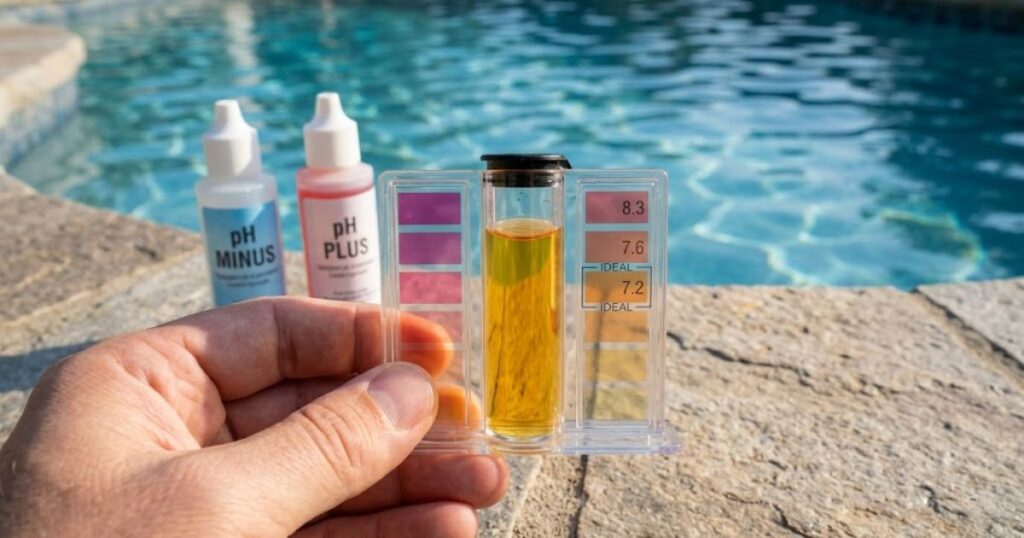
pH determines how effective every other chemical is. The ideal range is 7.2–7.4. Below 7.0, the water corrodes metal fittings, etches plaster, and irritates swimmers. Above 7.8, chlorine loses the majority of its sanitizing capacity, you can have 5 ppm of free chlorine at pH 8.0 and still have inadequate sanitation.
pH is the most important number to test. Everything follows from it.
Total Alkalinity: pH’s Stabilizer
Total alkalinity (TA) buffers the water against sudden pH swings. At 80–120 ppm, pH stays predictably stable between doses. Below 60 ppm, pH bounces wildly with any chemical addition or rainfall. Above 180 ppm, pH becomes stubbornly resistant to adjustment and scale starts forming on surfaces and equipment.
Or maybe I should put it this way: total alkalinity is what makes pH manageable. Fix alkalinity first, then pH. In that order.
Cyanuric Acid (CYA): Chlorine’s UV Shield
Cyanuric acid protects free chlorine from UV degradation in sunlight. Without it, an outdoor pool in direct summer sun loses 75–90% of free chlorine within two hours. At 30–50 ppm, UV protection is balanced without reducing chlorine’s reactivity. Above 80 ppm, chlorine lock develops, chlorine is present but functionally compromised.
Calcium Hardness: The Overlooked Parameter
Calcium hardness between 200–400 ppm prevents two opposing problems. Below 150 ppm, soft water is corrosive, it dissolves calcium from plaster, grout, and metal fittings. Above 500 ppm, calcium precipitates out as scale on walls, equipment, and inside pipes. Neither is inexpensive to fix.
What Happens When Levels Go Wrong
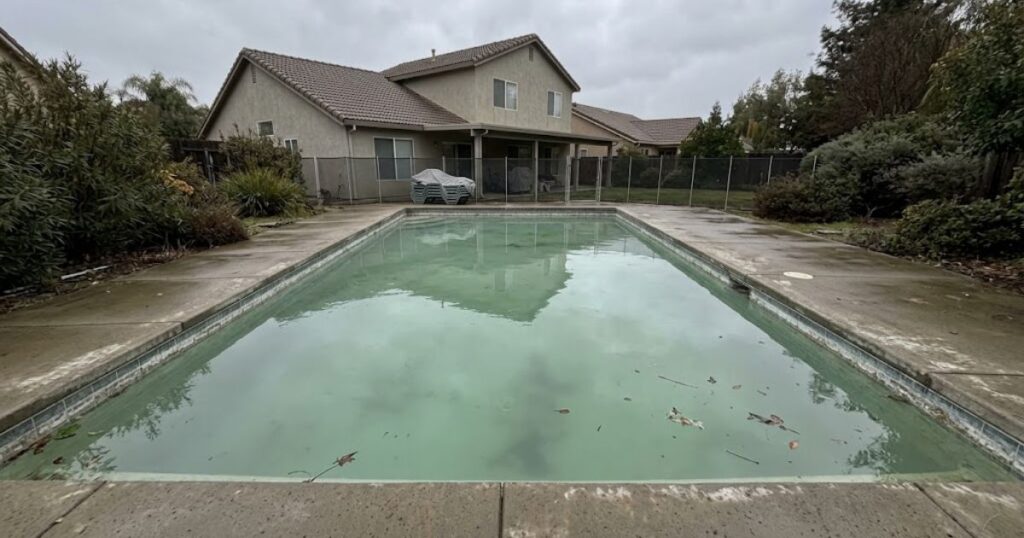
When pool chemistry levels fall outside ideal ranges, problems compound quickly. Low free chlorine allows algae growth within 24–48 hours. High pH reduces chlorine effectiveness by 50–80%. Low total alkalinity causes pH instability. High cyanuric acid above 80 ppm creates chlorine lock. Calcium hardness outside 200–400 ppm causes either corrosion or scaling depending on the direction of the imbalance.
| Parameter | Too Low: What Happens | Too High: What Happens |
|---|---|---|
| Free Chlorine | Algae in 24–48 hrs, bacteria survive, unsafe to swim | Eye/skin irritation, bleached swimwear, pool unusable |
| Combined Chlorine | Not applicable | Sharp smell, eye irritation, ineffective sanitation — shock required |
| pH | Corrosion, etching, eye burn, chlorine degrades fast | Chlorine loses 50–80% effectiveness, scale, cloudy water |
| Total Alkalinity | pH swings wildly with any small change | pH locked high, scale forms, chemical costs increase |
| Cyanuric Acid | Chlorine burns off in sun within 2 hrs, constant dosing | Chlorine lock, algae despite normal readings, only fix is partial drain |
| Calcium Hardness | Corrosion of plaster, grout, fittings, equipment | Scale on surfaces, pipes, and heat exchanger |
Look, most pool owners test free chlorine and maybe pH. The other five parameters get ignored until something visibly goes wrong. By that point you’re usually correcting two imbalances at once, spending twice the money, and using a week to get the water back. Testing all six monthly prevents most of that.
“Free chlorine too high right now? Here are 5 methods to lower it fast with exact dosing by pool size”
How to Test Your Pool Levels Correctly
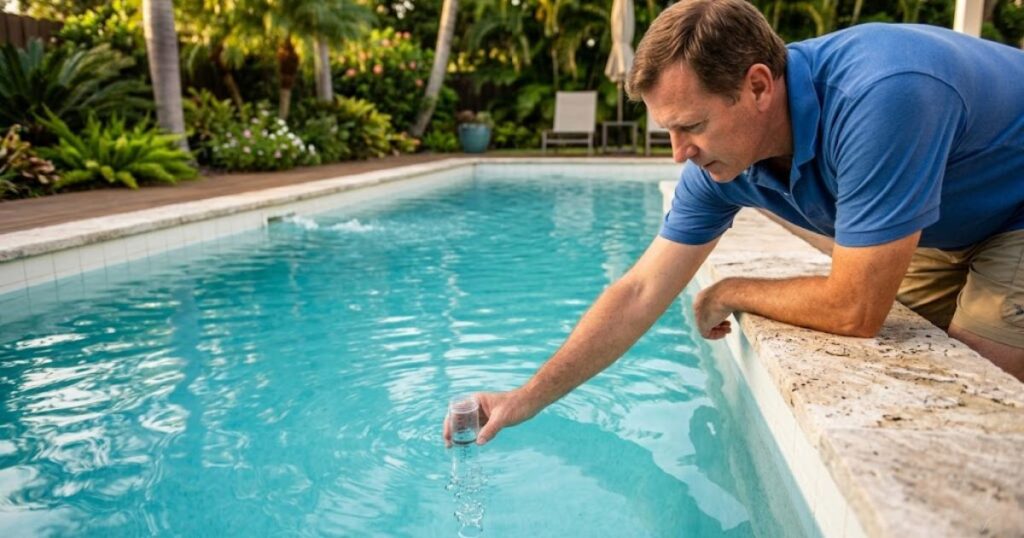
Testing accuracy matters as much as testing frequency.
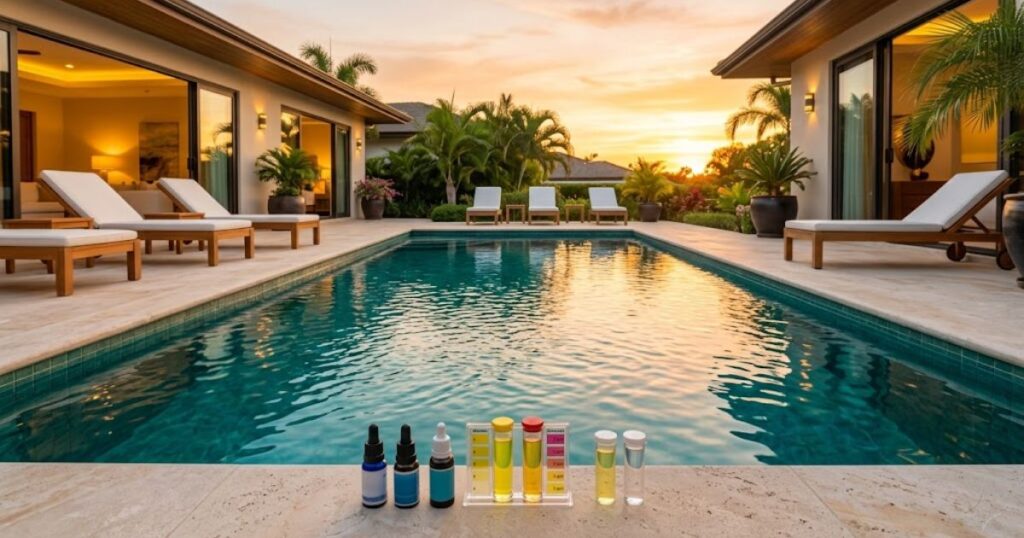
Use a DPD liquid test kit, not strips, for free chlorine and pH. Test strips fade in sunlight and become unreliable above 5 ppm — the exact scenario where accuracy is most critical. A Taylor Technologies K-2006C or LaMotte ColorQ covers all six parameters and is the standard professional kit.
Collect water from the right place. Dip your test vessel elbow-deep in the middle of the pool, away from return jets and the skimmer. Surface water near jets reads differently from the bulk water swimmers are actually in.
Test at the right time. Check free chlorine in the morning before UV has had a chance to degrade it, or in the evening after the day’s sun exposure. Midday readings in full sun understate true levels.
Test in the right order: alkalinity first, then pH, then chlorine. Alkalinity affects pH, and pH determines how meaningful your chlorine reading is. Out-of-sequence testing leads to over-correction and chemical waste.
“Combined chlorine above 0.5 ppm? Here’s how to shock a pool step by step to eliminate chloramines”
confirms ideal ranges for all six parameters and testing frequency for residential pools
FAQs
What is the ideal chlorine level for a pool?
Free chlorine should be 1–3 ppm. Below 1 ppm, bacteria and algae can establish within 24–48 hours. Above 5 ppm, the pool causes irritation and is unsafe to swim in. Always use a DPD liquid kit for accurate readings.
What should pool pH levels be?
Between 7.2 and 7.4. Below 7.0 causes corrosion and burns. Above 7.8, free chlorine loses 50–80% of its sanitizing effectiveness. Test pH every 2–3 days and fix alkalinity first before adjusting pH.
What does combined chlorine above 0.5 ppm mean?
It means free chlorine has been consumed by organic contaminants and converted into chloramines — the source of that sharp pool smell and eye irritation. The fix is shock treatment, not reducing chlorine.
What should pool alkalinity levels be?
Total alkalinity should be 80–120 ppm. Below 60 ppm, pH swings wildly with any chemical change. Above 180 ppm, pH becomes resistant to correction and scale forms on surfaces and equipment.
How often should I test pool water chemistry?
Free chlorine and pH every 2–3 days in summer. Total alkalinity and combined chlorine weekly. Cyanuric acid every 4–6 weeks. Calcium hardness monthly. After heavy rain or a pool party, re-test free chlorine and pH within 24 hours.
The Bottom Line
Pool chemistry isn’t complicated when you know what you’re looking at.
Free chlorine and pH are your daily indicators, they tell you whether the water is safe right now. Alkalinity and CYA are your weekly stability checks, they tell you whether chemistry will hold between doses. Calcium hardness and combined chlorine are your monthly audit, they tell you whether the water is slowly damaging your equipment or signalling a sanitation failure.
Test in that order. Fix alkalinity before pH. Fix pH before chlorine. When combined chlorine exceeds 0.5 ppm, shock the pool. That’s the whole system.