
Why Does My Pool Smell Like Chlorine Even After Treatment
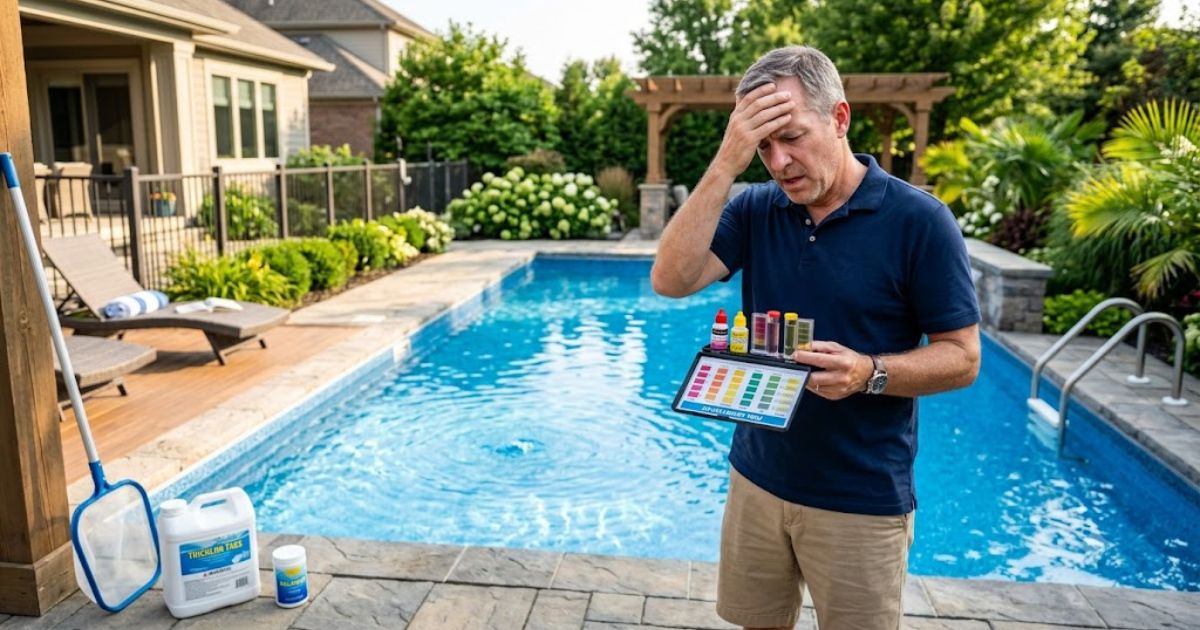
If your pool smells like chlorine even after treatment, the problem is usually not too much chlorine.
In fact, a strong chlorine odor often means your pool needs better water chemistry management, not less chlorine. Most pool owners assume the smell comes from excessive sanitizer levels, but the real cause is commonly chloramines, compounds that form when chlorine reacts with contaminants such as sweat, sunscreen, body oils, and other organic matter.
This misunderstanding leads many people to add more chemicals without fixing the actual issue.
The good news is that once you understand what’s causing the smell, it’s usually straightforward to eliminate and prevent from returning.
What Does It Mean When a Pool Smells Like Chlorine After Treatment?
A pool that smells strongly of chlorine after treatment typically contains elevated levels of chloramines, also known as combined chlorine.
Chloramines are created when free chlorine combines with contaminants in the water. These contaminants can include:
✓ Sweat
✓ Body oils
✓ Sunscreen
✓ Urine
✓ Leaves and organic debris
✓ Dead algae and bacteria
Contrary to popular belief, properly balanced pool water should have very little odor. The familiar “public swimming pool smell” many people recognize is often a sign that chloramines have built up in the water.
Most people think strong smell equals high chlorine.
The opposite is frequently true.
When chloramines accumulate, chlorine becomes less effective as a sanitizer while producing stronger odors and irritation.
Why Does My Pool Smell Like Chlorine Even After Treatment?
Several factors can cause chlorine odors to persist even after shocking or balancing your pool.
1. Chloramine Buildup
This is the most common reason.
Even after treatment, chloramines may remain in the water if there wasn’t enough oxidation to completely destroy them. A partial treatment can reduce contaminants but leave behind enough combined chlorine to continue producing odors.
2. The Pool Wasn’t Shocked Properly
Many pool owners add shock but don’t reach breakpoint chlorination.
Breakpoint chlorination occurs when enough chlorine is added to completely oxidize chloramines and other contaminants. If the dosage is too low, chloramines survive and the smell remains.
3. Poor Water Circulation
Water circulation plays a major role in pool sanitation.
Areas with poor circulation can trap contaminants and chloramines, allowing odors to linger even after chemical treatment. Dead spots often develop around steps, corners, and behind ladders.
4. Dirty Pool Filters
Your filter removes particles and contaminants from the water.
When a sand filter, cartridge filter, or DE filter becomes clogged, water quality suffers. Even if chlorine levels are correct, poor filtration can contribute to ongoing odor problems.
5. pH Imbalance
Chlorine works best when pool pH remains between approximately 7.2 and 7.8.
When pH drifts outside this range, sanitizer efficiency decreases. This can allow contaminants to accumulate and contribute to chloramine formation.
6. Hidden Organic Contamination
A clear pool isn’t always a clean pool.
Organic contaminants can remain dissolved in the water even when visibility is excellent. These contaminants continue reacting with chlorine and generating chloramines.
7. Poor Ventilation in Indoor Pools
Indoor pools often experience stronger chlorine odors than outdoor pools.
Without adequate ventilation, chloramines can accumulate above the water surface and create strong chemical smells that become trapped indoors.
If you’re unsure whether chloramines are causing the odor, read our detailed guide on why pool chlorine smells occur and what they actually mean: pool chlorine smell causes
Does a Strong Chlorine Smell Mean Too Much Chlorine?
No.
This is one of the biggest misconceptions in pool maintenance.
A strong chlorine odor is more likely to indicate high combined chlorine levels rather than excessive free chlorine.
Understanding the difference is important:
| Type | Purpose | Effect |
|---|---|---|
| Free Chlorine | Sanitizes water | Kills bacteria and contaminants |
| Combined Chlorine | Used-up chlorine | Produces odors and irritation |
| Total Chlorine | Combined measurement | Includes both FC and CC |
When combined chlorine rises, odors become stronger while sanitation effectiveness decreases.
This is why a pool can smell strongly of chlorine while actually needing additional oxidation treatment.
Is a Chlorine-Smelling Pool Safe to Swim In?
Not always.
The smell alone doesn’t determine whether a pool is safe. Water testing provides a much more accurate picture of pool conditions.
Before swimming, check:
✓ Free chlorine levels
✓ Combined chlorine levels
✓ pH balance
✓ Water clarity
✓ Recent contamination events
If chlorine odor is accompanied by burning eyes, respiratory irritation, or unusual water conditions, further testing and treatment may be necessary before swimming.
Children and sensitive swimmers are often the first to notice problems associated with chloramine buildup.
Why Does My Pool Smell Worse After Shocking?
Many pool owners become concerned when the smell actually increases after shocking.
This is usually temporary.
During oxidation, shock treatment begins breaking down chloramines and organic contaminants. As this process occurs, trapped compounds can become more noticeable before they are fully eliminated.
In most cases, the odor fades as treatment completes and filtration removes remaining contaminants.
The key is allowing sufficient circulation and filtration time after shocking.
How to Get Rid of Chlorine Smell Fast
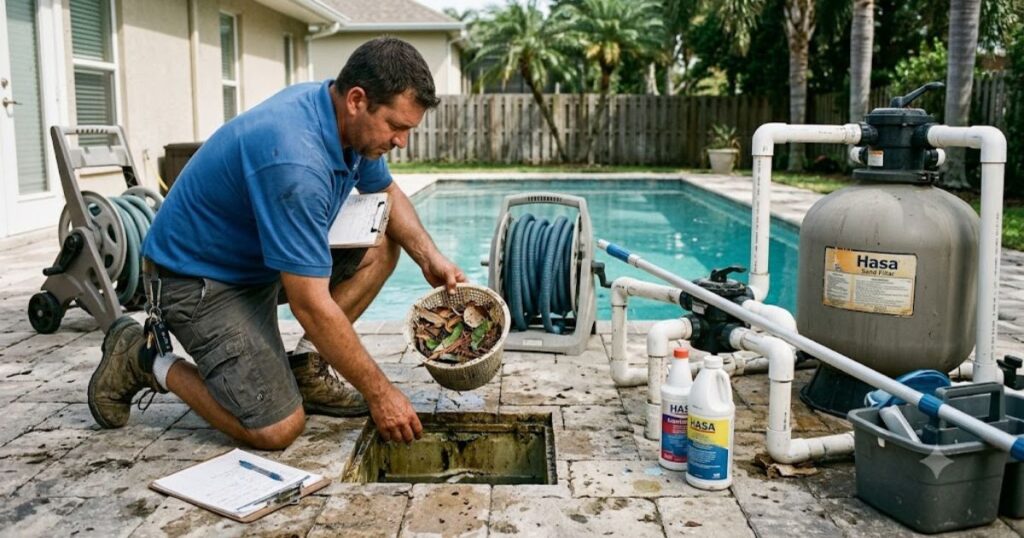
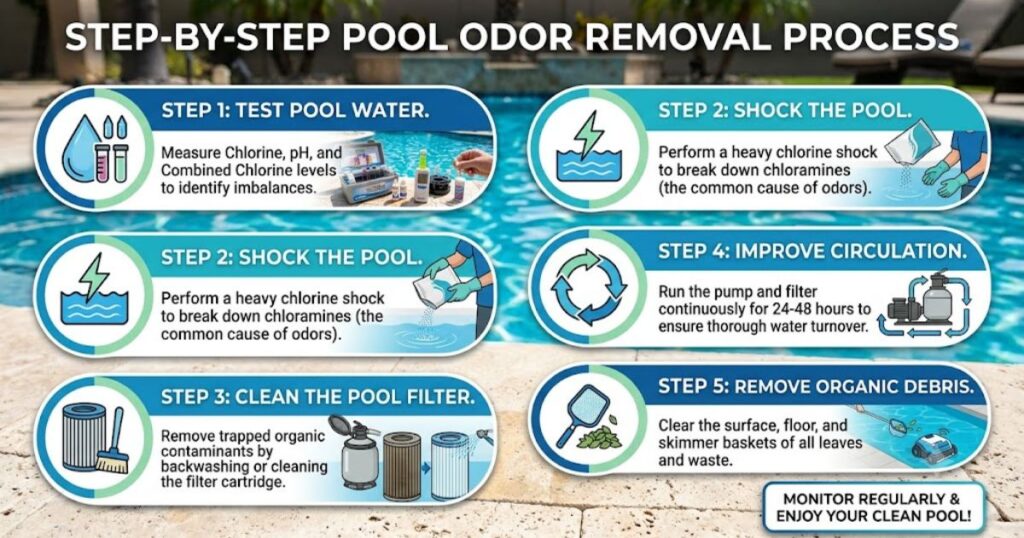
If your pool still smells like chlorine after treatment, focus on eliminating chloramines rather than simply adding more sanitizer.
Follow these steps:
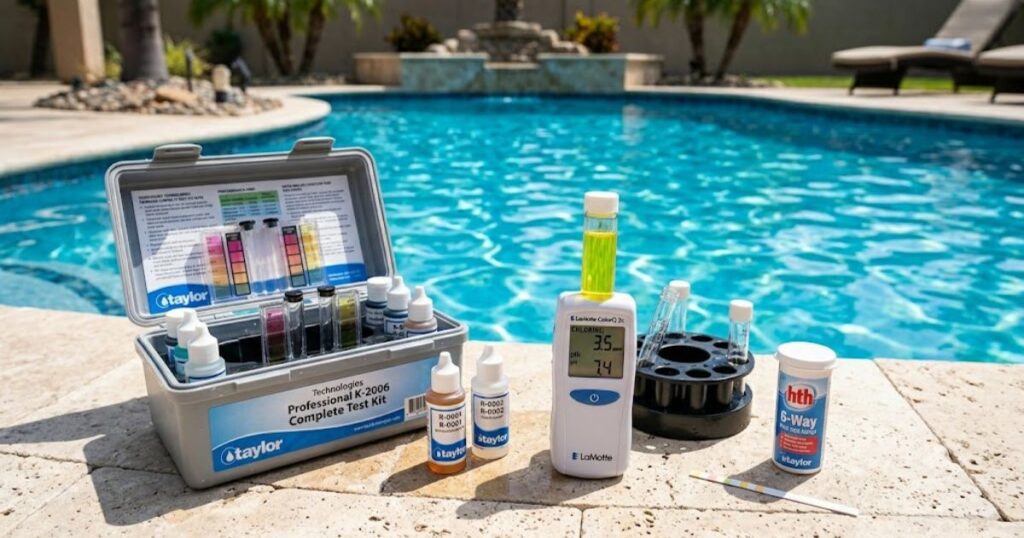
Step 1: Test Water Chemistry
Measure:
✓ Free chlorine
✓ Combined chlorine
✓ pH
Accurate testing identifies the real source of the problem.
Step 2: Shock the Pool Correctly
Apply enough shock treatment to achieve breakpoint chlorination.
This process destroys chloramines and restores sanitizer effectiveness.
Step 3: Clean the Filter
Backwash sand filters, rinse cartridge filters, or clean DE filters according to manufacturer recommendations.
A clean filter improves water quality significantly.
Step 4: Improve Circulation
Run the pump longer and verify that return jets are creating proper movement throughout the pool.
Better circulation helps distribute chemicals evenly.
Step 5: Remove Organic Debris
Skim leaves, vacuum debris, and brush surfaces regularly.
Reducing contamination lowers future chloramine production.
- ✓ A strong chlorine smell is often a sign of chloramine buildup, not too much chlorine, so focus on proper water balance and shocking rather than simply adding more sanitizer.
How to Prevent Chlorine Odors from Returning
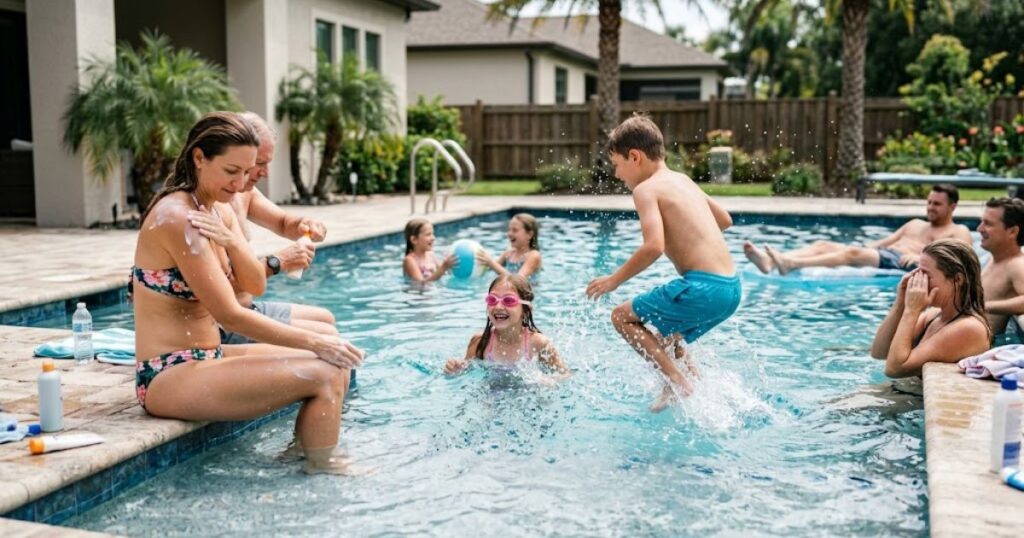
Preventive maintenance is easier and less expensive than repeated corrective treatments.
A simple routine can make a major difference.
✓ Test pool water weekly
✓ Maintain proper free chlorine levels
✓ Monitor pH and alkalinity
✓ Clean filters regularly
✓ Remove debris quickly
✓ Shock the pool as needed
✓ Encourage swimmers to shower before entering
✓ Maintain adequate circulation daily
Pool owners who consistently follow these practices typically experience fewer water quality problems and lower chemical costs over time.
Frequently Asked Questions
Why does my pool smell like chlorine after shocking?
Shocking may temporarily release chloramine odors while breaking down contaminants. The smell usually decreases as oxidation completes.
Can chloramines cause burning eyes?
Yes. Chloramines are one of the most common causes of red eyes, skin irritation, and respiratory discomfort in swimming pools.
How long does chlorine smell last after treatment?
Minor odors may disappear within hours, while severe chloramine buildup can require one to two days of filtration and circulation.
Why is my pool clear but still smells bad?
Water can appear crystal clear while containing dissolved contaminants and chloramines that create strong odors.
Final Thoughts
If you’ve been asking, “Why does my pool smell like chlorine even after treatment?”, the answer is usually chloramine buildup rather than excessive chlorine levels.
Most persistent pool odors occur because chlorine has reacted with contaminants and lost some of its effectiveness. Testing free chlorine, combined chlorine, and pH levels is the fastest way to diagnose the issue.
Once chloramines are removed through proper shocking, filtration, circulation, and water balancing, the odor typically disappears and your pool becomes more comfortable to swim in. Understanding this distinction can save money on unnecessary chemicals and help maintain cleaner, healthier pool water all season long.