
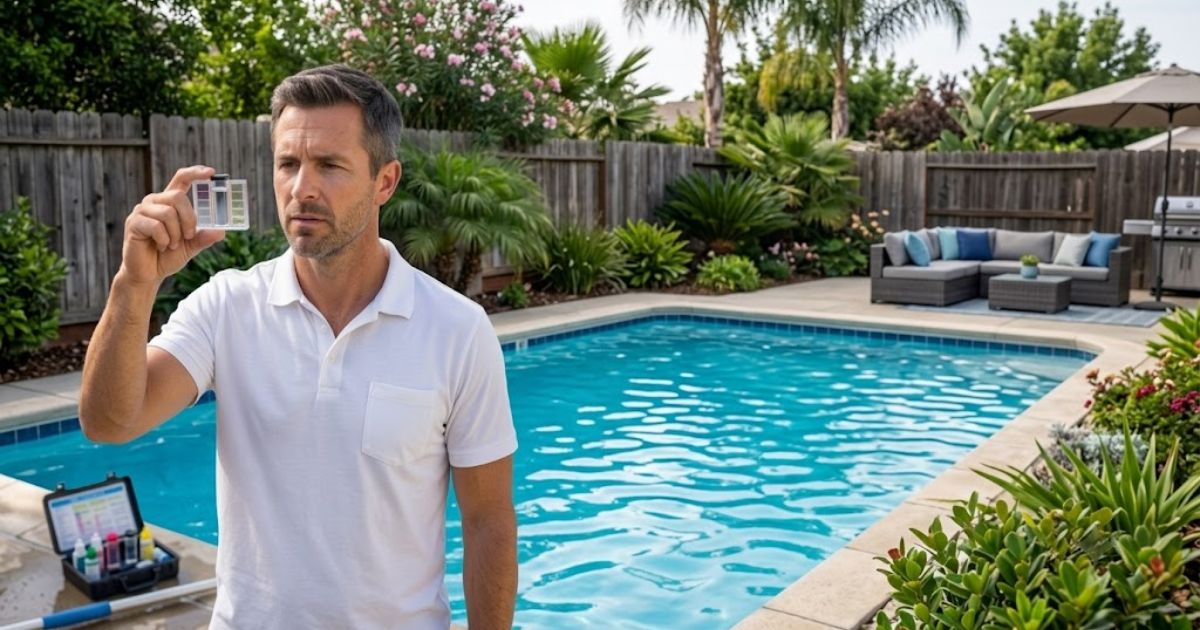

pool crystal clear but no chlorine
You look at your pool and it looks perfect. Blue, sparkling, inviting. So when you grab the test kit just to double check, the last thing you expect is a chlorine reading of zero. You add more. You wait. You test again. Still nothing.
It feels wrong, almost like the test itself must be broken. But clear water and balanced water are not the same thing, and a pool can look flawless on the surface while something underneath is quietly destroying every bit of chlorine you put in. The good news is that this has a clear cause almost every time, and once you know where to look, finding it usually takes less time than you’d think.
Key Takeaways
✓ Clear water tells you nothing about your actual sanitizer level
✓ Always separate Free Chlorine from Total Chlorine before troubleshooting anything else
✓ Check things in this order: combined chlorine, then CYA, then phosphates, then ammonia or nitrates
✓ Saltwater pools run into the exact same issues, just through a different chlorine source
✓ A chlorine demand that disappears within minutes is almost always a sign of ammonia, not a testing mistake
Free Chlorine and Total Chlorine Are Not the Same Thing
This is where a lot of confusion starts, and it’s worth slowing down on before anything else.
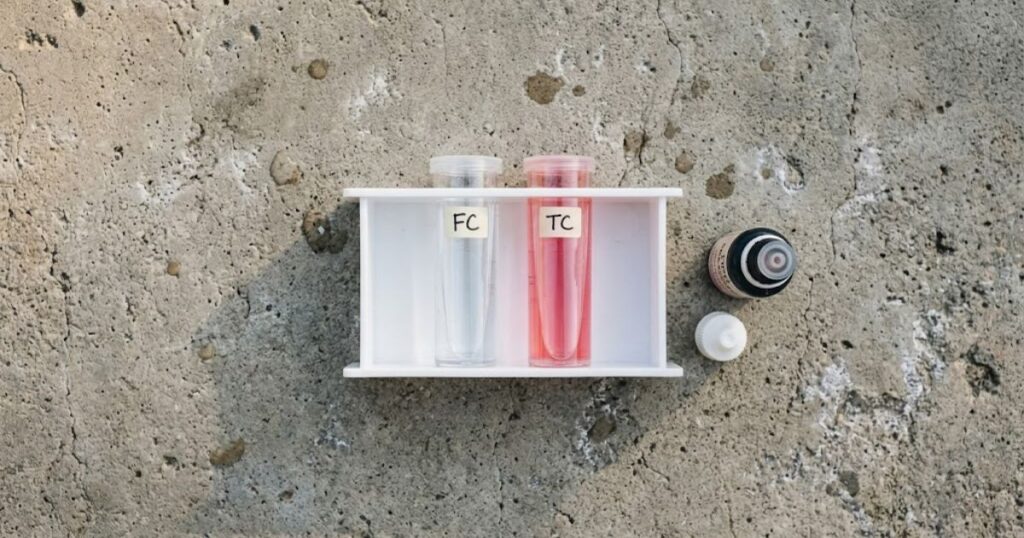
Free Chlorine (FC) is the chlorine that’s actually available to sanitize your water right now.
Total Chlorine (TC) is free chlorine plus chlorine that has already reacted with something in the water and is no longer doing any work.
Combined Chlorine (CC) is simply Total Chlorine minus Free Chlorine. This tells you how much chlorine has already been spent fighting contaminants.
If your Free Chlorine reads zero but your Total Chlorine shows 5 or 6, your chlorine hasn’t vanished into thin air. It’s been used up already, and shocking the pool to clear out that combined chlorine is the actual fix, not pouring in more sanitizer.
| What You See | What It Actually Means |
|---|---|
| FC normal, CC close to zero | Water is genuinely healthy |
| FC low, TC normal or high | Chlorine is reacting with something and getting used up |
| FC drops to zero within hours of dosing | Something is creating heavy chlorine demand |
The Five Hidden Causes Behind Disappearing Chlorine
Low Cyanuric Acid
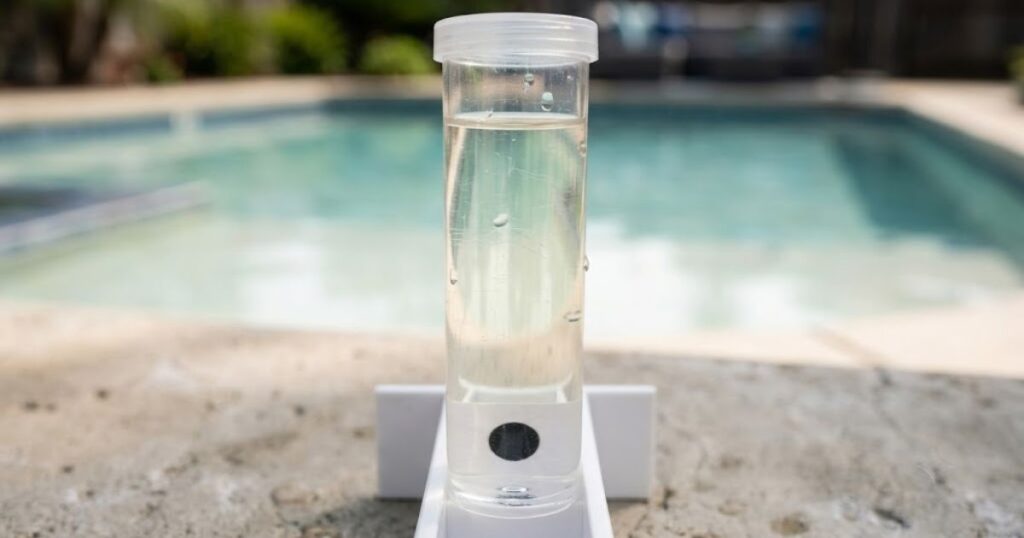
Cyanuric acid (CYA) acts like sunscreen for your chlorine. Without enough of it, UV rays from the sun chew through unprotected chlorine in a matter of hours. A reading under 30 ppm is usually the warning sign, especially in pools that get long hours of direct sunlight. For the full picture on dosing this correctly, our guide on what cyanuric acid is and how it protects your pool walks through it in detail.
Cyanuric Acid Set Too High
Pool Crystal Clear But No Chlorine
The flip side is just as real. When CYA climbs too far in the other direction, often above 100 ppm, it starts suppressing how effective your chlorine actually is, even when the number on your test strip looks acceptable. This is sometimes called chlorine lock, and it’s one of the most overlooked reasons pools feel impossible to sanitize properly.
Ammonia in the Water
Pool Crystal Clear But No Chlorine
This cause surprises most people, but it happens more often than you’d guess. Ammonia can enter a pool through fertilizer runoff, decomposing leaves or organic debris, or even from bacteria slowly breaking down cyanuric acid over time. Once ammonia is present, it reacts with chlorine almost instantly, which explains why some pools lose their entire chlorine dose in under an hour. TroubleFreePool’s detailed ammonia removal guide explains the breakpoint chlorination process needed to clear it out completely.
Phosphates Feeding Hidden Growth
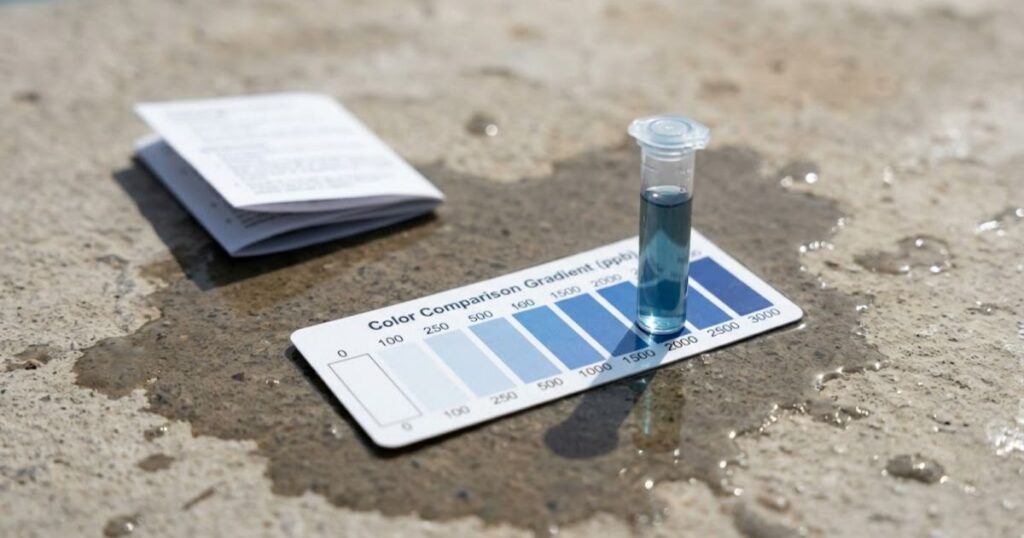
Phosphates don’t eat chlorine directly, but they act as fertilizer for early algae and bacteria that you can’t see yet. The water still looks clear, but your sanitizer is already working overtime against something invisible. Treating with a phosphate remover alongside a proper shock usually clears this up. If algae does take hold, our complete walkthrough on how to shock a pool the right way covers the process step by step.
Nitrates Nobody Tested For
Pool Crystal Clear But No Chlorine
Most pool stores skip nitrate testing entirely, but aquarium and fish supply shops test for it routinely. Nitrates can cause chlorine to burn off at a surprisingly fast rate, and if you’ve already ruled out everything above, this is the next thing worth checking.
A Simple Order to Work Through Each Test
Testing for everything at once usually just adds confusion. Go through it step by step instead.
- Check Free Chlorine against Total Chlorine to rule out combined chlorine first
- Test your CYA level, since both too low and too high cause this same symptom
- Test for phosphates to rule out hidden organic demand
- If nothing above explains it, test specifically for ammonia and nitrates
Saltwater Pools Run Into This Too
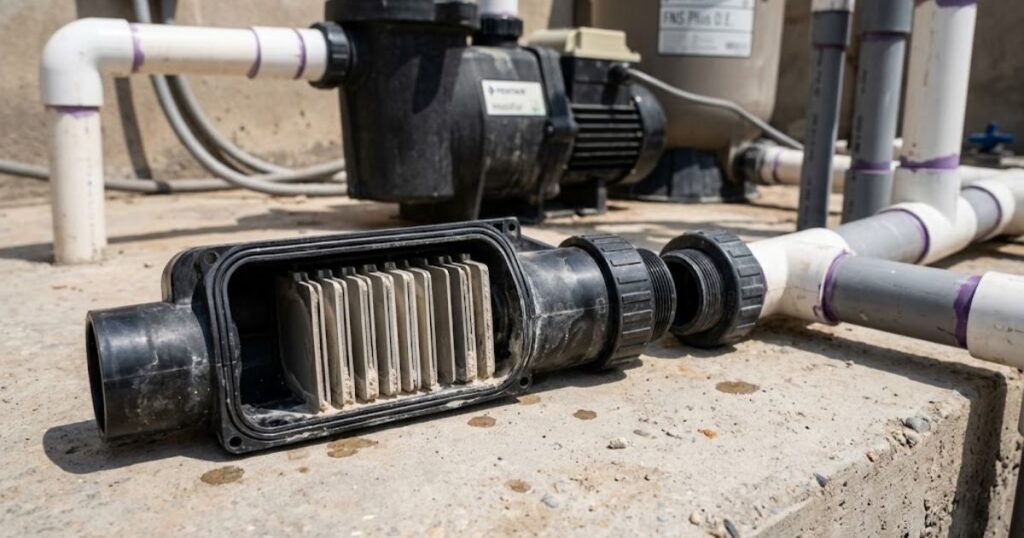
Owning a salt system doesn’t make you immune. The salt cell is just generating chlorine continuously, but the underlying causes are identical. Low or high CYA, ammonia, and phosphates affect saltwater pools exactly the same way they affect manually dosed ones. If your water looks great but free chlorine never holds, run through the same checklist instead of assuming the cell is broken.
When Adding More Chlorine Just Isn’t the Fix
Pool Crystal Clear But No Chlorine
In confirmed ammonia situations, dumping in more chlorine often doesn’t work since the ammonia keeps consuming it as fast as you add it. In stubborn cases like this, a partial drain combined with a strong breakpoint shock is sometimes the only realistic path forward. This isn’t common, but if CYA, phosphates, and standard shocking haven’t solved the problem, it’s worth considering before spending more on chlorine that keeps vanishing.
If your alkalinity has also been swinging around lately, it’s worth checking that separately too. Our guide on how to lower alkalinity in a pool covers what causes it to climb and how to bring it back down safely.
Frequently Asked Questions
Why does my chlorine disappear within a few hours of shocking? This usually points to a high chlorine demand somewhere in the water, most commonly from ammonia, but it can also happen with very low CYA letting sunlight burn through your chlorine fast.
Can ammonia actually get into a swimming pool? Yes, it happens less often than other causes, but it’s a real possibility through fertilizer runoff, decomposing organic matter, or bacteria breaking down cyanuric acid over time. Ammonia-specific test strips, often sold at pet and aquarium stores, can confirm it.
Is total chlorine the same reading as free chlorine? No. Total chlorine includes both the active free chlorine and the combined chlorine that’s already been used up. A low free chlorine reading sitting next to a normal total chlorine number usually means your chlorine is being consumed, not missing.
Should I get my pool checked for nitrates? If you’ve already ruled out CYA imbalance, phosphates, and ammonia, and chlorine is still vanishing fast, yes. Most standard pool store panels don’t test for nitrates by default, so you may need to ask specifically or test separately.
Crystal clear water can be deceiving. Chlorine demand from ammonia or nitrates often leaves no visible trace until you test for them directly. If your CYA is already correct and chlorine still keeps disappearing, ask your pool store for an ammonia and nitrate test instead of just the standard panel.
Final Thoughts
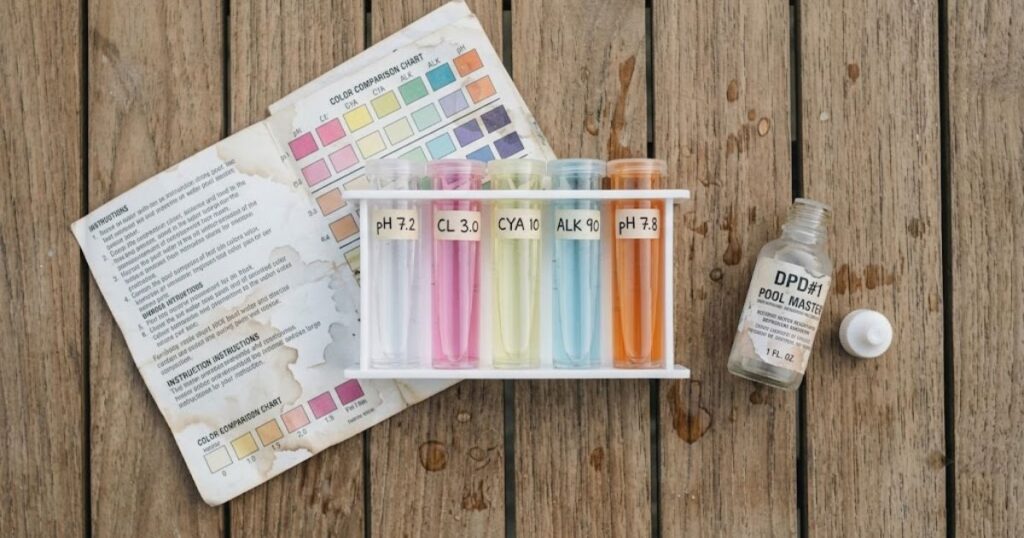
Pool Crystal Clear But No Chlorine Clear water gets mistaken for balanced water far more often than it should. Several of the toughest chlorine demand problems, including ammonia, nitrates, and chlorine lock from excess CYA, leave zero visible warning signs until you actually test for them. If you’ve already added chlorine, shocked the pool, and watched the readings vanish anyway, resist the urge to keep dumping in more. Work through the order above, starting with free versus total chlorine and your CYA level, before assuming something unusual is at play. Once you find the real cause, the fix is almost always simpler than the troubleshooting itself.
If your pH has also been acting unpredictable, it’s worth checking whether the two issues are connected. Our guide on why pool pH keeps dropping even with high alkalinity breaks down exactly how to tell.
Pool
Crystal Clear But No Chlorine