
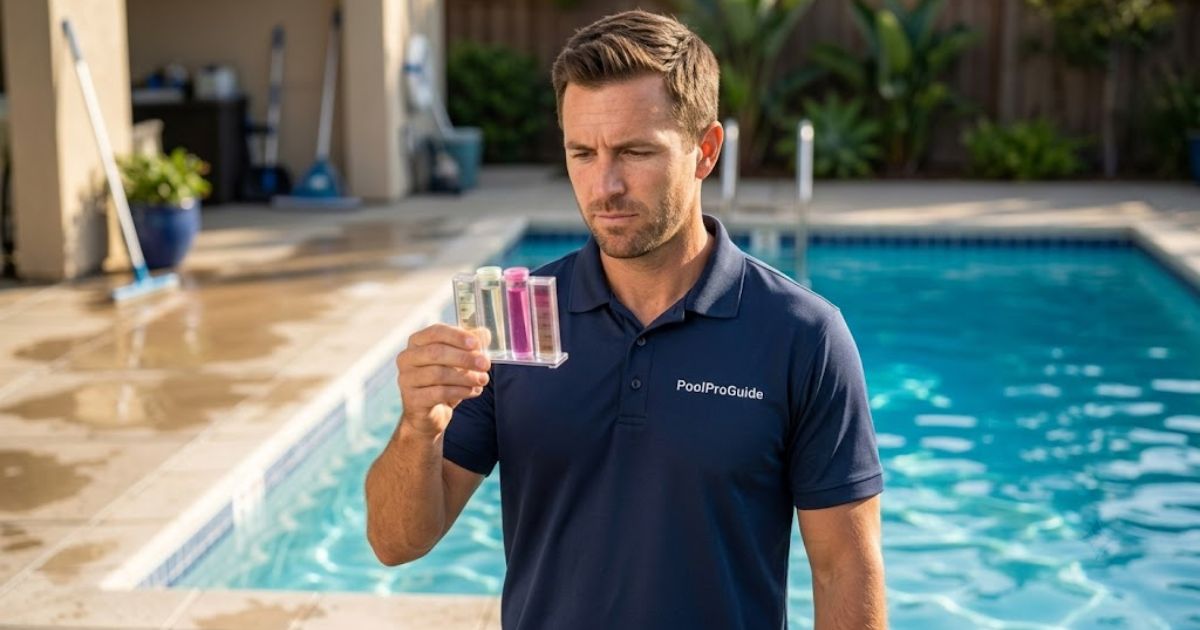

If your pool pH is normal but chlorine is not working, you’re not imagining it — and you’re not alone. You test your pH and it’s sitting right where it should be. You add chlorine just to be careful, and a few hours later it’s gone. Not low, gone. So you add more, and the same thing happens all over again.
You test your pH and it’s sitting right where it should be. You add chlorine just to be careful, and a few hours later it’s gone. Not low, gone. So you add more, and the same thing happens all over again.
It doesn’t make sense at first, because everyone tells you that balanced pH means working chlorine. But a normal pH reading is only one part of the equation, and it has nothing to do with several of the most common reasons chlorine fails to stick around. Once you know what those reasons actually are, the fix is usually a lot simpler than the troubleshooting felt.
Key Takeaways
✓A normal pH reading doesn’t rule out the real problem behind disappearing chlorine
✓Always test Free Chlorine against Total Chlorine before chasing other causes
✓Low CYA burns chlorine off fast in sunlight, while high CYA quietly suppresses it
✓Ammonia and phosphates are the two most commonly missed causes once pH and CYA check out
✓Saltwater pools follow the exact same troubleshooting steps as chlorine-dosed ones
Why Pool pH is Normal but Chlorine is Not Working Is More Common Than You Think
Pool pH is Normal but Chlorine is Not Working
This is the part that catches most pool owners off guard. pH is just one piece of the puzzle, not the whole picture. How well your chlorine actually performs depends just as much on cyanuric acid levels, combined chlorine, and any contaminants quietly using up your sanitizer before it has a chance to work. If your pH itself has been bouncing around recently, it’s worth ruling that out separately first. Our guide on why pool pH keeps dropping even with high alkalinity walks through that exact scenario.
So if pH checks out fine and chlorine still won’t hold, the answer is almost never to add more chlorine. It’s figuring out what’s actually consuming it.
Start Here: Free Chlorine or Total Chlorine?
Pool pH is Normal but Chlorine is Not Working
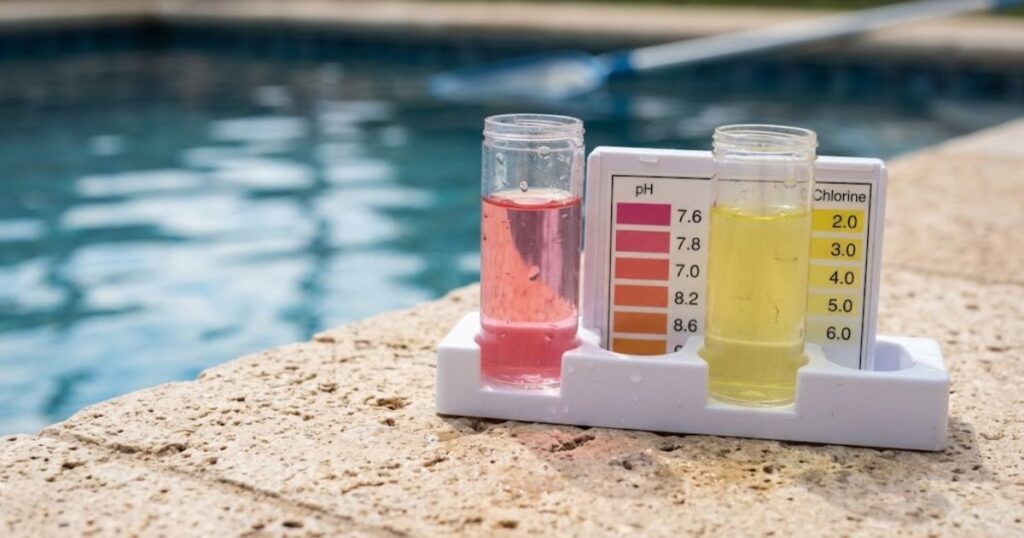
Before troubleshooting anything else, confirm what your test is actually telling you.
Free Chlorine (FC) is the active sanitizer doing real work in your water right now.
Total Chlorine (TC) is free chlorine plus chlorine that already reacted with something and stopped working.
Combined Chlorine (CC) is the gap between the two, and it tells you how much chlorine has already been used up fighting contaminants.
If your test shows Free Chlorine near zero but Total Chlorine sitting at 5 or 6, that’s not missing chlorine. That’s chlorine that already did its job and needs to be cleared out with a proper shock, not topped up with more.
The Real Reasons Chlorine Won’t Hold, Even With Healthy pH
Pool pH is Normal but Chlorine is Not Working
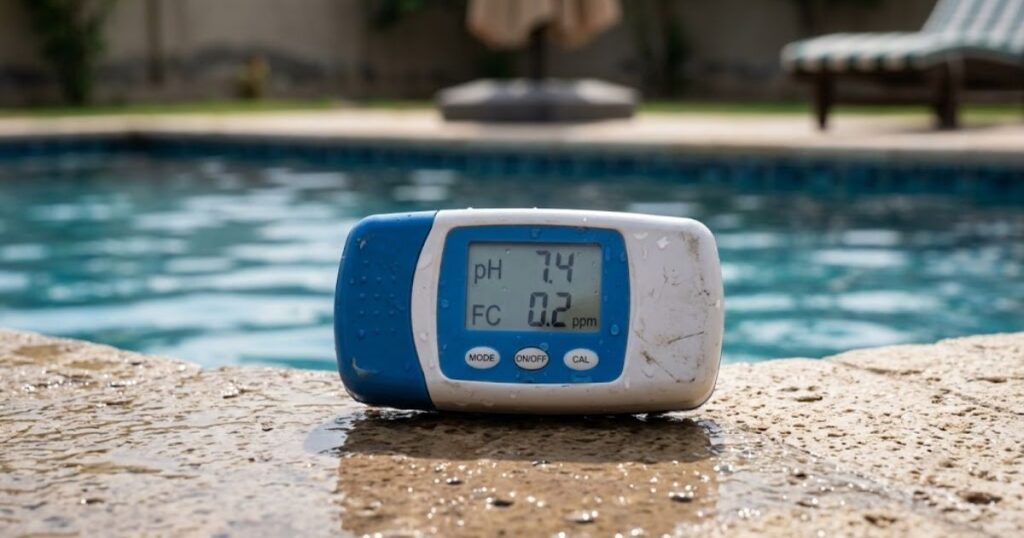
Cyanuric acid running too low. Without enough CYA acting as a buffer, sunlight burns through unprotected chlorine within hours. This is one of the most common and most overlooked causes of chlorine that seems to vanish on a sunny afternoon. Our detailed guide on what cyanuric acid is and how it works covers exactly how to dose it correctly.
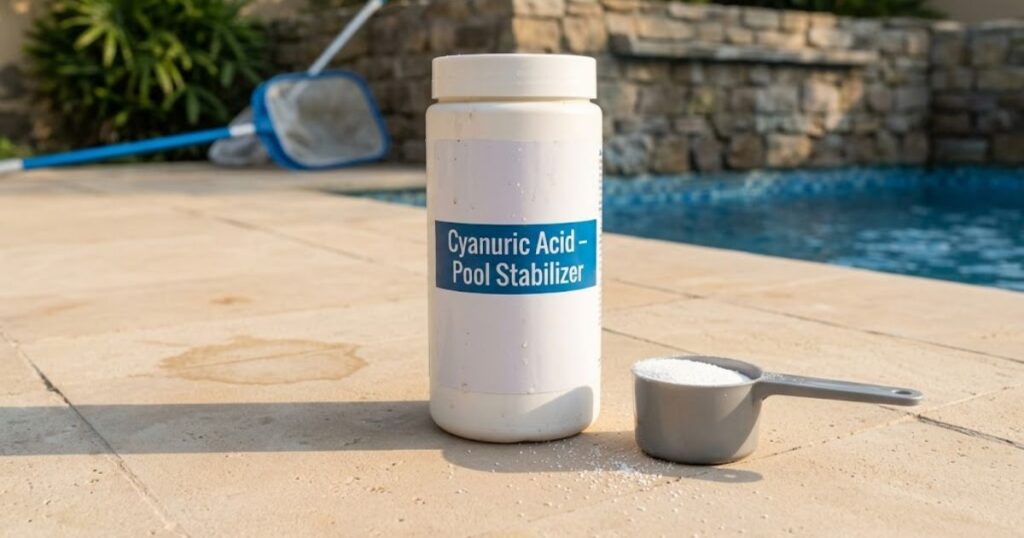
Cyanuric acid climbing too high. The opposite problem happens just as often. Once CYA rises too far, it starts weakening chlorine’s actual sanitizing strength, even if the number on your test still looks reasonable. Pool owners often call this chlorine lock, and it’s a measurable, well documented effect.
Ammonia making its way into the water. This one tends to surprise people, but it’s more common than expected, often from fertilizer runoff, decomposing organic matter, or bacteria slowly breaking down cyanuric acid over time. Once ammonia shows up, it reacts with chlorine almost instantly, which is why some pools lose an entire dose within thirty minutes. TroubleFreePool’s ammonia removal wiki explains the breakpoint chlorination steps needed to clear it for good.
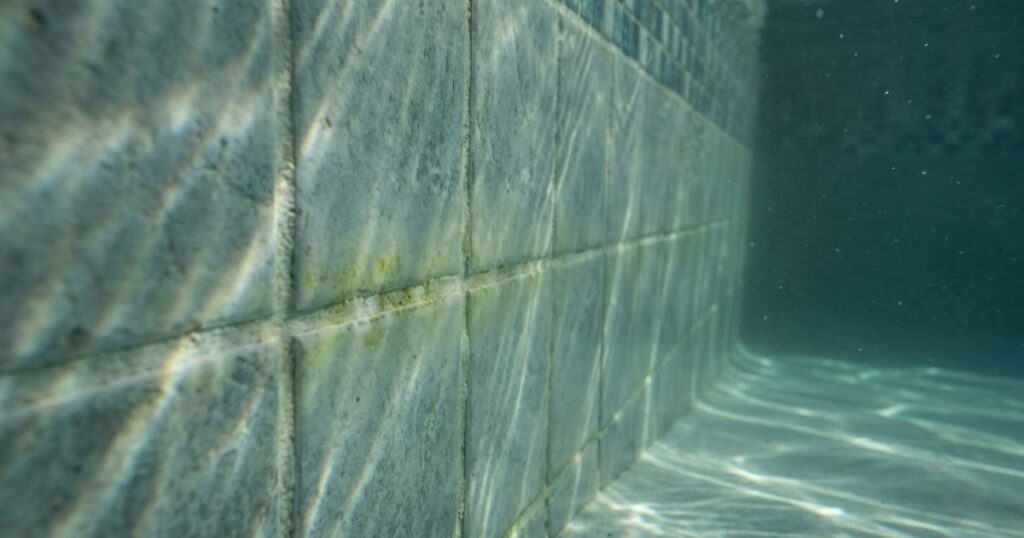
Phosphates quietly feeding growth you can’t see yet. High phosphates don’t consume chlorine directly, but they fuel early stage algae and bacteria that put constant demand on your sanitizer, often well before the water shows any visible sign of trouble.
Work Through the Tests in This Order
Pool pH is Normal but Chlorine is Not Working
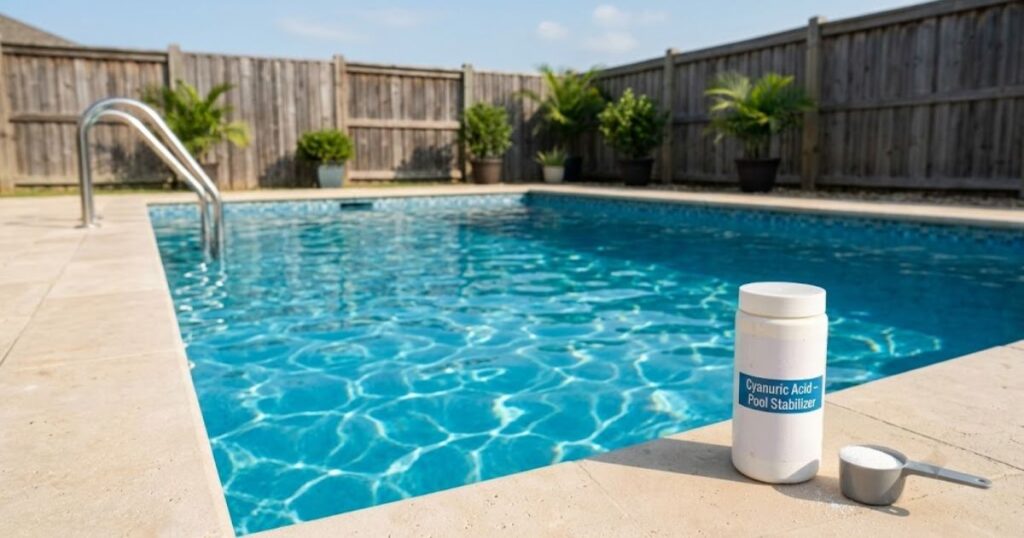
Testing everything all at once usually just creates more confusion than answers. Go through it in sequence instead.
- Free chlorine versus total chlorine, to rule out combined chlorine first
- Your CYA level, since both too low and too high cause this exact same symptom
- Phosphates, to rule out hidden organic demand
- Ammonia and nitrates, less common but worth checking if the first three come back clean
Pool pH is Normal but Chlorine is Not Working
Saltwater Pools Aren’t Exempt From Any of This
Pool pH is Normal but Chlorine is Not Working
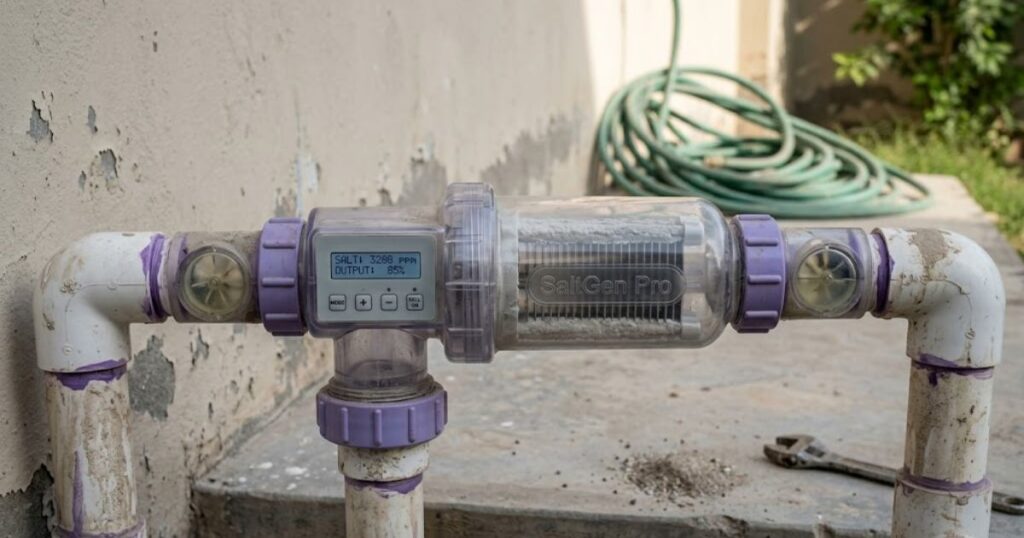
Running a salt system doesn’t change much here. The salt cell is simply generating chlorine continuously, but the underlying causes affecting that chlorine are identical to a chlorine-dosed pool. Low or high CYA, ammonia, and phosphates all behave the same way regardless of where your chlorine comes from. If your water looks fine but free chlorine consistently reads close to zero, work through the same diagnostic steps rather than assuming the cell itself has failed.
When More Chlorine Isn’t the Right Move
In confirmed ammonia cases, simply adding more chlorine often doesn’t help, since the ammonia keeps consuming it as fast as it goes in. In stubborn situations like this, a partial drain paired with a strong breakpoint shock is sometimes the realistic fix. It’s not the most common scenario, but if CYA, phosphates, and proper shocking haven’t solved it, it’s worth considering before spending more on chlorine that keeps disappearing.
If you’re also dealing with chlorine readings that won’t budge no matter what you try, our guide on how to raise chlorine in a pool covers the correct dosing approach once the underlying demand is addressed. And if your numbers swing the opposite direction afterward, how to lower chlorine in a pool fast explains how to bring it back down safely.
A normal pH reading only tells part of the story. If chlorine keeps vanishing despite balanced pH, check your CYA level and combined chlorine before anything else. Those two numbers explain the majority of chlorine problems that pH alone simply can’t.
Frequently Asked Questions
Why is my pH fine but my chlorine still isn’t working?
pH is only one factor among several. Chlorine effectiveness also depends on your cyanuric acid level, combined chlorine, and contaminants like ammonia or phosphates that can consume chlorine no matter how well your pH is balanced.
Is total chlorine the same thing as free chlorine?
No. Total chlorine includes both free chlorine, which is still active, and combined chlorine, which has already been used up. A low free chlorine reading next to a normal total chlorine number usually means your chlorine is being consumed somewhere, not actually missing.
Can ammonia really show up in a residential pool?
Yes. It’s less common than other causes, but it’s a real possibility through fertilizer runoff, organic debris, or bacteria slowly breaking down cyanuric acid over time. If chlorine keeps vanishing fast despite normal pH and CYA, it’s worth testing for directly.
Why does my chlorine disappear within hours of shocking the pool?
This usually points to a high chlorine demand somewhere in the water, most often from low CYA, ammonia, or organic contamination. Work through CYA and free versus total chlorine first before assuming something more unusual is happening.
Final Thoughts
It’s easy to assume that fine pH automatically means working chlorine, but pool chemistry doesn’t run on a single number. Cyanuric acid, combined chlorine, and the occasional hidden contaminant all play a role in whether your sanitizer actually holds up. If you’re stuck watching chlorine disappear despite doing everything right on paper, resist the urge to keep adding more blindly. Check CYA first, then combined chlorine, then the less common culprits like ammonia and phosphates. Once the real cause is identified, the fix is almost always more straightforward than the troubleshooting process itself.
For the related case where water looks perfectly clear but chlorine refuses to register at all, our companion guide on pool water that’s crystal clear but shows no chlorine covers that exact scenario in full detail.