
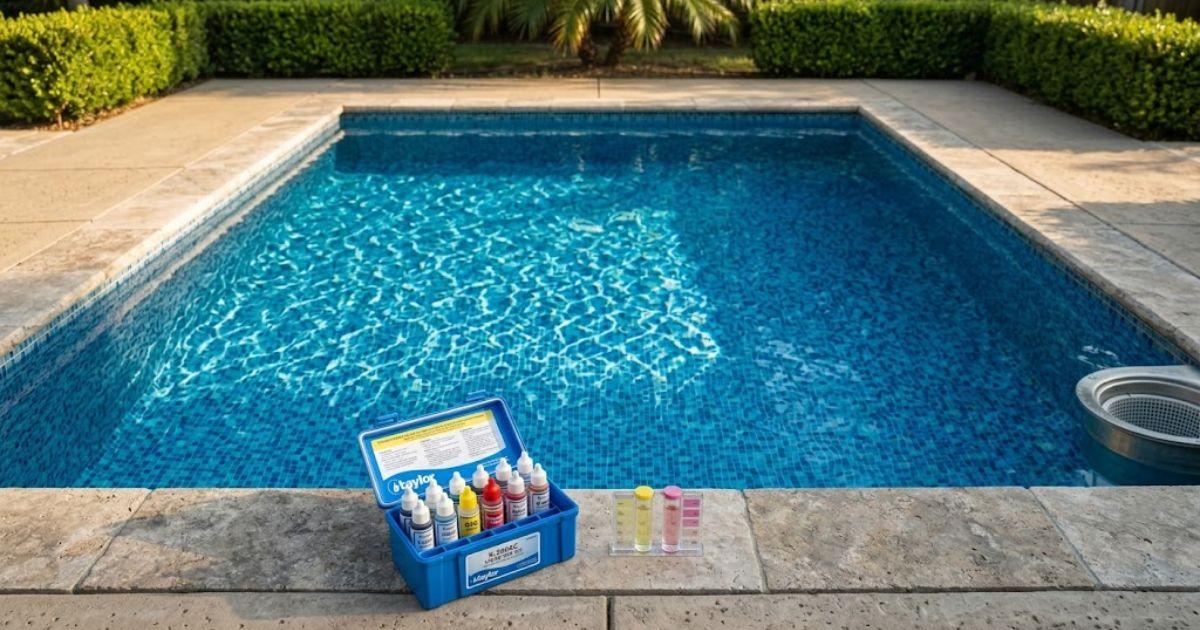
Your eyes sting after a swim. The water looks hazy even though you just shocked it. You keep adding chlorine but nothing holds. Before you buy more chemicals, check one number first: your pH.
pool ph too high or too low
A pH reading outside the ideal range quietly breaks everything else in your water chemistry. Chlorine weakens. Scale builds up. Equipment corrodes. And none of it looks dramatic at first, which is why pool owners often spend weeks treating symptoms instead of the actual cause.
Quick Answer: Ideal pool pH is 7.2 to 7.6. Below 7.2 the water turns acidic and damages equipment. Above 7.6 chlorine loses most of its sanitizing strength. Always test Total Alkalinity before adjusting pH, then correct in small steps.
Key Takeaways
✓ pH between 7.2 and 7.6 keeps chlorine effective and swimmers comfortable
✓ High pH causes cloudy water, scale buildup, and weak chlorine
✓ Low pH corrodes equipment, etches surfaces, and burns eyes
✓ Fix Total Alkalinity before touching pH or the adjustment will not hold
✓ Correct no more than 0.2 pH points per chemical addition
pool ph too high or too low
What pH Actually Does to Your Pool
Pool pH Too High or Too Low
pH measures how acidic or alkaline your water is on a scale from 0 to 14. Seven is neutral. Your pool needs to sit between 7.2 and 7.6 because that is where chlorine performs at its peak.
According to the CDC healthy swimming guidelines, pool water pH should stay between 7.2 and 7.8 to ensure effective disinfection and swimmer safety. At pH 7.2, chlorine operates at around 65 percent of its sanitizing capacity. At pH 8.0, that drops below 20 percent. Same chlorine, same dose, dramatically different results.
| pH Level | Water State | Primary Risk |
|---|---|---|
| Below 7.0 | Corrosive | Equipment damage, eye burning |
| 7.2 to 7.6 | Ideal | Chlorine fully effective |
| Above 7.8 | Alkaline | Chlorine largely ineffective |
Our pool chlorine levels chart shows exactly how chlorine effectiveness changes at each pH reading.
7 Signs Your Pool pH Is Off
Pool pH Too High or Too Low
1. Stinging or Burning Eyes After Swimming
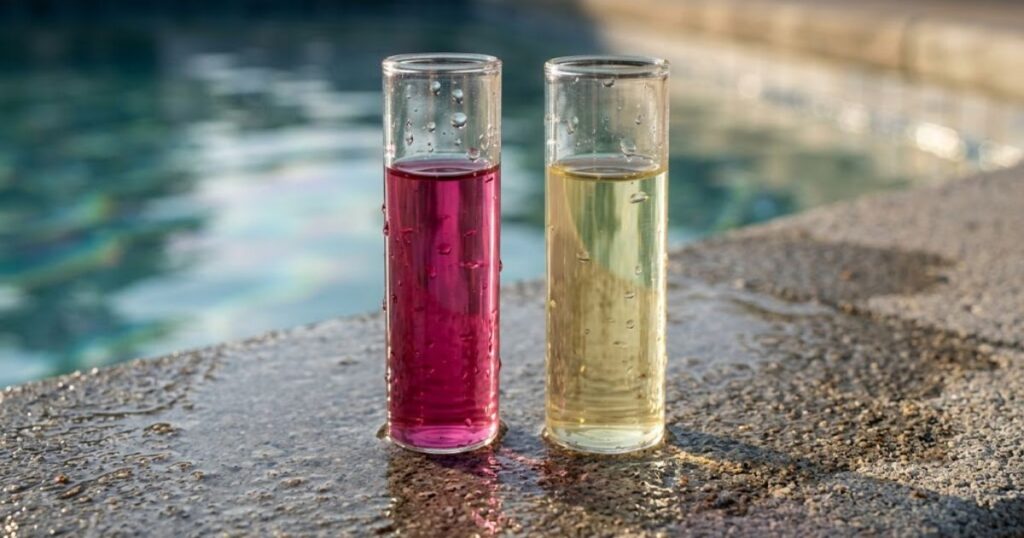
The most common sign something is wrong. Most people blame chlorine, but eye irritation is almost always a pH issue. The human eye sits at a natural pH of around 7.4. Water that drifts too far in either direction causes the burning that swimmers recognize immediately.
Low pH creates a sharp, immediate sting. High pH causes lasting redness that lingers after getting out of the water.
2. Cloudy Water That Shocking Will Not Clear
Pool pH Too High or Too Low
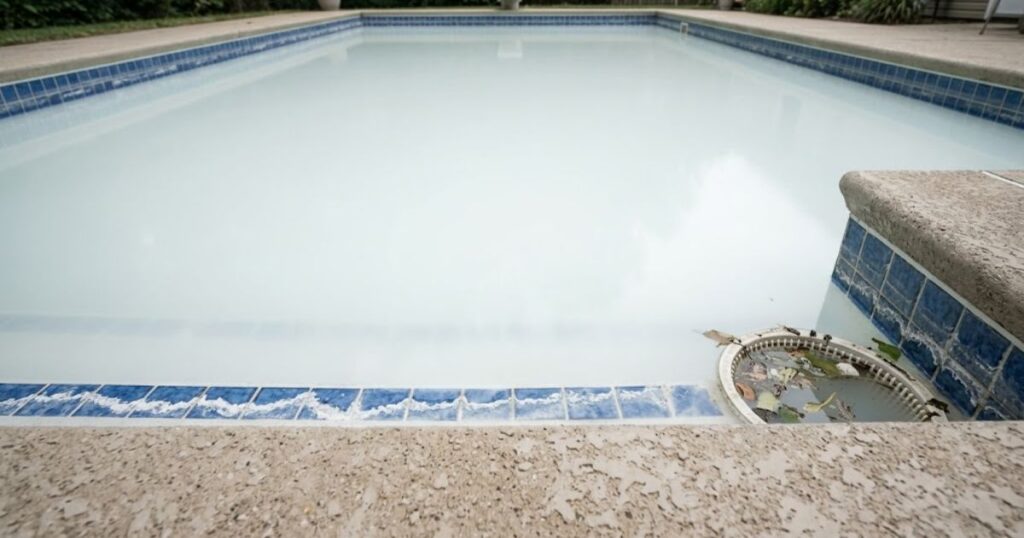
High pH forces dissolved calcium out of solution, creating a milky haze that does not respond to shocking or clarifiers. This cloudiness has a white, mineral quality rather than a greenish tint and persists even with correct chlorine levels.
Our guide on pool water that looks clear but shows no chlorine covers the related situation where water clarity and chemistry readings do not match.
3. White Chalky Scale on Tile and Equipment
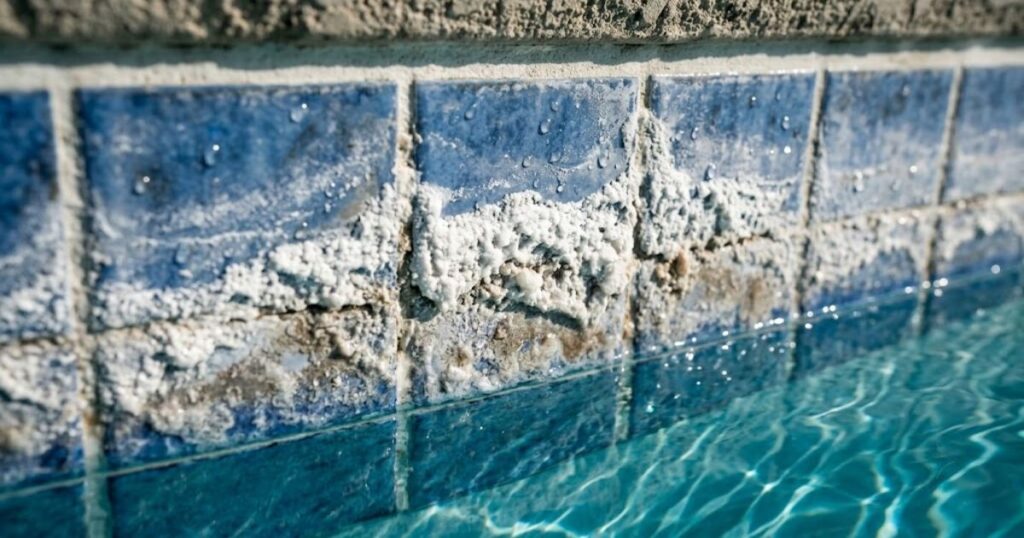
Calcium scale on tile lines, ladders, and return jets is a visible sign pH has been running high long enough for minerals to crystallize out of solution. According to the World Aquatic Health Conference water quality standards, pH consistently above 7.8 accelerates calcium carbonate precipitation on pool surfaces and equipment.
Left unchecked, scale deposits clog filters and reduce heater efficiency over time.
Pool pH Too High or Too Low
4. Chlorine Disappears Faster Than Normal
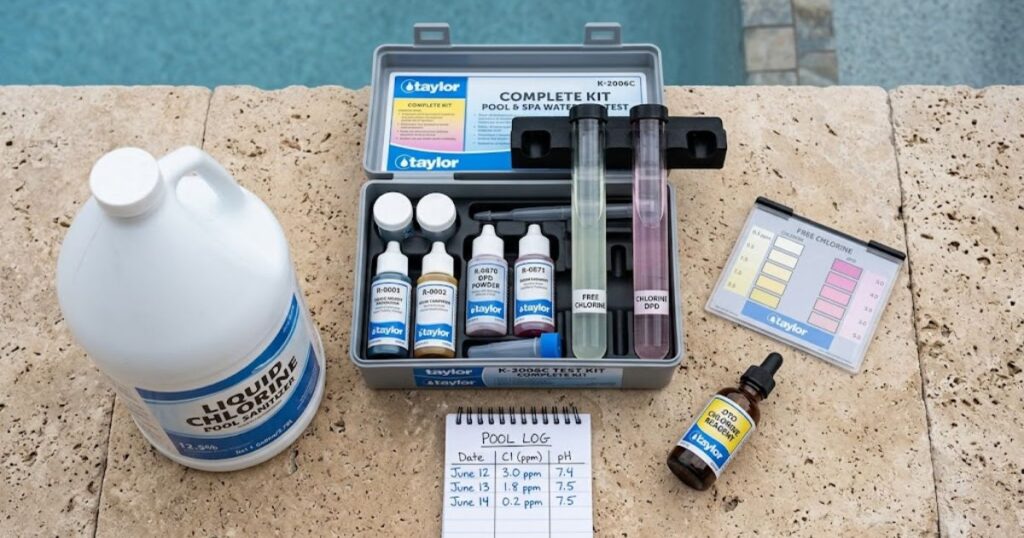
When pH is high, the active sanitizing compound in chlorine converts to a weaker form that cannot kill bacteria effectively. You keep dosing, the test confirms chlorine is present, but the pool still looks dull or develops algae anyway.
Fix pH before adding more chlorine. Our guide on how to raise chlorine correctly explains the right dosing approach once pH is back in range. If chlorine runs too high after correction, our guide on how to lower chlorine fast covers that adjustment safely. For the specific situation where pH looks normal but chlorine still will not hold, our guide on pool pH normal but chlorine not working walks through additional causes pH testing alone will not reveal.
Pool pH Too High or Too Low
5. Dry or Itchy Skin After Getting Out
Both extremes of pH strip the body’s natural surface oils. Acidic water is more aggressive and immediately noticeable. High pH causes a subtler dryness that swimmers often attribute to sun exposure rather than pool chemistry.
If multiple swimmers consistently leave the pool with dry or irritated skin, test pH before reaching for any other explanation.
6. Rust Stains or Corroding Metal Parts
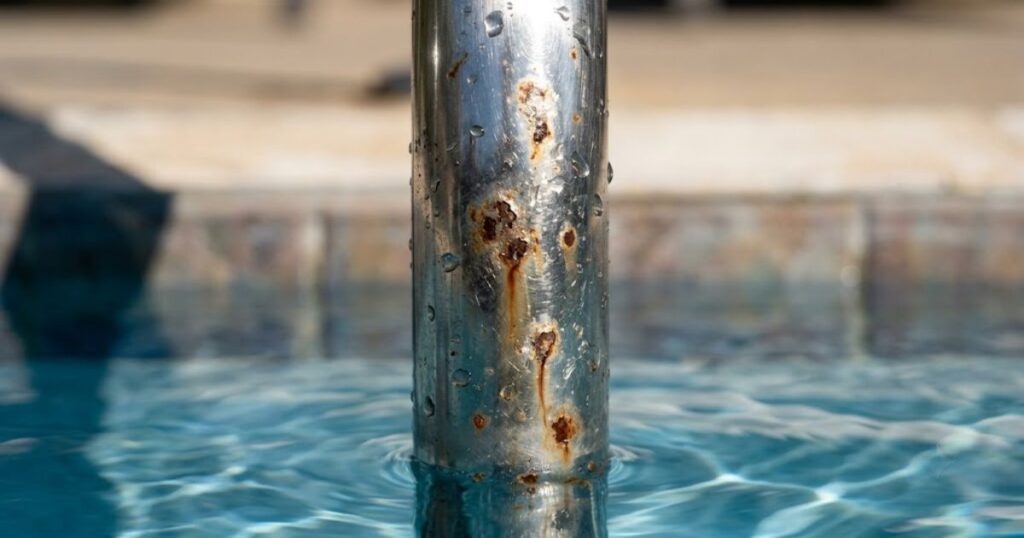
Low pH makes water acidic enough to corrode metal. Ladders, pump components, light fixtures, and heater elements are all vulnerable. The Water Quality and Health Council notes that pH below 7.0 significantly accelerates metal corrosion in residential pools. The damage is slow but irreversible once it begins.
Rust stains near metal fittings and pitting on metal surfaces are the early warning signs to catch before the damage becomes expensive.
Pool pH Too High or Too Low
7. pH Bounces Back Within a Day or Two
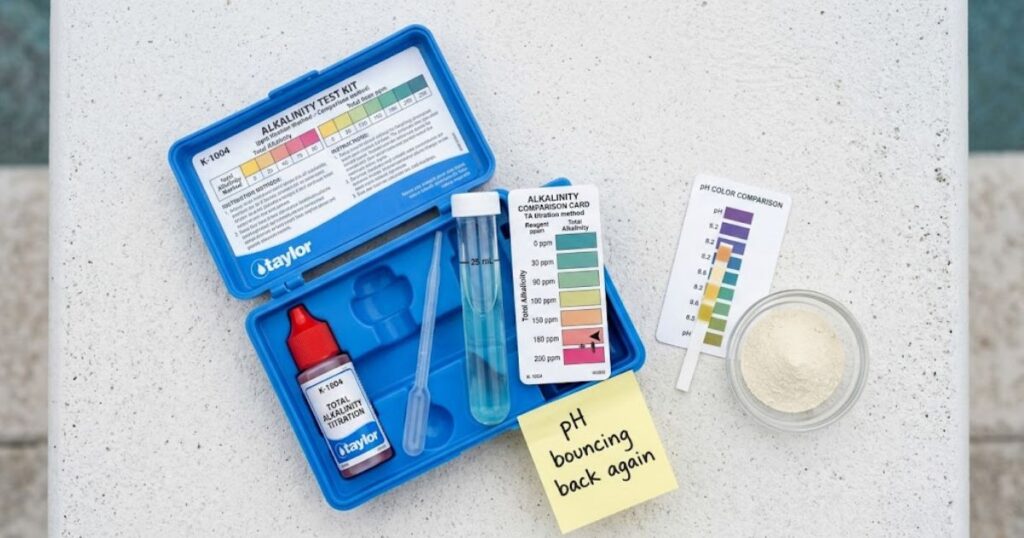
If you correct your pH and it returns to the same reading within 48 hours, the real problem is Total Alkalinity, not pH itself. High TA acts as a chemical buffer that continuously pushes pH back up after each correction.
The fix is not more acid. The fix is addressing alkalinity first. Our guide on how to lower alkalinity in a pool explains how to bring it down without crashing pH at the same time. For the specific case where pH keeps dropping rather than rising, our guide on why pool pH keeps dropping with high alkalinity explains that pattern separately.
How to Fix High pH
Step 1: Test Total Alkalinity first. If TA reads above 120 ppm, address that before touching pH.
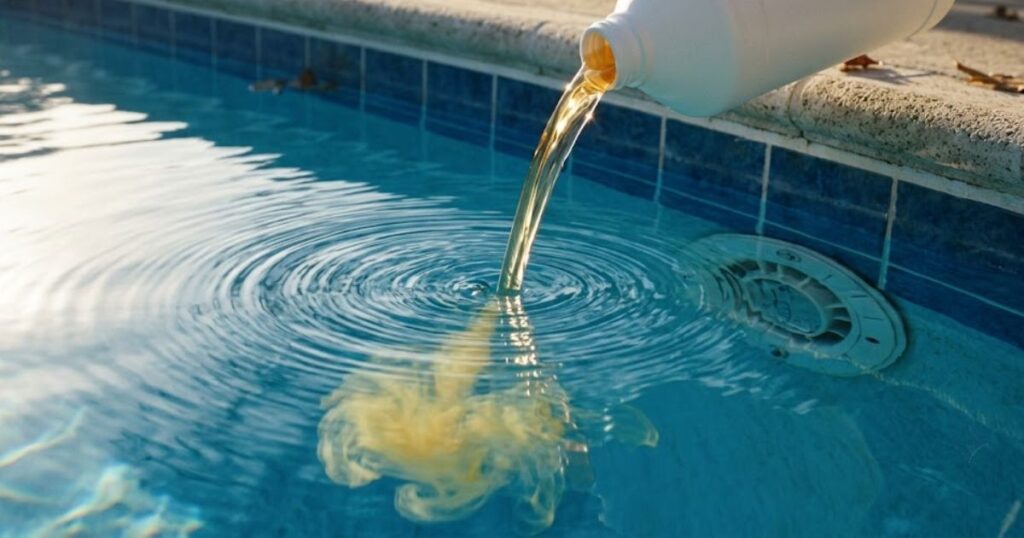
Step 2: Add muriatic acid or dry acid in small amounts near an active return jet with the pump running. Never pour acid into the skimmer or onto surfaces directly.
Step 3: Wait four to six hours before retesting. Retesting too early produces inaccurate readings and leads to overcorrection.
Step 4: Adjust no more than 0.2 points per addition. Repeat in small increments until pH reaches the target range.
For the complete acid-and-aerate method that prevents pH from bouncing back after correction, our guide on how to lower pool pH naturally covers the full process including why fixing Total Alkalinity first is the key to making the change stick.
How to Fix Low pH
Step 1: Test Total Alkalinity at the same time. Low TA and low pH frequently occur together.
Step 2: Choose the right chemical based on your alkalinity reading:
✓ Alkalinity also low: use soda ash (sodium carbonate), which raises both pH and TA together
✓ Alkalinity normal or high: use borax, which raises pH without pushing TA higher
Baking soda raises both pH and alkalinity. If TA is already elevated, using baking soda compounds the underlying problem rather than solving it.
Step 3: Dissolve the chemical in a bucket of water first, then broadcast it slowly around the pool with the pump running.
Step 4: Retest after four to six hours and repeat in small steps as needed.
The Right Order to Test and Adjust
Adjusting pH before checking alkalinity is the single most common mistake pool owners make. Follow this sequence every time:
- Test Total Alkalinity (target 80 to 120 ppm)
- Correct alkalinity if needed, then wait for it to stabilize
- Test and adjust pH (target 7.2 to 7.6)
- Test and adjust chlorine last
- Wait four to six hours after any chemical addition before retesting
If you are unsure whether your testing method is giving you reliable numbers, our guide on how to test pool water correctly compares test strips, liquid kits, and digital testers so you can choose the right one for your situation.
If your pH correction never sticks, stop adjusting pH and test Total Alkalinity first. TA controls how stable your pH stays. Fixing pH without correcting alkalinity is like adjusting a thermostat with a broken sensor underneath it.
Frequently Asked Question
Can I swim in a pool with high pH? It is not immediately dangerous, but your chlorine is not sanitizing properly and swimmers will experience irritation. Correct pH before swimming when possible.
Why does my pH keep rising no matter what I add? High Total Alkalinity is almost always the cause. TA buffers the water and continuously pushes pH back up after each correction. Fix TA first and pH will become far more stable.
Does shocking affect pool pH? Yes. Calcium hypochlorite raises pH slightly. Trichlor tablets lower it over time. Liquid chlorine tends to raise it. Our guide on how to shock a pool correctly explains how to account for these effects when planning your treatment.
How often should I test pH? Two to three times per week during swimming season, and after every storm, shock treatment, or heavy swimmer session.
Final Thoughts
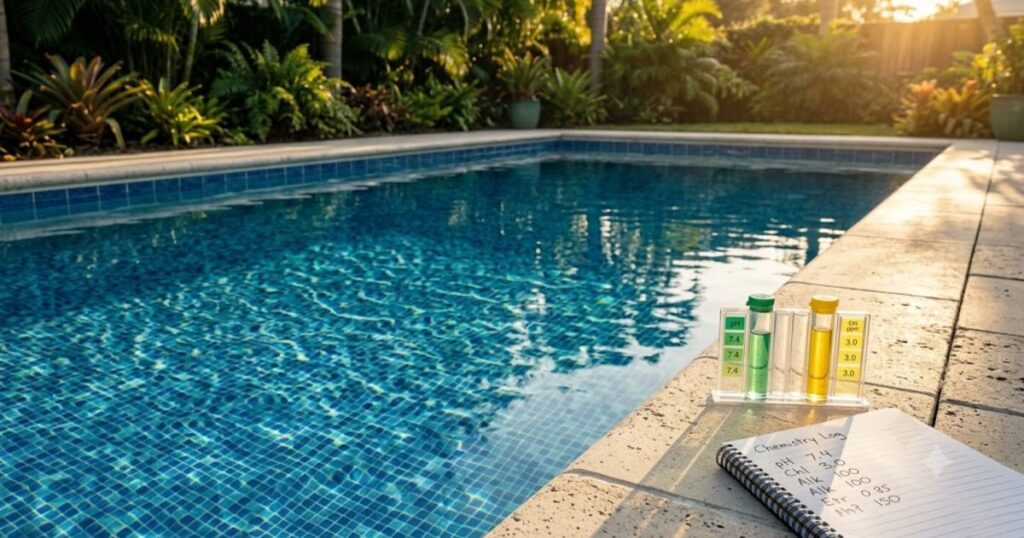
pH is the most foundational number in pool chemistry. When it drifts, chlorine weakens, surfaces deteriorate, and swimmers feel it immediately. The seven signs above follow a clear pattern depending on which direction pH has moved and how long it has been off. Eye irritation and cloudy water are early signals. Scale and corrosion mean it has been off for a while. A pH that keeps bouncing back means alkalinity needs attention before anything else.
Test twice a week. Adjust in small steps. Always fix alkalinity before pH. That sequence alone resolves the majority of persistent pool chemistry problems without spending money on additional chemicals.
Great content! Keep up the good work!