
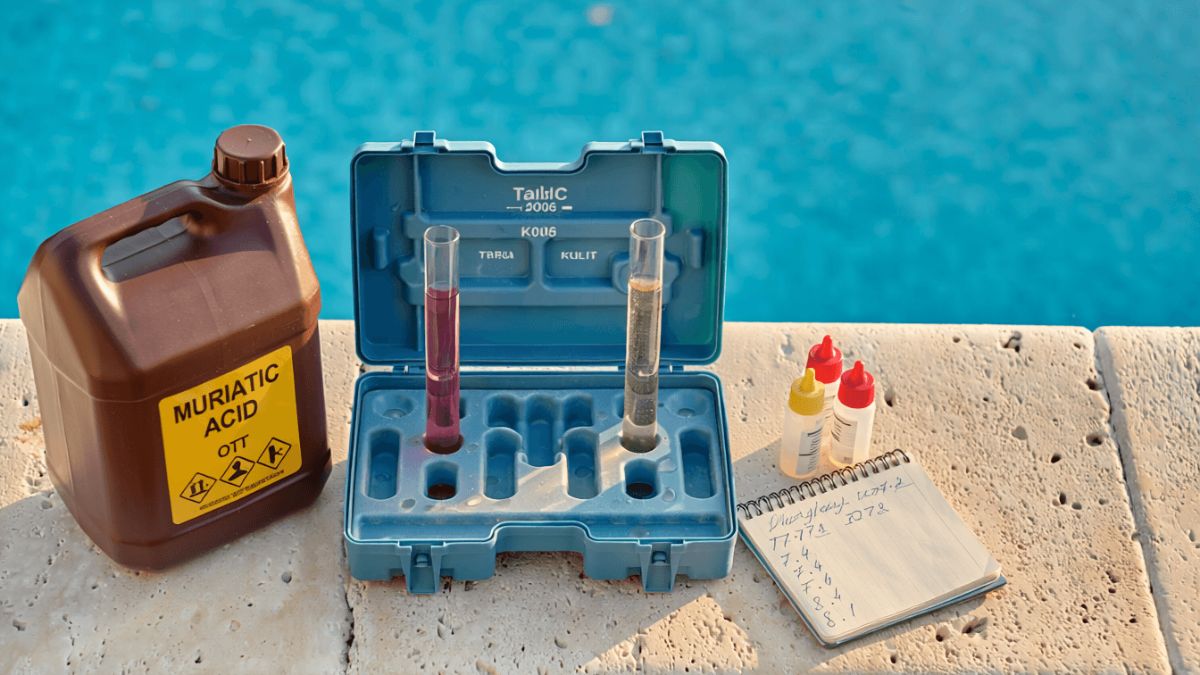

why does my swimming pool pH keep rising is one of the most searched pool chemistry questions online, and for good reason. You add muriatic acid, pH drops to 7.4, and 48 hours later it’s back at 7.9 or higher. You add more acid. Same thing happens. You start wondering if something is genuinely broken, or if you are doing something fundamentally wrong.
You are probably not doing anything wrong. The real problem is that most pool guides give you a surface-level answer, tell you to add acid, and leave out the part that actually matters: why pH keeps coming back up, and what to fix so it stops.
This guide covers the five real reasons your pool pH keeps rising, what each one actually means for your specific pool setup, and what to do about each one so you are not buying a gallon of acid every single week.
Quick Answer: Pool pH keeps rising because CO2 naturally escapes from water, pushing pH upward. The main triggers are high Total Alkalinity, aeration from water features or return jets, salt chlorine generators, new plaster curing, and high-alkalinity fill water. The permanent fix is lowering Total Alkalinity to 60 to 80 ppm, not just repeatedly adding acid.
Key Takeaways
✓ pH rises naturally because CO2 escapes from water constantly, this is physics not a pool problem
✓ High Total Alkalinity is the single biggest controllable cause of rapid pH rise
✓ Lowering TA to 60 to 80 ppm slows pH drift significantly without causing instability
✓ Salt chlorine generators and aeration features will always push pH up, your goal is managing the ceiling not eliminating the rise
✓ Borates at 50 ppm can reduce how frequently you need to add acid without changing your total acid consumption much
✓ The pH ceiling concept explains why pH naturally tops out around 8.2 and why fighting it below 7.6 is the right strategy
Why Does My Swimming Pool pH Keep Rising
What Is the Ideal Pool pH and Why Does It Drift Upward?
The ideal pool pH range is 7.2 to 7.6. According to the CDC’s residential pool water guidelines, maintaining pH within this range ensures effective disinfection and protects swimmers from skin and eye irritation.
pH drifts upward for one fundamental reason: carbon dioxide escapes from pool water constantly. When CO2 leaves the water, carbonic acid levels drop, and the water becomes less acidic. That is pH rising in real time, happening every hour your pool is open to the air, regardless of what chemicals you have added.
This is not a defect. It is chemistry. The question is what makes it happen faster in your specific pool. Our pool chlorine levels chart shows how pH directly impacts chlorine effectiveness at every reading.
Reason 1: Total Alkalinity Running Too High
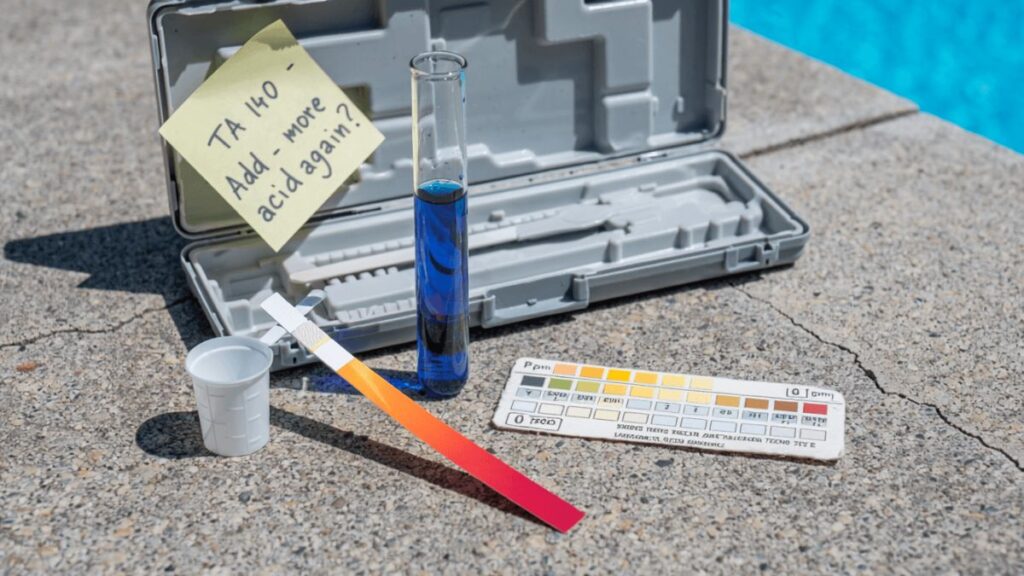
This is the number one controllable cause of rapid pH rise, and the one most pool guides underexplain.
Total Alkalinity acts as a buffer for your water chemistry. When TA is high, it locks pH into a range and makes it harder to lower with acid. But it also creates what pool chemistry experts call a high pH ceiling. When you force pH down with acid in high-TA water, the water has so much buffering capacity that it pushes pH back up quickly.
Real experience from Reddit and pool forums confirms this repeatedly. Pool owners with TA running at 100 to 120 ppm report needing to add acid every two to three days. Those who brought TA down to 60 to 70 ppm report needing to add acid once every one to two weeks with the same pool setup.
The fix is to target TA at 60 to 80 ppm rather than the often-cited 80 to 120 ppm range. The lower end of that range is perfectly safe and significantly slows pH drift. Our guide on how to lower alkalinity in a pool walks through the exact process for bringing TA down without crashing pH at the same time.
According to TroubleFreePool’s TA guide, TA can safely go as low as 50 ppm before causing real instability problems, which gives you more room to manage pH than most pool store advice suggests.
Reason 2: Aeration from Water Features, Spillovers, and Return Jets
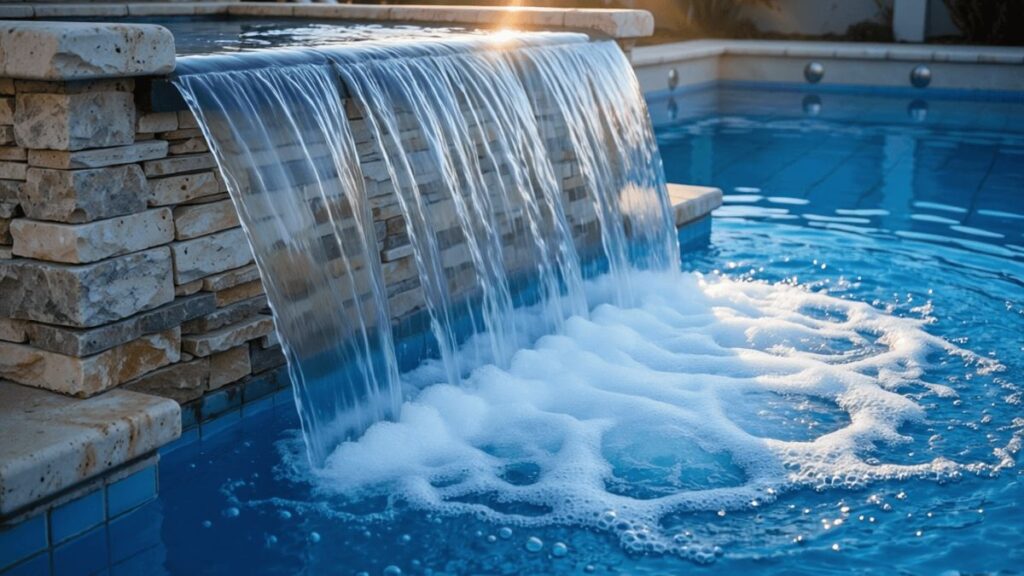
If you have a spa spillover, waterfall, fountain, or return jets that break the water surface, this is almost certainly contributing to your pH problem.
Aeration accelerates CO2 loss from pool water. Every time water splashes, bubbles, or breaks the surface, CO2 escapes faster and pH rises faster. A pool with a spa spillover running constantly can need acid every day or every other day regardless of TA levels.
Multiple Reddit users in the r/pools community confirmed this exact experience. One user with a spillover spa reported adding muriatic acid every three days and described how reducing pump run time from 24/7 to daytime-only brought their pH to a range where only slight adjustments were needed. Another user identified their upward-pointing return jets as a contributing aeration source.
What to do:
✓ Point return jets downward or at an angle rather than breaking the water surface
✓ Reduce run time on water features if pH drift is severe
✓ If aeration is permanent by design, accept that acid addition will be ongoing and focus on managing TA to lower the frequency
For infinity edge pools and heavily aerated setups, CO2 injection systems are an alternative to muriatic acid that maintains pH without continuously lowering Total Alkalinity. This is worth researching if you are adding significant acid volumes weekly.
Reason 3: Your Salt Chlorine Generator
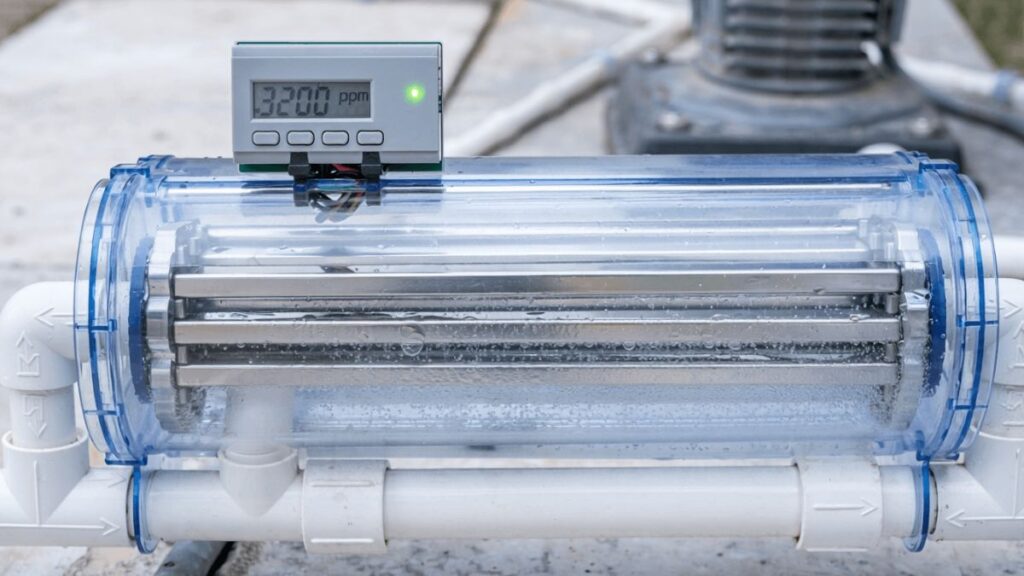
Salt systems produce chlorine through electrolysis, and that process naturally generates hydrogen gas and raises pH as a side effect.
This is not a malfunction. It is how salt chlorine generators work. The electrolysis process creates sodium hypochlorite with a naturally high pH, and it also causes localized aeration at the cell that accelerates CO2 loss. Both effects push pH upward continuously.
If you recently switched from trichlor tablets (which are acidic and naturally push pH down) to a salt system, the change in how your pH behaves is not coincidental. Trichlor was chemically counteracting pH rise. Your salt system does the opposite.
What to do:
✓ Expect to add acid on a regular schedule with a salt system, this is normal and not a sign anything is wrong
✓ Keep TA at the lower end of the acceptable range (60 to 80 ppm) to slow the rise between additions
✓ Test pH two to three times per week instead of weekly
If you also need to manage chlorine levels alongside pH, our guides on how to raise chlorine in a pool and how to lower chlorine in a pool fast cover both directions.
Reason 4: New Plaster Still Curing

If your pool is less than one year old or has been recently resurfaced, the plaster itself is releasing calcium and alkaline compounds into the water as it cures.
New plaster is highly alkaline. During the first several months after plastering, the surface reacts with pool water and continuously releases calcium carbonate and other compounds that raise pH. This is expected behavior, and it does slow down over time, but it can make the first pool season feel like a constant battle.
One forum contributor described adding 500 to 600 ml of acid per day for three years on a pebblecrete surface before identifying that LSI (Langelier Saturation Index) imbalance was pulling minerals from the surface and compounding the problem.
What to do:
✓ During the first year, accept that acid addition will be more frequent than normal
✓ Use less acid than you think you need and dilute it more
✓ Brush the pool regularly during the curing period to prevent calcium dust from settling
✓ Do not try to force pH down aggressively in a new plaster pool, this can cause surface etching
Reason 5: Your Fill Water Has High Alkalinity
The water coming out of your tap might already have high pH and high alkalinity before it even enters the pool.
If you are in an area with hard water (common in many parts of the US Southwest, UK, and Australia), your fill water may arrive at pH 7.8 or higher with TA above 120 ppm. Every time you top up the pool, you are adding water that is already predisposed to push pH up.
This is particularly relevant for pools that lose significant water through evaporation in hot climates, where topping up happens frequently throughout the summer.
What to do:
✓ Test your tap water’s pH and TA before adding it to the pool
✓ Factor the fill water’s chemistry into your baseline understanding of why your pool is different from your neighbor’s
✓ In extreme cases, a carbon filter on fill water or a partial drain and refill with lower-alkalinity water can help reset the baseline
For related guidance, our guide on how to test pool water correctly explains how to test both pool water and fill water accurately.
The pH Ceiling Concept No One Fully Explains
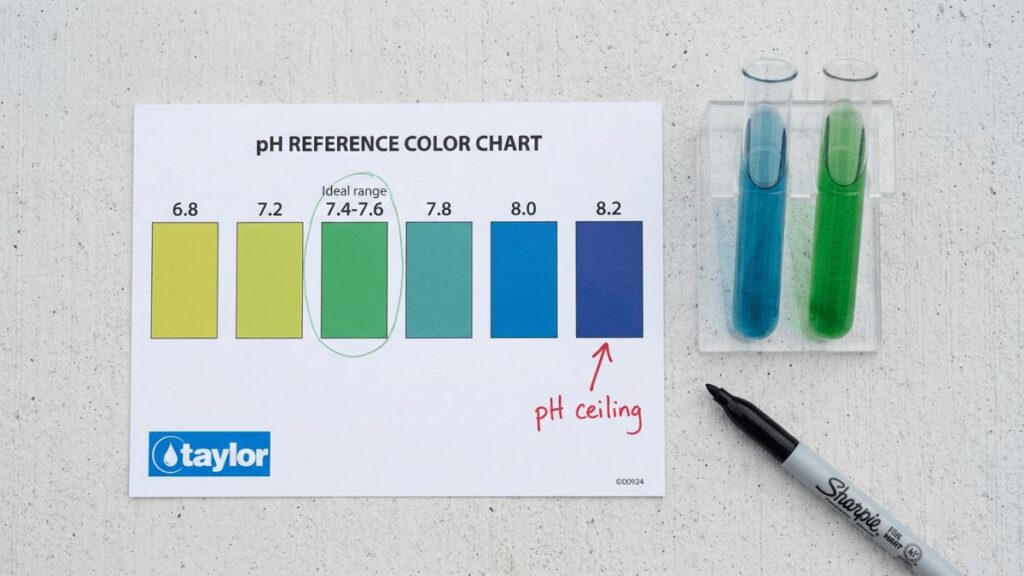
This is the single most important concept for understanding why your pH behaves the way it does, and almost no mainstream pool guide explains it properly.
Your pool water has a natural pH ceiling determined by its carbonate alkalinity. As CO2 escapes from water, pH rises until it reaches a point where the water is in equilibrium with the surrounding atmosphere. That ceiling is typically around 8.2 pH, depending on your specific water chemistry.
What this means practically: pH will always rise toward its ceiling. You cannot stop the rise. What you can control is where the ceiling sits and how fast pH drifts toward it.
According to Orenda Technologies’ pH ceiling explanation, setting a minimum pH target of 7.5 or 7.6 and allowing it to naturally drift toward the ceiling is a more sustainable approach than fighting to keep pH at exactly 7.4 at all times.
If your ceiling is at 8.2, the practical strategy is to add acid when pH reaches 7.8 or 7.9, bring it back to 7.4 or 7.5, and accept the cycle. The goal is to lower the frequency of the cycle by reducing TA, not to eliminate the rise entirely.
How to Actually Stop pH from Rising Every Week
There is no permanent fix that eliminates pH rise completely. But there is a permanent fix that reduces how often you deal with it.
Step 1: Lower your Total Alkalinity to 60 to 80 ppm. This is the single most effective change you can make. Most pool store advice targets TA at 80 to 120 ppm, but the lower end of the safe range significantly slows pH drift. Use muriatic acid added near the jets with the pump running, in the same way you lower pH, to bring TA down gradually. Our complete guide on how to lower alkalinity in a pool covers the process in detail.
Step 2: Address aeration sources you can control. Point return jets downward. Reduce water feature run times if pH drift is severe. You cannot eliminate CO2 loss, but you can slow it.
Step 3: Use acid correctly. Add acid in small doses near an active return jet, never in the skimmer, never poured directly onto surfaces. Wait four to six hours before retesting. Our guide on how to lower pool pH naturally explains the full acid-and-aerate method.
Step 4: Test consistently. Two to three times per week during swimming season. After every storm. After shocking.
Should You Add Borates?
Borates at 50 ppm are a legitimate strategy for reducing how frequently you need to add acid, though they will not reduce the total amount of acid you use over time.
Several Reddit pool owners reported that adding borate to 50 ppm changed their maintenance schedule from adding acid every two days to adding it once or twice a month. The chemistry is that borates add a secondary buffering system that helps hold pH stable, slowing the drift toward the ceiling between acid additions.
According to TroubleFreePool’s borates guide, borates also have the benefit of improving water clarity and reducing algae pressure. They do not interact negatively with chlorine or CYA.
If you choose to add borates, use boric acid powder or granules, not borax. Borax raises both pH and alkalinity, which defeats the purpose. Make sure your CYA is at an appropriate level before adjusting other parameters, our guide on what cyanuric acid is and how it works explains the role of CYA in your overall chemistry picture.
If your pH keeps rising and you are tired of adding acid constantly, stop chasing pH and fix your Total Alkalinity first. Bringing TA down to 60 to 80 ppm is the single change that makes the biggest difference to how often pH demands attention. Everything else is secondary.
Frequently Asked Questions
Why does my pool pH keep rising even after adding acid? Adding acid lowers pH temporarily, but if Total Alkalinity is high, aeration is ongoing, or you have a salt system, the same forces that caused pH to rise will push it back up again. The fix is addressing those root causes, particularly TA, not just repeatedly adding acid.
Is it normal to add muriatic acid every week? For pools with salt systems, water features, or naturally high-alkalinity fill water, weekly or even more frequent acid addition can be completely normal. It is a sign you should lower your TA and accept the cycle rather than an indication something is broken.
Does a saltwater pool always have high pH? Yes, salt chlorine generators naturally push pH upward as part of how they work. This is expected and not a malfunction. Managing TA at the lower end of the safe range and testing regularly is the standard approach for salt pool owners.
Can rain cause pool pH to rise? Rain is typically acidic and usually lowers pH slightly. However, heavy rain that brings in debris, fertilizer runoff, or dilutes a well-balanced pool can trigger secondary effects. The bigger pH impact from rain usually comes from the additional aeration caused by rain hitting the water surface.
Why is my pool pH always above 8.0? Persistent pH above 8.0 usually means Total Alkalinity is too high, aeration is significant and ongoing, or both. Bringing TA to 60 to 80 ppm and addressing aeration sources should lower the ceiling your pH drifts toward.
Can I shock the pool without affecting pH? Different shock products affect pH differently. Calcium hypochlorite raises pH. Trichlor tablets lower it. Liquid chlorine tends to raise it. Our guide on how to shock a pool correctly explains how to account for these effects when planning your treatment.
Why does pH rise faster in summer? Higher water temperature accelerates CO2 offgassing. More swimmers means more organic load and more surface agitation. More evaporation means more frequent fill water top-ups. All three factors compound during summer.
Final Thoughts

Pool pH rising is not a malfunction. It is the natural behavior of water in contact with air. CO2 escapes, carbonic acid levels drop, and pH climbs. You cannot stop the chemistry, but you can absolutely control how fast it happens and how much of your time and money it consumes.
The five causes above account for the overwhelming majority of cases where pH rises faster than it should. High Total Alkalinity is the most common and most fixable. Aeration from water features and return jets is the most overlooked. Salt systems and new plaster are situations where the cause is structural and the solution is management rather than elimination.
Once you understand that pH will always drift toward its ceiling, and once you bring that ceiling down by correcting TA, the weekly acid battle usually becomes a fortnightly task. That is not a perfect solution, but it is a realistic one, and it costs significantly less in time and chemicals.
If you are also seeing chlorine that will not hold alongside rising pH, that is a related but separate problem. Our guide on pool pH normal but chlorine not working explains what else to check when balancing pH alone is not solving the full picture.